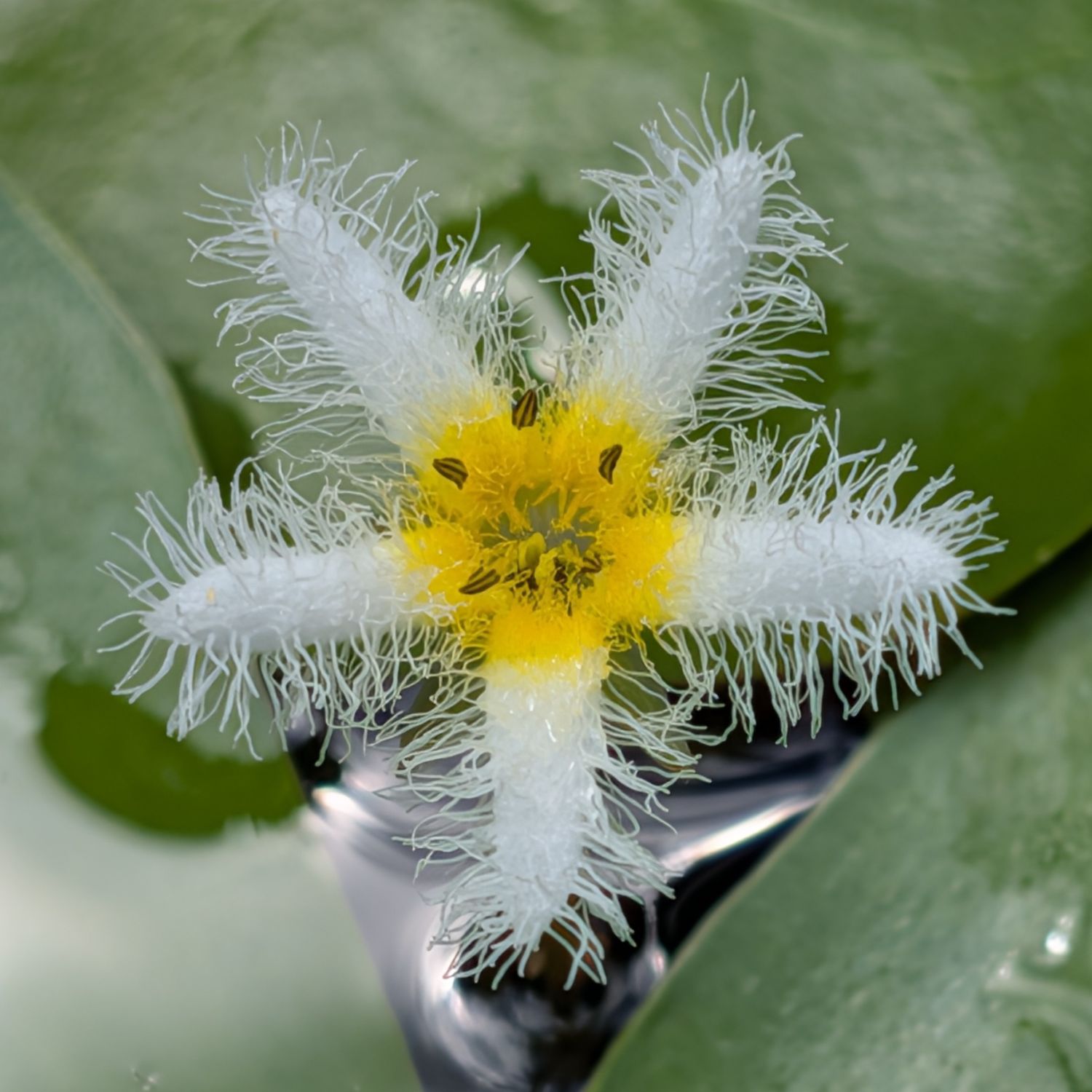
ガガブタの和名は水面に浮かぶ丸い葉に由来し、「かがみふた」が転訛。英名は星形に縁飾りの花に由来し、「水上の雪片」という意味です。
The Japanese name for the Water Snowflake comes from its floating, round leaves and is a variation of kagami-futa (meaning “mirror lid”). Its English name refers to its star-shaped, fringed flowers, translating to “snowflake on the water.”
【仮名】ガガブタ
【和名】鏡蓋
【英名】Water Snowflake
【学名】Nymphoides indica
【誕生】08/ 04, 08/ 10
【開花】07, 08, 09, 10月
【花色】White
ガガブタ
ガガブタの概要
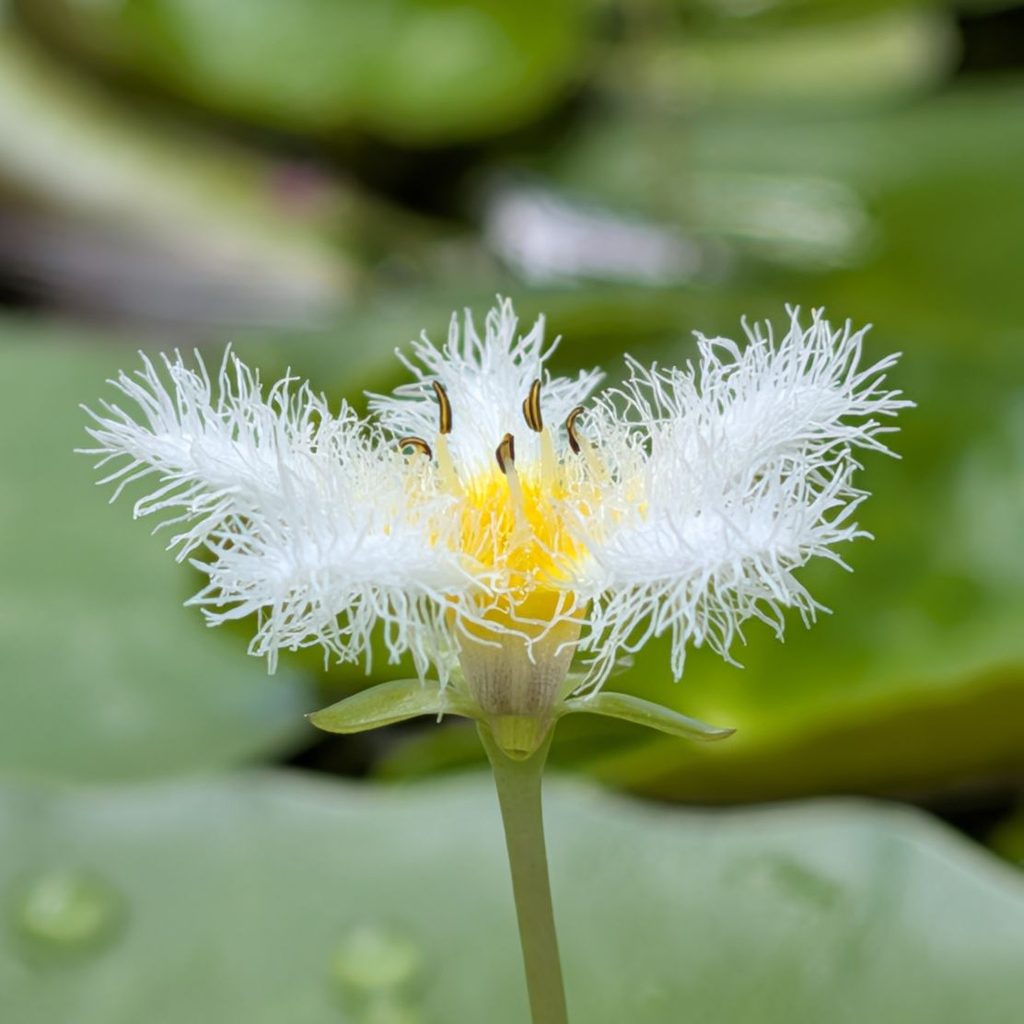
ガガブタはミツガシワ科アサザ属の多年生浮葉植物です。日本を含む温帯~熱帯で広域に分布。花は雌雄異株の一日花で長花柱花と短花柱花があります。花弁が5枚、雄しべが5本、繊細な毛状突起が密生。昔はため池を埋めつくす「雑草」でしたが、今は絶滅の恐れがある植物です。
ガガブタの名前
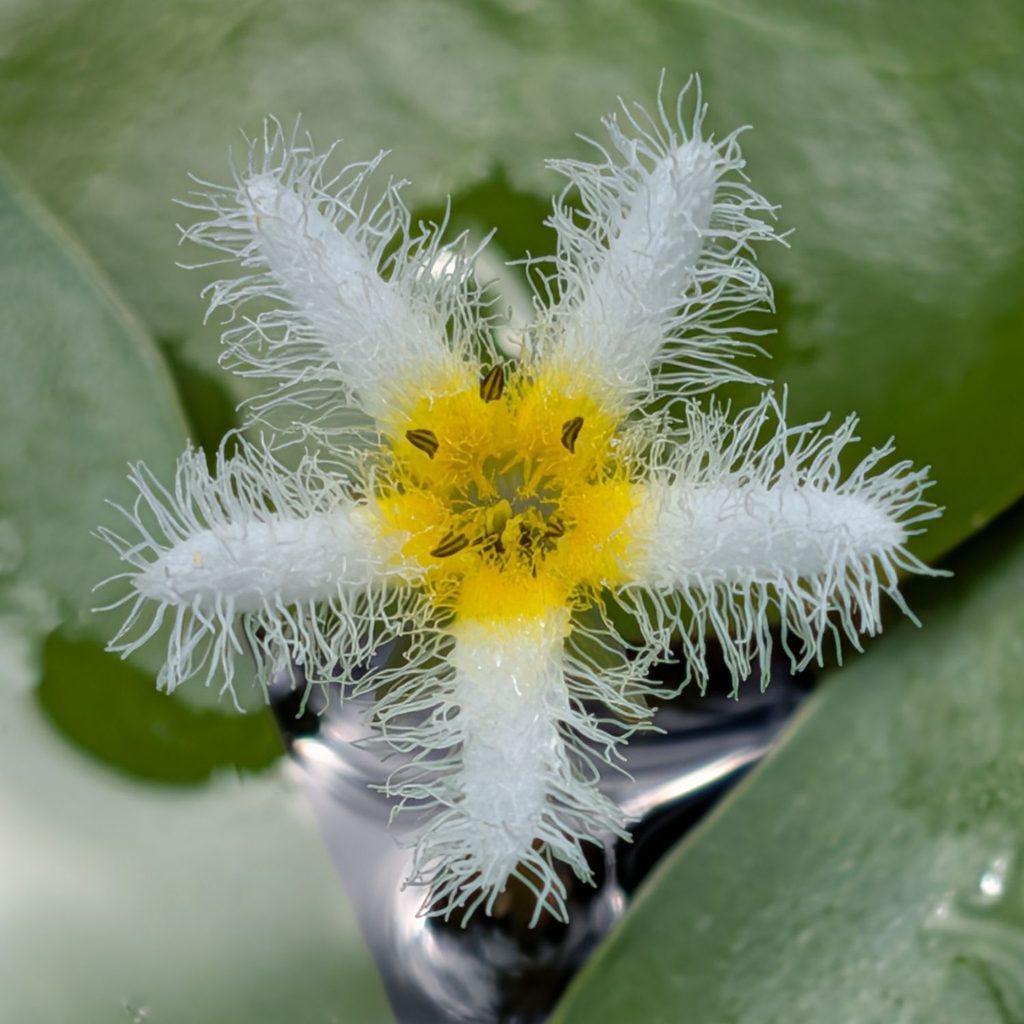
ガガブタの和名は水面に浮かぶ丸い葉に由来。銅鏡の蓋のように見えるので「かがみふた」と呼ばれ、それが転訛しました。英名ウォーター・スノーフレークは星形に縁飾りがついたような白色の花に由来し、「水上の雪片」という意味。属名ニンフォイデスは水の妖精を意味します。
ガガブタの姿形
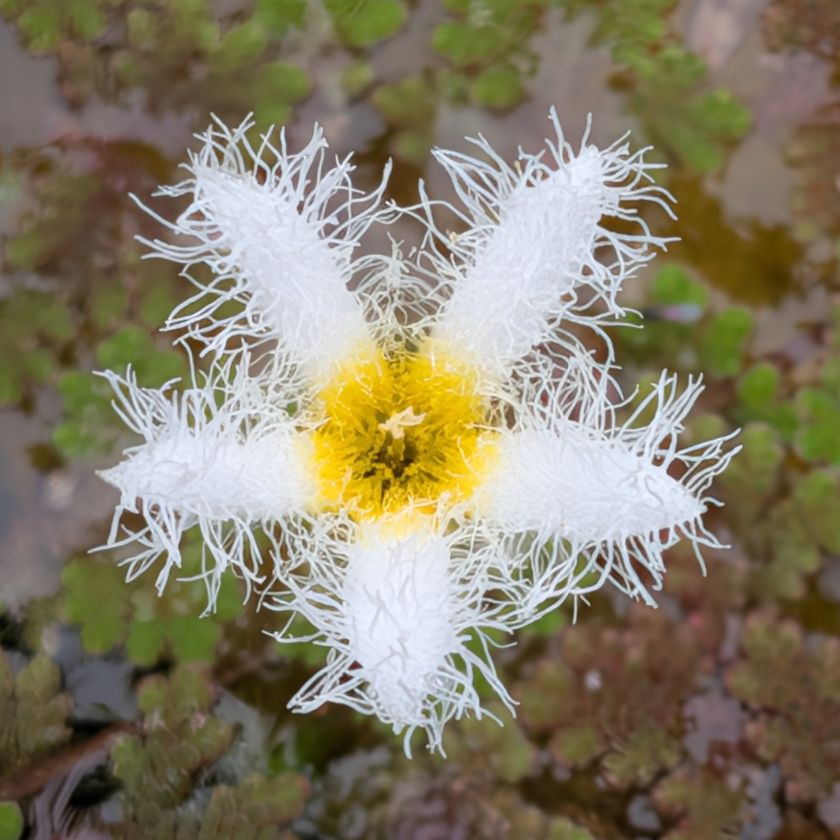
ガガブタは水底で短い根茎から固着根を伸ばし、底土をつかみます。根茎から上に仮茎を伸ばし、先端の水面で葉、花、不定根が発生。葉は光沢のある円形で撥水性があり、海綿状の通気組織で浮力があります。花は受粉後、水中で蒴果を形成。熟すと裂けて扁平な種子を散らします。
ガガブタの逸話
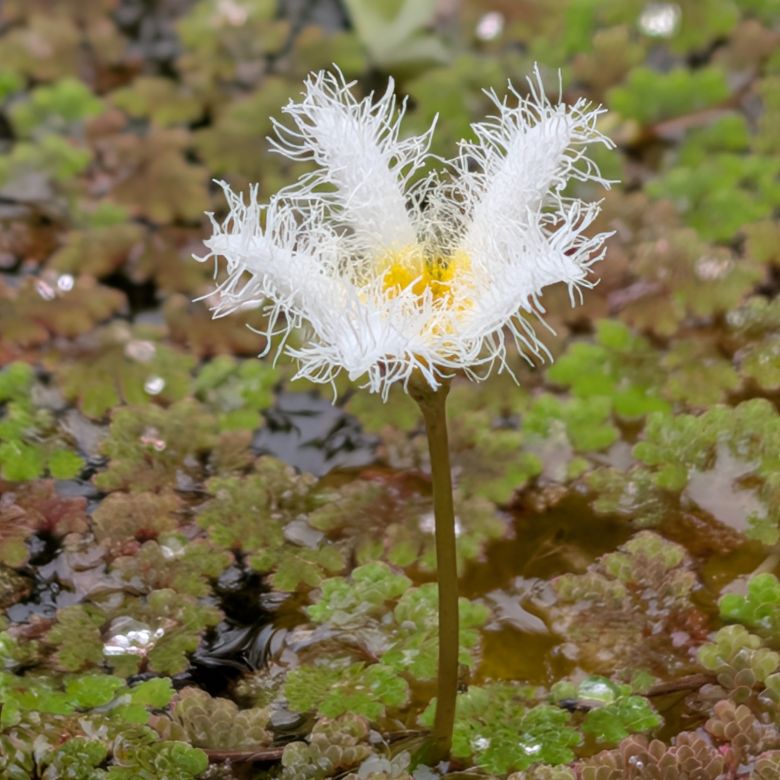
ガガブタは日本最古の和歌集「万葉集」に古名「鏡草」で登場。川辺で刈り取られる様子が詠まれています。西日本では「池底の河童の目覚まし」と呼ばれ、古くから親しまれていた水草。東アジア各地で煎じて内服されたり、磨り潰して外用されたり、灰汁抜きして食べられました。
Water Snowflake
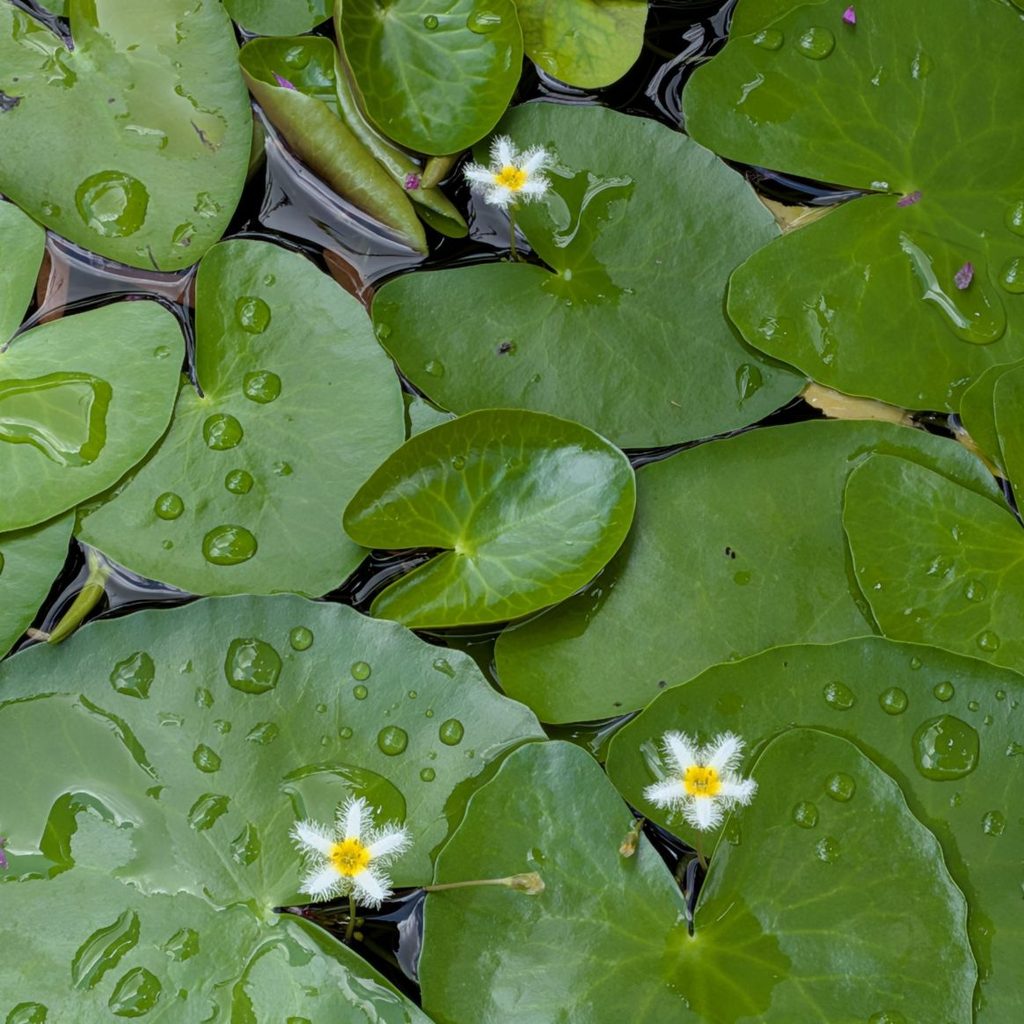
The Water Snowflake (Nymphoides indica) is a perennial, floating-leaved aquatic plant in the family Menyanthaceae. It is widely distributed across temperate and tropical regions, including Japan. Its flowers are ephemeral, lasting just a single day, and display heterostyly—existing as both long-styled and short-styled forms. Each bloom features five white petals densely fringed with delicate hairs and five stamens. Though once considered a common “weed” that choked irrigation ponds, it is now an endangered species.
The Japanese name for the Water Snowflake (Kagami-futa) derives from its round, floating leaves, which were thought to resemble the lids (futa) of traditional bronze mirrors (kagami). Over time, the phrase kagami-futa evolved into its current common name. Its English name refers to its star-shaped, white-fringed blossoms that look like delicate snowflakes resting on the water. The genus name, Nymphoides, means “resembling a nymph” or “water fairy.”
Anchored to the muddy bottom by short rhizomes and roots, the plant sends long, stem-like structures (pseudostems) up to the surface, where leaves, flowers, and adventitious roots develop. The glossy, round leaves are water-repellent and buoyed by a spongy, air-filled tissue. After pollination, the flowers sink underwater to form seed capsules, which split open when ripe to scatter flat seeds.
The plant has a long history in Japanese culture, appearing in the Man’yōshū—Japan’s oldest poetry collection—under the ancient name Kagami-gusa (“mirror grass”), in verses describing it being gathered along riverbanks. In western Japan, it was affectionately called the “alarm clock for the kappa” (a mythical water imp residing at the bottom of the pond). Across East Asia, it was traditionally utilized in various ways: brewed as an herbal decoction, mashed into a paste for topical application, or processed with lye to remove bitterness and eaten as food.