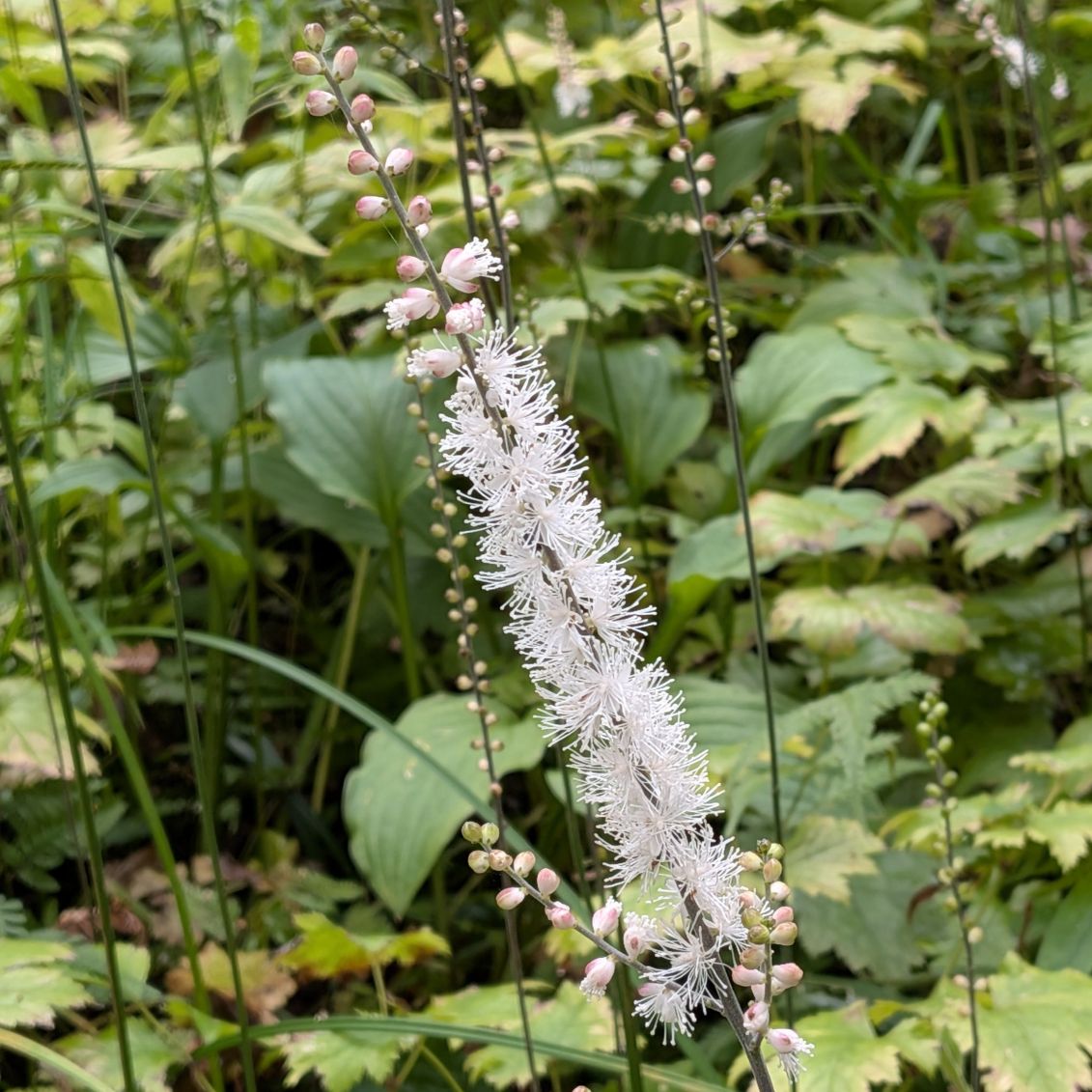
イヌショウマは花茎が立ち上がって傾くことなく、花穂が引き締まって垂れることなく、凛として、そこはかとなく幽玄な趣が感じられます。
Cimicifuga biternata features upright flower stalks that stand firm without leaning, and compact flower spikes that remain straight without drooping. It possesses a dignified, poised presence, evoking a subtle and ethereal charm.
【仮名】イヌショウマ
【和名】犬升麻
【英名】Cimicifuga biternata
【学名】Cimicifuga biternata
【誕生】10/ 15, 10/ 25
【開花】08, 09, 10月
【花色】White
イヌショウマ
イヌショウマの概要
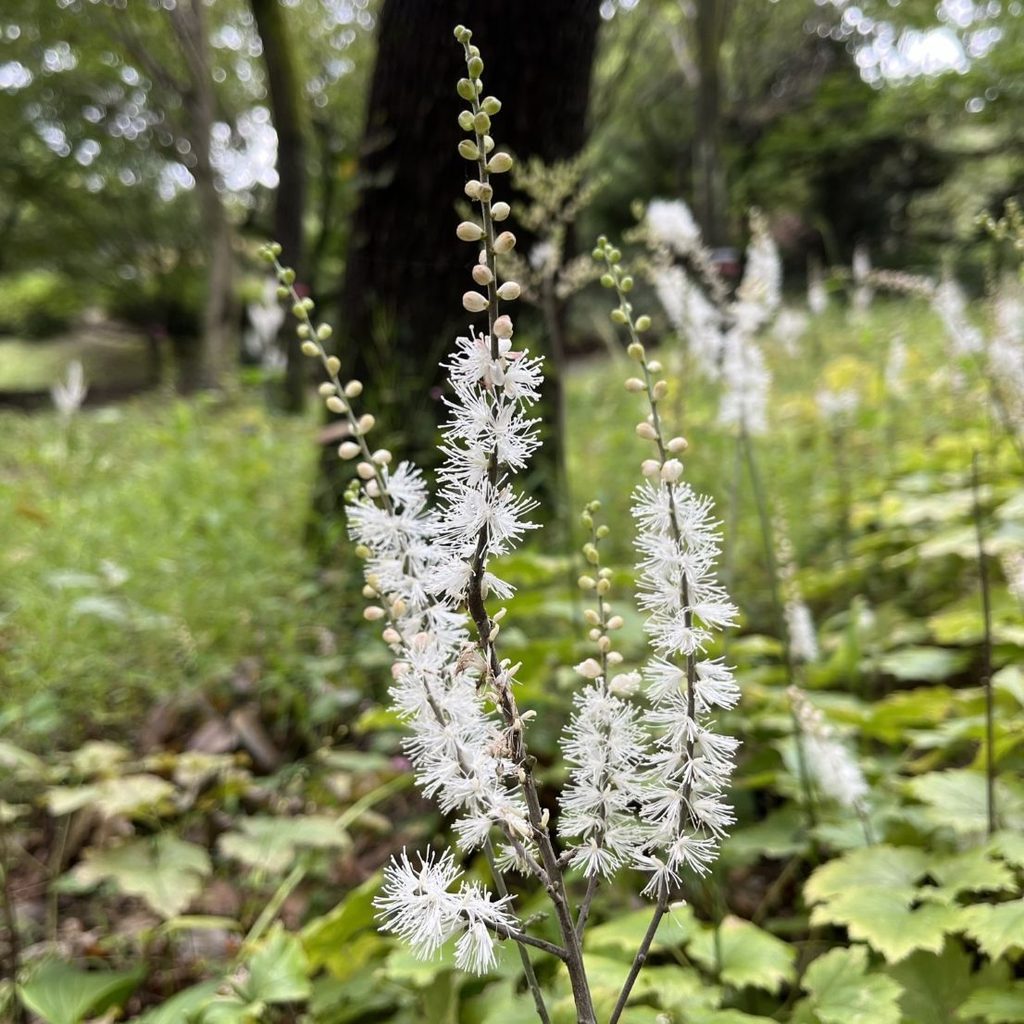
イヌショウマはキンポウゲ科の多年草です。本州の関東~中部地方に分布し、林野の明るく、やや湿り気のあるところに自生。近縁種の晒菜升麻に似ながら、花茎が立ち上がって傾くことなく、花穂が引き締まって垂れることなく、凛として、そこはかとなく幽玄な趣が感じられます。
イヌショウマの名前
イヌショウマの和名は「役に立たない升麻」という意味。近縁種の晒菜升麻に姿形が似ながら、同じような薬効がないからです。属名シミシフーガは「虫を追い払う」という意味で悪臭を出す同属異種に由来。種小名ビテルナータは「2回3出複葉」という意味で葉の形に由来します。
イヌショウマの姿形
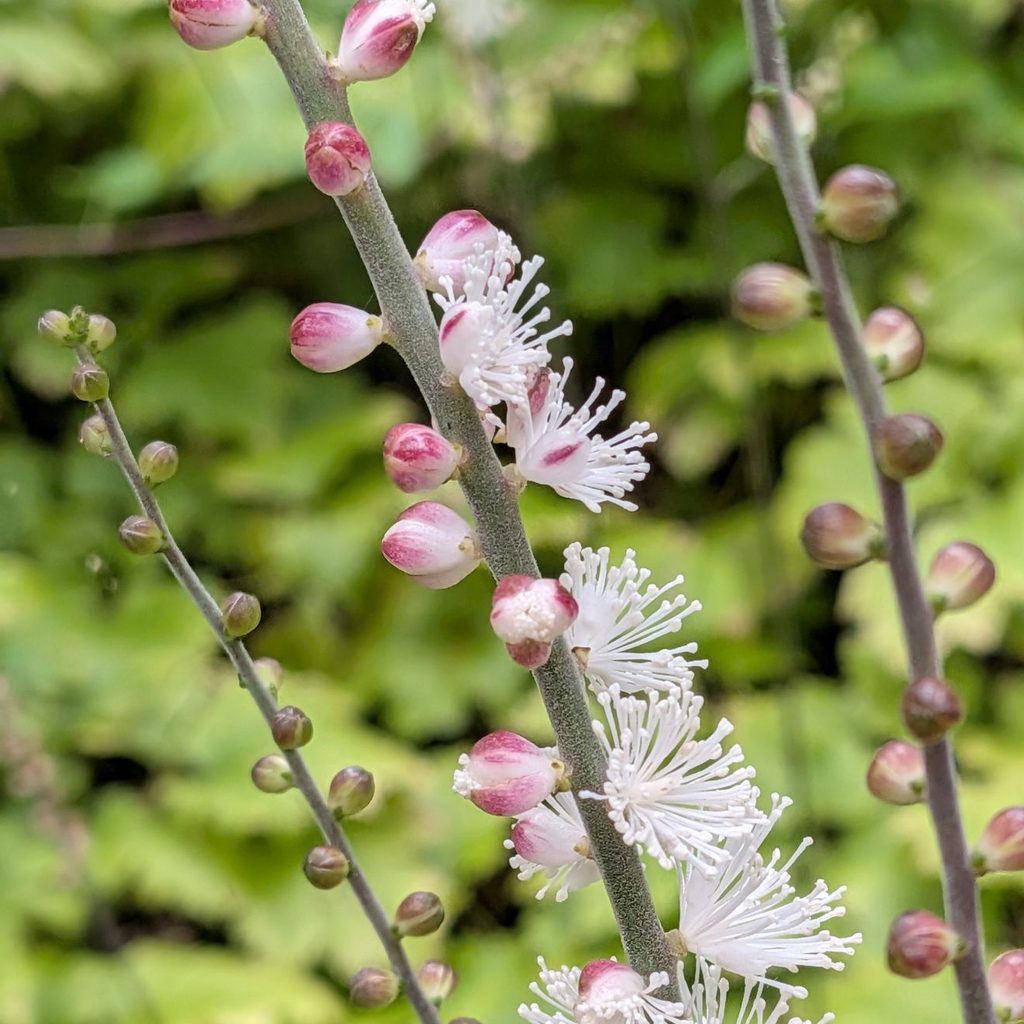
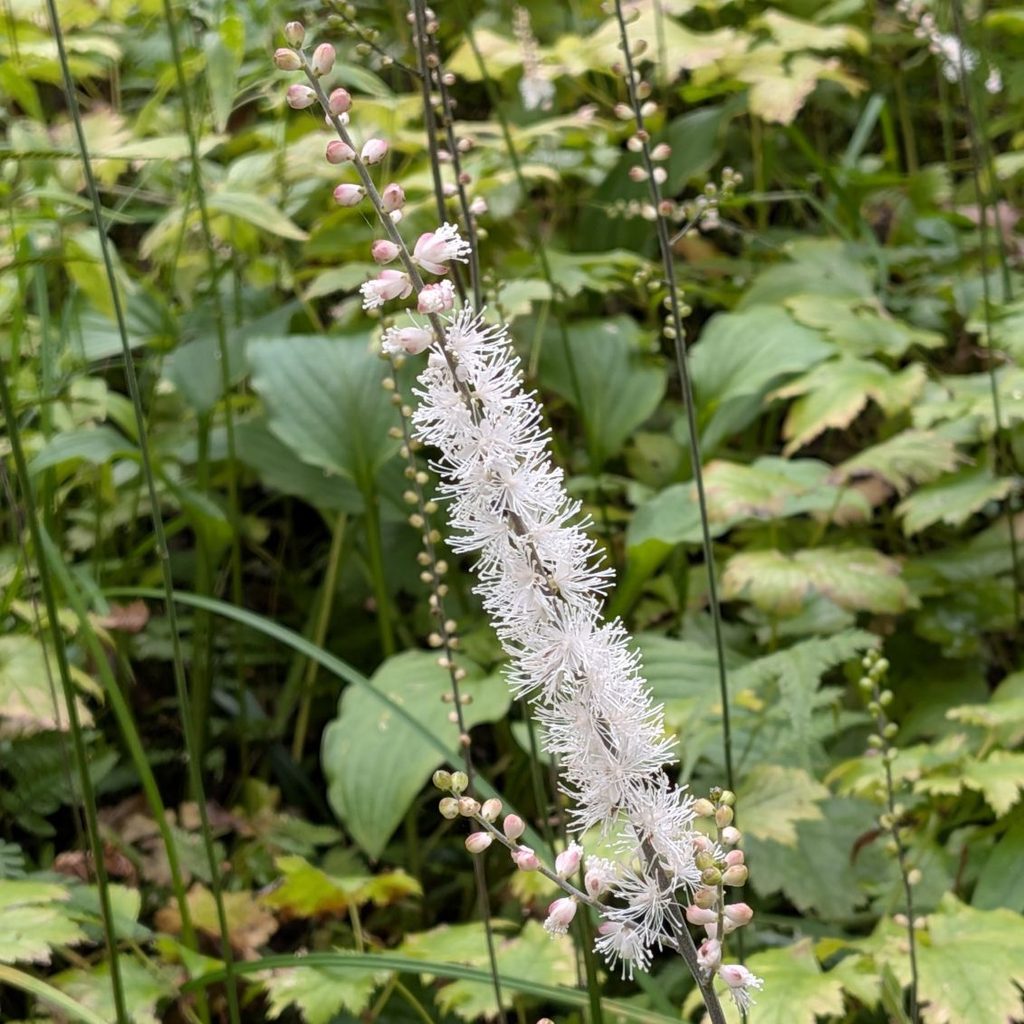
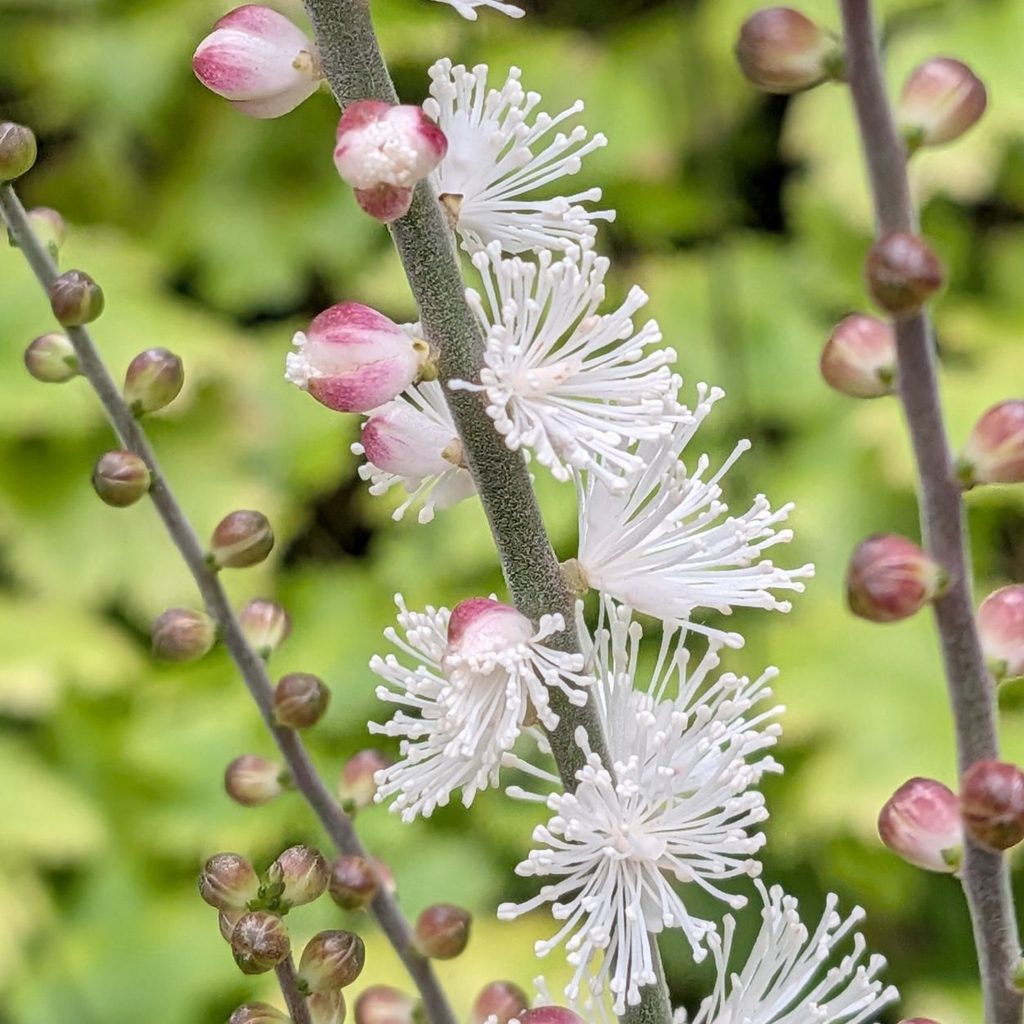
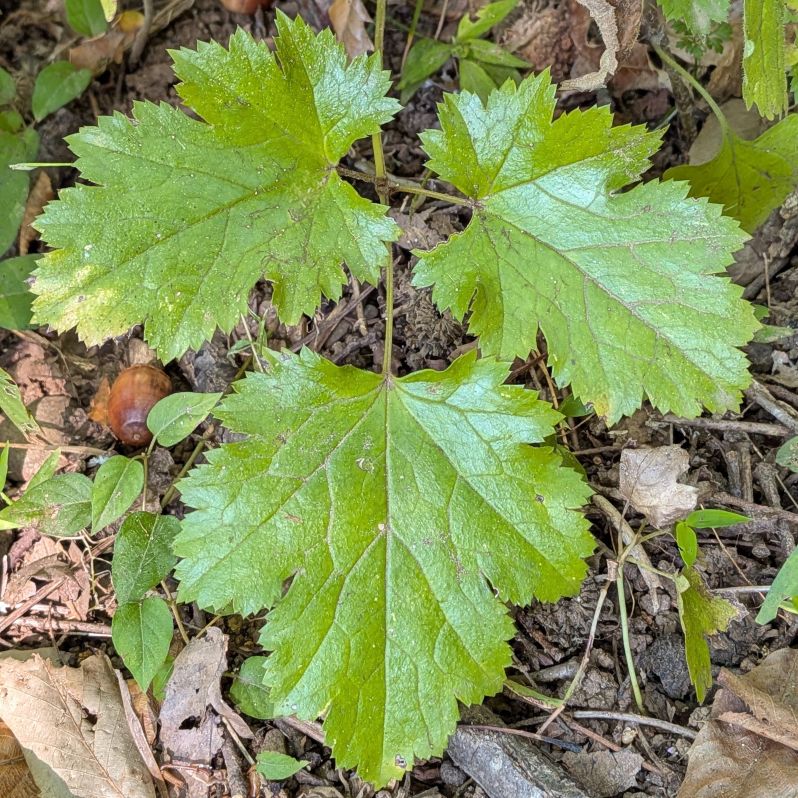
イヌショウマは木質化した黒色の根茎から太い髭根が伸長。葉は根生の2回3出複葉で縁に鋭い鋸歯があります。花は柄がなく、花弁のような萼片が4~5枚、雄しべが多数。茎先で穂状に集まって咲きます。開花で萼片が緩んで早落、雄しべと雌しべが突出。花後は袋果を結びます。
イヌショウマの近縁
イヌショウマの近縁種「晒菜升麻」は同じような白色の花穂を立ち上げます。一方、葉は3回3出複葉で縁の切れ込みが細かく、花は有柄。根茎は外観が似ているものの、生薬「升麻」となり、おもに「熱を冷まし毒を散らす」「低下した気や臓器を持ち上げる」ために用いられます。
Cimicifuga biternata
Cimicifuga biternata is a perennial herb in the Ranunculaceae (buttercup) family. Native to the Kanto and Chubu regions of Honshu, Japan, it grows in bright, slightly damp woodland areas. While it closely resembles its relative Cimicifuga simplex, it is distinguished by its sturdy, upright flower stalks and compact, non-drooping flower spikes—giving it a dignified and subtly ethereal quality.
The Japanese name for Cimicifuga biternata translates to “useless Cimicifuga rhizome,” referencing the fact that it lacks the medicinal properties of Cimicifuga simplex. The genus name Cimicifuga means “to drive away insects,” referring to related species that emit a strong odor. The specific epithet biternata describes the plant’s biternate (twice-ternate) compound leaves.
Cimicifuga biternata produces thick, fibrous roots extending from a woody, black rhizome. Its basal leaves are biternate compound leaves with sharply serrated edges. The flowers are sessile (lacking individual stalks), featuring 4 to 5 petal-like sepals and numerous stamens, clustered in spikes at the tips of the stems. As the flowers open, the sepals loosen and quickly fall away, leaving the stamens and pistils exposed. After flowering, the plant forms follicle-type fruits.
Its close relative, Cimicifuga simplex, produces similar upright white flower spikes. However, C. simplex can be distinguished by its triternate (three-times-ternate) compound leaves with finely cut margins, as well as flowers borne on individual stalks. Although the rhizomes of the two species appear similar, only those of C. simplex are harvested as the crude drug “Cimicifuga Rhizome,” which is primarily used in traditional medicine to “clear heat and remove toxins” and to “raise sunken qi or prolapsed organs.”
