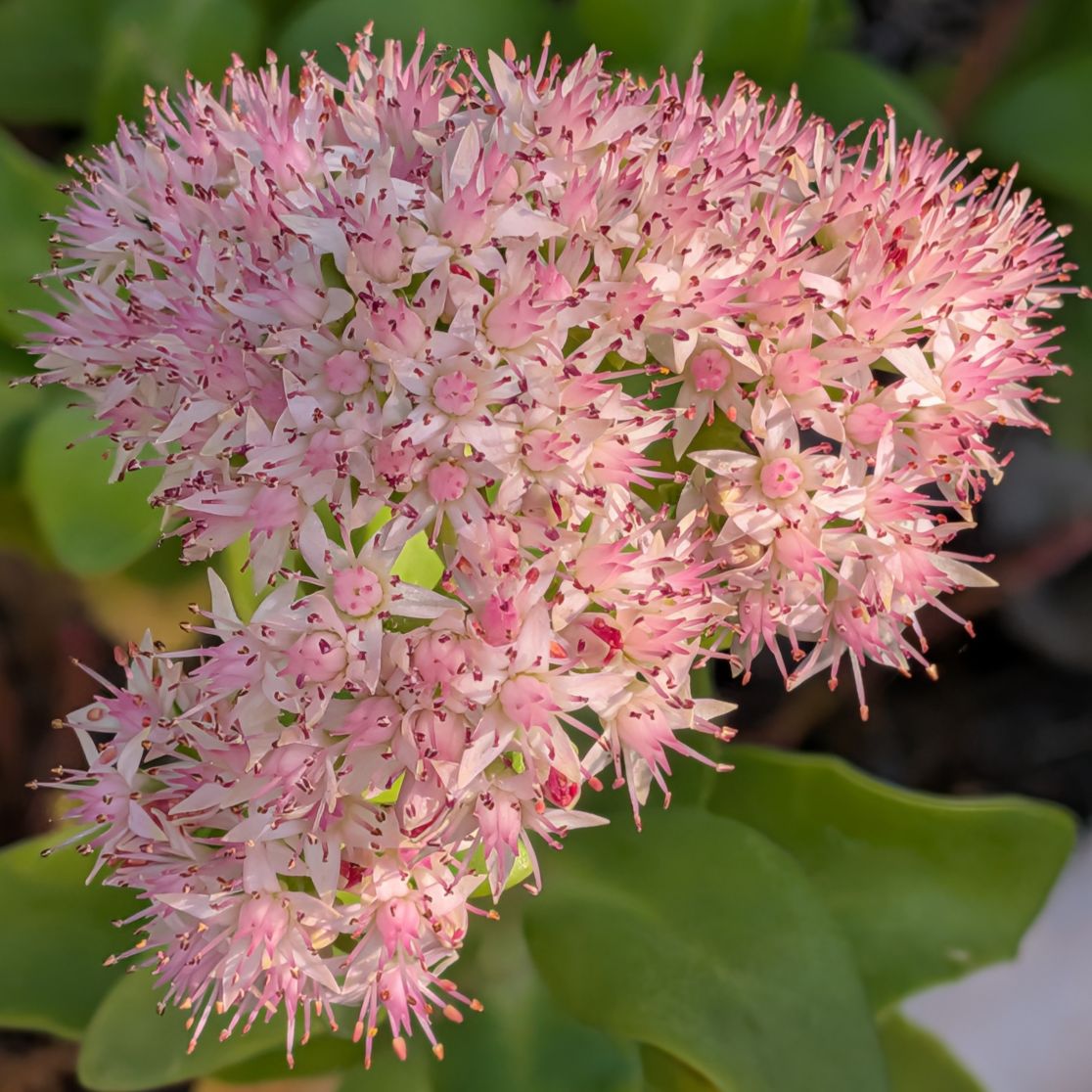
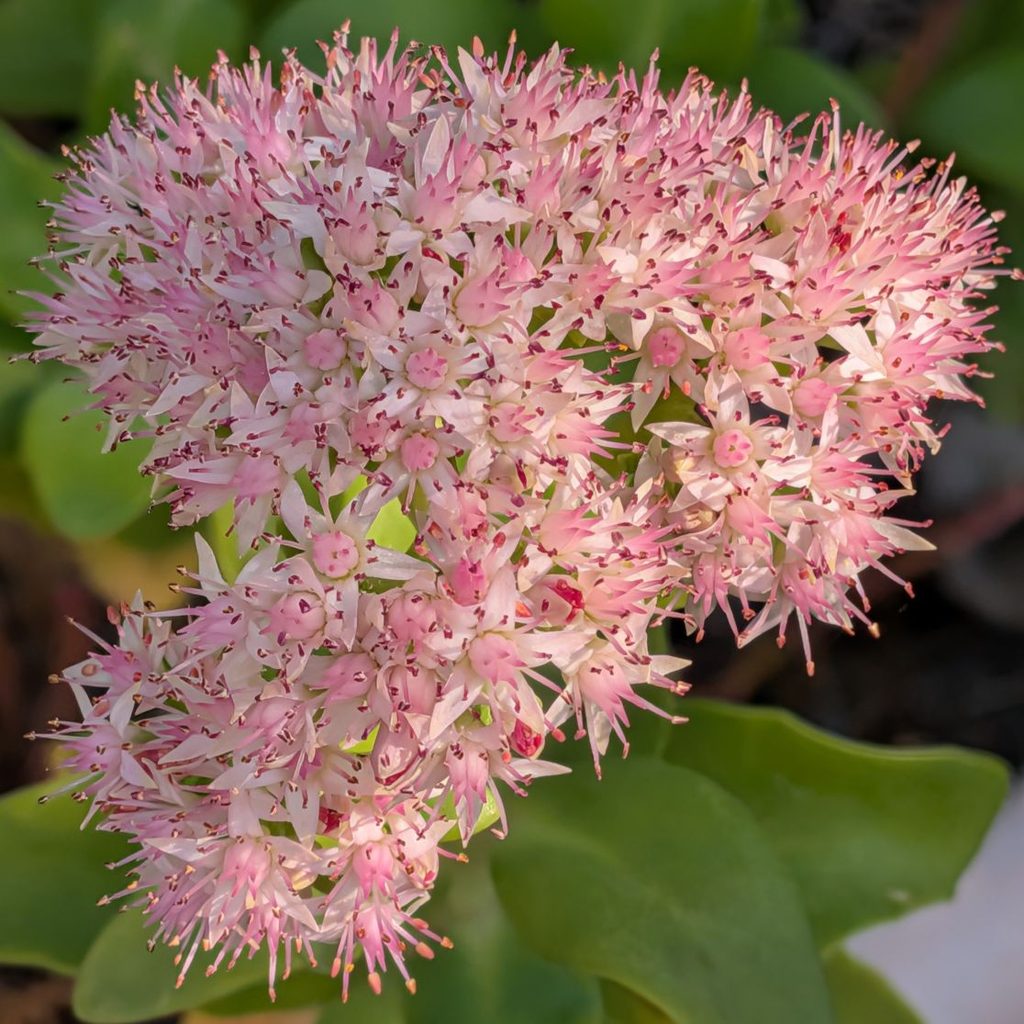
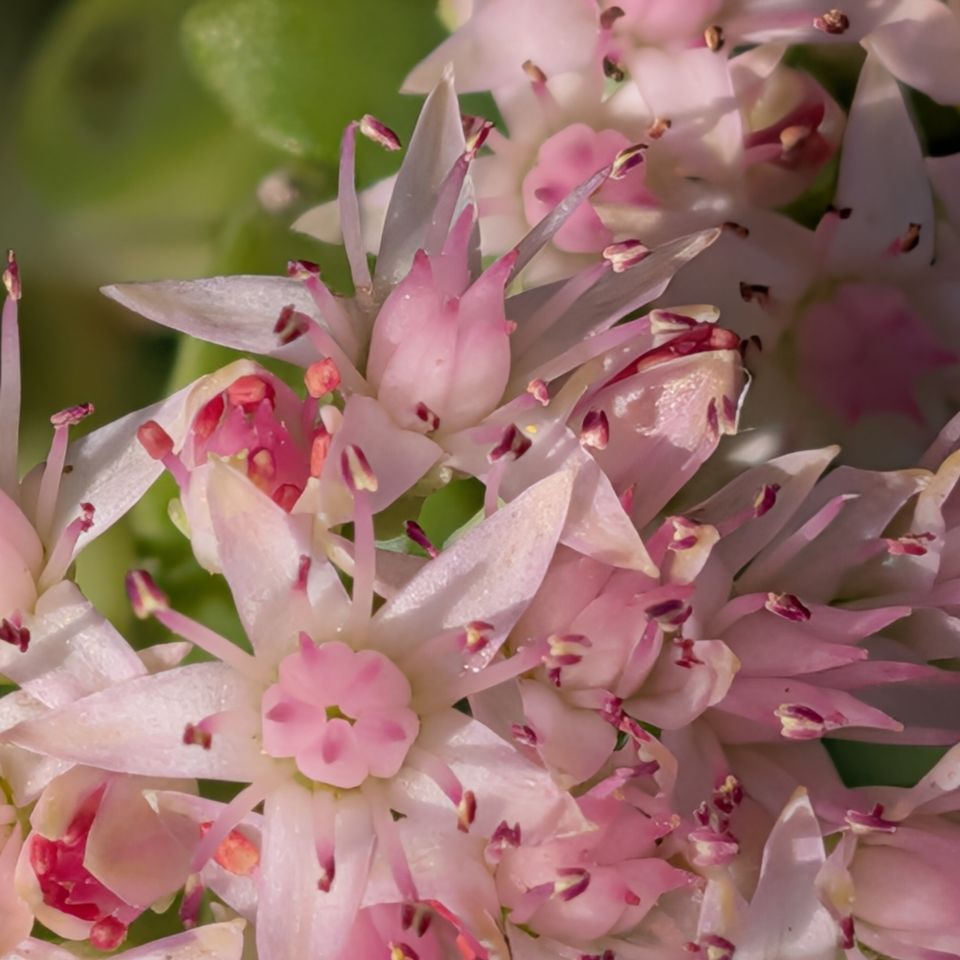
オオベンケイソウの花は萼片が5枚、花弁が5枚、雄しべが外輪に5本、内輪に5本。離生心皮の基部に蜜腺があり、蝶々に花蜜を与えます。
The flowers of the showy stonecrop have five sepals, five petals, and ten stamens arranged in an outer whorl of five and an inner whorl of five. At the base of the distinct carpels lie nectaries, which provide nectar to butterflies.
【仮名】オオベンケイソウ
【和名】大弁慶草
【英名】Showy Stonecrop
【学名】Hylotelephium spectabile, Sedum spectabile
【誕生】09/ 11, 09/ 26, 10/ 17
【開花】08, 09, 10月
【花色】White, Pink, Red, Purple
オオベンケイソウ
オオベンケイソウの概要
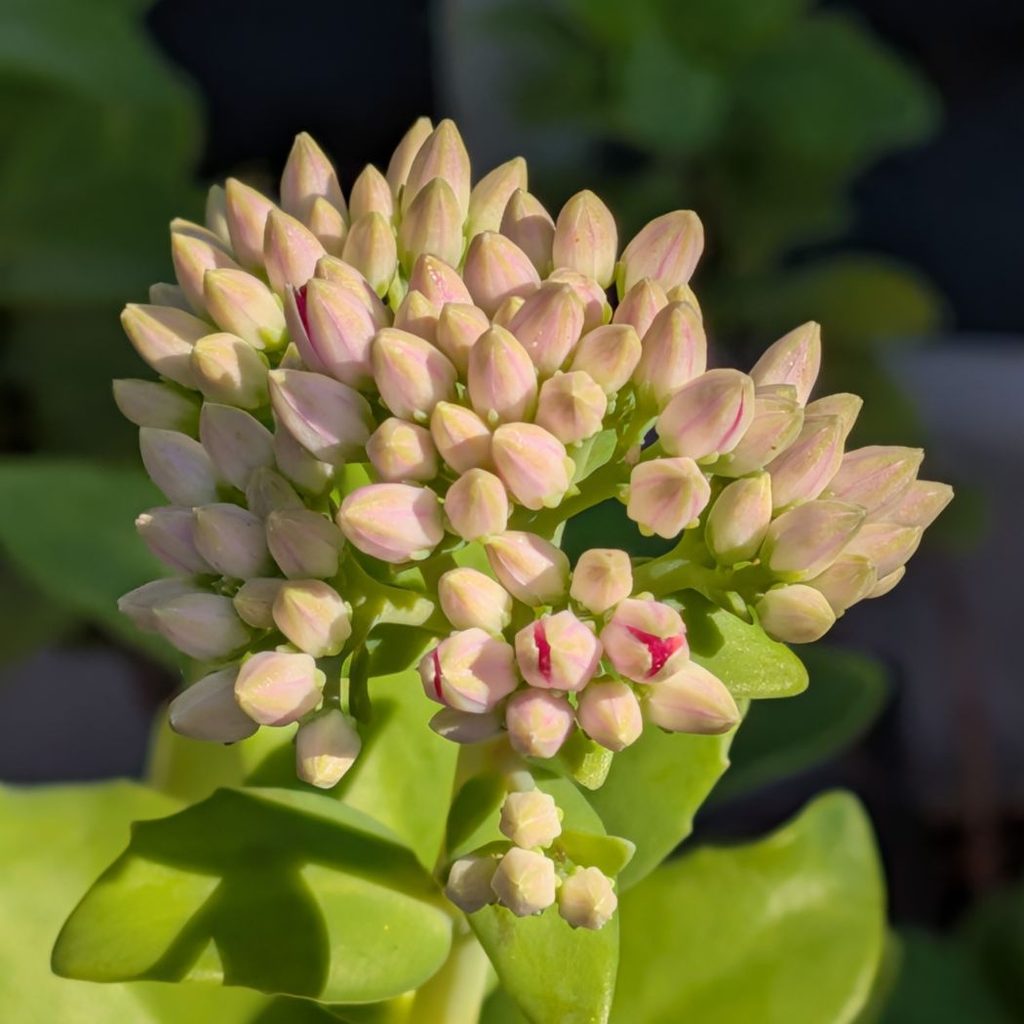
オオベンケイソウはベンケイソウ科の宿根性多肉多年草。原産地は中国~朝鮮半島で、日本へは明治時代に渡来しました。乾燥や寒さに強く、陽当たりの良い岩場などで自生。花は離生心皮(雌しべ)の基部に蜜腺があり、長距離を移動するタテハチョウ科の浅葱斑に花蜜を与えます。
オオベンケイソウの名前
オオベンケイソウの和名は「大きな弁慶草」という意味。摘んでも枯れない強靭さを怪力無双の僧兵「武蔵坊弁慶」に見立てました。英名ショウイー・ストーンクロップは「華やかな弁慶草」、属名ヒロテレフィウムは「森の弁慶草」、種小名スペクタビレは「際立った」という意味。
オオベンケイソウの姿形
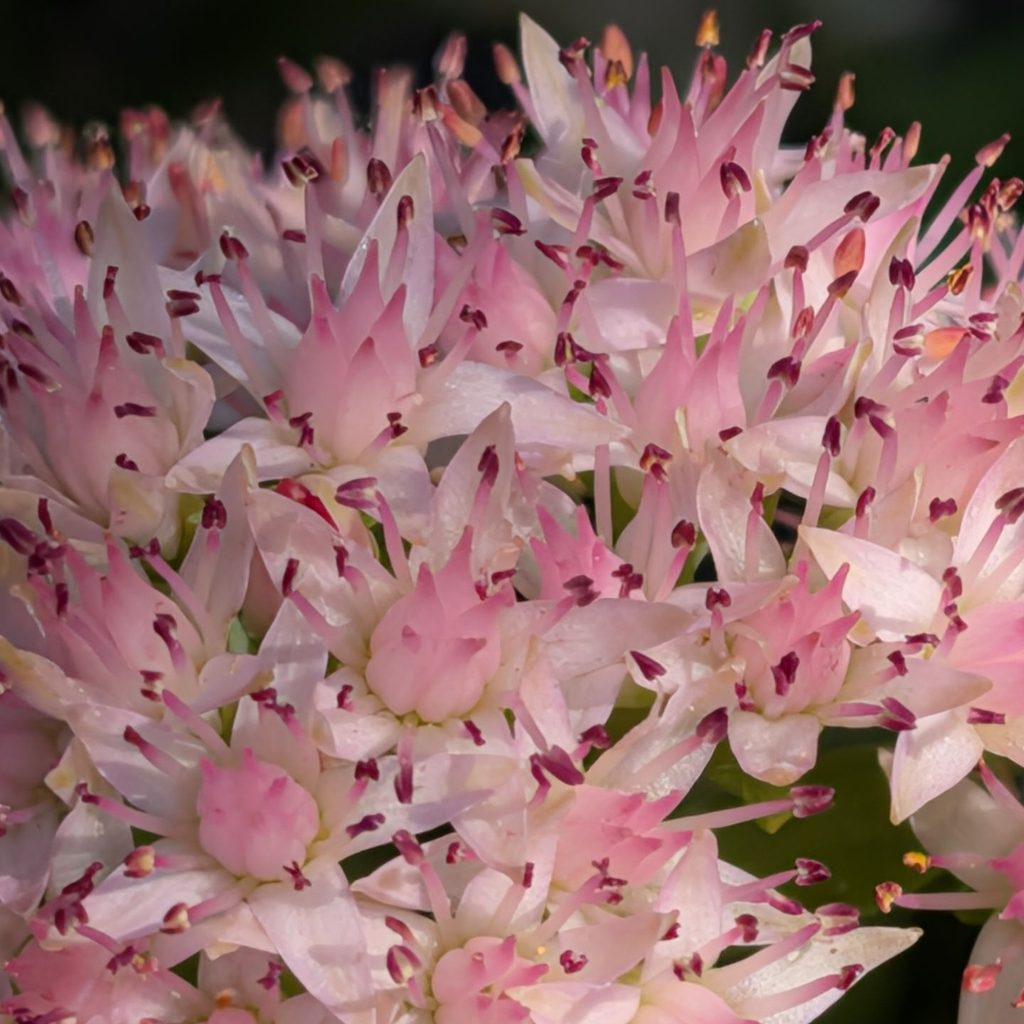
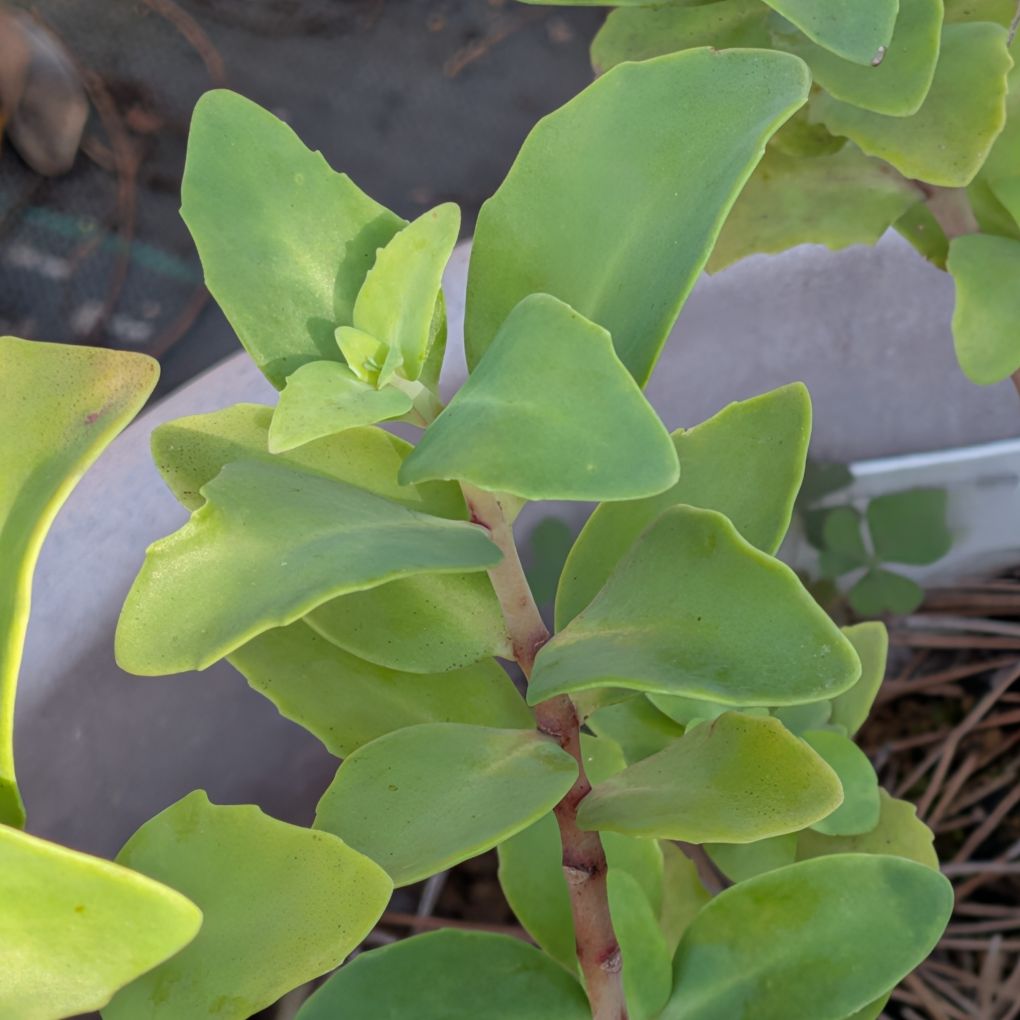
オオベンケイソウは太い塊根から多くの細根が伸長。茎は束生で直立し、白粉を帯びます。葉は対生または輪生の広卵形。肉質で白粉に覆われ、縁が浅く波打ちます。花は萼片が5枚、花弁が5枚、雄しべが外輪に5本、内輪に5本。花後の袋果は熟すと裂けて微細種子を散らします。
オオベンケイソウの逸話
オオベンケイソウは欧州で古くから恋のおまじないに用いられました。夏至の夜、意中の人を想いながら、2本の茎を並べて壁に貼り付け。翌朝もし互いに寄り添うように曲がっていれば相思相愛で結ばれます。また、庭に植えることで雷や火事から家を守る魔除けに用いられました。
Showy Stonecrop
The showy stonecrop (Hylotelephium spectabile) is a perennial succulent plant in the family Crassulaceae. Native to a region spanning from China to the Korean Peninsula, it was introduced to Japan during the Meiji era. Highly resilient to both drought and cold, it grows naturally in sunny, rocky areas. At the base of the distinct carpels, the flowers feature nectaries that provide nectar to the Chestnut Tiger butterfly (Parantica sita), a species of brush-footed butterfly known for its long-distance migration.
In Japanese, the plant is called Ō-benkei-sō (“Large Benkei Herb”). The name refers to Musashibō Benkei, a legendary warrior monk of immense physical strength, symbolizing the plant’s extraordinary hardiness—it remains resilient and does not wither even after being plucked. Its English common name, “Showy Stonecrop,” highlights its striking appearance. The genus name Hylotelephium means “forest Telephium,” while the specific epithet spectabile translates to “spectacular” or “conspicuous.”
The showy stonecrop forms a thick tuberous root from which numerous fine feeder roots extend. Its upright stems grow in dense clusters and have a glaucous (waxy, powdery) coating. The broad, egg-shaped leaves are arranged in opposite pairs or whorls; they are fleshy, glaucous, and feature shallowly wavy margins. As mentioned above, the flowers consist of five sepals, five petals, and ten stamens divided evenly between inner and outer whorls. After blooming, the plant produces follicles that split open upon maturing to disperse minute seeds.
In Europe, the showy stonecrop was traditionally used in love divination. On the night of the summer solstice, a person would fix two stems side-by-side on a wall while focusing their thoughts on someone they loved. If the stems had curved toward each other by the following morning, it was taken as a sign of mutual love. Planting it in gardens was also believed to serve as a protective charm, shielding homes from lightning strikes and fires.