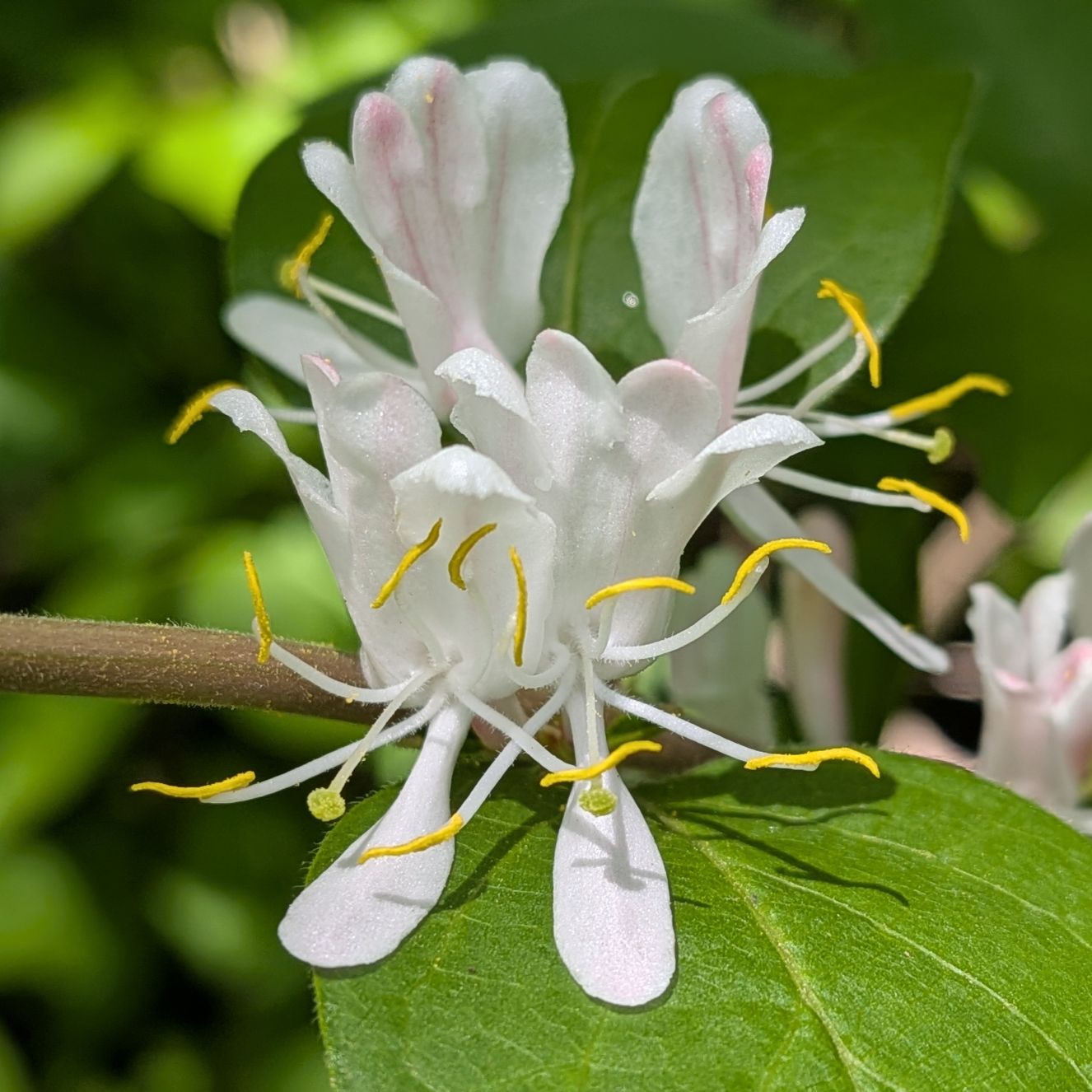
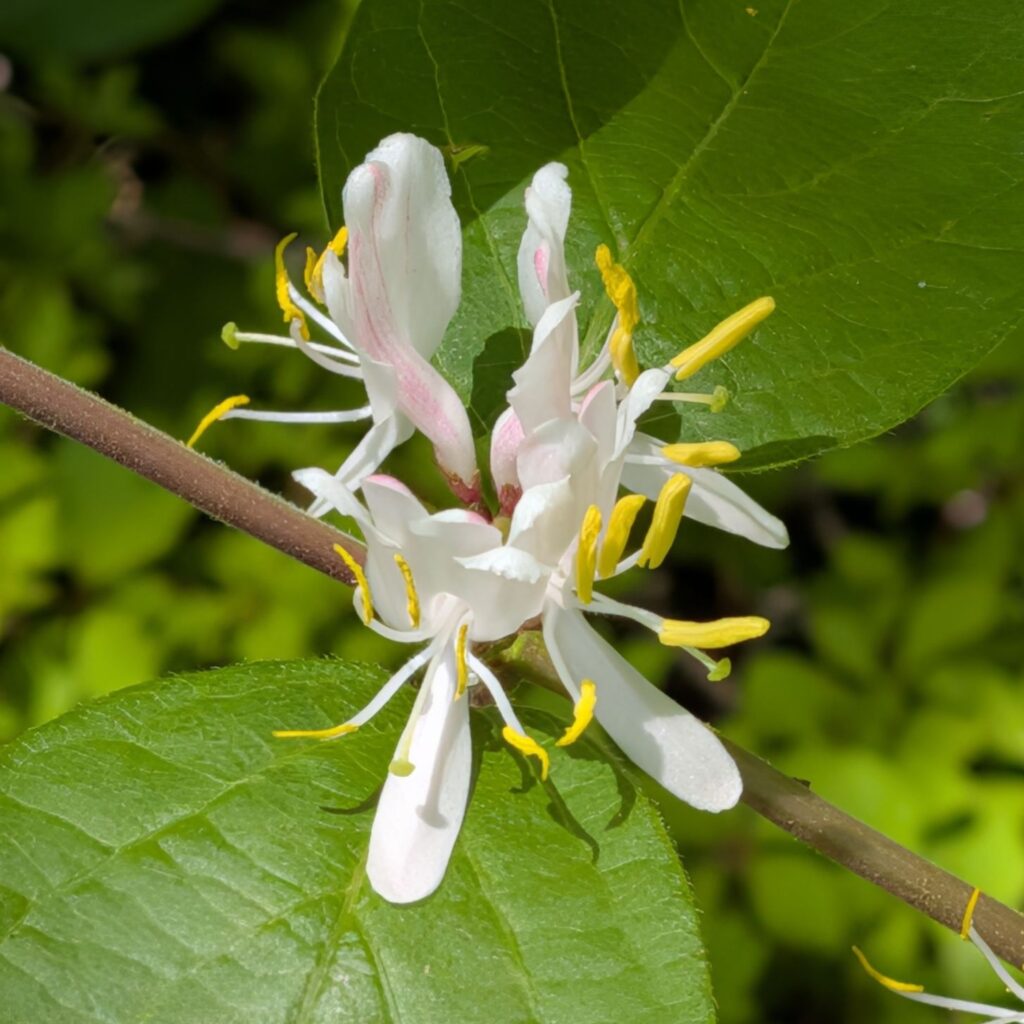
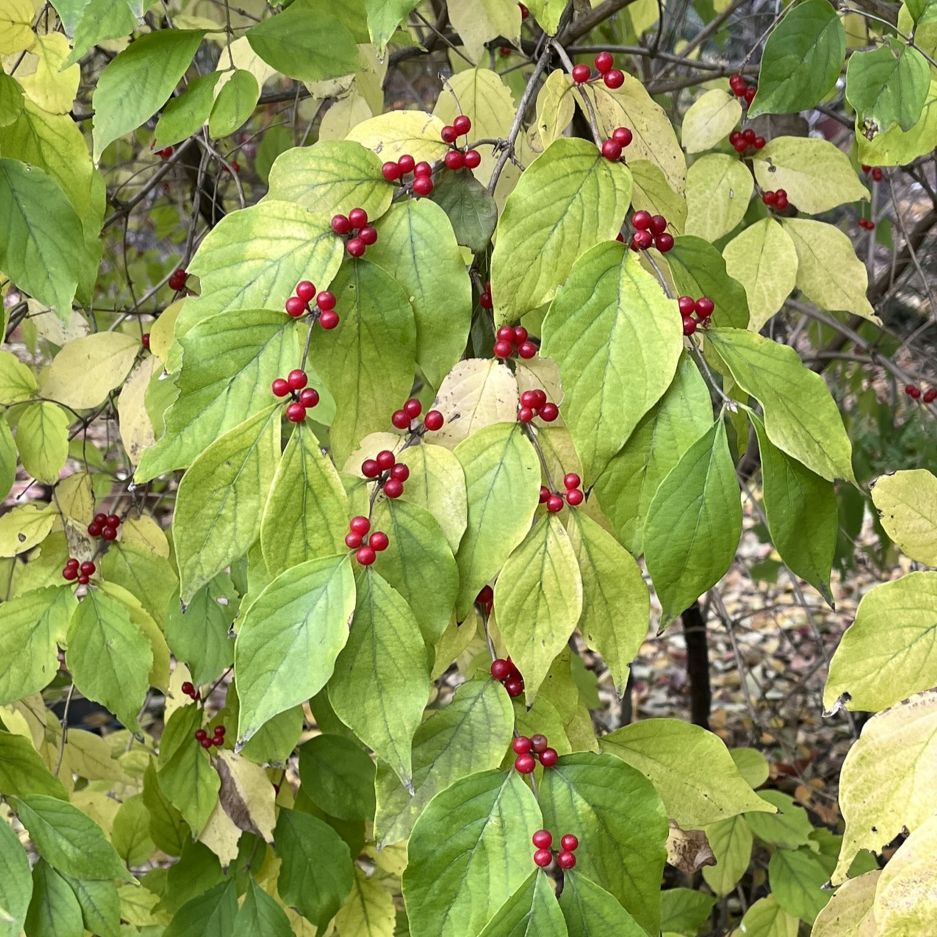
ハナヒョウタンボクの花は唇形花。咲き始めが銀白色、咲き終わりが黄金色で、芳香を放ちます。花後は鮮紅色の液果が2つずつ並んで結実。
The flowers of the Amur Honeysuckle are two-lipped (labiate). They open in a brilliant silvery-white and mature into a golden yellow, emitting a rich fragrance. After flowering, the plant bears pairs of vibrant red berries.
【仮名】ハナヒョウタンボク
【和名】花瓢箪木
【英名】Amur Honeysuckle
【学名】Lonicera maackii
【誕生】06/ 12, 06/ 15
【開花】05, 06月
【花色】White, Yellow
ハナヒョウタンボク
ハナヒョウタンボクの概要
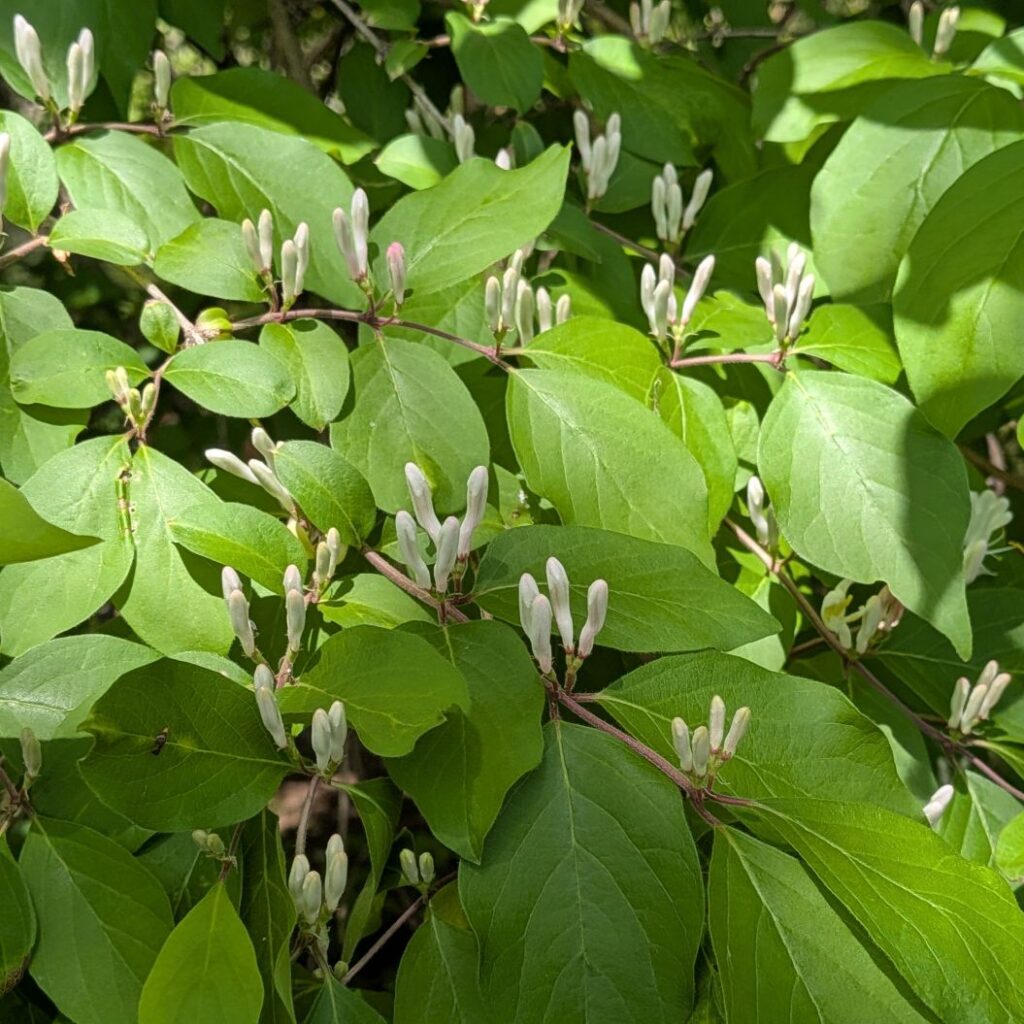
ハナヒョウタンボクはスイカズラ科の落葉低木です。日本では本州の東北~中部地方、国外ではロシア極東部、中国、朝鮮半島に分布。日本では河川整備などで衰退し、絶滅が危惧される一方、19世紀に移入された北米では在来植物が駆逐され、侵略的外来種として警戒されています。
ハナヒョウタンボクの名前
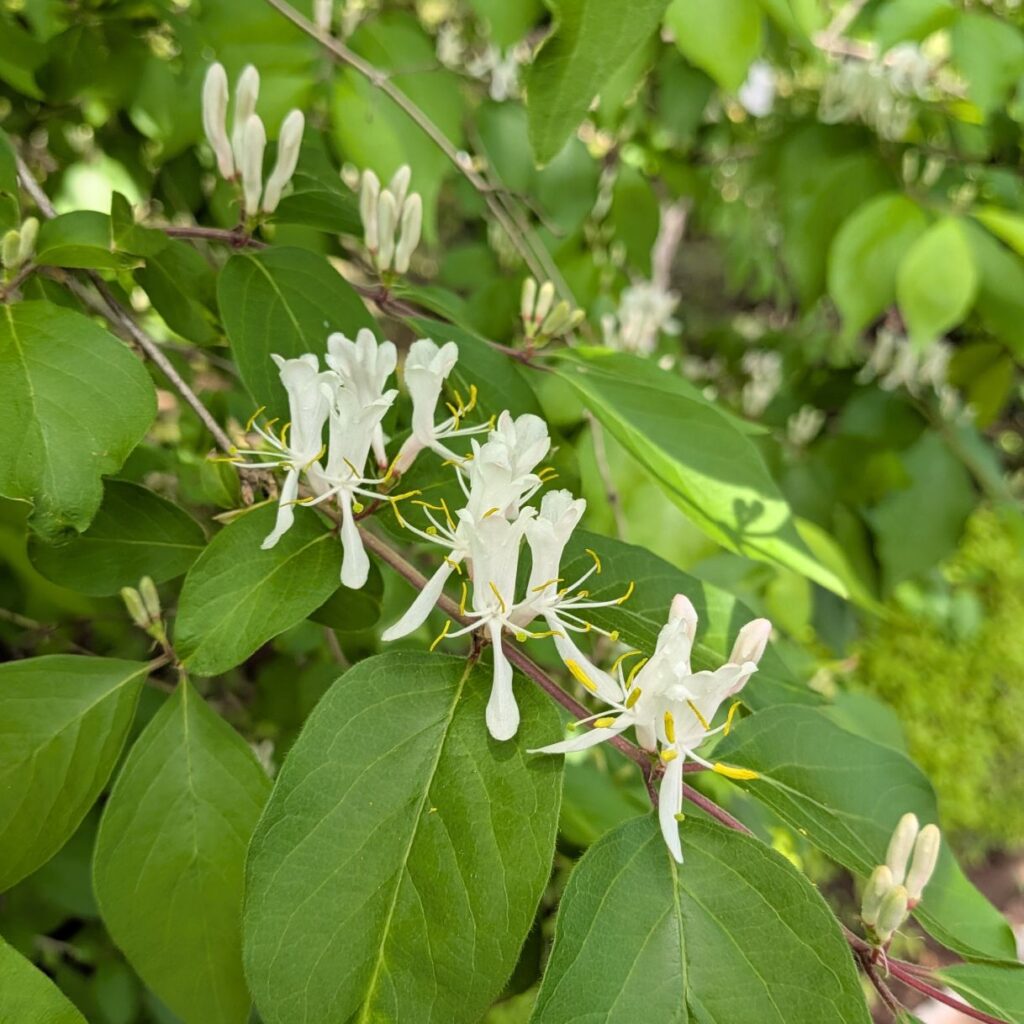
ハナヒョウタンボクの和名の由来は「花」の咲き方が華やかな「瓢箪木」だから。瓢箪木は果実が2つずつ並んで「瓢箪」のように見える「木」です。英名のアムールは原産地を流れる中露国境の川の名前。ハニーサックルは「蜜を吸う」という意味で、花筒の奥に甘い蜜を湛えます。
ハナヒョウタンボクの学名
ハナヒョウタンボクの属名ロニケラは16世紀のドイツの医師・植物学者で『本草書』を出版したアダム・ロニチェルへの献名。種小名マーケィは19世紀のロシアの博物学者・地理学者・人類学者で、アムール近辺の動植物を採集・紹介したリヒャルト・オットー・マークへの献名です。
ハナヒョウタンボクの姿形
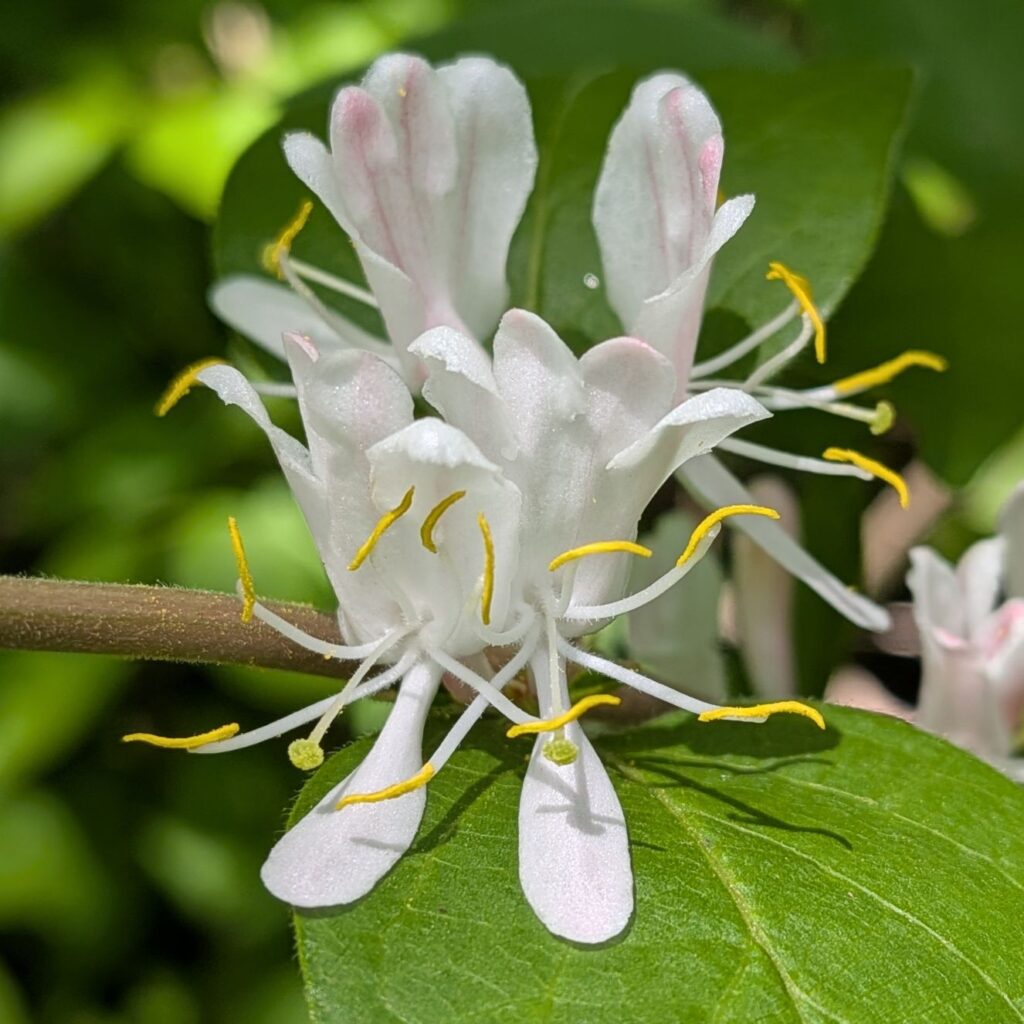
ハナヒョウタンボクの根は浅く細かく伸び広がります。幹は樹皮が縦に裂け、枝が中空。葉は先の尖った長卵形で対生します。花は唇形花で2つずつ並んで咲き、雄しべが突出。咲き始めは銀白色、咲き終わりは黄金色で、芳香を放ちます。花後は鮮紅色の液果が2つずつ並んで結実。
Amur Honeysuckle
Amur Honeysuckle (Lonicera maackii) is a deciduous shrub in the Caprifoliaceae (honeysuckle) family. In Japan, it is distributed across the Tohoku and Chubu regions of Honshu, while its international range includes the Russian Far East, China, and the Korean Peninsula. In its native Japan, the species is in decline due to river development and is now considered endangered. Conversely, in North America—where it was introduced in the 19th century—it has become a problematic invasive species, aggressive enough to displace native vegetation.
The Japanese name for this shrub describes its character: “a tree with ornate flowers and fruits that grow in pairs, resembling gourds.” The English name “Amur” refers to the Amur River, which forms the border between Russia and China and flows through its native habitat. The name “Honeysuckle” is derived from the sweet nectar found deep within the flower’s tubular base.
The genus name Lonicera is a tribute to Adam Lonicer, a 16th-century German physician and botanist who authored a renowned herbal (materia medica). The species epithet maackii honors Richard Otto Maack, a 19th-century Russian naturalist, geographer, and anthropologist who collected and cataloged the flora and fauna of the Amur region.
The root system of the Amur Honeysuckle is shallow but extends finely and broadly. The trunk features bark that fissures longitudinally, and the branches are distinctively hollow. Its leaves are opposite and oblong-ovate with pointed tips. The two-lipped flowers bloom in pairs with prominent, protruding stamens. Initially silvery-white, the blossoms fade to a golden yellow as they age, all the while releasing a sweet scent. These are followed by bright red berries that sit side-by-side in pairs.