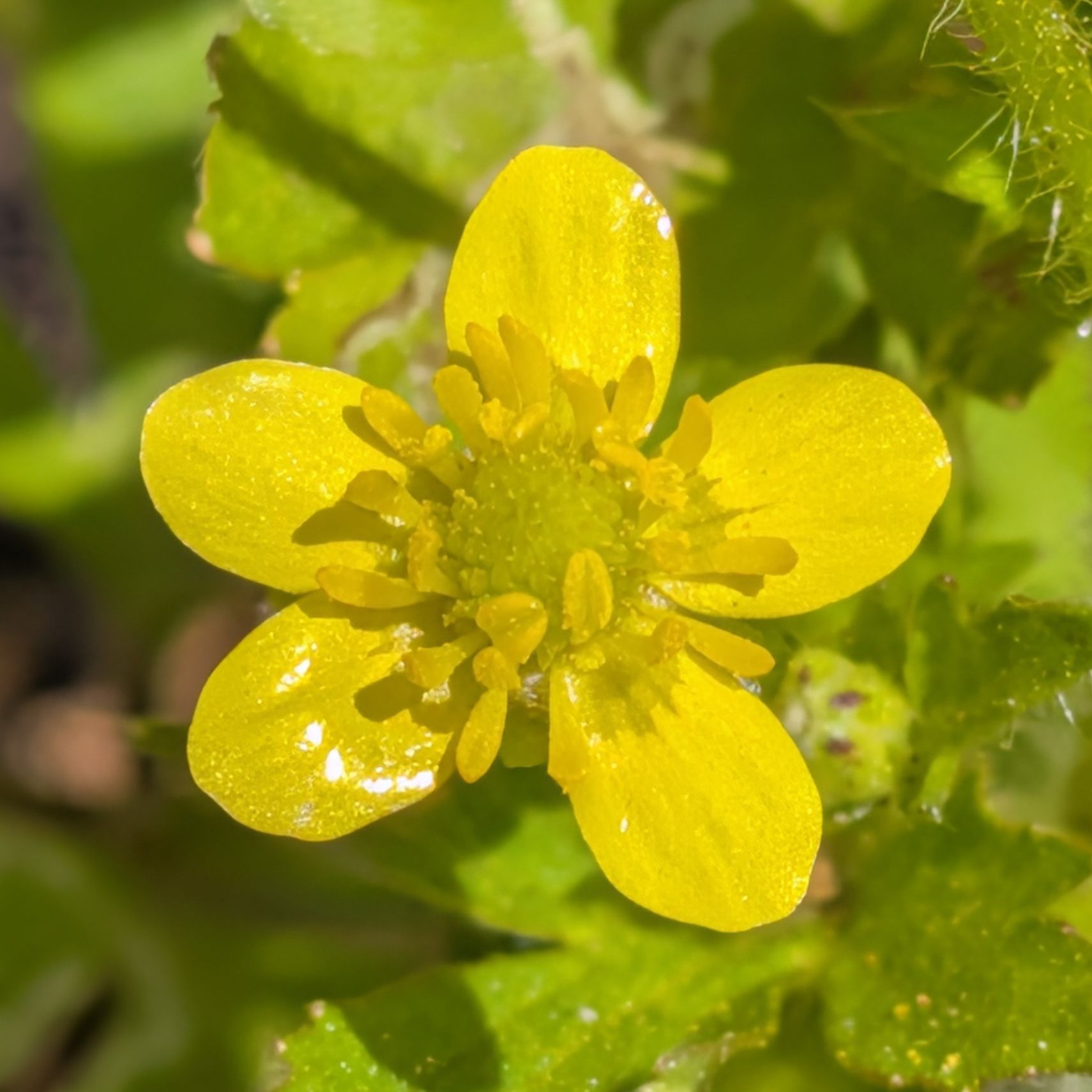
ケキツネノボタンは水辺など湿ったところで自生。茎と葉に開出毛が密生し、光沢のある黄色の花が咲き、金平糖のような集合果を結びます。
The Canton Buttercup thrives in moist environments such as wetlands and riverbanks. It is characterized by its stems and leaves, which are densely covered in spreading hairs, and its glossy yellow flowers that eventually produce aggregate fruits resembling konpeito (traditional Japanese star-shaped sugar candy).
【仮名】ケキツネノボタン
【和名】毛狐の牡丹
【英名】Canton Buttercup, Hairy Buttercup
【学名】Ranunculus cantoniensis
【誕生】06/ 14
【開花】04, 05, 06, 07月
【花色】Yellow
ケキツネノボタン
ケキツネノボタンの概要
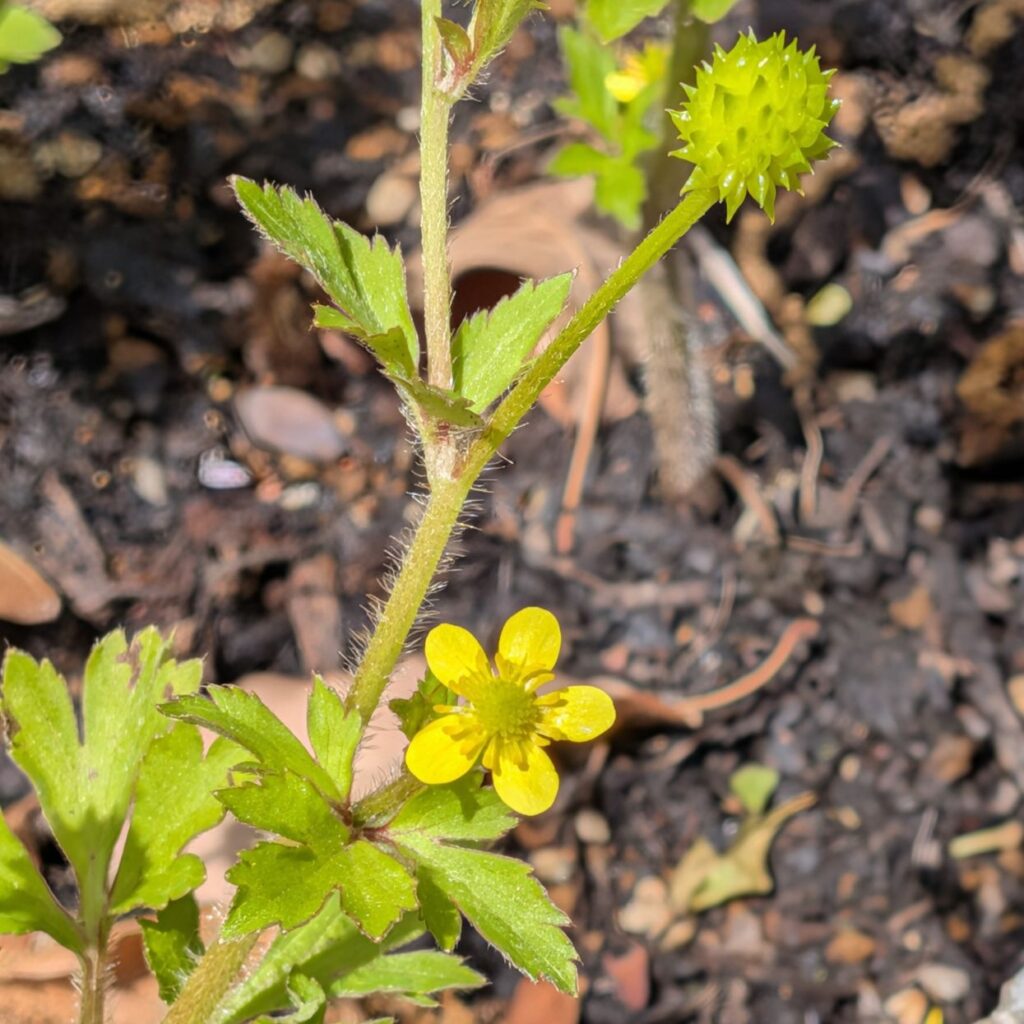
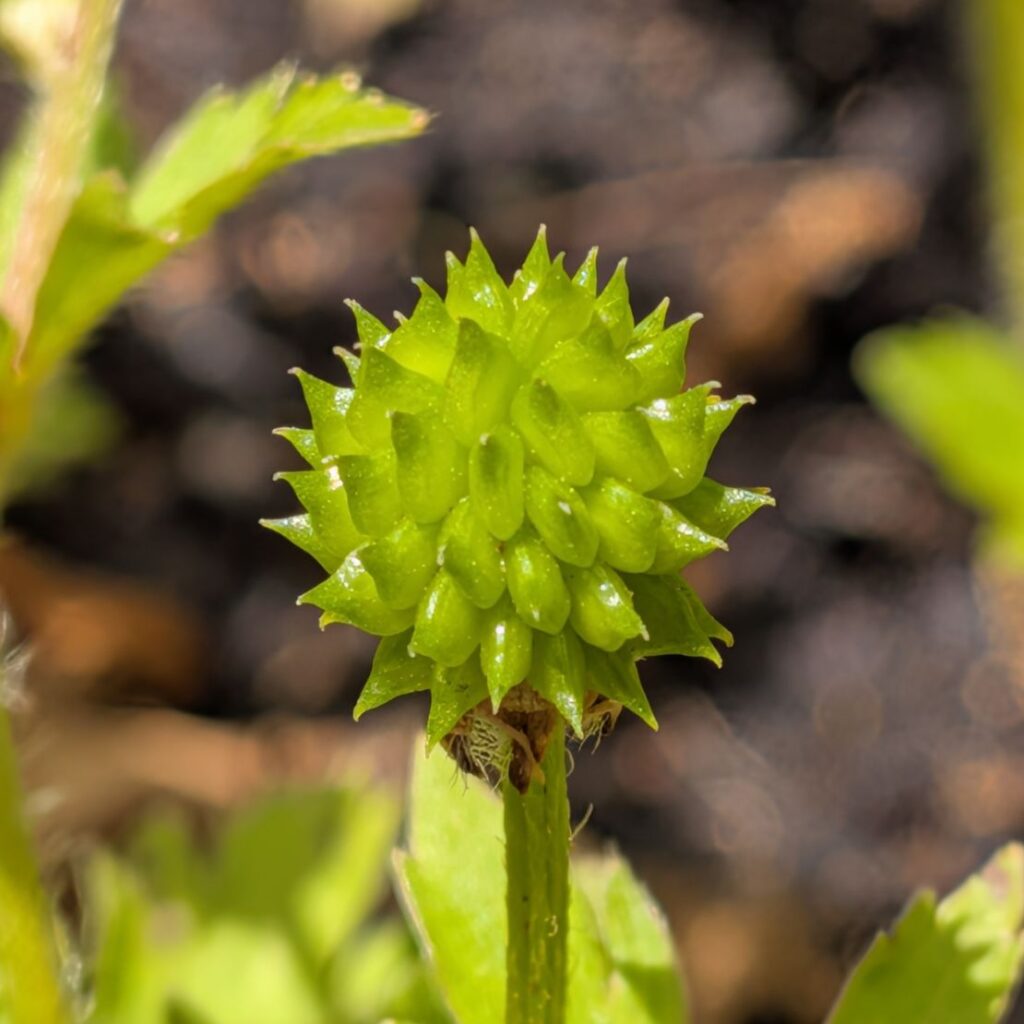
ケキツネノボタンはキンポウゲ科の越年草です。日本では本州の関東以西、四国、九州、沖縄、国外では朝鮮半島、中国、台湾、インドシナ、インドに分布し、水辺などの湿ったところで自生。茎と葉に開出毛が密生し、光沢のある黄色の花が咲き、金平糖のような集合果を結びます。
ケキツネノボタンの名前
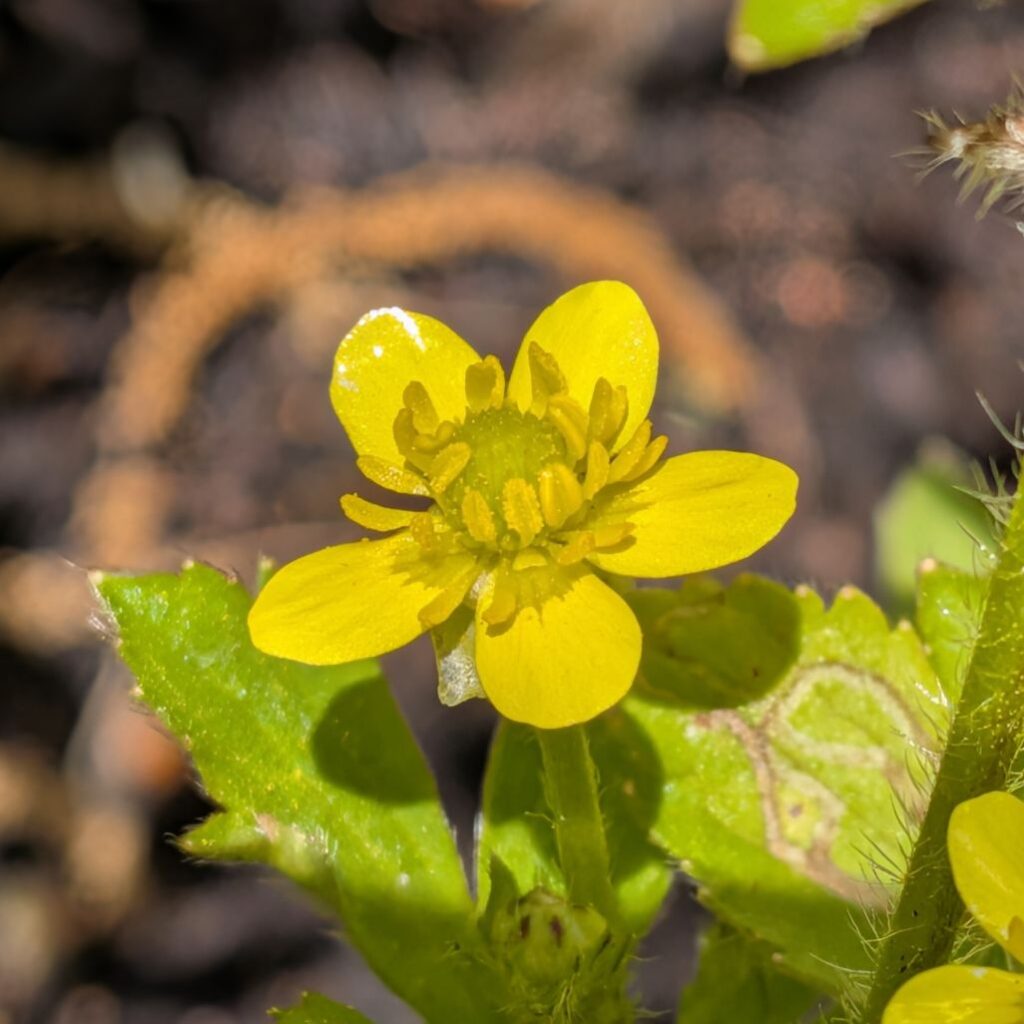
ケキツネノボタンは「毛深い狐の牡丹」という意味です。狐の牡丹は、牡丹のような葉なのに花が牡丹でなく、狐に化かされたようだから。属名ラヌンクルスは「小さな蛙」という意味で湿地に自生しているからです。種小名カントニエンシスは標本が中国の広東省で採集されたから。
ケキツネノボタンの姿形
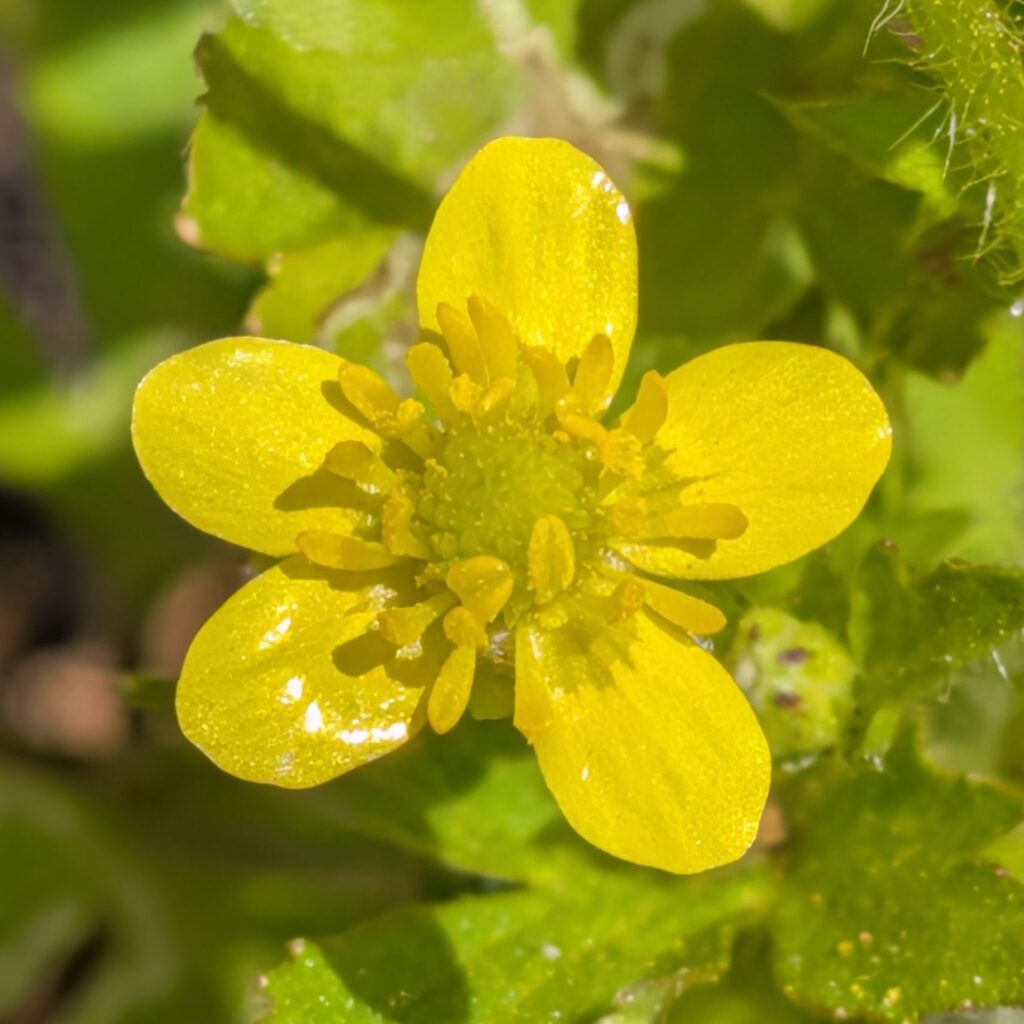
ケキツネノボタンは短い根茎から多くの細根が伸長。茎は中空で下方が直立、上方が分枝します。葉は互生の3出複葉で、小葉が深裂。茎も葉も開出毛が密生します。花は萼片が反り返り、光沢のある花弁が5枚、雄しべも雌しべもたくさん。花後は突起のある痩果が丸く集まります。
ケキツネノボタンの逸話
ケキツネノボタンは皮膚に炎症が生じるプロトアネモニンを含有。かつては葉をすり潰し、皮膚に貼って水ぶくれを作り、体内の「毒」を出す迷信がありました。一方、物乞いをする人々が同情を引くため、故意に湿疹や水ぶくれを作って困窮を演出。「乞食の草」とも呼ばれました。
Canton Buttercup
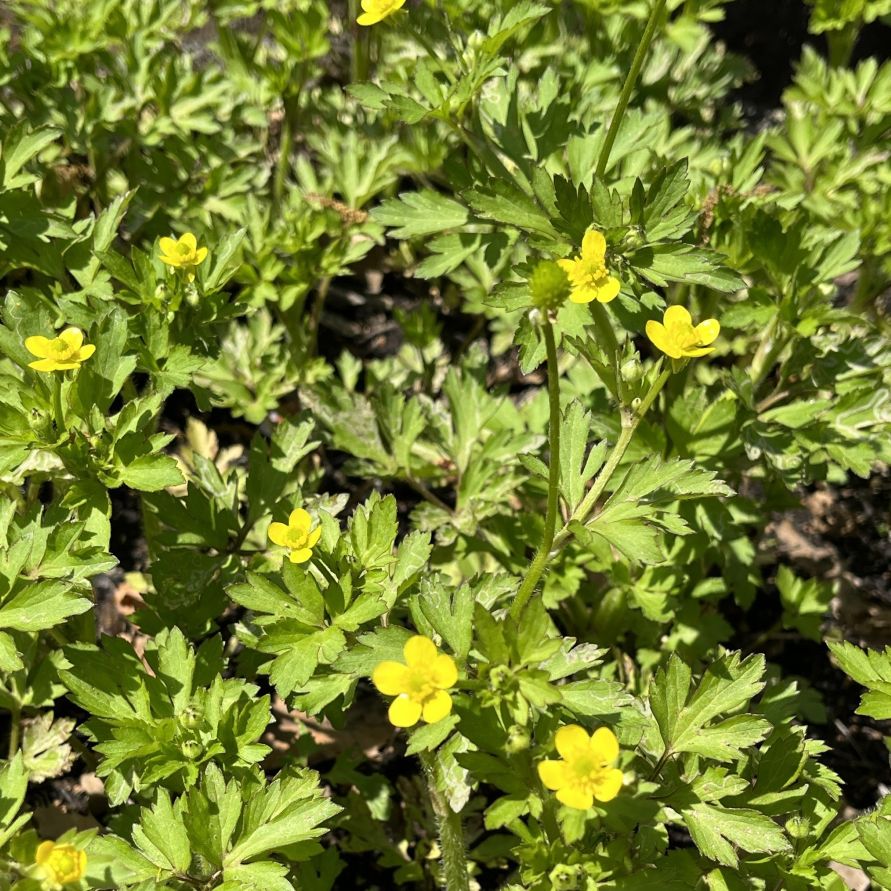
The Canton Buttercup (Ranunculus cantoniensis) is a biennial herb in the Ranunculaceae family. In Japan, it is distributed from the Kanto region of Honshu westward, including Shikoku, Kyushu, and Okinawa. Internationally, its range extends across the Korean Peninsula, China, Taiwan, Indochina, and India.
It thrives in moist environments such as wetlands and riverbanks. The plant is characterized by its stems and leaves, which are densely covered in spreading hairs, and its glossy yellow flowers that eventually produce aggregate fruits resembling konpeito (traditional Japanese star-shaped sugar candy).
Its Japanese name, Ke-kitsune-no-botan, literally translates to “hairy fox peony.” This name stems from ancient folklore; it was once believed that foxes deceived humans, and because the plant’s leaves resemble those of a peony while its flowers do not, the discrepancy was attributed to a fox’s trickery.
The genus name Ranunculus translates to “little frog,” a reference to its tendency to grow in damp habitats preferred by amphibians. The specific epithet cantoniensis refers to the fact that the original botanical specimen was collected in Guangdong (Canton) Province, China.
The Canton Buttercup develops numerous fine roots from a short rhizome. Its hollow stems are erect at the base and branch out toward the top. The leaves are alternate and trifoliate (divided into three leaflets), with deeply lobed edges. Both the stems and leaves are densely covered in distinct spreading hairs.
The flowers feature reflexed sepals and five lustrous petals, with numerous stamens and pistils. After the flowering season, the plant produces round clusters of achenes (small, dry fruits) characterized by distinct projections.
Like many buttercups, this species contains protoanemonin, a compound that causes skin inflammation and blistering. Historically, a superstition existed that crushing the leaves and applying them to the skin would draw out “toxins” from the body through the resulting blisters.
Conversely, the plant was also known as “beggar’s grass.” This name originated from beggars who would intentionally use the plant to create sores and eczema on their skin, feigning a more pitiable condition to elicit greater sympathy and alms from passersby.