ハキダメギクは牧野富太郎博士が命名。道端や空き地などで育ち、殖える、たくましい外来雑草ですが、目立つことなく可憐な花が咲きます。
The Japanese name for the shaggy soldier was coined by Dr. Tomitaro Makino. It is a hardy, non-native weed that thrives and spreads along roadsides and in vacant lots, yet it produces delicate, inconspicuous flowers.
【仮名】ハキダメギク
【和名】掃溜菊
【英名】Shaggy Soldier
【学名】Galinsoga quadriradiata
【誕生】07/ ??
【開花】07, 08, 09, 10月
【花色】White, Yellow
ハキダメギク
ハキダメギクの概要
ハキダメギクはキク科コゴメギク属の一年草。原産地は北米南部から中米、南米北部にかけてです。18世紀後半、欧州に持ち込まれて逸出し、南極を除く世界各地に広がって定着。道端や空き地などで育ち、殖える、たくましい外来雑草ですが、目立つことなく可憐な花を咲かせます。
ハキダメギクの名前
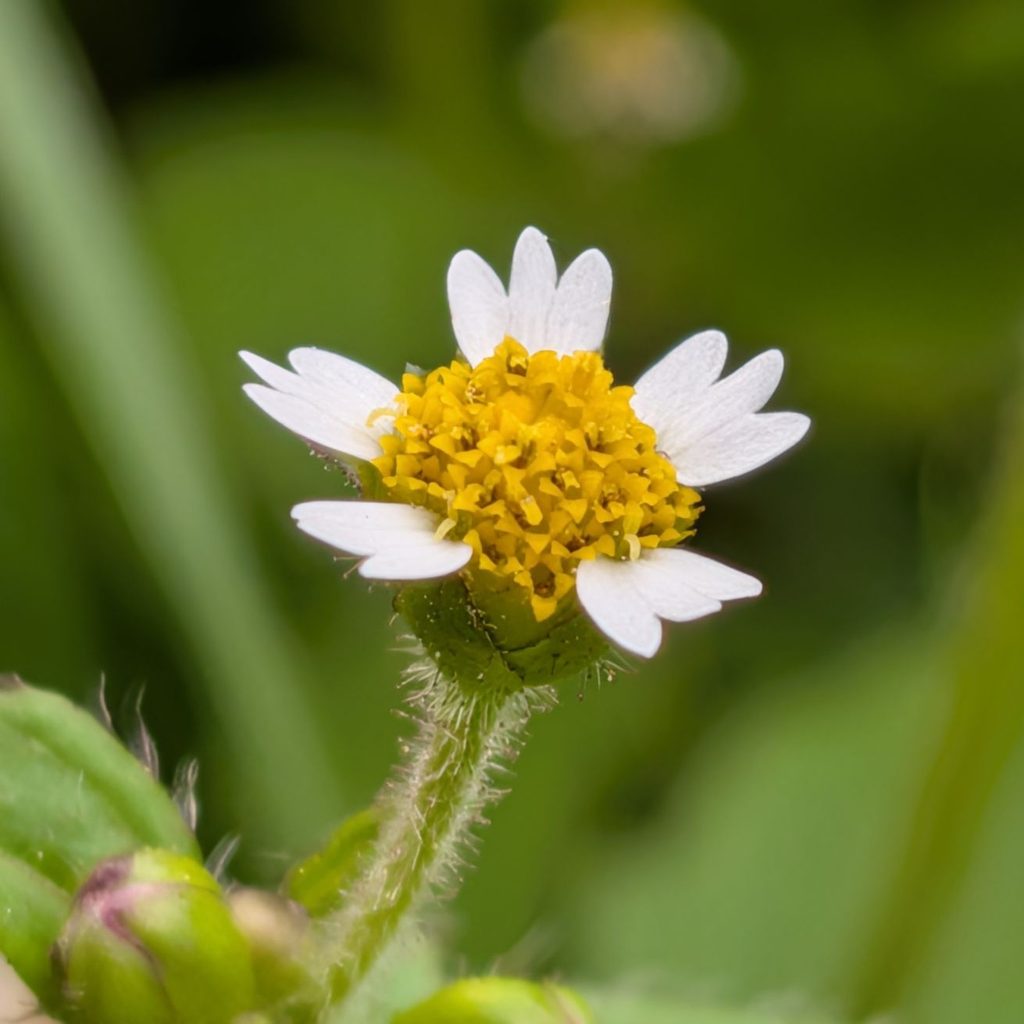
ハキダメギクの和名は牧野富太郎博士が「掃き溜め」で見つけて命名。英名シャギー・ソルジャーは「毛むくじゃらの兵士」という意味です。属名ガリンソガはスペインの医師マルティネス・ガリンソガへの献名。種小名クアドリラディアタは「4つの舌状花を持つ」という意味です。
ハキダメギクの姿形
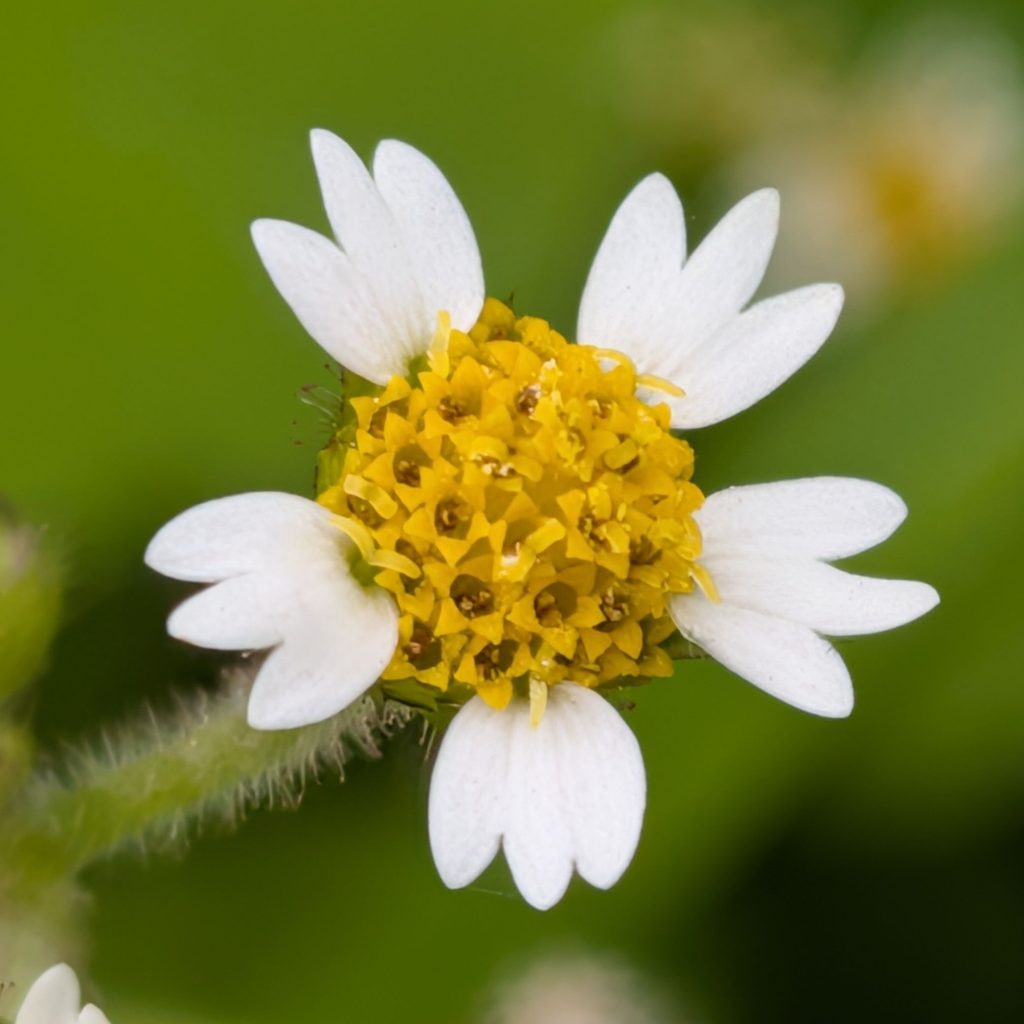
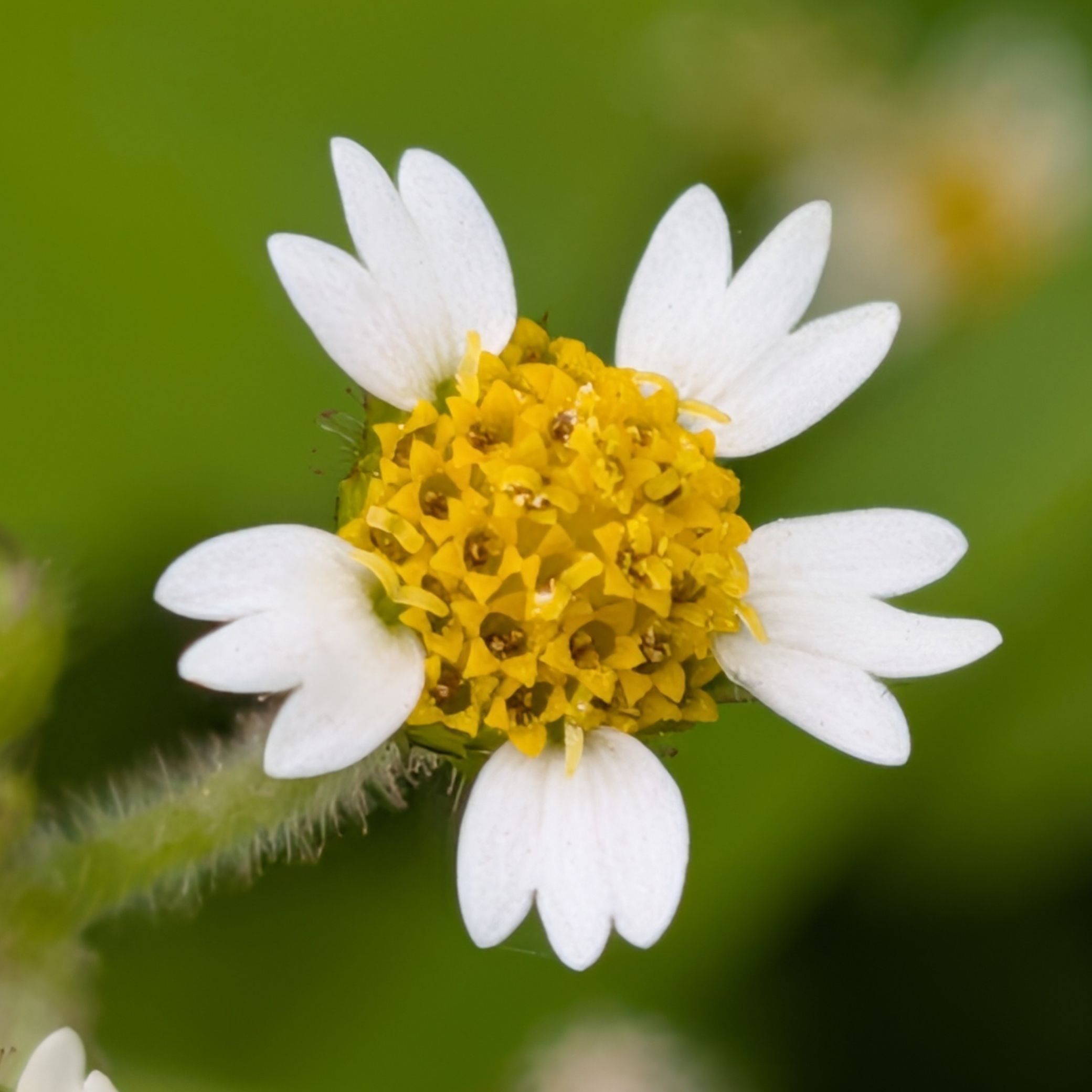
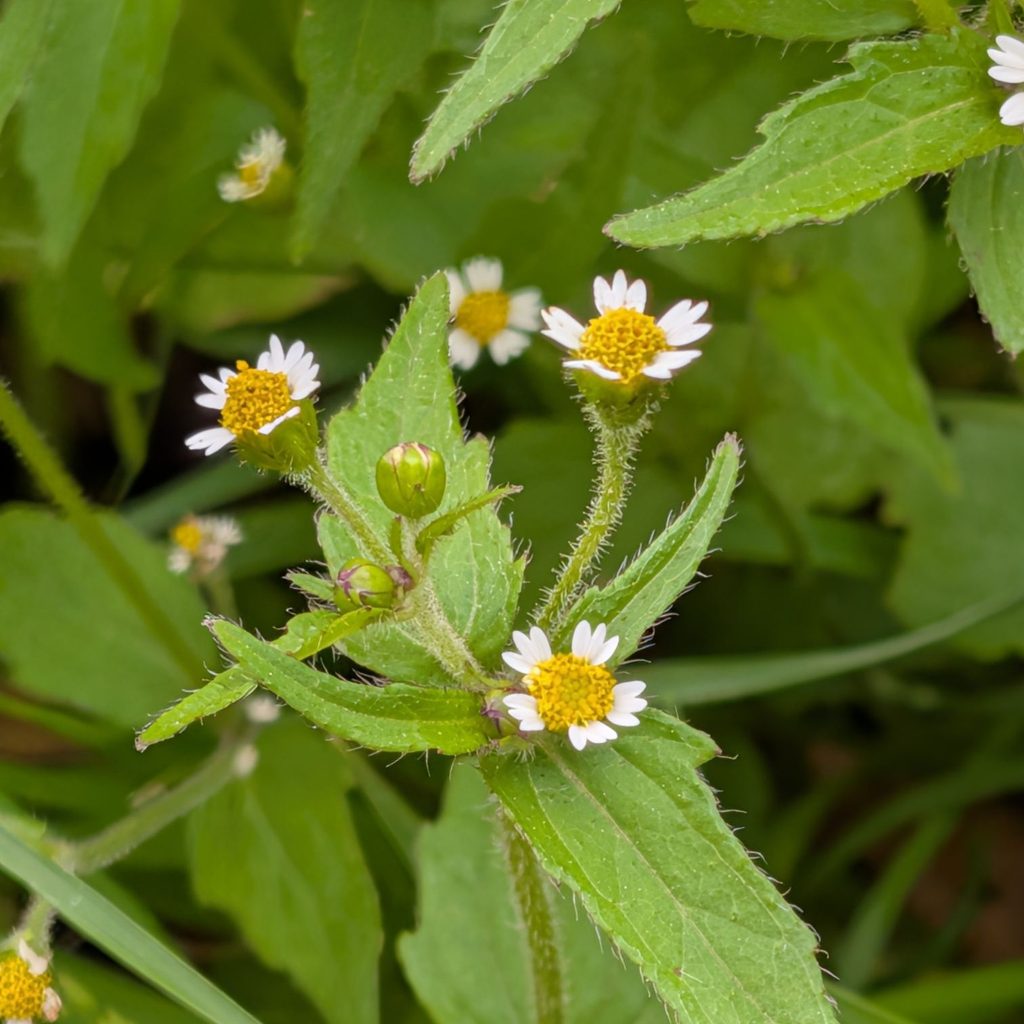
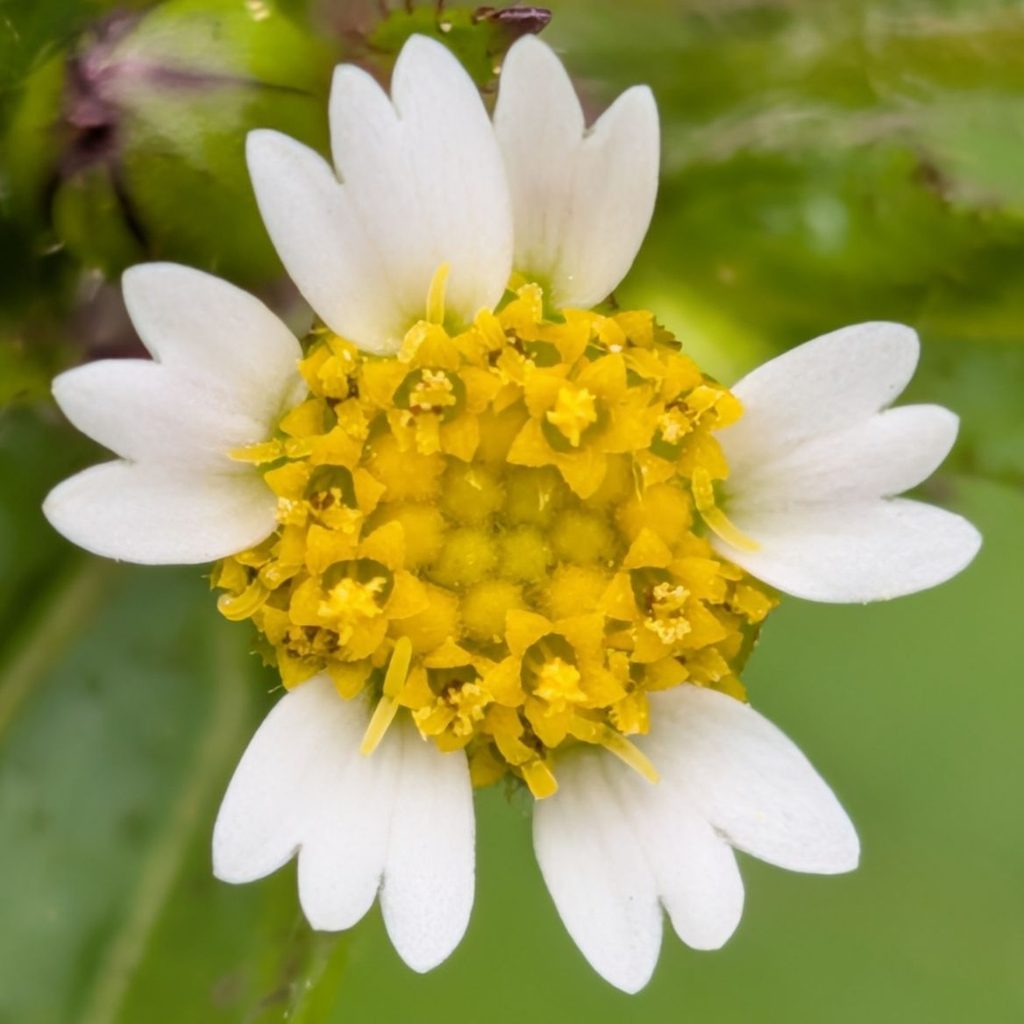
ハキダメギクは髭根が浅く広がり、柔らかい茎が分枝。葉は対生の卵形~披針形で、縁に粗い鋸歯があります。茎も葉も白色の粗毛が疎生~密生。花は小さな頭花で、真ん中に5裂の筒状花が密集し、周りに3裂の舌状花が5つ並びます。花後は痩果を結び、王冠のように冠毛が輪生。
ハキダメギクの利用
ハキダメギクは中南米、南~東アフリカ、南アジアで若葉や茎先が汁物、炒め物などで食べられます。コロンビアでは「グアスカ」と呼ばれ、伝統料理アヒアコに欠かせない香草。抗酸化・抗炎症成分を含み、民間薬として搾り汁が傷や虫刺されに、煎じ液が風邪などに用いられます。
Shaggy Soldier
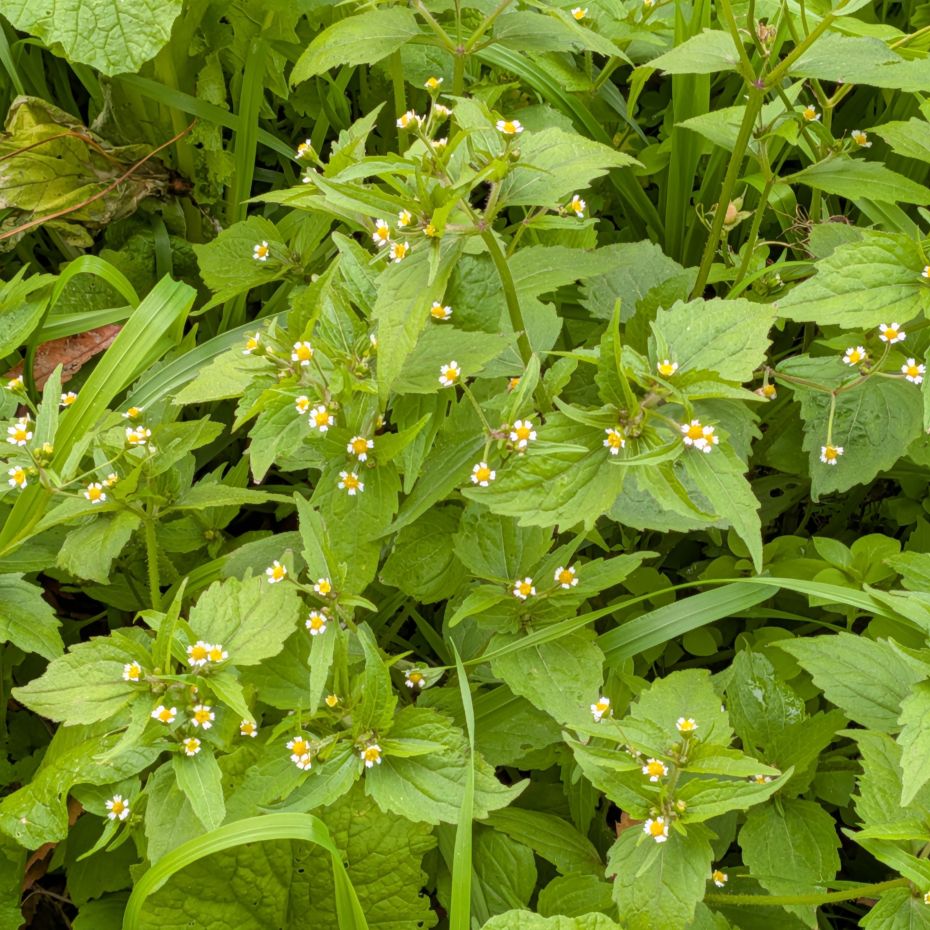
The shaggy soldier (Galinsoga quadriradiata) is an annual plant belonging to the genus Galinsoga in the Asteraceae (daisy) family. It is native to a region stretching from the southern United States through Central America to northern South America. Introduced to Europe in the late 18th century, it escaped cultivation and has since spread and established itself across the globe—everywhere except Antarctica. While it is a robust, non-native weed that grows and multiplies in places like roadsides and vacant lots, it bears small, delicate, and unassuming flowers.
The plant’s Japanese name (hakidame-giku) was coined by Dr. Tomitaro Makino, who discovered it growing in a “trash heap” (hakidame). The genus name, Galinsoga, honors the Spanish physician Martínez Galinsoga, while the specific epithet, quadriradiata, means “having four ray florets.”
The shaggy soldier has a shallow, fibrous root system and soft, branching stems. Its leaves are arranged in opposite pairs and range from ovate to lanceolate in shape, with coarsely toothed margins. Both the stems and leaves are covered with sparse to dense, coarse white hairs. The flowers are small composite heads: the center consists of a dense cluster of five-lobed tubular (disc) florets, surrounded by five three-lobed ray florets. After flowering, the plant produces achenes (dry, one-seeded fruits) topped with a ring of scales, resembling a small crown.
In parts of Central and South America, Southern and Eastern Africa, and South Asia, the young leaves and stem tips of the shaggy soldier are eaten in soups and stir-fried dishes. In Colombia, it is known as guasca and serves as an essential herb in the traditional soup ajiaco. The plant contains antioxidant and anti-inflammatory compounds; in folk medicine, its expressed juice is applied to wounds and insect bites, while a decoction is used to treat ailments such as the common cold.