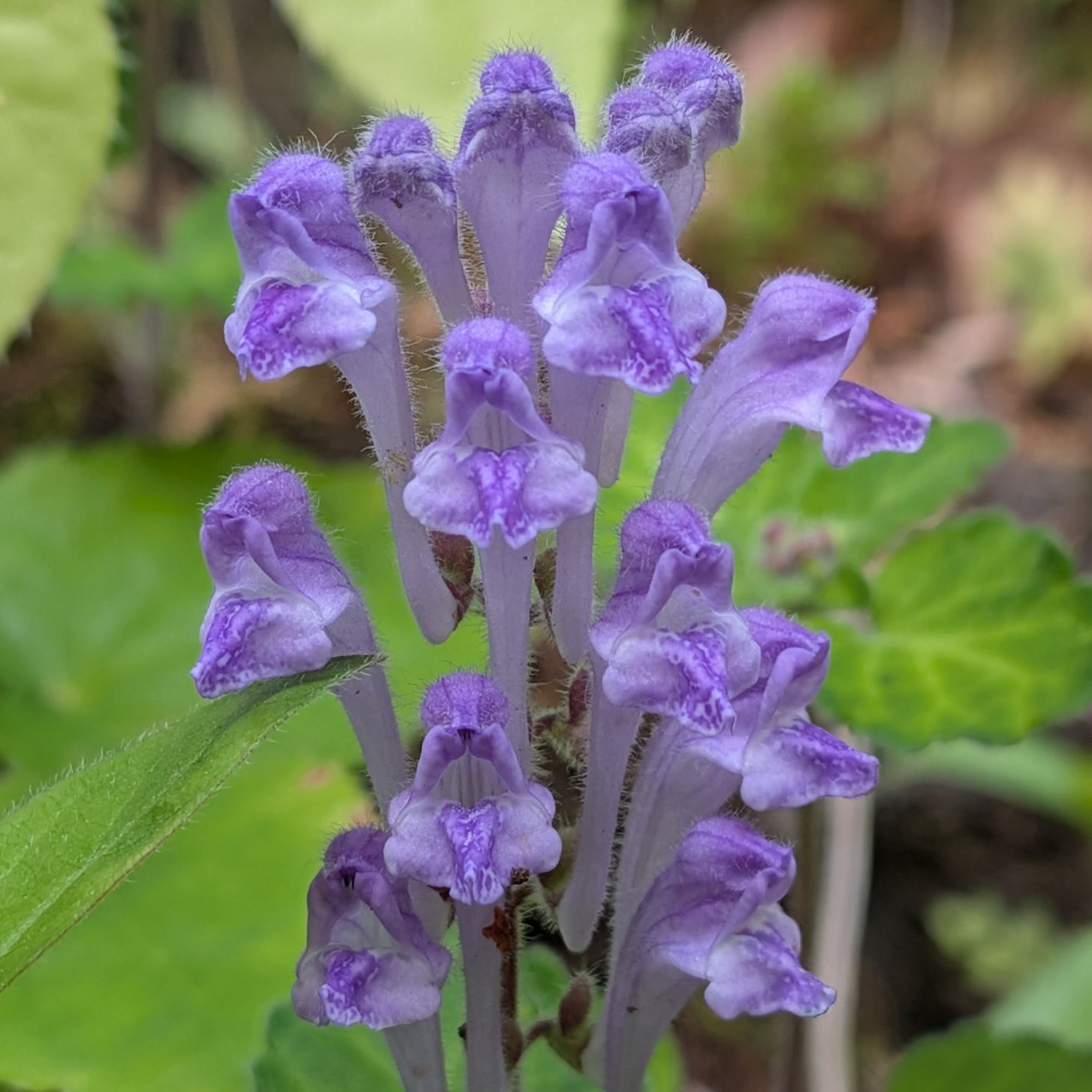
タツナミソウは、ありふれた野草である一方、名将に所縁のある薬草。茎の片側に寄って咲く花々の姿が、泡立って押し寄せる波のようです。
Skullcap is a common wildflower, yet it carries a deep historical connection to Han Xin, one of the “Three Heroes” of the Han Dynasty. Its delicate flowers bloom along one side of the stem, resembling the rhythmic crests of frothy, crashing waves.
【仮名】タツナミソウ, カンシンソウ
【和名】立浪草, 韓信草
【英名】Skullcap
【学名】Scutellaria indica
【誕生】04/ 22, 05/ 15, 06/ 22
【開花】04, 05, 06月
【花色】White, Pink, Purple, Violet, Blue
タツナミソウ
タツナミソウの概要
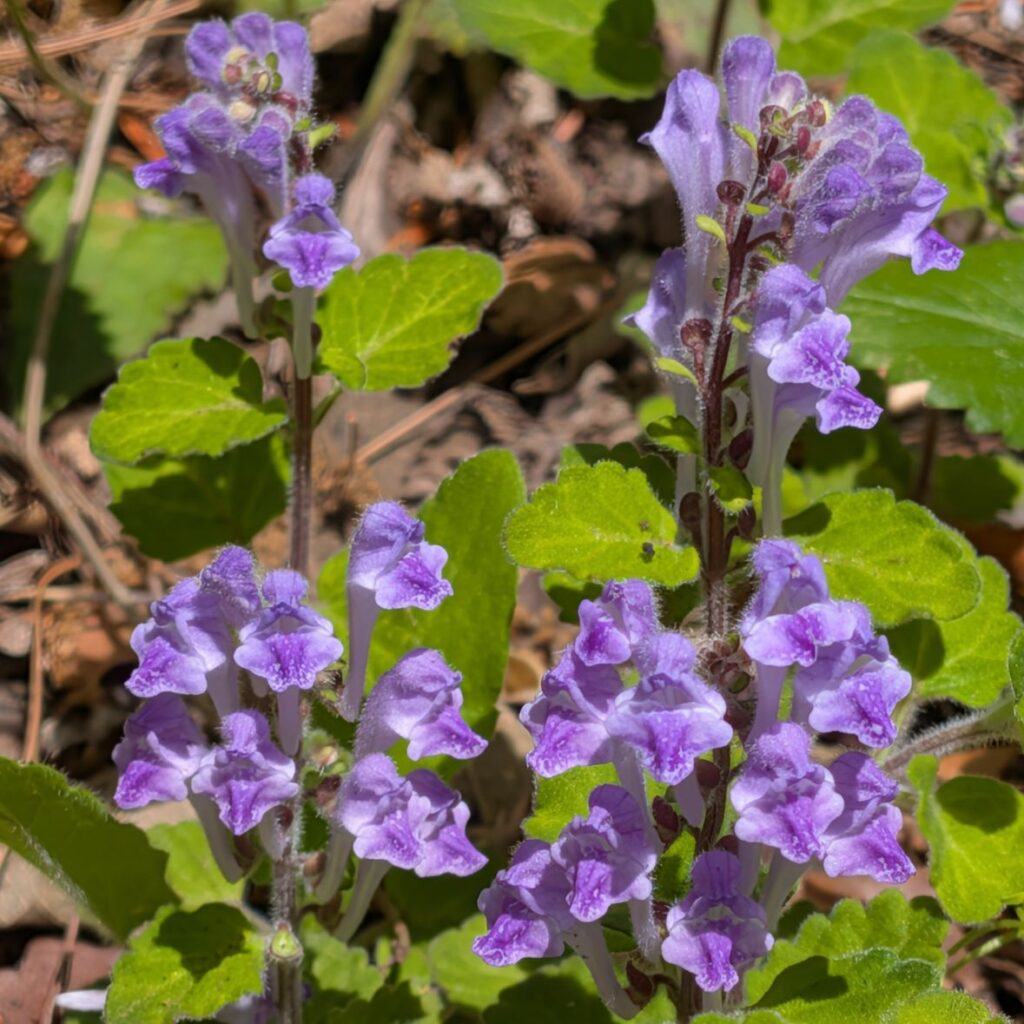
タツナミソウはシソ科の多年草。日本では本州、四国、九州、沖縄、国外では東アジア~東南アジア北部に分布しています。ありふれた野草である一方、漢の三傑の一人、韓信に所縁のある薬草。熱を下げ、毒を出し、血行を促し、痛みを止め、腫れが引く妙薬として重用されました。
タツナミソウの名前
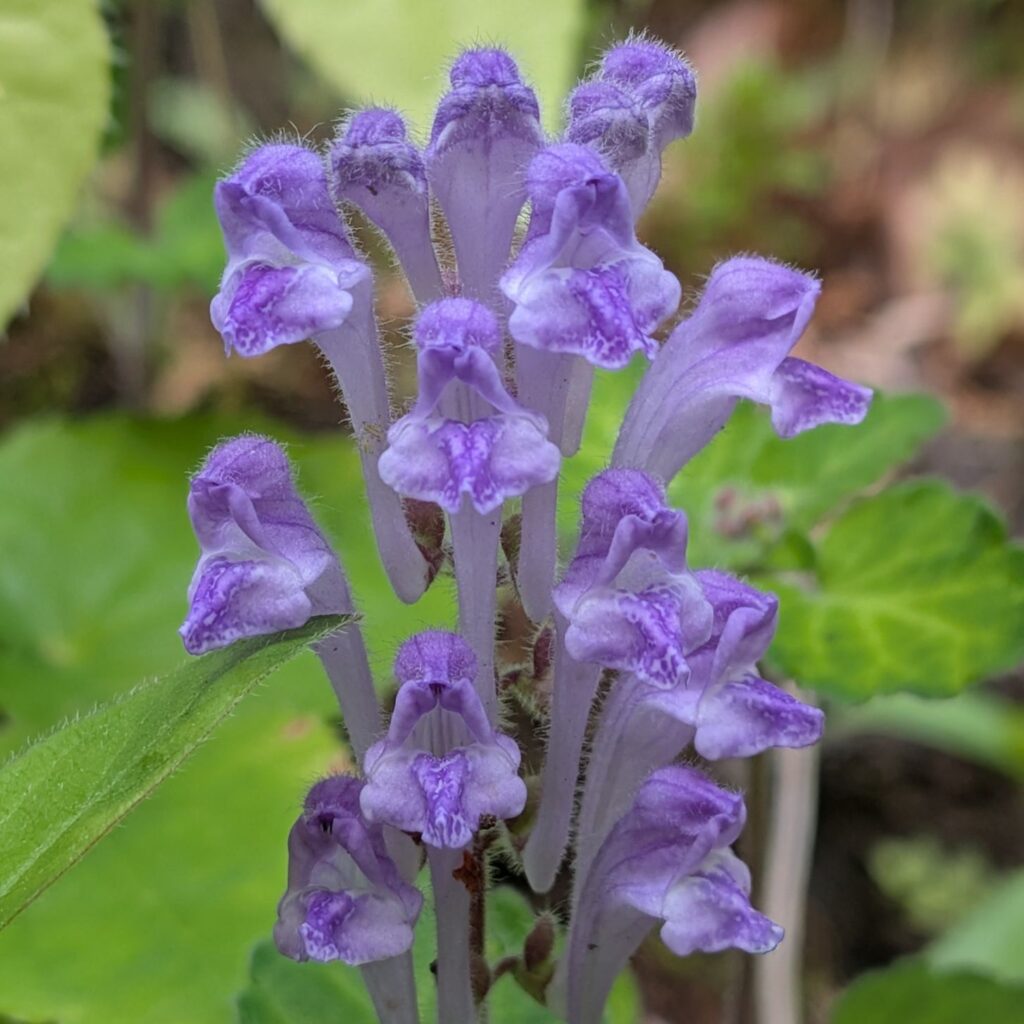
タツナミソウの和名の由来は、茎の片側に寄って咲く花々の姿が、泡立って押し寄せる波のようだからです。英名スカルキャップは中世の兵士の「兜」や、聖職者の「帽子」を意味し、花後の萼の形に由来。属名スクテラリアも「小さな皿」という意味で、萼の上の突起に由来します。
タツナミソウの姿形
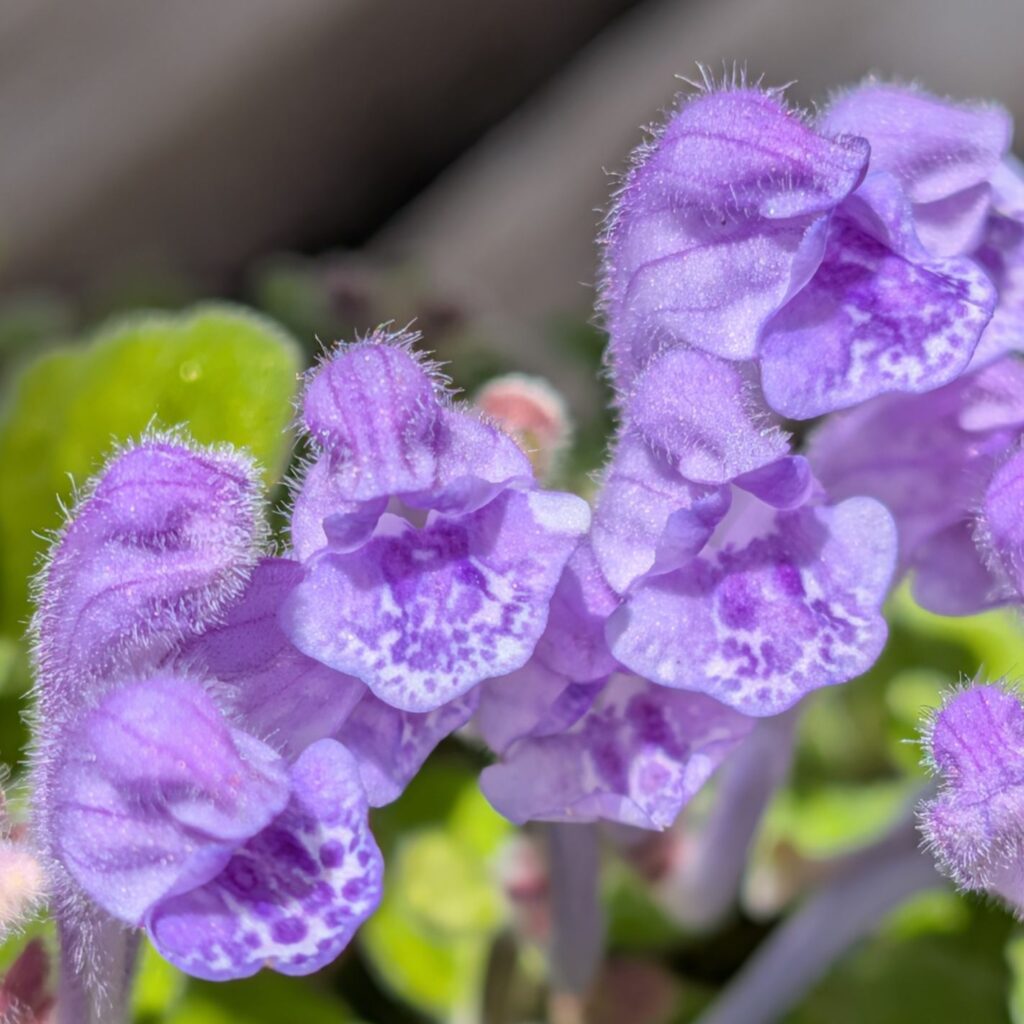
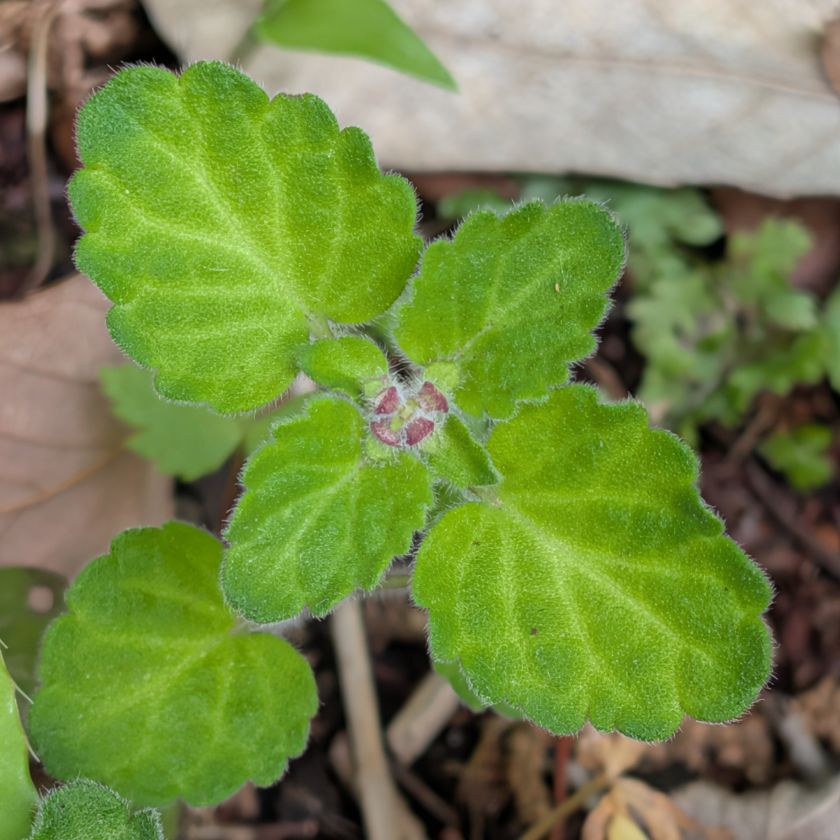
タツナミソウは短い根茎から多くの髭根が伸びます。茎は方柱形で直立し、細毛が密生。葉は対生の卵形で、軟毛が密生し、縁が波打ちます。花は筒状の唇形花で、上唇が盛り上がり、下唇が3裂。花後の分果は熟すと萼の上部が外れ、突起のついた種子に雨が当たると弾け飛びます。
タツナミソウの逸話
タツナミソウの漢名の始まりは、ならず者に打ちのめされ、動けなくなった貧しい若者。近所の老婦が野草を磨り潰して傷口に塗り、煎じて飲ませました。快復した若者は後に名将となり、負傷した兵士たちをこの野草で治療。名将の名前から「韓信草」と呼ばれるようになりました。
Skullcap
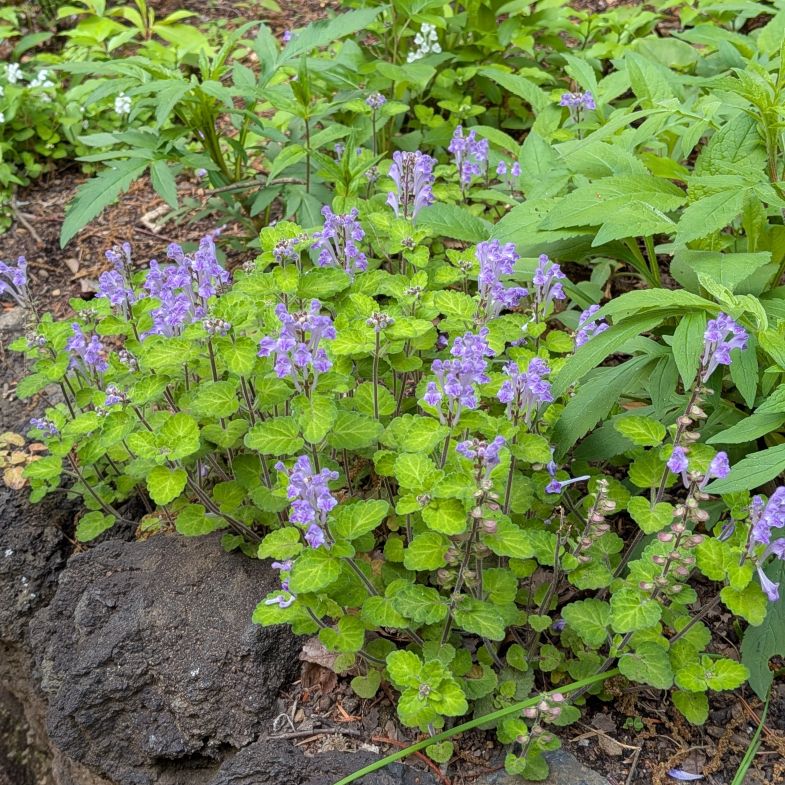
Skullcap is a perennial plant in the Lamiaceae (mint) family. In Japan, it is found across Honshu, Shikoku, Kyushu, and Okinawa, while its broader distribution spans East Asia to northern Southeast Asia. Although often seen as a simple wild herb, it is highly regarded in traditional medicine for its association with the legendary general Han Xin. It has long been valued as a potent remedy used to reduce fever, detoxify the body, promote circulation, and alleviate pain and swelling.
The Japanese name for this plant translates to “wave-cresting grass.” This evocative name comes from the way its flowers cluster on one side of the stem, looking like white foam on the edge of a wave. The English name “Skullcap” refers to the shape of the calyx (the base of the flower) after the petals have fallen, which resembles a medieval soldier’s helmet or a clergyman’s cap. Similarly, the genus name Scutellaria is derived from the Latin scutella, meaning “small dish,” referring to the distinctive dish-like projection on the calyx.
The plant features a short rhizome from which numerous fibrous roots extend. Its stems are quadrangular (square-shaped) and erect, densely covered with fine, soft hairs. The leaves grow in opposite pairs and are ovate with wavy margins. The flowers are tubular and two-lipped (bilabiate), with a hooded upper lip and a three-lobed lower lip. Once the fruit ripens, the upper part of the calyx detaches; when raindrops hit the seeds inside, they are spring-loaded to burst forth and scatter.
The Chinese name for Skullcap originates from a story of a poor young man who was beaten by ruffians and left unable to move. A kind elderly neighbor took pity on him, crushing this wild herb to apply to his wounds and brewing it into a medicinal tea. The young man made a full recovery and eventually rose to become the famous General Han Xin. Remembering the plant that saved him, he used it to treat his own wounded soldiers. In honor of his legacy, the plant became known as “Han Xin’s Herb.”