結婚式では聖母マリアのベールが纏われ、カスミソウがブーケや髪飾りに編み込まれ、花嫁を悪霊から守るとともに慈愛と純潔が示されます。
At weddings, the bride wears a veil inspired by the Virgin Mary, and Baby’s Breath is woven into bouquets and hair ornaments. This tradition protects the bride from evil spirits while symbolizing devotion and purity.
【仮名】カスミソウ
【和名】霞草
【英名】Baby’s Breath
【学名】Gypsophila elegans
【誕生】04/ 04, 05/ 21, 06/ 01
【開花】05, 06, 07月
【花色】White, Pink, Red, Purple
カスミソウ
カスミソウの概要
カスミソウはナデシコ科の一年草です。原産地は東欧~西アジアで、陽当たり、水はけの良い、痩せた石灰岩地に自生。欧州の伝統的な結婚式では「聖母マリアのベール」が纏われ、カスミソウがブーケや髪飾りに編み込まれ、花嫁を悪霊から守るとともに、慈愛と純潔が示されます。
カスミソウの名前
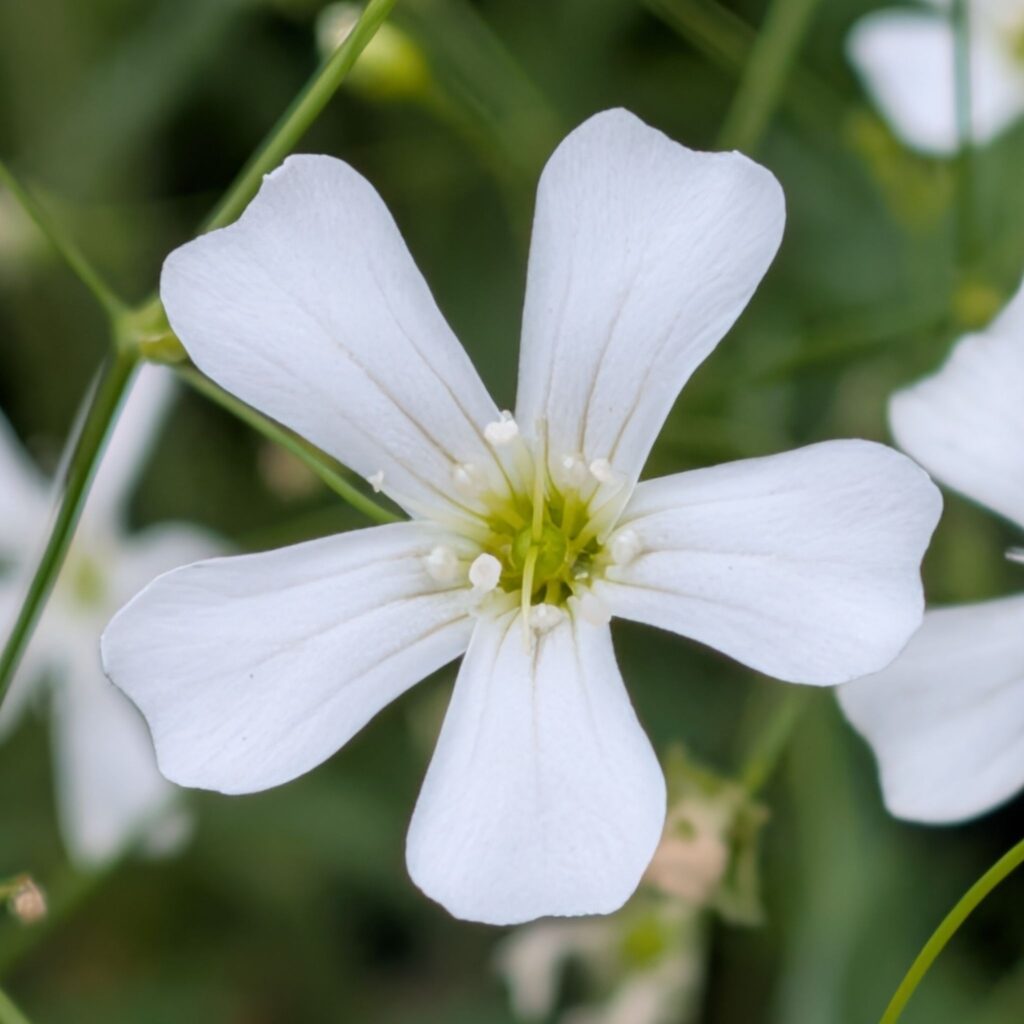
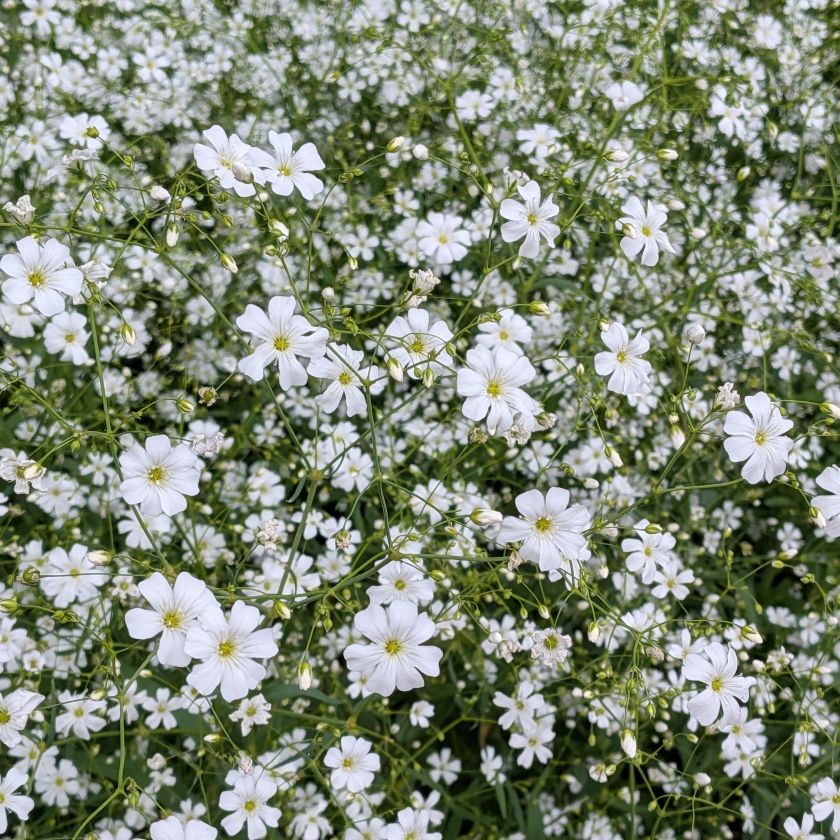
カスミソウの和名の由来は、群がって咲く白色の花々が、山野にたなびく「霞」のようだから。英名ベビーズ・ブレスは「赤ちゃんの吐息」という意味で、花の純真無垢、甘酸っぱい香りに由来します。属名ギプソフィラは「石灰を好む」、種小名エレガンスは「優雅な」という意味。
カスミソウの姿形
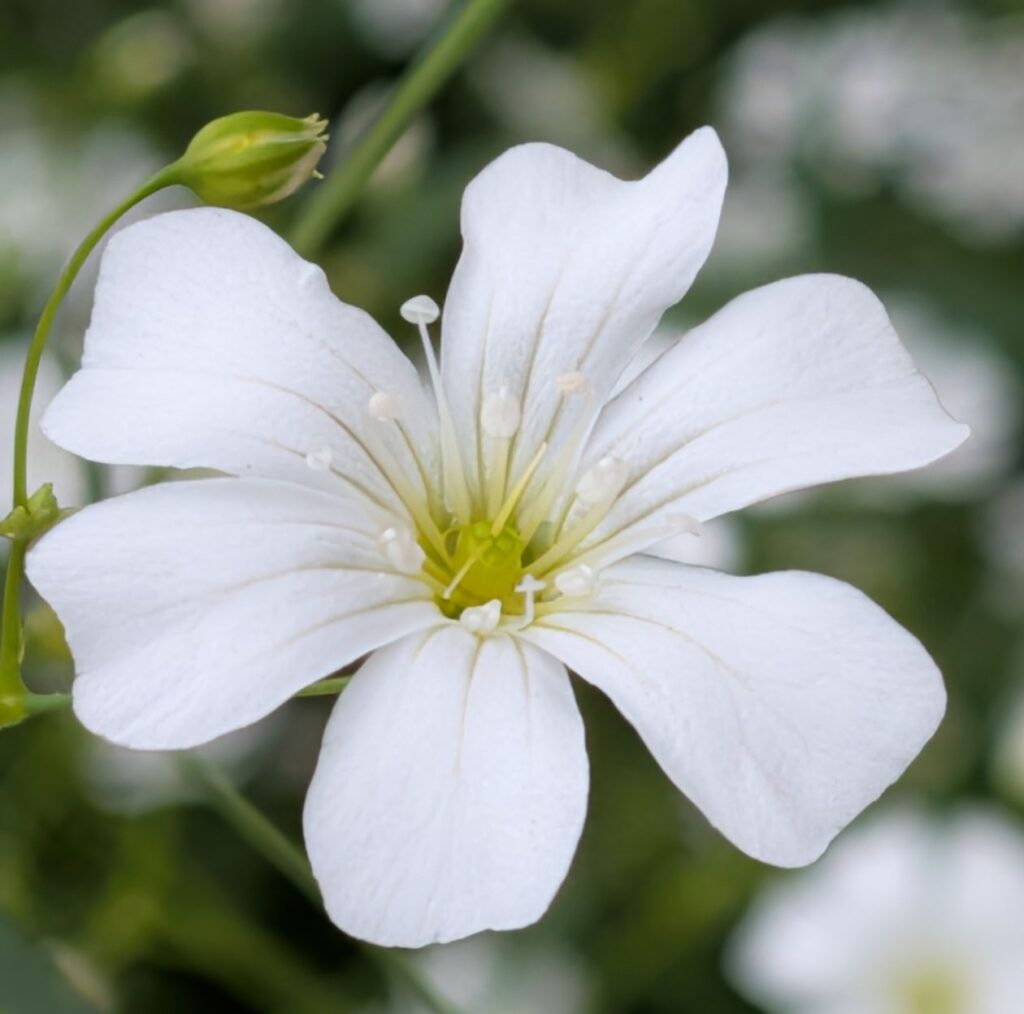
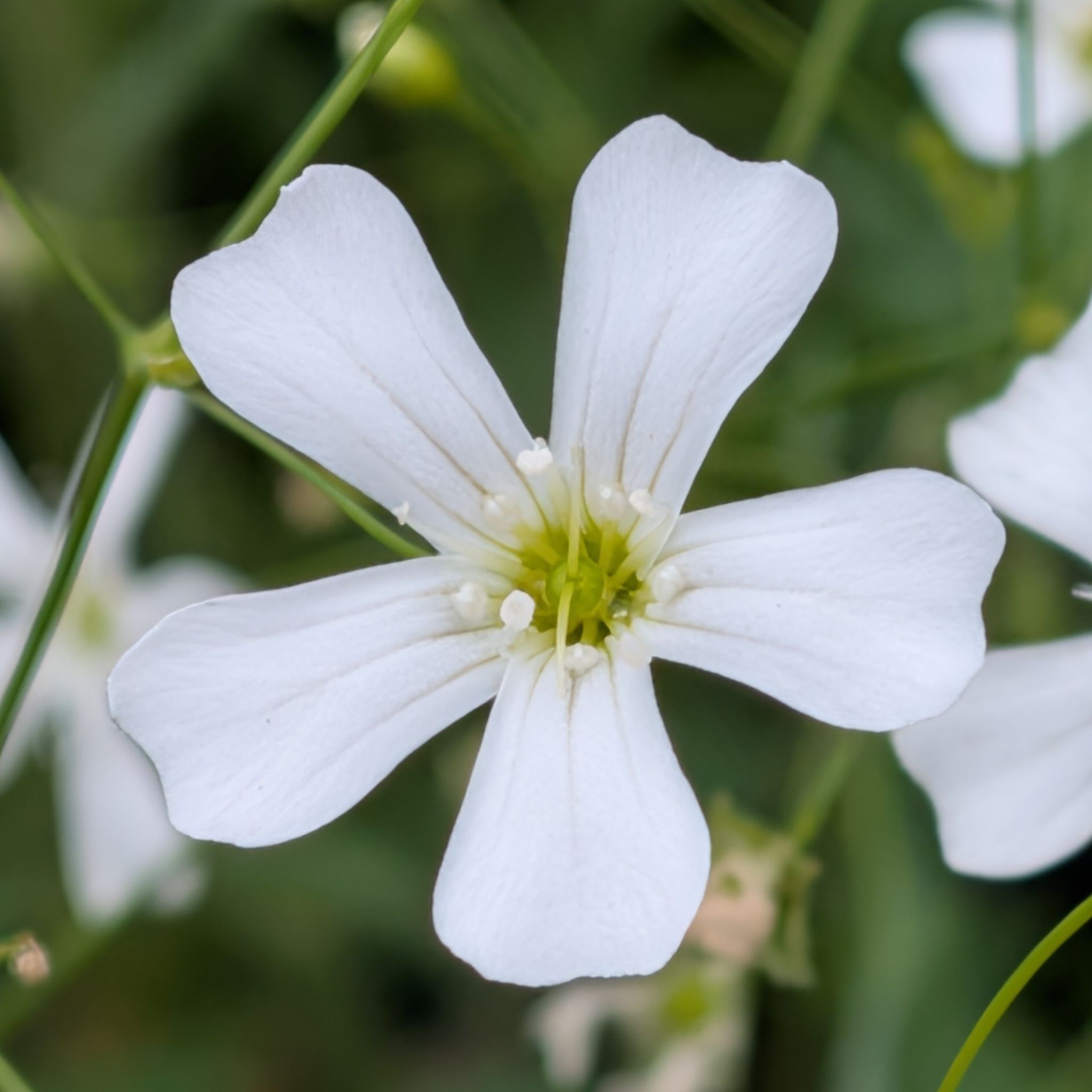
カスミソウは太い直根が伸び、細い側根が広がります。茎は二叉分枝を繰り返し、節が膨らんで箒状。葉は対生の披針形です。花は茎先に集まって咲き、花弁が5枚、雄しべが10本、雌しべの柱頭が2裂。花後はお椀型の果蒴を結び、熟すと4つに裂けて、腎臓形の種子を散らします。
カスミソウの近縁
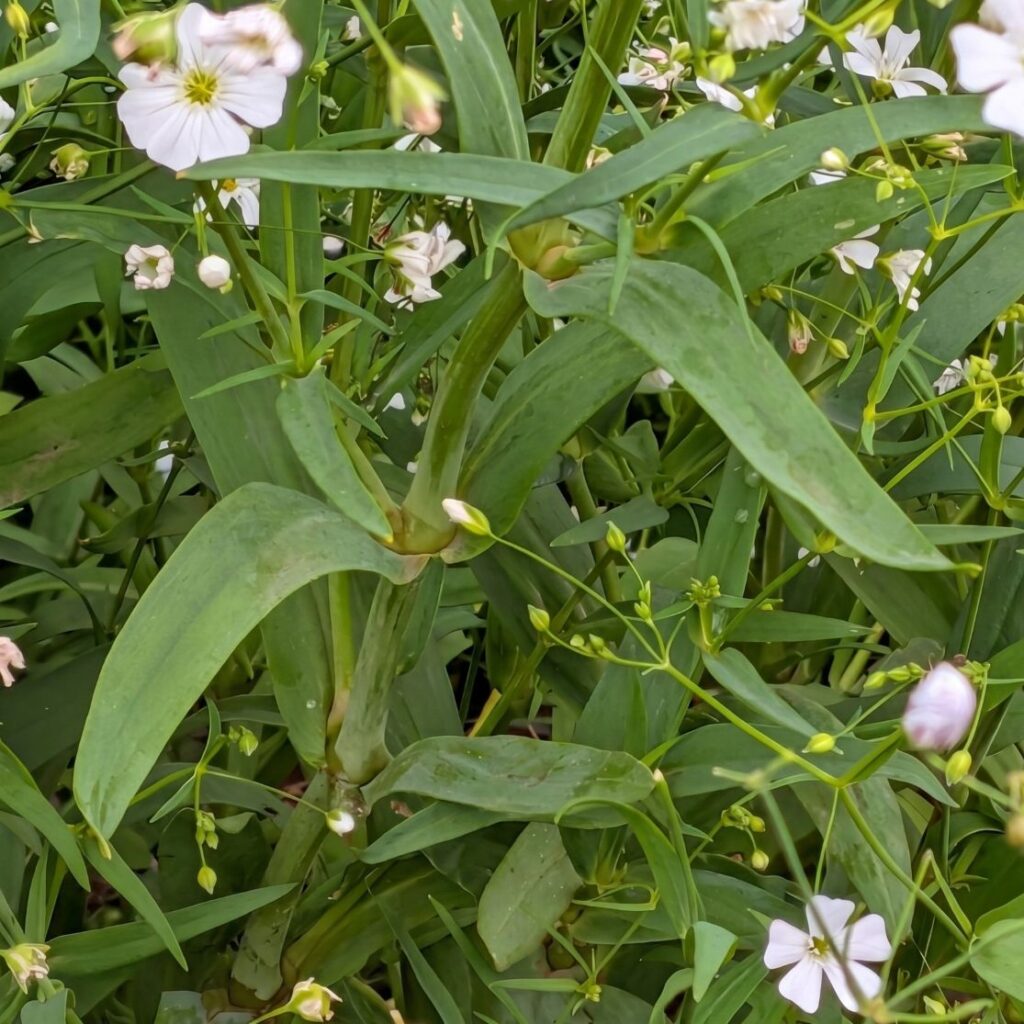
カスミソウの近縁種「宿根霞草」も石灰質のアルカリ性土壌が適地。披針形の葉を対生で伸ばし、細かく分枝した茎先で小花を無数に咲かせます。一方、文字通りの多年草で、花が粒のように小さく、フワリとした立体感。「パーフェクタ」などの八重咲き品種はさらに霞のようです。
Baby’s Breath

Baby’s Breath is an annual plant belonging to the Caryophyllaceae (pink) family. Native to Eastern Europe and Western Asia, it thrives in sunny, well-drained, and nutrient-poor limestone areas. In traditional European weddings, a “Virgin Mary’s veil” is worn, and Baby’s Breath is woven into bouquets and hair accessories, serving to protect the bride from evil spirits and to signify devotion and purity.
The Japanese name for Baby’s Breath translates to “mist grass” (Kasumi-so), so named because its dense clusters of white flowers resemble mist drifting across mountains and fields. The English name, Baby’s Breath, derives from the flower’s pure innocence and its sweet, delicate fragrance. The genus name Gypsophila means “chalk-loving,” while the species epithet elegans means “elegant.”
Baby’s Breath develops a thick taproot from which thin lateral roots spread. The stems branch repeatedly in a dichotomous (forked) pattern with swollen nodes, creating a broom-like appearance. The lanceolate leaves grow in opposite pairs. The flowers bloom in clusters at the tips of the stems, each featuring five petals, ten stamens, and a two-lobed stigma. After flowering, it produces a cup-shaped capsule that splits into four sections when ripe, releasing kidney-shaped seeds.
A close relative, Gypsophila paniculata, also thrives in calcareous, alkaline soils. It features opposite, lanceolate leaves and produces countless tiny flowers at the tips of its finely branched stems. Unlike the annual variety, it is a perennial herb with minute, bead-like flowers that create a soft, airy, and three-dimensional effect. Double-flowered cultivars such as “Perfecta” offer an even more beautifully hazy appearance.