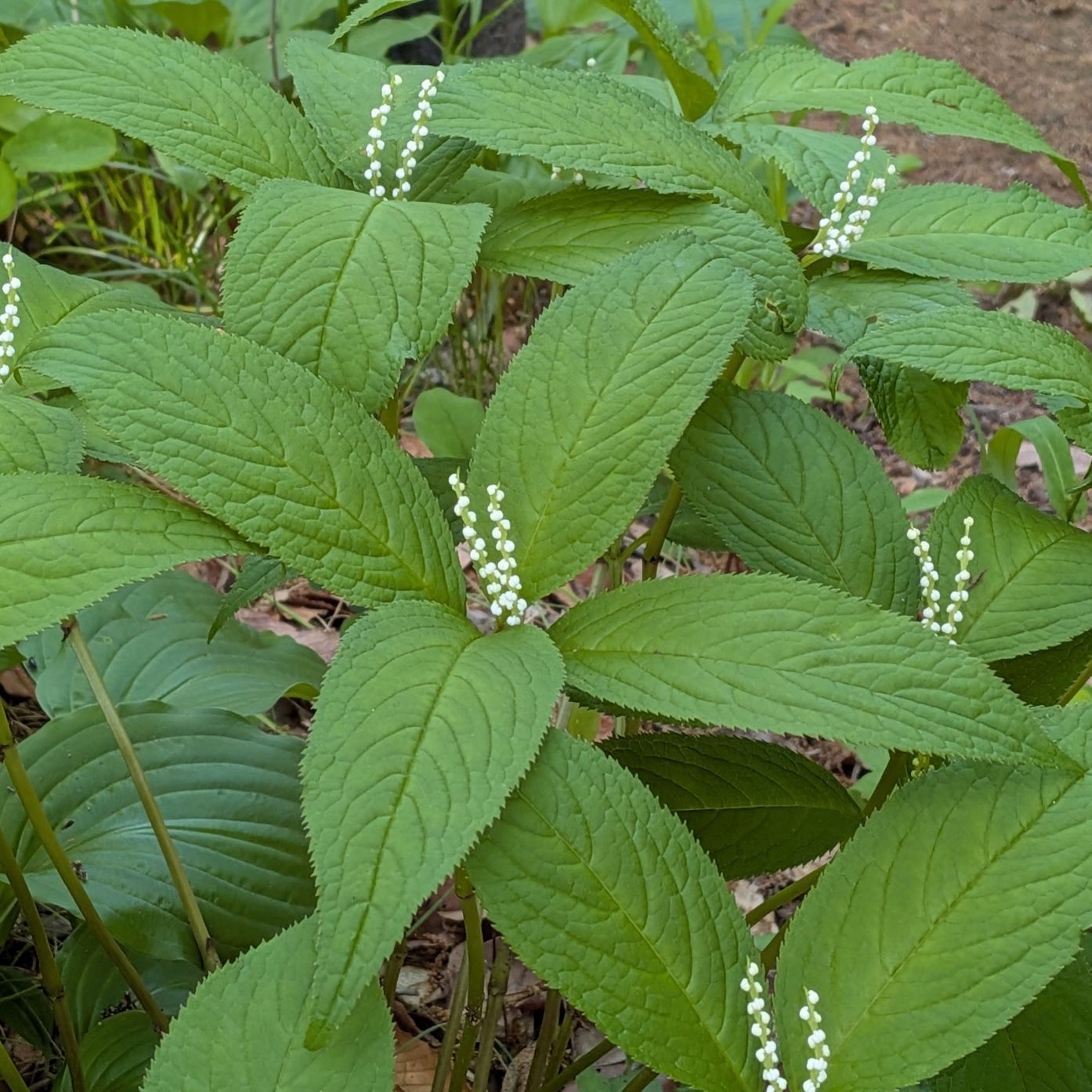
フタリシズカの和名は能の演目「二人静」に由来。静御前の霊と静御前に取り憑かれた神職の女性が、寄り添う2本の花穂のように舞います。
The Japanese name for Serrate Chloranthus means “Two Shizukas,” which derives from the Noh play of the same name. In the play, the spirit of Shizuka Gozen and a Shinto priestess possessed by her dance together, mirroring the appearance of the plant’s two side-by-side flower spikes.
【仮名】フタリシズカ
【和名】二人静
【英名】Serrate Chloranthus
【学名】Chloranthus serratus
【誕生】05/ 20, 06/ 21
【開花】04, 05, 06月
【花色】White, Green
フタリシズカ
フタリシズカの概要
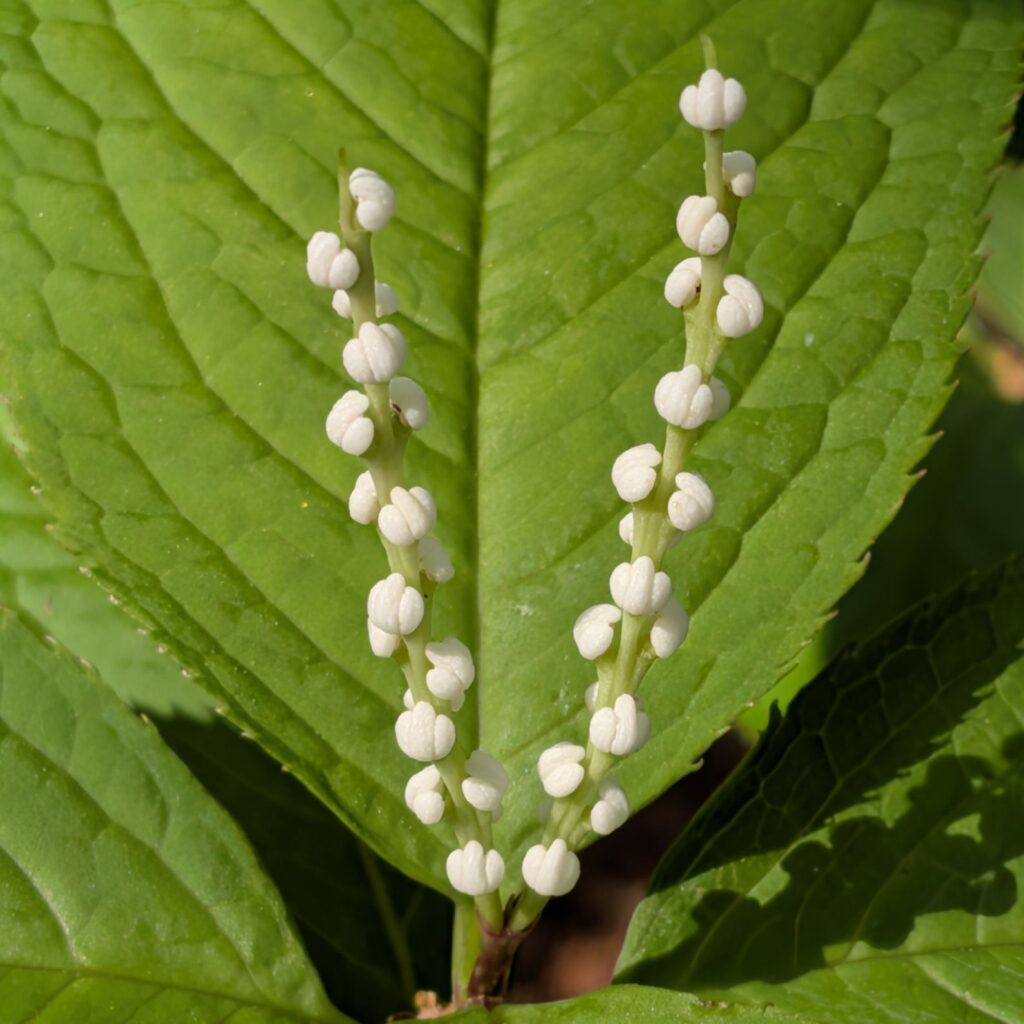
フタリシズカはセンリョウ科の多年草です。日本では北海道、本州、四国、九州、沖縄、国外では中国、台湾、朝鮮半島、ロシアに分布し、山地の薄暗く湿った林内で自生。近縁種の一人静とともに、源義経と静御前の悲恋の物語を今に伝える花です。花言葉は「いつまでも一緒に」。
フタリシズカの名前

フタリシズカの和名は能の演目「二人静」に由来。静御前の霊と、静御前に取り憑かれた神職の女性が、寄り添う2本の花穂のように舞います。属名クロランサスは「緑色の花」という意味で目立たない花のこと。種小名セラータスは「鋸の歯のような」という意味で葉縁を表します。
フタリシズカの姿形

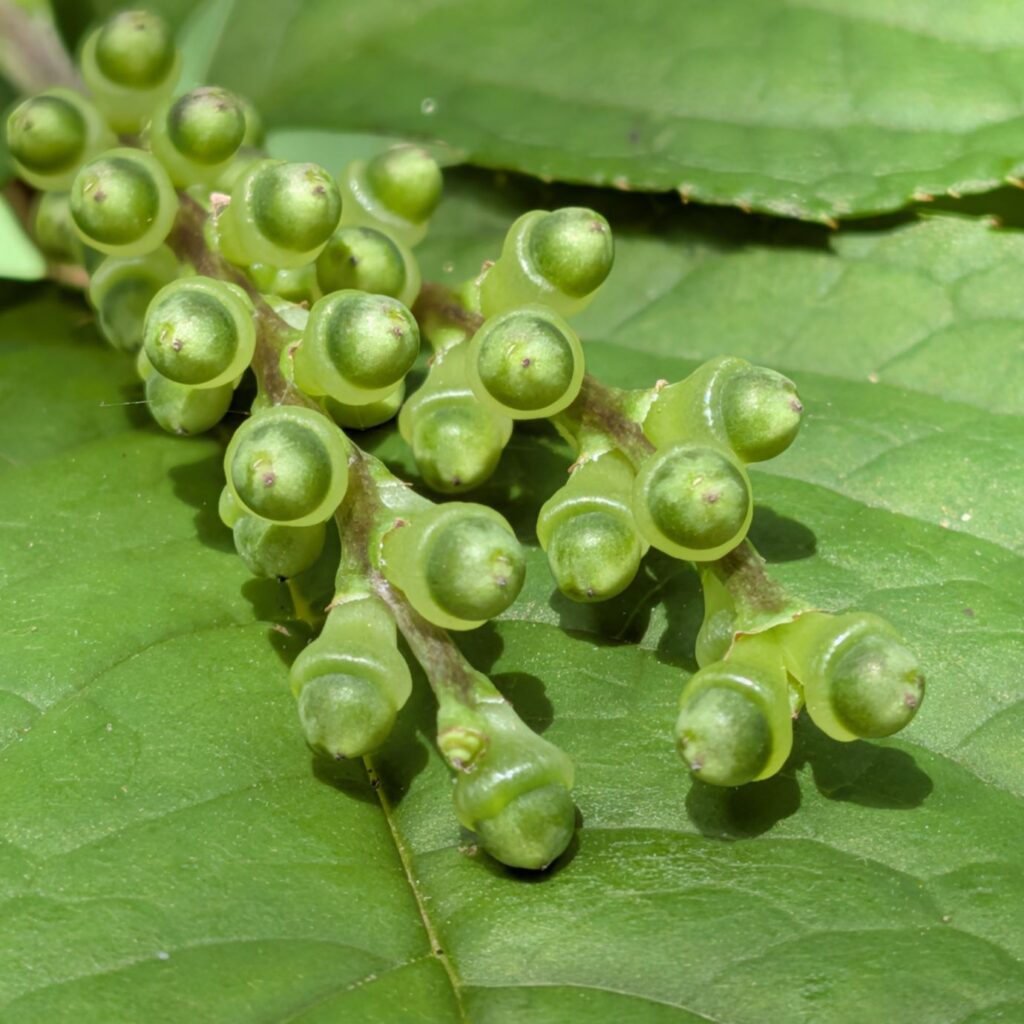
フタリシズカは短い根茎から髭根が伸び、繊細な茎が立ち上がります。葉は2枚ずつの対生で、縁に鋸歯のある楕円形。花穂は紐状で上を向いて伸び、米粒のような小花を連ねます。小花は花弁も萼片もなく、雄しべ3本が雌しべを抱き込んで合着。花後は核果(偽漿果)を結びます。
フタリシズカの逸話
フタリシズカの和名の由来は室町時代に世阿弥によって作られた能の演目「二人静」。勝手明神に仕える女性が春の野原で菜を摘んでいると、静御前の霊が出現。それを伝えた神官の前で、静御前の霊と、霊に取り憑かれた女性が同じ衣装をまとい、同じ動きで「静の舞」を舞います。
Serrate Chloranthus

Serrate Chloranthus is a perennial herb in the Chloranthaceae family. In Japan, it is distributed across Hokkaido, Honshu, Shikoku, Kyushu, and Okinawa. Internationally, it can be found in China, Taiwan, the Korean Peninsula, and Russia, growing wild in the shaded, damp woodlands of mountainous regions. Along with its close relative, “Hitori Shizuka” or “One Shizuka” (Chloranthus quadrifolius), this flower keeps alive the tragic love story of Minamoto no Yoshitsune and Shizuka Gozen. Its flower language is “together forever.”
The Japanese name for Serrate Chloranthus means “Two Shizukas,” which derives from the Noh play of the same name. In the play, the spirit of Shizuka Gozen and a Shinto priestess possessed by her dance together, mirroring the appearance of the plant’s two side-by-side flower spikes. The genus name Chloranthus translates to “green flower,” referring to its inconspicuous blossoms, while the specific epithet serratus means “saw-toothed,” describing the leaf margins.
The plant develops a short rhizome with fibrous roots, from which delicate stems arise. Its leaves grow in opposite pairs and are oval-shaped with serrated edges. The slender flower spikes grow upright, bearing a succession of tiny, rice-grain-sized florets. These florets lack both petals and sepals; instead, three fused stamens closely embrace the pistil. After flowering, the plant produces a drupe (false berry).
The origin of its Japanese name lies in “Futari Shizuka” (Two Shizukas), a Noh play written by Zeami during the Muromachi period. The story begins with a woman serving at Katte Myojin Shrine who is picking wild greens in a spring field when the spirit of Shizuka Gozen appears before her. Later, in front of the shrine priest, the spirit of Shizuka Gozen and the woman possessed by her appear in identical costumes, performing the “Shizuka Dance” in perfect unison.