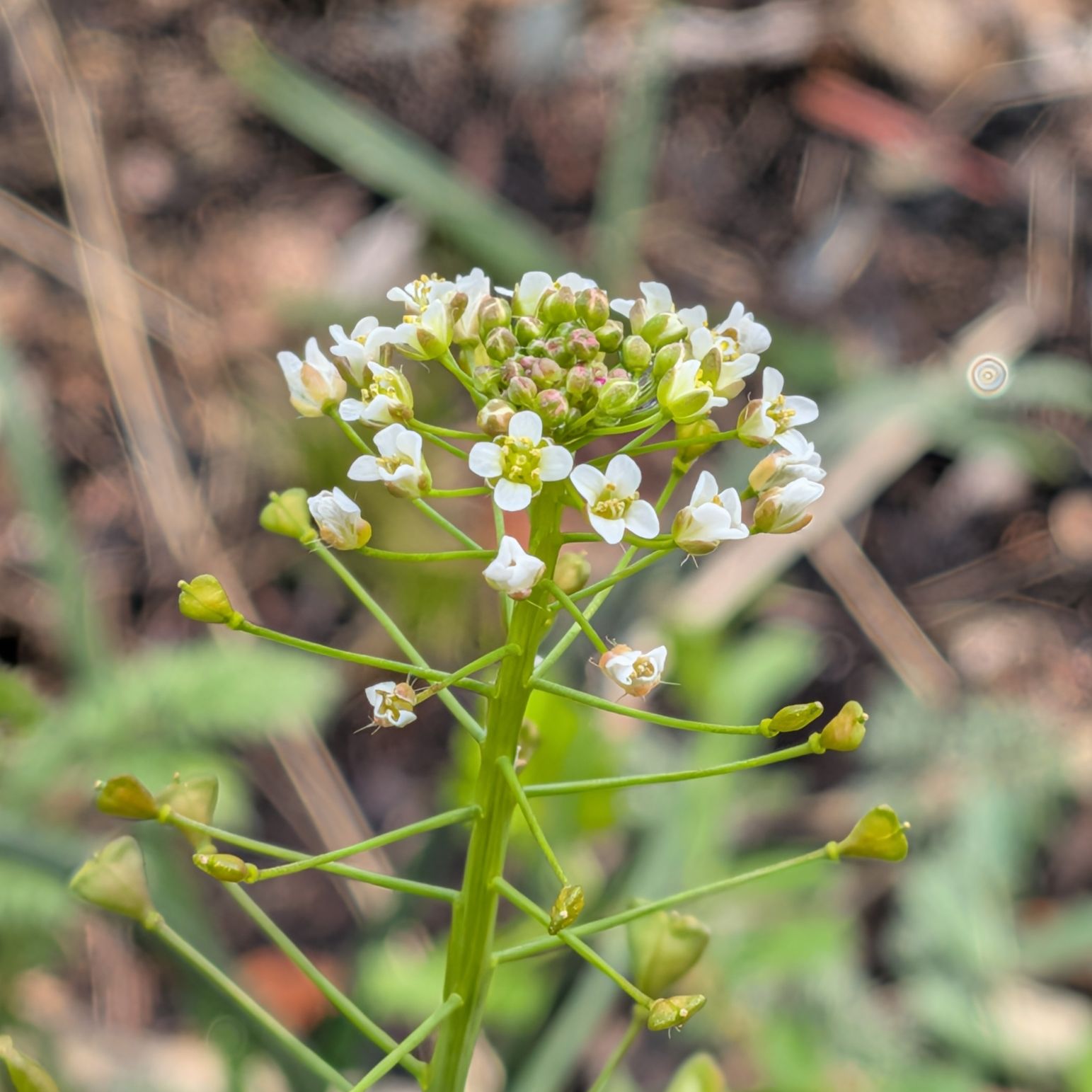
ナズナは、子どもたちが親指と人差し指で花茎を回し、でんでん太鼓遊び。果実が三味線のばちに似ていて、「ペンペン草」とも呼ばれます。
In Japan, children play with shepherd’s purse by spinning the flower stalk between their thumb and forefinger, making a clicking sound like a traditional pellet drum (denden daiko). Because its heart-shaped fruit resembles the plectrum of a shamisen (a traditional Japanese lute), it is affectionately known as “penpen-gusa.”
【仮名】ナズナ, ペンペングサ, シャミセングサ
【和名】薺, ペンペン草, 三味線草
【英名】Shepherd’s Purse
【学名】Capsella bursa-pastoris
【誕生】01/ 07, 01/ 17
【開花】03, 04, 05, 06月
【花色】White
ナズナ
ナズナの概要
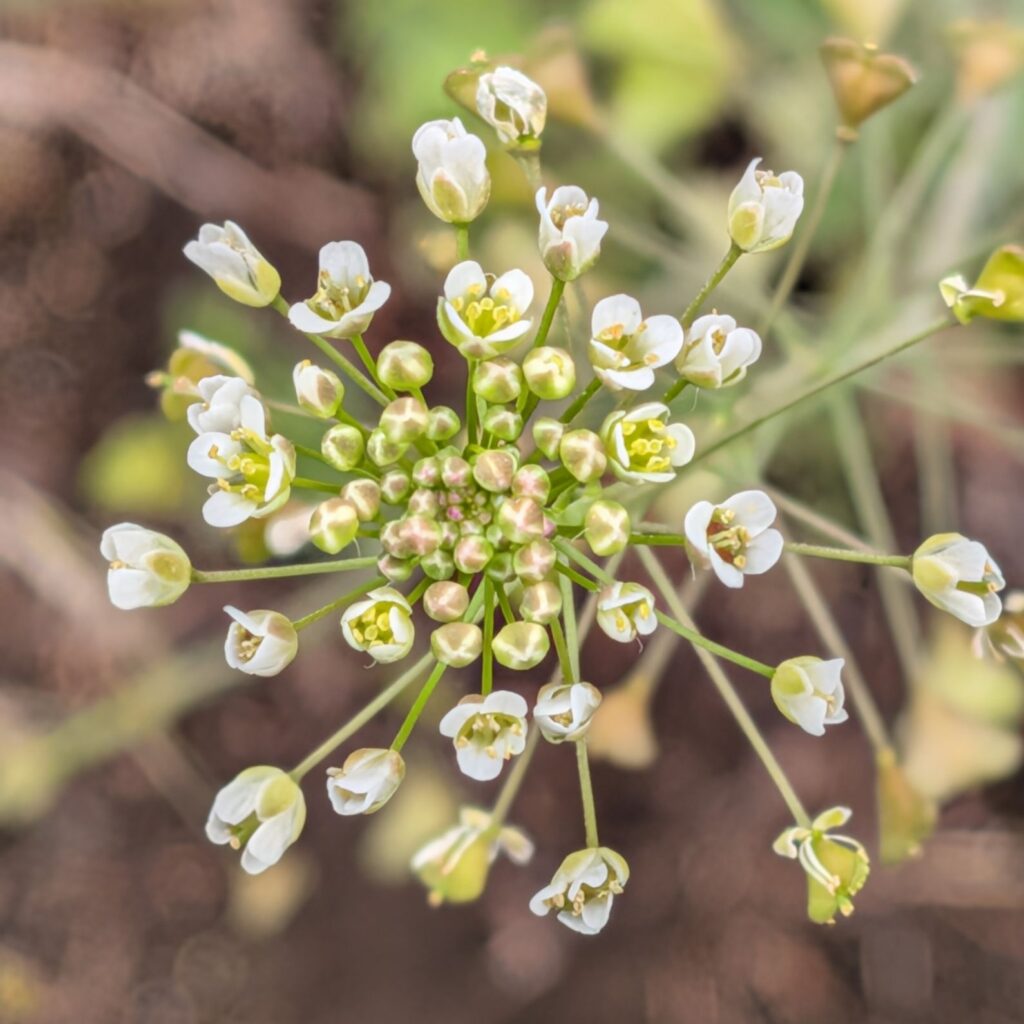
ナズナはアブラナ科の越年草です。原産地は欧州~西アジアの地中海沿岸で、農耕とともに温帯~亜寒帯に拡大。踏圧・耕起に強い、路傍や農地の雑草です。子どもたちが親指と人差し指で花茎を回し、でんでん太鼓遊び。果実が三味線のばちに似て、「ペンペン草」とも呼ばれます。
ナズナの名前
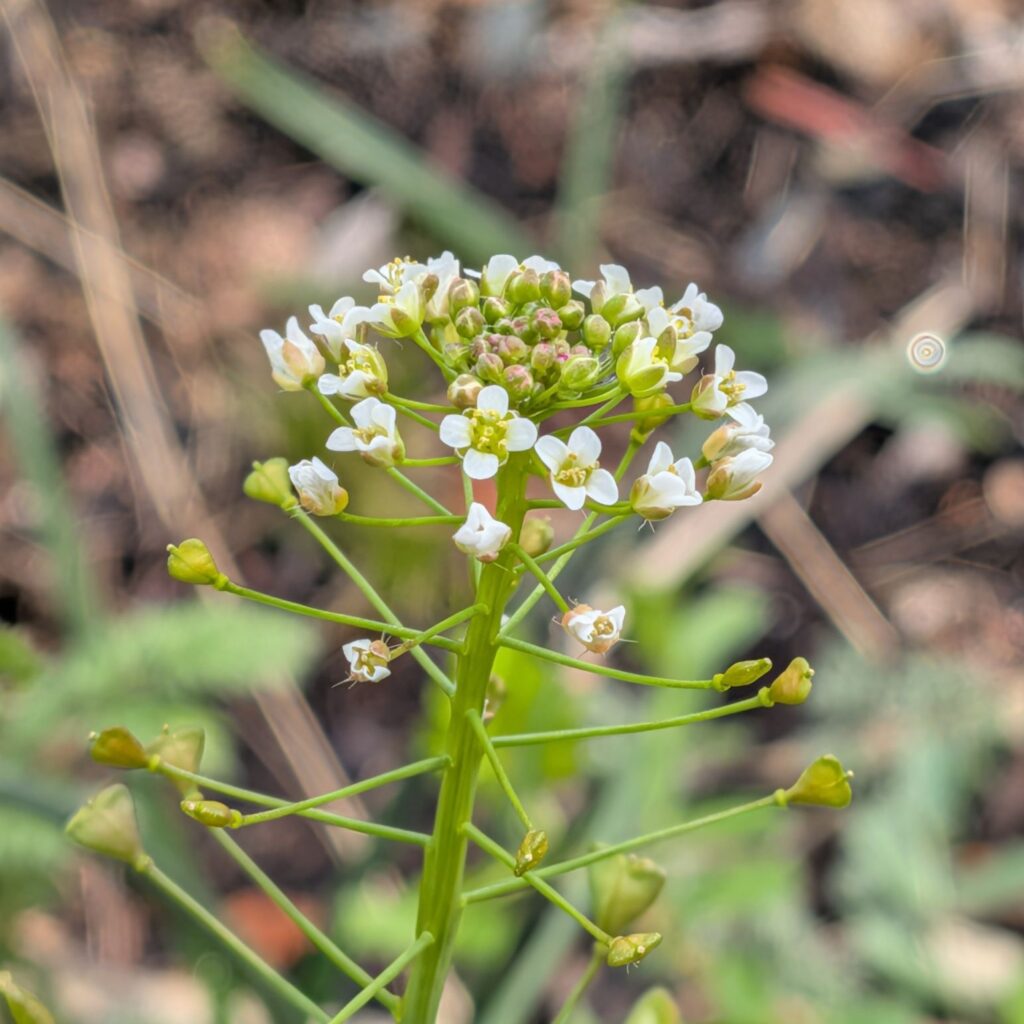
ナズナの和名の由来は夏に枯れて姿を消す「夏無」、愛らしくて撫でたくなる「撫で菜」の転訛など、諸説あります。属名カプセラは「小さな箱」、種小名ブルサ・パストリスは「羊飼いの袋」、英名シェパード・パースも「羊飼いの鞄」という意味。いずれも果実の形に由来します。
ナズナの姿形
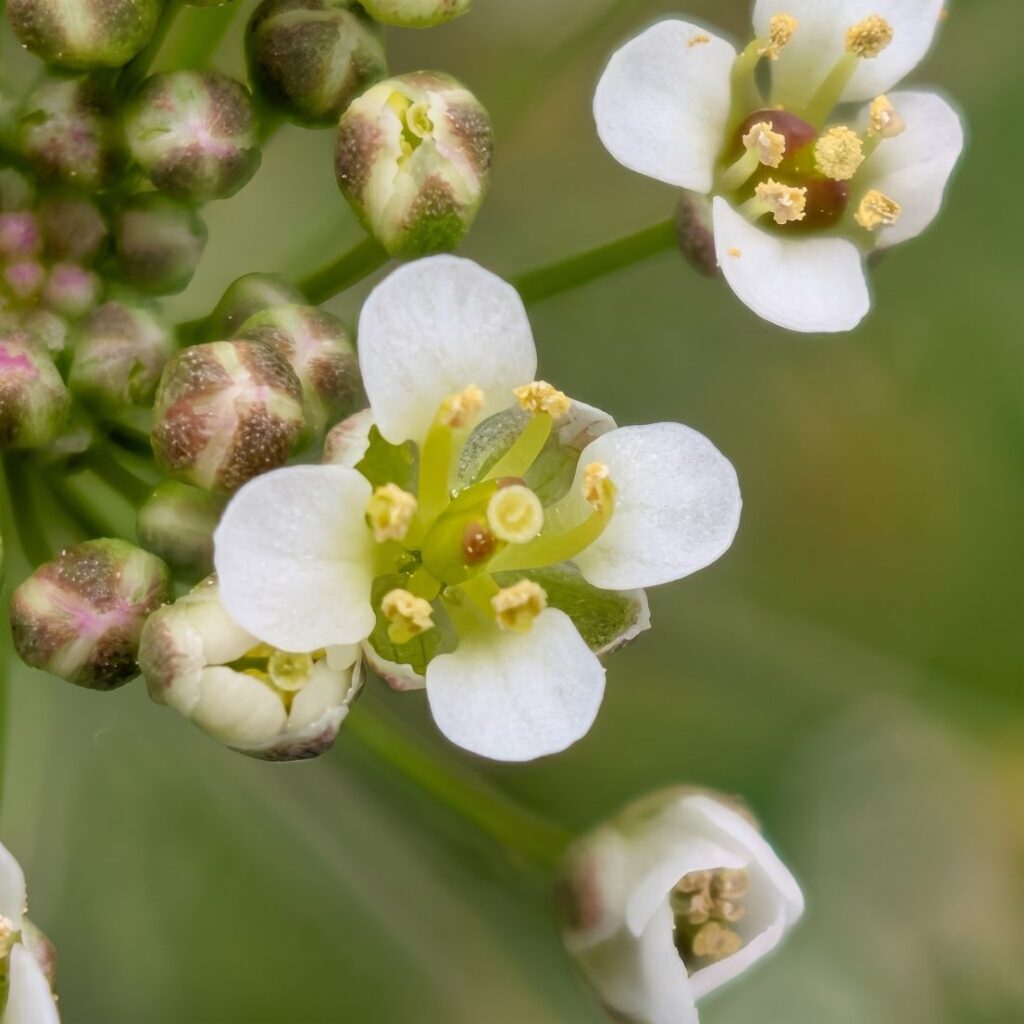
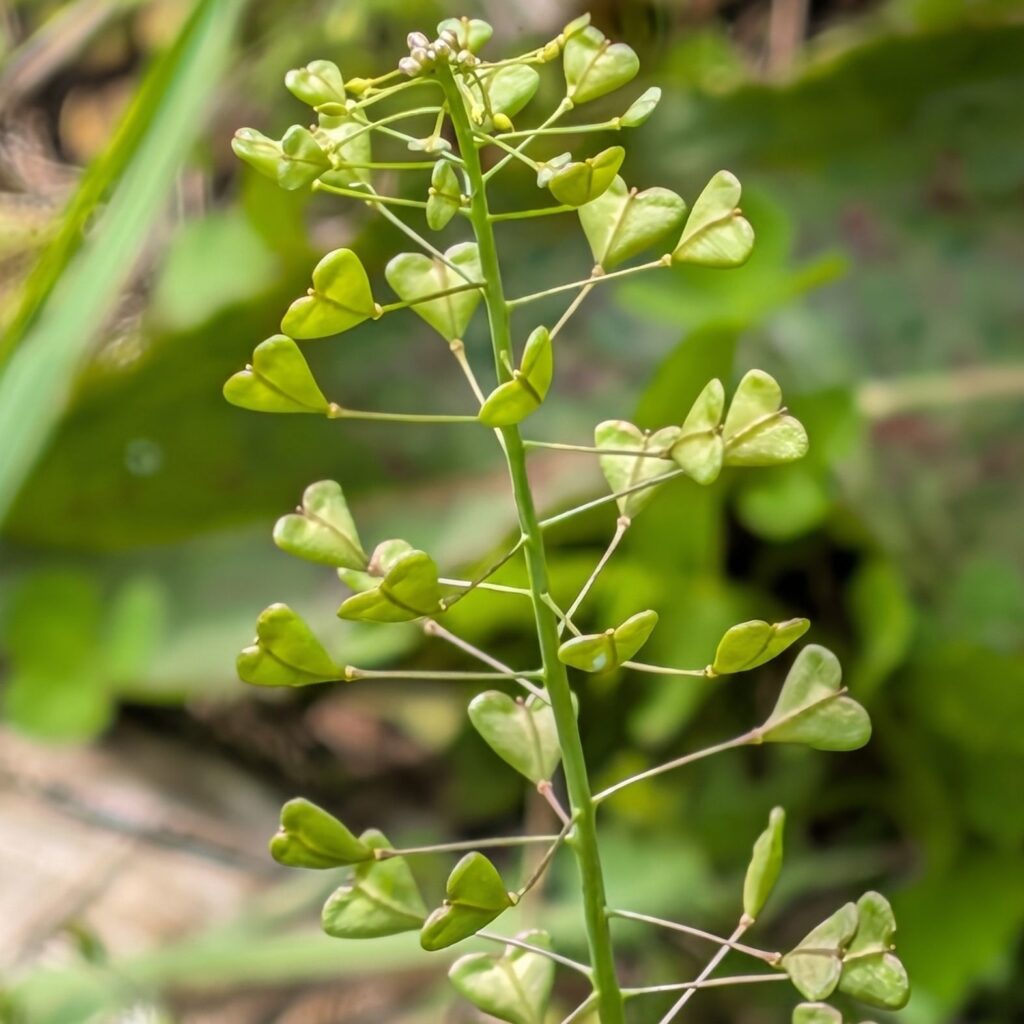
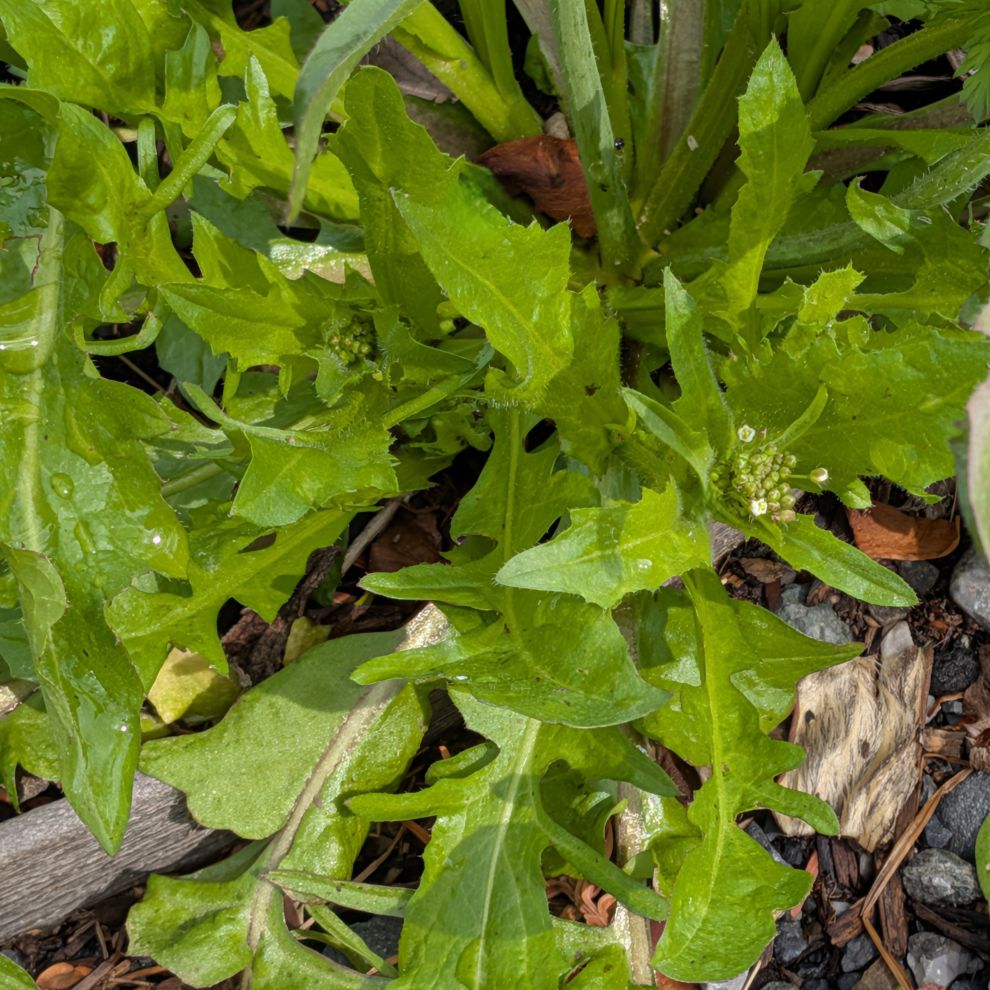
ナズナは太い直根が伸び、細い花茎が直立。冬に羽状の根出葉を放射状に広げ、春に披針形の茎生葉を互生で伸ばします。花は小さく、花弁が4枚、雄しべが6本。花茎が伸び上がりながら、小花が咲き上がります。平たい倒三角形の長角果が結実。熟すと楕円形の種子を落とします。
ナズナの利用
ナズナは「春の七草」の一つ。根出葉はアクが少なく、ほのかな辛味と香ばしさがあります。ビタミンやミネラルに富み、お粥のほか、お浸し、和え物、天ぷら、汁物などに。一方、古くからの薬草として、中国では涼血・利尿・明目に、欧州では戦場での止血などに用いられました。
Shepherd’s Purse
Shepherd’s purse is a biennial herb and a member of the mustard family (Brassicaceae). Native to the Mediterranean coast of Europe and Western Asia, it spread to temperate and subarctic regions alongside the development of agriculture. This resilient plant is a common weed found along roadsides and in agricultural fields, highly resistant to both trampling and tilling. Children often play with it by spinning the flower stalk between their fingers to mimic a pellet drum. Its fruit’s resemblance to a shamisen plectrum earned it the Japanese nickname “penpen-gusa.”
There are several theories regarding the origin of its Japanese name (nazuna). Some say it means “a plant that withers and disappears in summer,” while others suggest it comes from the idea of “a lovely vegetable you want to stroke.” Its scientific names also reflect its appearance: the genus name Capsella means “little box,” and the specific epithet bursa-pastoris means “shepherd’s purse.” Both are inspired by the unique shape of its seed pods.
The plant develops a thick taproot and a slender, upright flower stalk. In winter, its pinnate basal leaves form a radial rosette. In spring, it produces lanceolate stem leaves that grow alternately. The flowers are small, featuring four petals and six stamens, blooming sequentially from the bottom to the top as the stalk grows. It bears flat, heart-shaped (inverted triangular) siliques that release oval seeds when ripe.
Shepherd’s purse is celebrated as one of Japan’s “Seven Herbs of Spring” (Haru no Nanakusa). The basal leaves have very little bitterness, offering a subtle, pleasant pungency and aroma. Rich in vitamins and minerals, they are traditionally used in rice porridge (nanakusa-gayu), as well as in blanched or seasoned side dishes, tempura, and soups. Beyond the kitchen, it has a long history as a medicinal herb; in traditional Chinese medicine, it was used to cool the blood, promote urination, and improve vision, while in Europe, it was valued on the battlefield to stop bleeding.