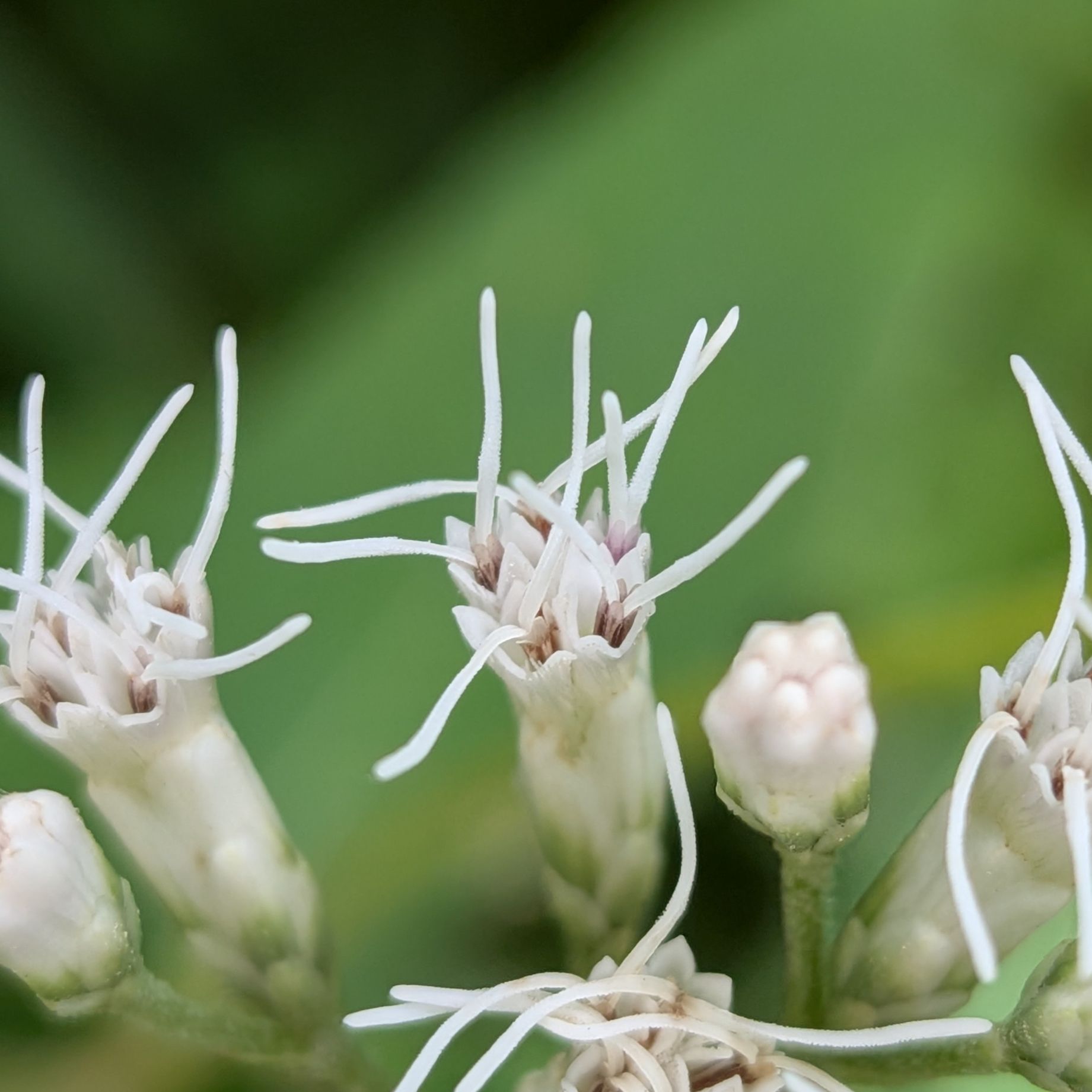
ヒヨドリバナは、花が5裂の筒状で、雄しべが内に収まり、雌しべが外に出ます。頭花が5つの筒状花から成り、平らに集まって花序を形成。
Japanese Boneset features tubular, five-lobed flowers with stamens housed inside the floral tube and the style of the pistil extending outward. Five tubular florets form each compact head, which aggregate into a flat-topped inflorescence.
【仮名】ヒヨドリバナ
【和名】鵯花
【英名】Japanese Boneset
【学名】Eupatorium makinoi
【誕生】10/ 15, 10/ 23, 11/ 08
【開花】08, 09, 10月
【花色】White
ヒヨドリバナ
ヒヨドリバナの概要
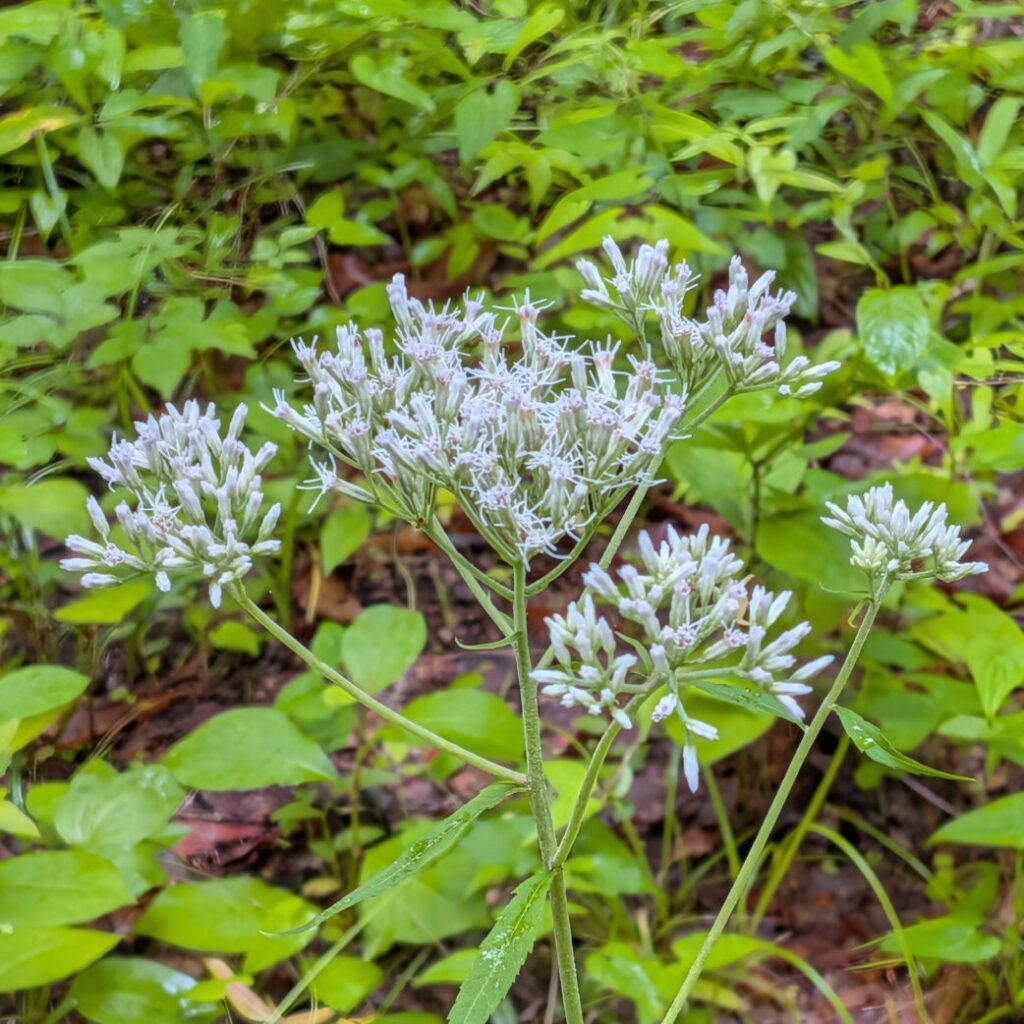
ヒヨドリバナはキク科の宿根草です。日本では北海道、本州、四国、九州、国外では朝鮮半島、中国など、東アジアの温帯域に分布。陽当たりのよい山野に自生します。春に萌芽・伸長、夏~秋に開花・結実、冬に地上部が枯れ、地下部で休眠。近縁の藤袴によく似た花を咲かせます。
ヒヨドリバナの名前
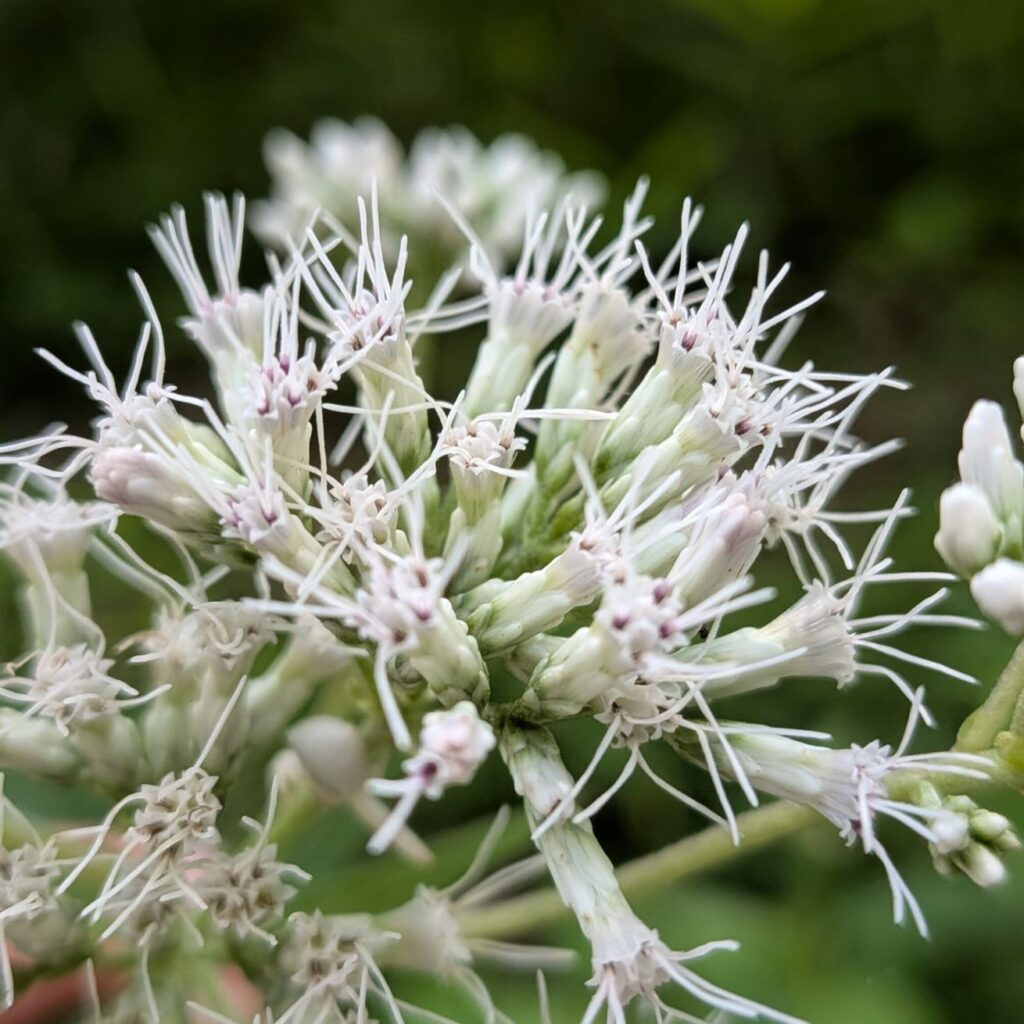
ヒヨドリバナの和名の由来は野鳥の鵯が山から里に降りて鳴き始める頃に花が咲くから。英名ボーンセットは「骨接ぎ」という意味です。属名ユーパトリウムは古代ギリシャの英傑ミトリダテス6世の異名「エウパトル」に由来。種小名マキノイは日本の牧野富太郎博士への献名です。
ヒヨドリバナの姿形
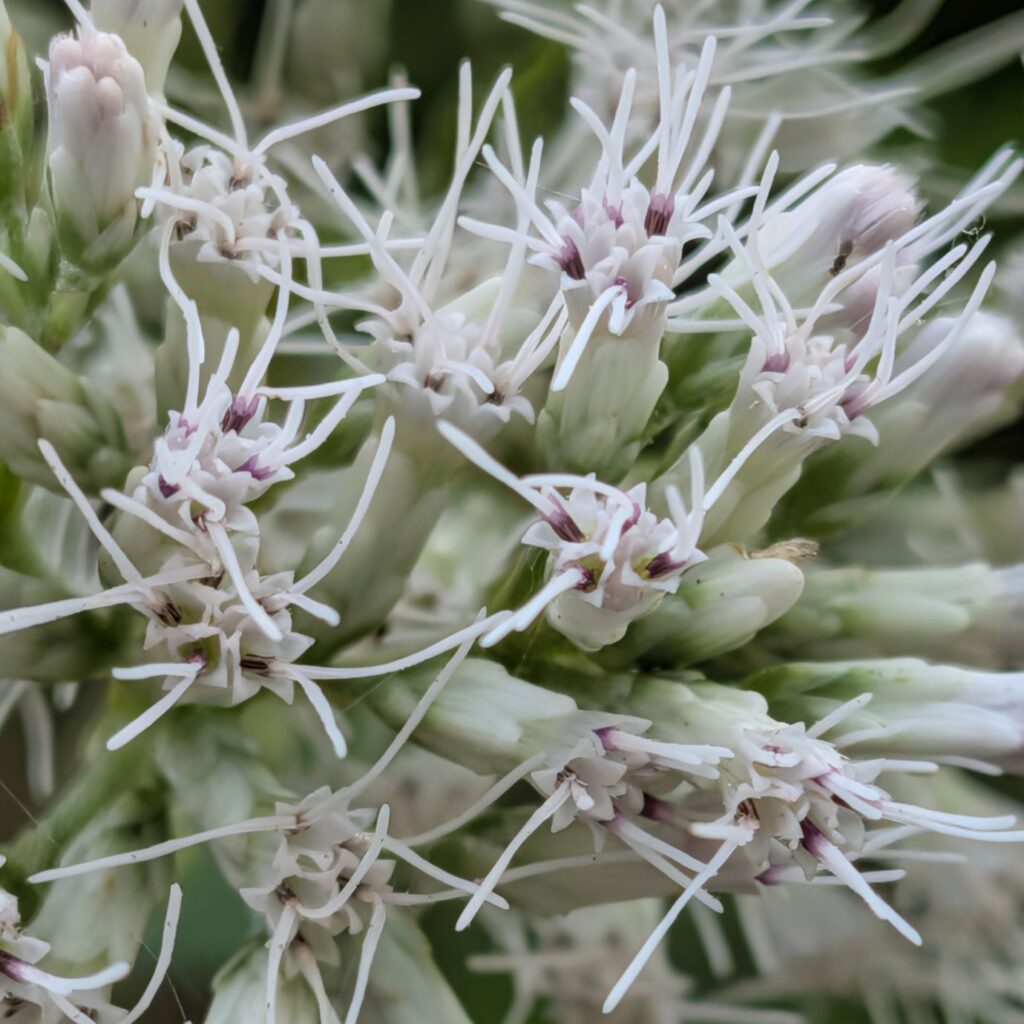
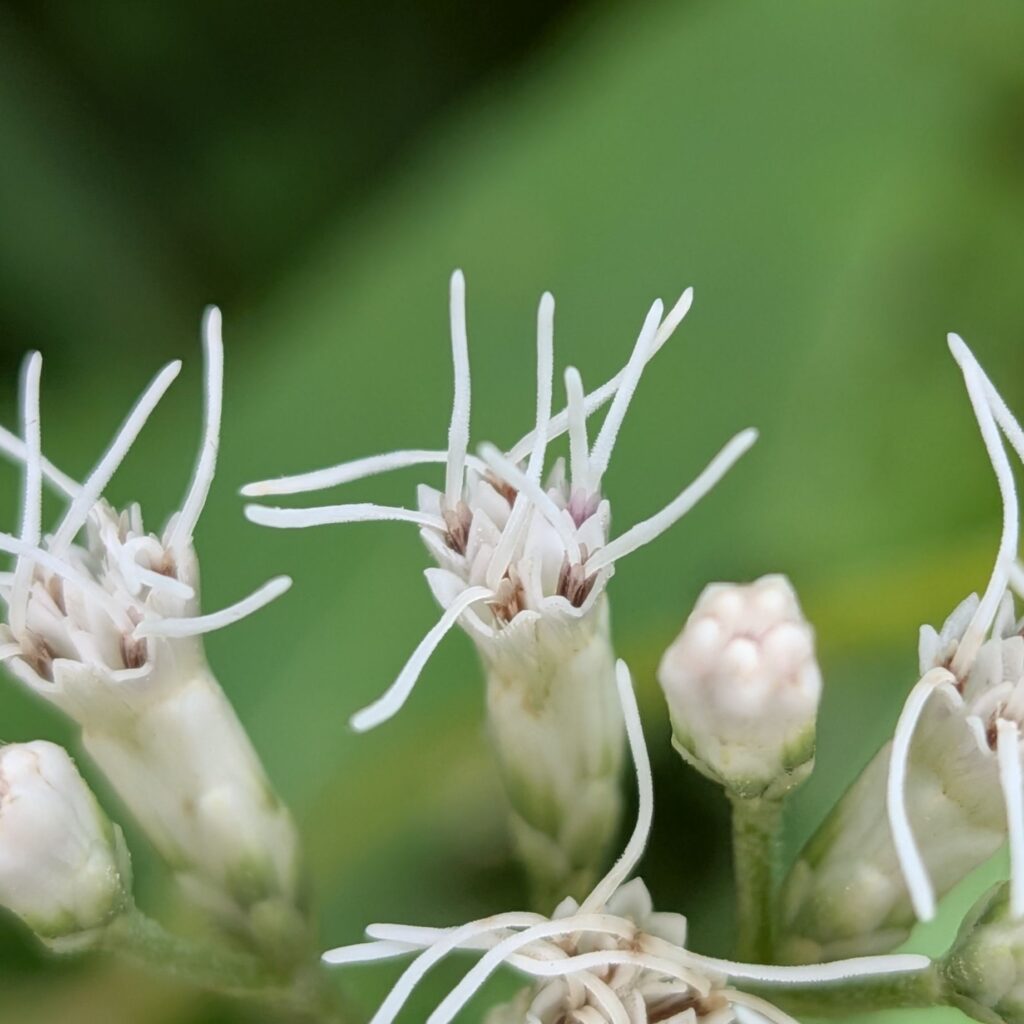
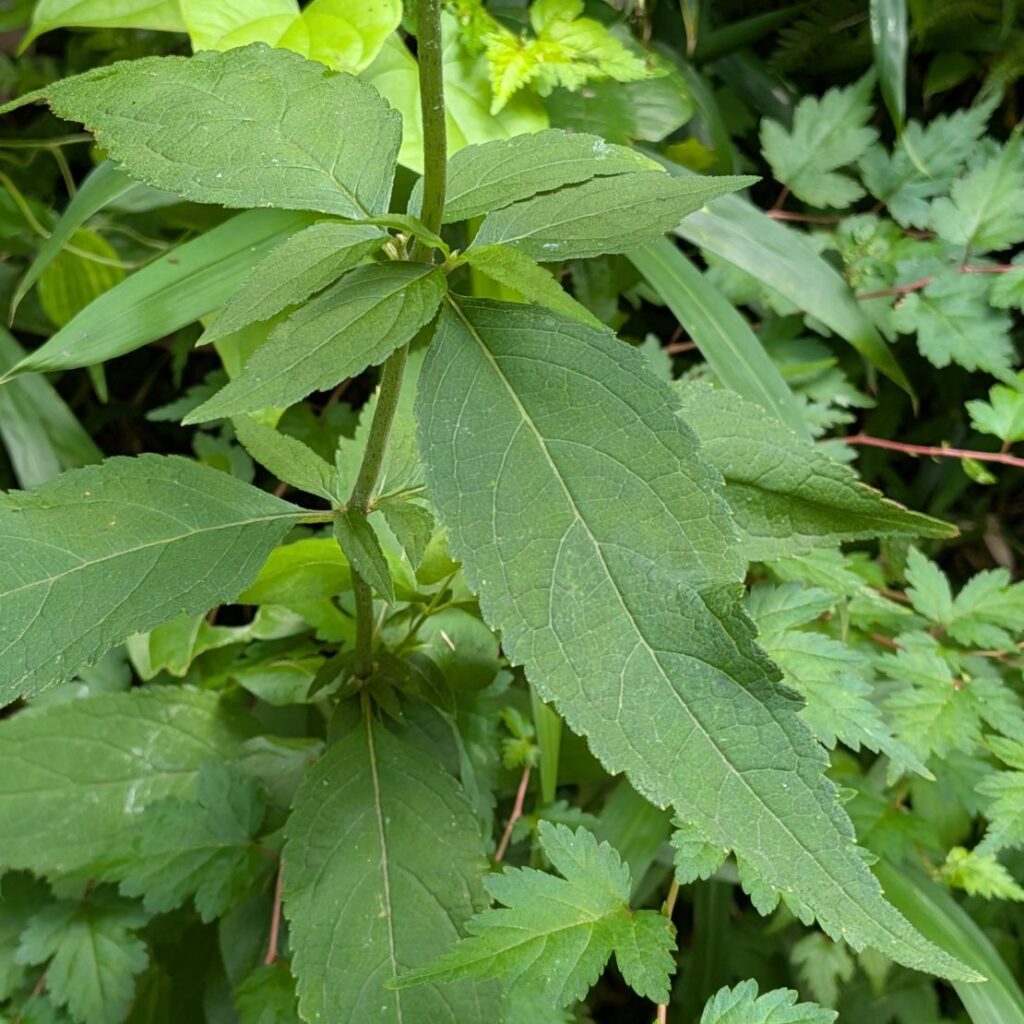
ヒヨドリバナは短い根茎から太い髭根を伸ばします。葉は先の尖った長楕円形で対生。花が5裂の筒状で、雄しべが花筒内に収まり、雌しべの花柱が2裂で花筒外に出ます。頭花が5つの筒状花から成り、平らに集まって花序を形成。花後の瘦果は冠毛で風に乗り、遠くへ運ばれます。
ヒヨドリバナの共生
ヒヨドリバナと共生するタテハチョウ科のアサギマダラは浅葱色の斑紋が美しい蝶です。ミツバチの口器が届かない花筒の奥から吸蜜、体表に付着した少量の花粉を遠くに運搬。一方、蜜に含まれる有毒成分ピロリジジンアルカロイドで天敵から身を守り、性フェロモンも合成します。
Japanese Boneset
Japanese Boneset is a perennial plant in the family Asteraceae. Native to the temperate regions of East Asia, it is found across Japan (Hokkaido, Honshu, Shikoku, and Kyushu), as well as the Korean Peninsula and China. It thrives in sunny fields and mountainous areas. The plant sprouts and grows vigorously in spring, blooms and sets fruit from summer through autumn, and dies back to its underground rootstock to remain dormant during winter. Its blossoms closely resemble those of its close relative, Fujibakama (Eupatorium japonicum).
Its Japanese name, Hiyodori-bana (“Bulbul Flower”), comes from the belief that it blooms around the time the brown-eared bulbul (hiyodori) descends from the mountains toward human settlements and begins its calls. The genus name Eupatorium stems from “Eupator,” an epithet of Mithridates VI, king of ancient Pontus. The specific epithet makinoi honours the renowned Japanese botanist Dr. Tomitaro Makino.
Japanese Boneset develops thick, fibrous roots from a short rhizome. Its leaves are opposite and elongated-oblong with pointed tips. The tubular flowers feature five-lobed tips, with stamens neatly enclosed within the floral tube while the two-cleft style of the pistil protrudes prominently outside. Each individual flower head consists of five tubular florets, forming flat-topped clusters. After flowering, the achenes (dry, single-seeded fruits) are dispersed over long distances by the wind, carried by their feathery pappi.
The Chestnut Tiger butterfly (Parantica sita, Nymphalidae) shares a notable symbiotic relationship with Japanese Boneset. Adorned with striking pale blue-green (asagi) markings, the butterfly uses its long proboscis to sip nectar from deep within the floral tube—a source inaccessible to honeybees. In doing so, it transports pollen sticking to its body across broad distances. Furthermore, the butterfly sequesters toxic pyrrolizidine alkaloids present in the nectar to defend itself against predators and to synthesize its sex pheromones.