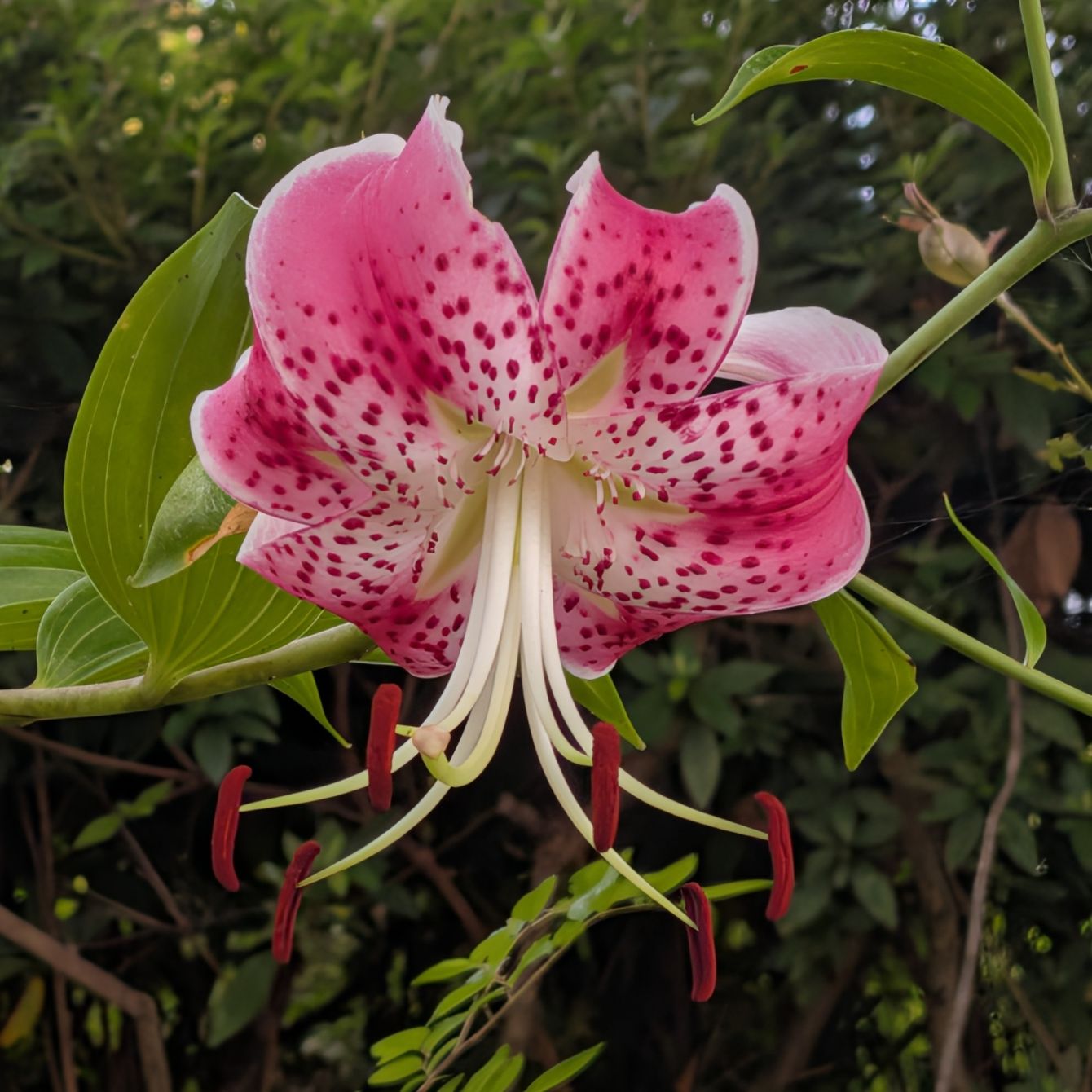
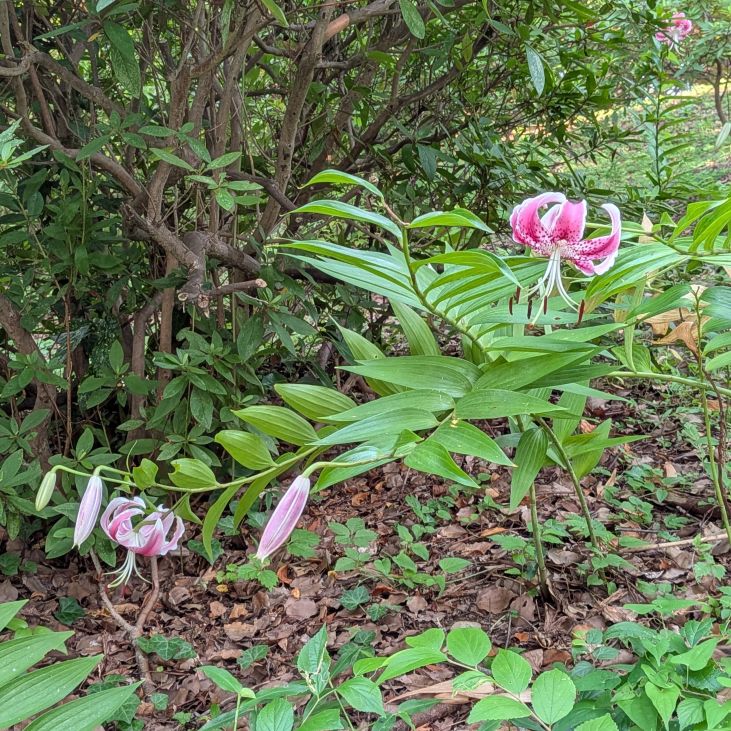
カノコユリの花は花被が外側へ反り返り、内側に鹿の子斑とともに乳頭状突起が散在。茎先で下を向いて咲き、周囲に甘い芳香を漂わせます。
The Speciosum Lily (Lilium speciosum) features recurved tepals with distinct crimson spots and delicate papillae on the inner surface. Nodding at the stem tips, its downward-facing blooms fill the air with a sweet fragrance.
【仮名】カノコユリ
【和名】鹿の子百合
【英名】Speciosum Lily, Showy Lily
【学名】Lilium speciosum
【誕生】08/ 02, 08/ 07
【開花】07, 08月
【花色】White, Pink, Red
カノコユリ
カノコユリの概要
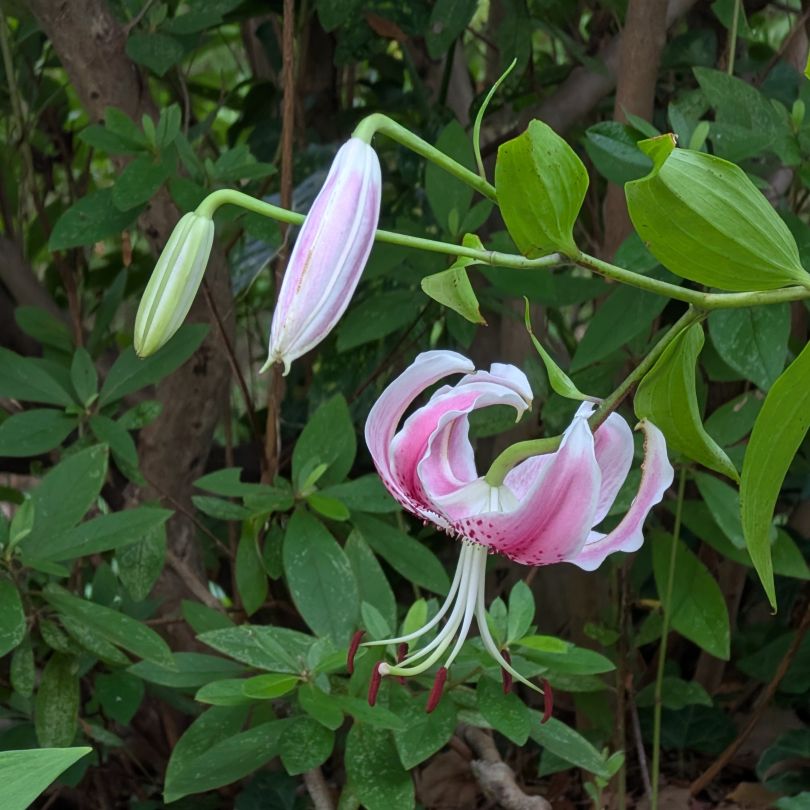
カノコユリはユリ科の多年草。日本では四国と九州の暖地、国外では中国東部~東南部に分布しています。陽当たり、風通し、水はけのよい崖地で自生。古くから鱗茎が生薬や食料に用いられました。花被の反り返り、鮮やかな鹿の子斑、甘い芳香。「荘厳」という花言葉があります。
カノコユリの名前
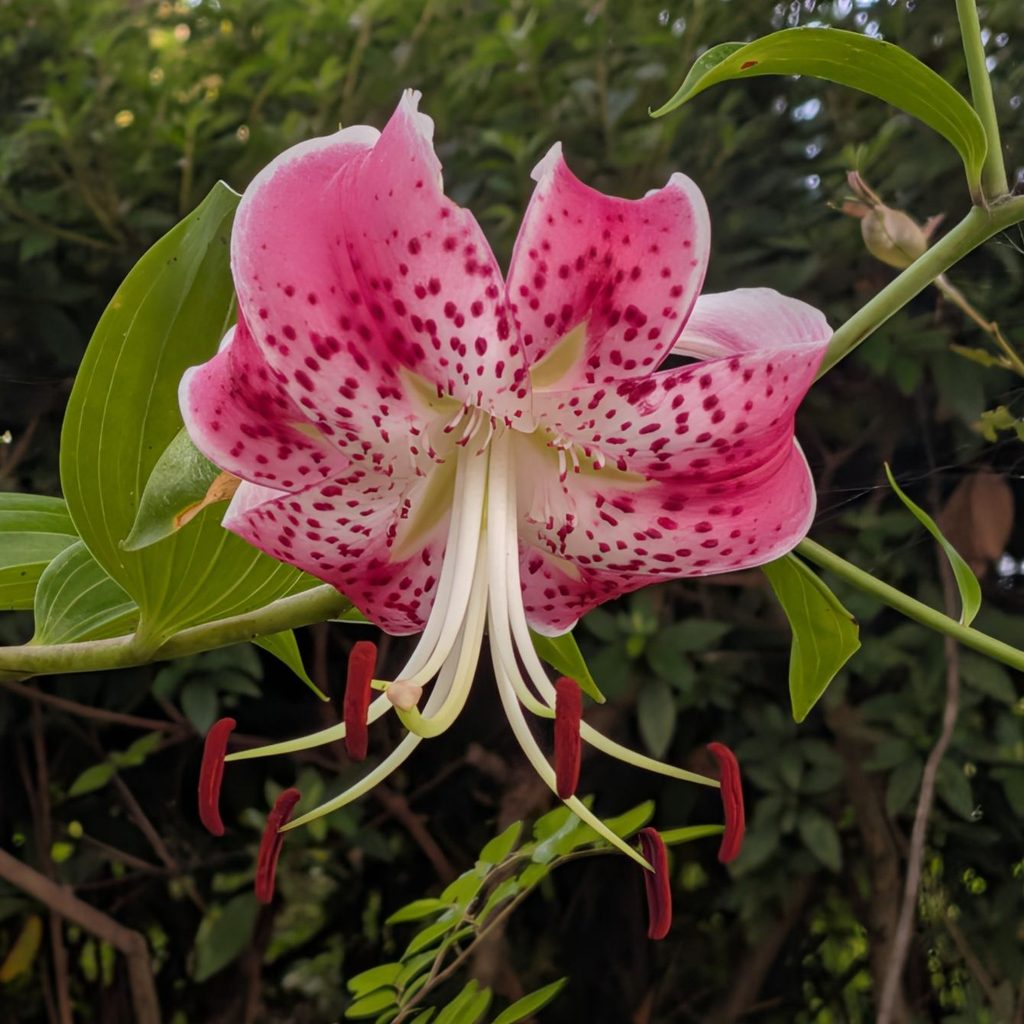
カノコユリの和名の由来は花弁内側の斑点が小鹿の背中の「鹿の子斑」を思わせるから。盛夏に花が咲くので「土用百合」という別名もあります。属名リリウムは「百合」、種小名スペシオスムは「美しい」という意味。英名ショーウィー・リリーは「華やかな百合」という意味です。
カノコユリの茎と葉
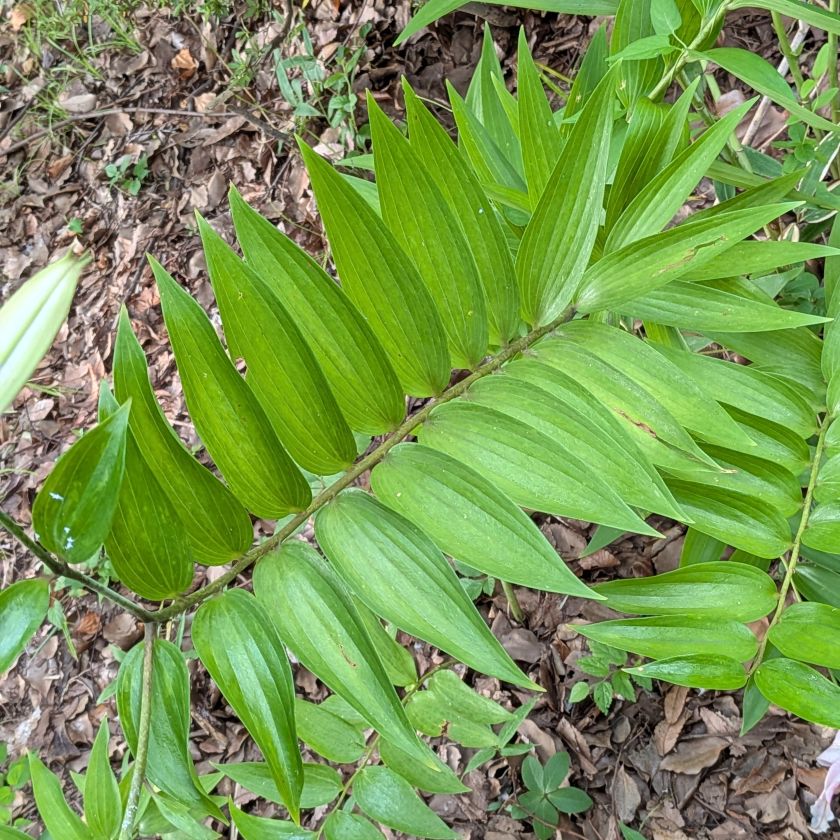
カノコユリの鱗茎は肉厚な鱗片が重なり合って球形。底から太い下根を伸ばし、しっかり土を掴みます。発芽後に地中茎の節々から上根が伸びて養水分を吸収。地上茎は太く頑丈で直立し、伸びると弓のようにしなります。葉は互生の長楕円形。葉面に光沢があり、平行脈が走ります。
カノコユリの花と実
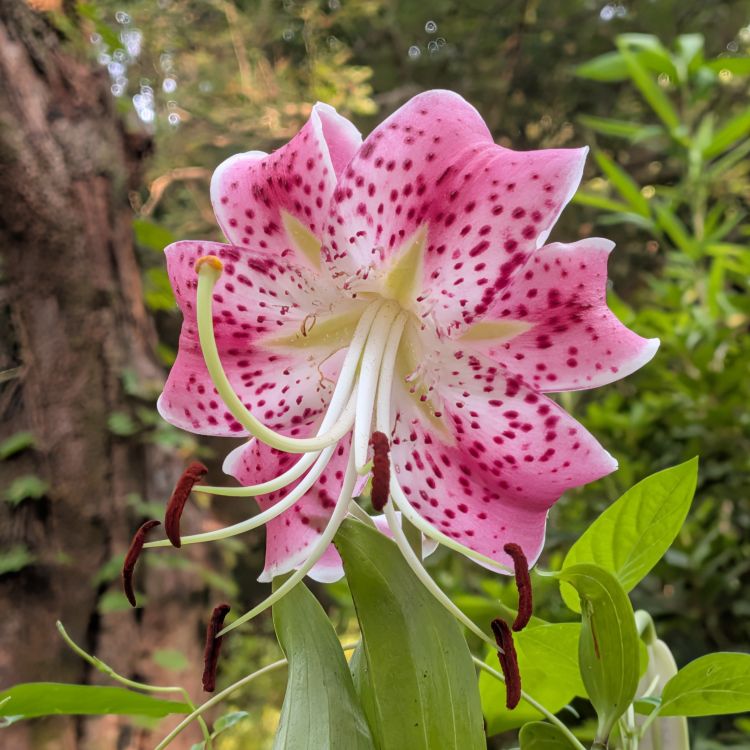
カノコユリの花は花被片が6枚、雄しべが6本、雌しべの柱頭が3つに裂けます。花被は外側へ反り返り、内側に鹿の子斑とともに乳頭状突起が散在。茎先で下を向いて咲き、周囲に甘い芳香を漂わせます。花後は蒴果を結び、熟すと縦に裂開。薄い翼のついた種子を風で散らします。
Speciosum Lily
The Speciosum Lily (Lilium speciosum) is a perennial plant in the Liliaceae family. In Japan, it grows natively in the warm coastal regions of Shikoku and Kyushu, as well as in eastern and southeastern China. It thrives on sunny, well-ventilated, and well-drained cliffs. Historically, its bulbs have been used for both medicinal purposes and food. Its grand appearance—marked by strongly reflexed tepals, vibrant spots, and a rich fragrance—gives it the flower language meaning of “majesty” or “magnificence.” The Japanese name for the Speciosum Lily, Kanoko-yuri, translates to “fawn lily,” so named because the spots on the petals resemble the markings on a young deer’s back. Because it blooms in the height of summer, it is also known as Doyō-yuri (Midsummer Lily). The genus name Lilium means “lily,” while the specific epithet speciosum translates to “showy” or “beautiful.” The fleshy, overlapping scales give the bulb of the Speciosum Lily a rounded shape. Strong basal roots extend from the base to anchor the plant firmly in the soil, while stem roots emerge underground after germination to absorb water and nutrients. The aerial stem grows thick, sturdy, and upright, gently arching like a bow as it grows taller. The glossy, oblong leaves feature parallel veins and are arranged alternately along the stem. Each flower consists of six tepals, six stamens, and a pistil with a three-lobed stigma. The tepals curl back sharply, revealing intricate fawn-like spots and scattered papillae inside. Dangling from the stem tips, the blooms release a sweet fragrance into the air. After flowering, the plant forms a capsule fruit that splits open vertically when ripe, scattering light, winged seeds on the wind.