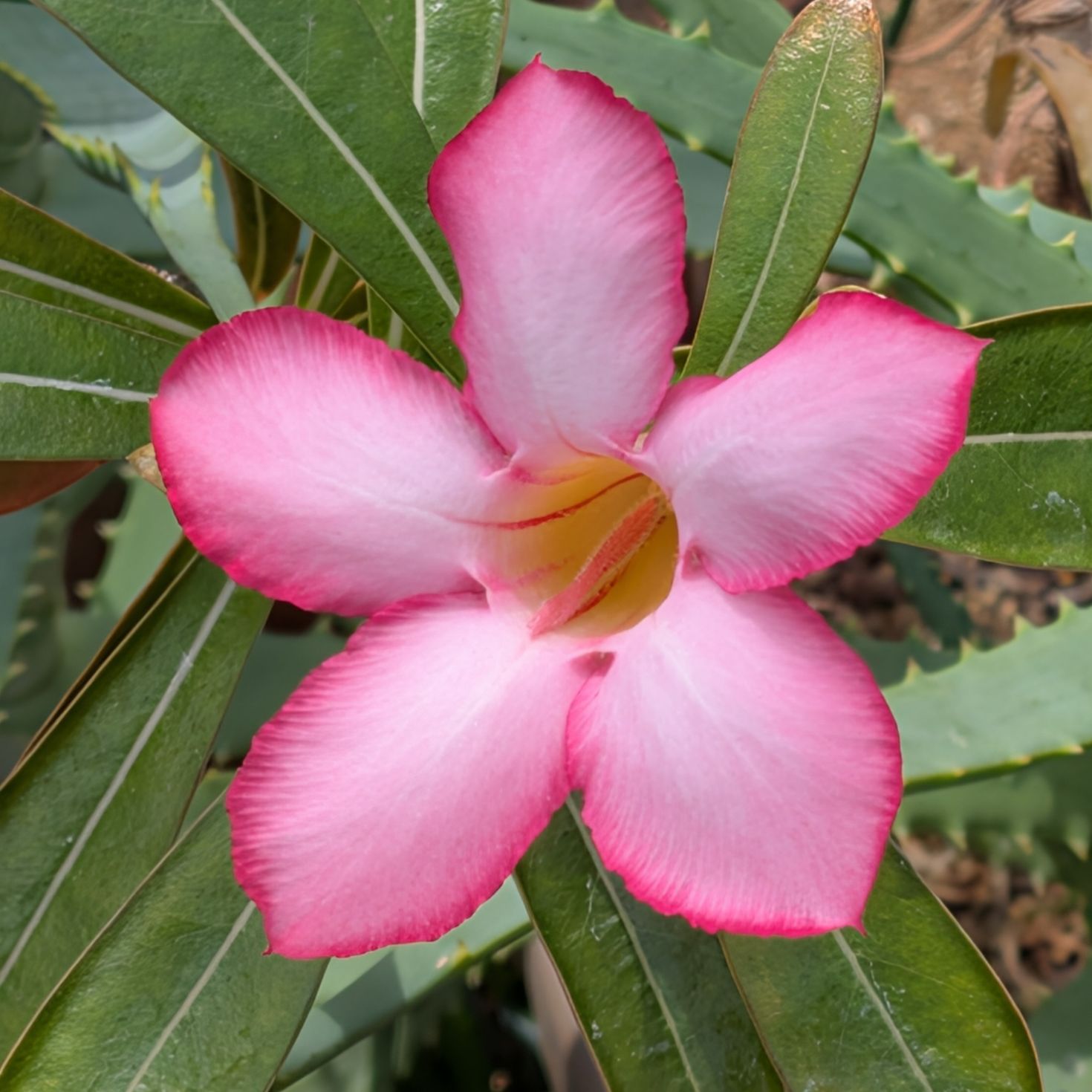
アデニウムは雨期に水分を蓄え、乾期に耐えるため、塊根と塊茎が発達。砂漠のようなところに自生し、薔薇のように美しい花を咲かせます。
Desert Roses develop a swollen caudex to store moisture during the rainy season and withstand dry periods. Growing naturally in arid, desert-like environments, they bloom with flowers as beautiful as roses.
【仮名】アデニウム, アデニウムオベスム, サバクノバラ
【和名】砂漠の薔薇, 天宝花
【英名】Desert Rose
【学名】Adenium obesum
【誕生】08/ 07, 10/ 02
【開花】04, 05, 06, 07, 08, 09月
【花色】White, Pink, Red, Purple, Violet, Yellow
アデニウム
アデニウムの概要
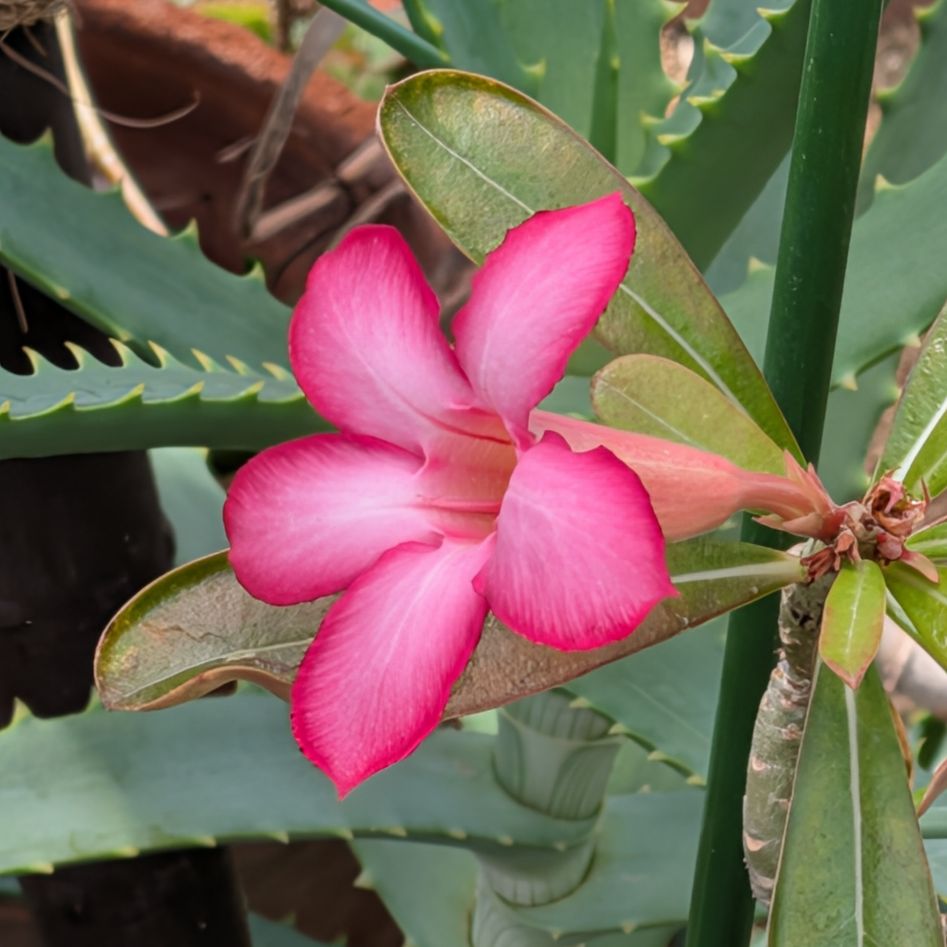
アデニウムはキョウチクトウ科の低木。西アジアのアラビア半島南部~アフリカのサハラ砂漠南縁に分布し、高温の乾燥地帯で自生しています。雨期に水分を蓄え、乾期に耐えるため、塊根と塊茎が発達。華やかな花を咲かせる一方、樹液には強い毒性のある強心配糖体が含まれます。
アデニウムの名前
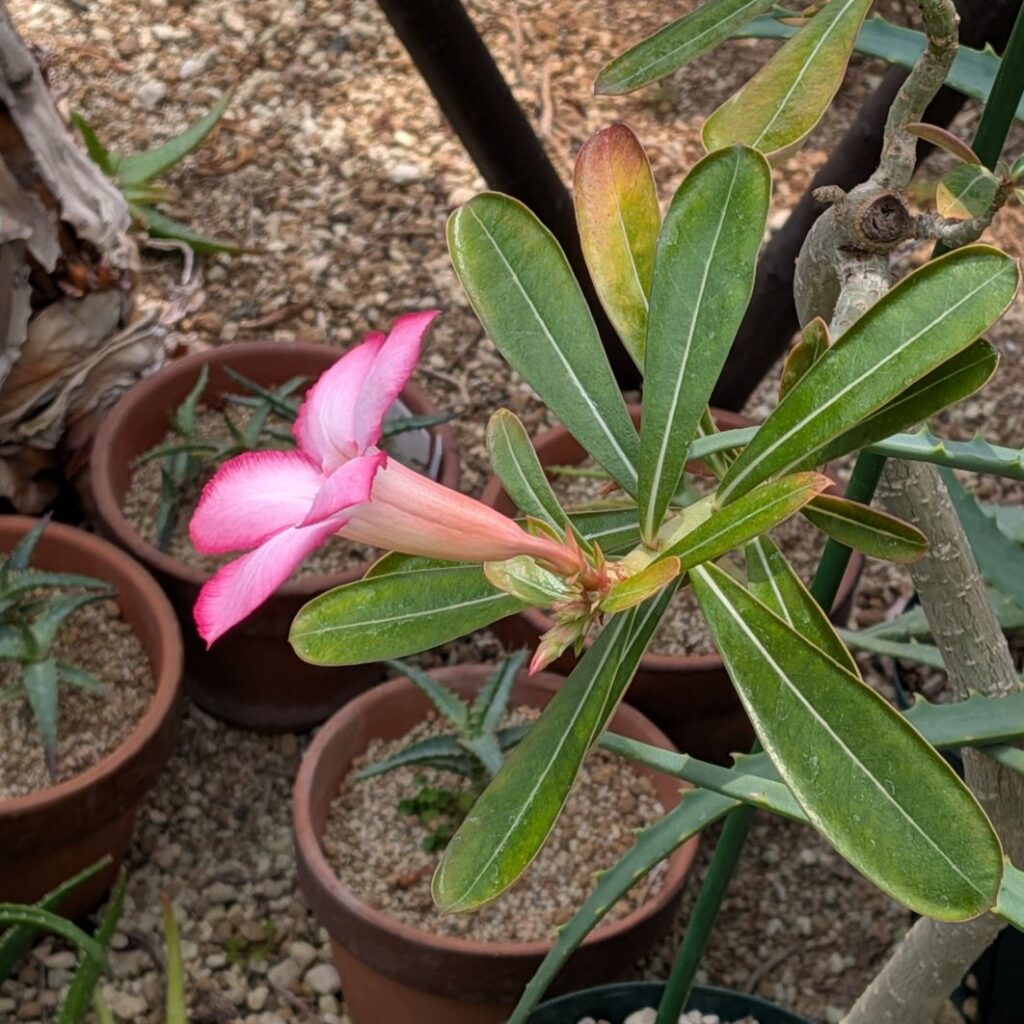
アデニウムは属名に由来。欧州の植物学者がアラビア半島の港湾都市「アデン」で採集・記録したためです。種小名オベスムは「肥満した」という意味で、幹が丸々と太っているから。英名デザート・ローズの由来は「砂漠」に自生し、「薔薇」のように美しい花を咲かせるからです。
アデニウムの姿形
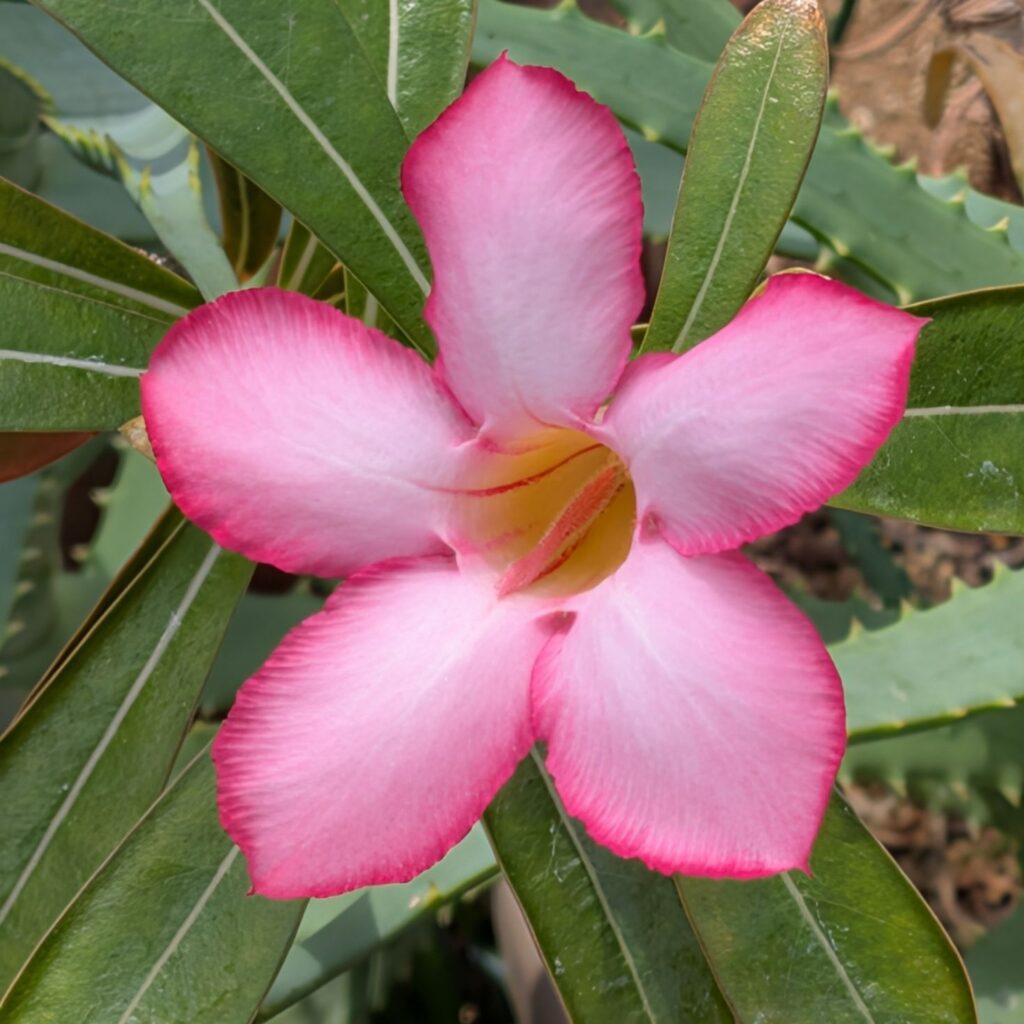
アデニウムは塊根と塊茎が膨らみ、傷つけると粘り気のある白色の樹液が浸出。葉は光沢のある倒卵形で、螺旋状に互生します。花は5裂の漏斗型で、筒部に細毛が密生し、雄しべが雌しべを包んで合着。花後は二本角の袋果を結び、熟すと裂けて、冠毛のついた種子を風に乗せます。
アデニウムの逸話
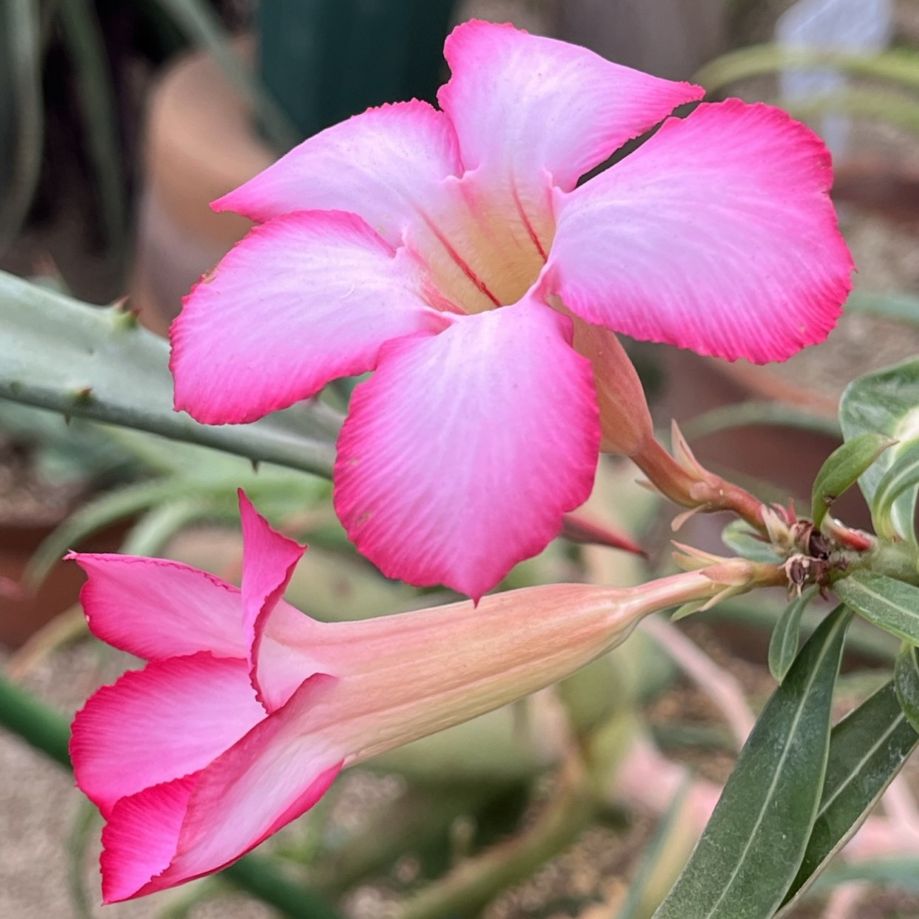
アデニウムはアラビア半島南部で土着の伝承があります。膨らんだ幹には砂漠の精霊が宿っており、傷つけると白色の血を流し、その呪いで人が病気になる…というもの。一方、過酷な砂漠を往来する交易商にとって瑞々しい緑色の葉と鮮やかな桃色の花は希望の象徴でもありました。
Desert Rose
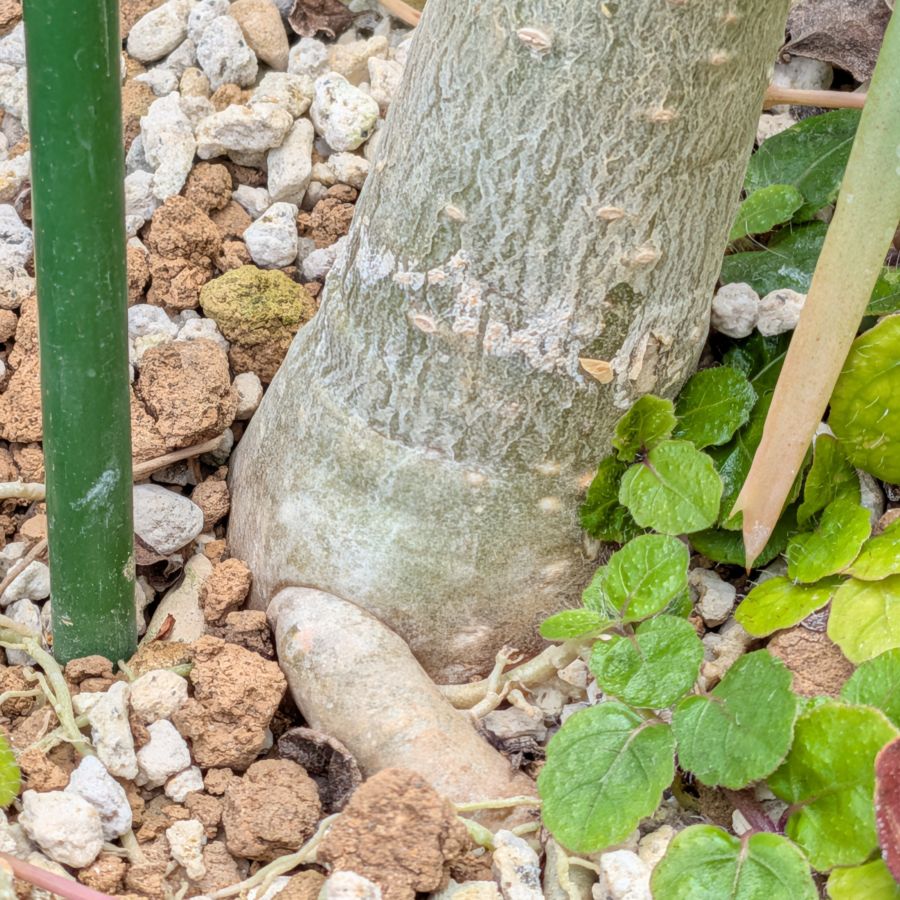
The Desert Rose is a succulent shrub belonging to the dogbane family (Apocynaceae). Native to the region stretching from the southern Arabian Peninsula in Western Asia to the southern edge of the Sahara Desert in Africa, it thrives in hot, arid climates. To store water during the rainy season and endure droughts, the plant develops a thick, swollen stem base known as a caudex. While it produces vibrant, showy flowers, its sap contains highly toxic cardiac glycosides.
The genus name Adenium is derived from the port city of Aden on the Arabian Peninsula, where European botanists first collected and documented the plant. The specific epithet obesum means “fat” or “obese,” referring to its remarkably plump, round trunk. Its common English name comes from its natural desert habitat and its strikingly beautiful, rose-like blooms.
The Desert Rose features a swollen trunk and roots that exude a sticky, white, milky sap when injured. Its glossy, obovate leaves are arranged in a spiral, alternate pattern. The funnel-shaped flowers have five lobes with a densely hairy tube, where the stamens are fused around the pistil. After flowering, it produces horn-like twin follicles that split open when ripe, releasing tufted seeds to be carried away by the wind.
In the southern Arabian Peninsula, the Desert Rose is steeped in local folklore. Legend has it that a desert spirit resides within the swollen trunk; damaging it causes the plant to bleed white blood, bringing a curse of illness upon the offender. Conversely, for merchants and traders traversing the unforgiving desert, its lush green leaves and vivid pink blossoms served as a powerful symbol of hope.