ヒメジョオンは圧倒的な種子生産量とアレロパシー作用で全国に広がった一方、飾らない佇まいから「素朴で清楚」という花言葉があります。
While the annual fleabane has spread across the country due to its overwhelming seed production and allelopathy, its unadorned appearance has earned it a symbolic meaning in the language of flowers: “simplicity and purity.”
【仮名】ヒメジョオン
【和名】姫女苑
【英名】Annual Fleabane, Daisy Fleabane
【学名】Erigeron annuus
【誕生】05/ 12, 07/ 18, 11/ 22
【開花】06, 07, 08, 09, 10月
【花色】White
ヒメジョオン
ヒメジョオンの概要
ヒメジョオンはキク科ムカシヨモギ属の多年草。原産地は北米で、日本へは江戸時代末期に観賞用で持ち込まれました。圧倒的な種子生産量とアレロパシー作用で在来種を駆逐しながら全国に広がった侵略的外来種。一方、飾らない佇まいから「素朴で清楚」という花言葉があります。
ヒメジョオンの名前
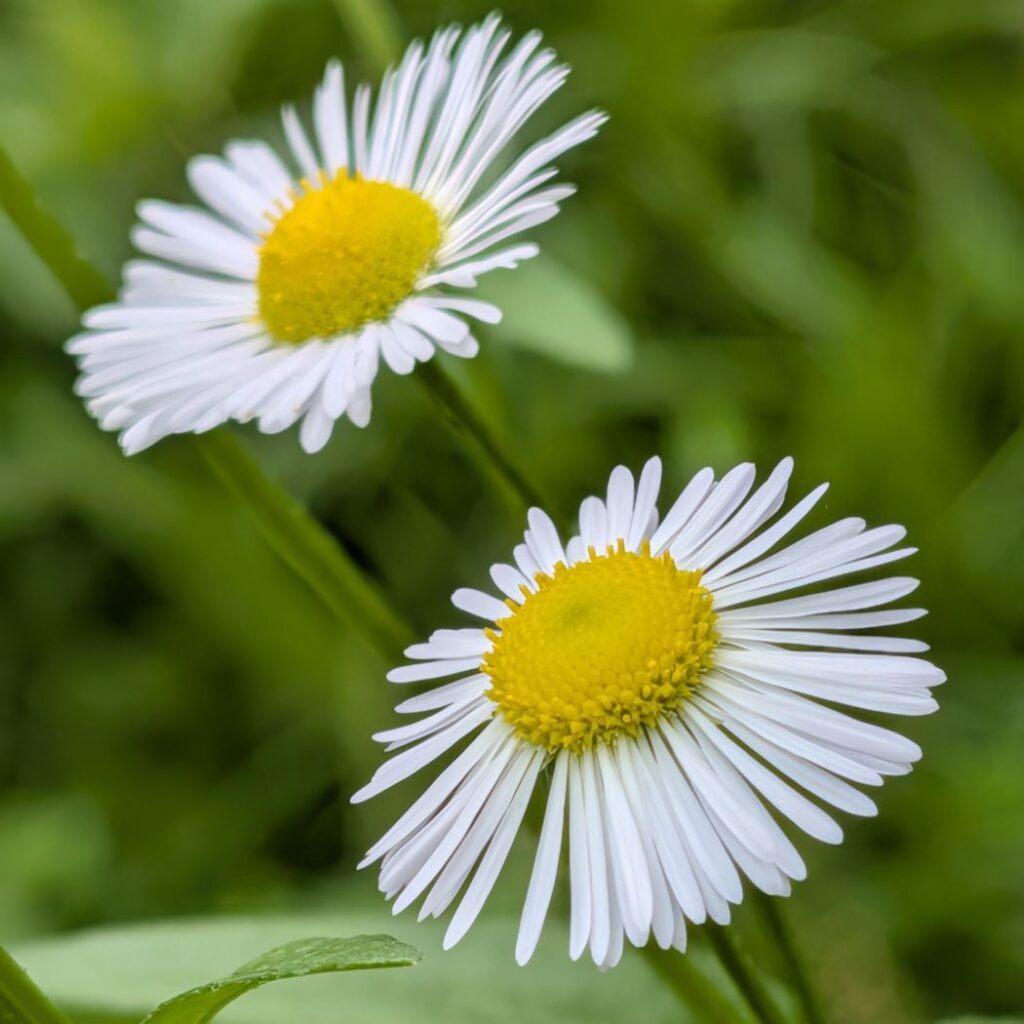
ヒメジョオンは「小さく可愛らしい野菊」といった意味。線路沿いに広がったので「鉄道草」という別名もあります。英名アニュアル・フリーベインは「蚤除けの1年草」という意味。属名エリゲロンは冠毛から「早くに老人のような」、種小名アヌウスは「一年草」という意味です。
ヒメジョオンの姿形
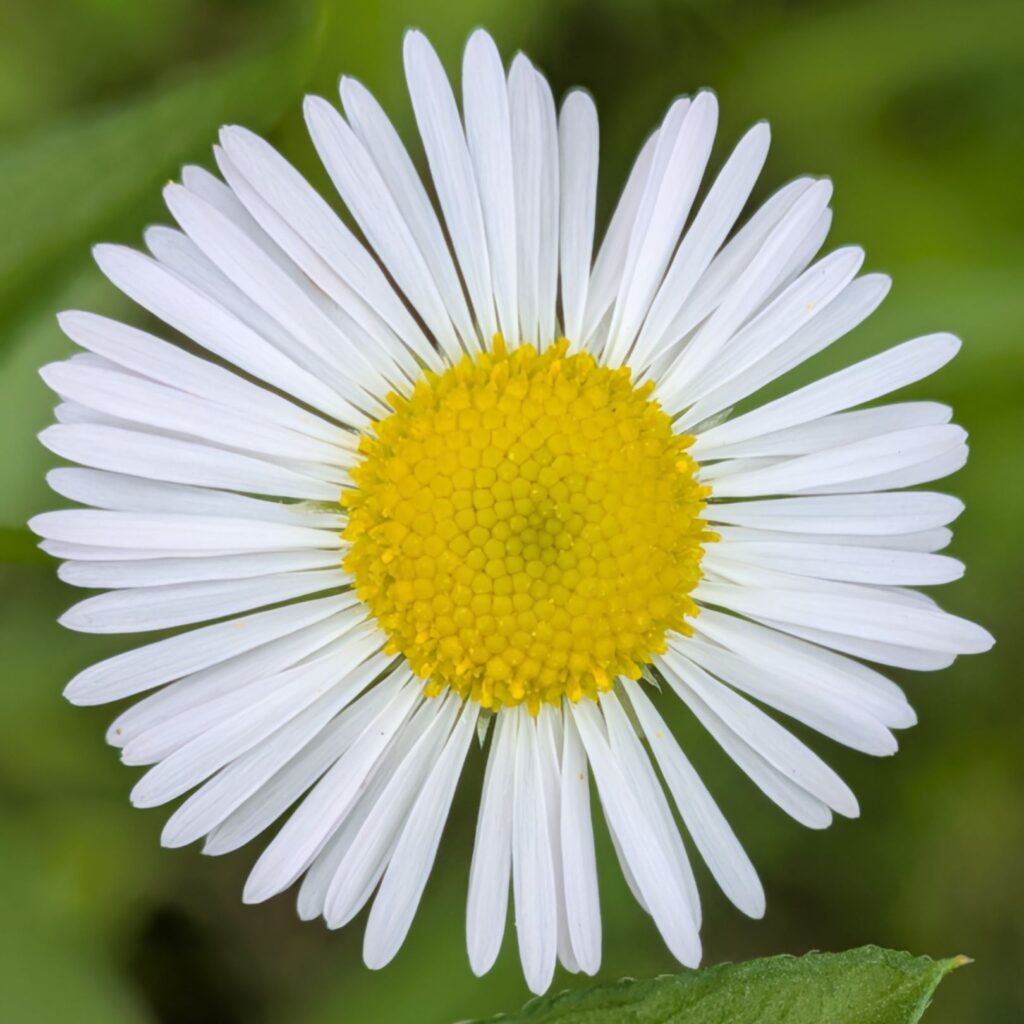
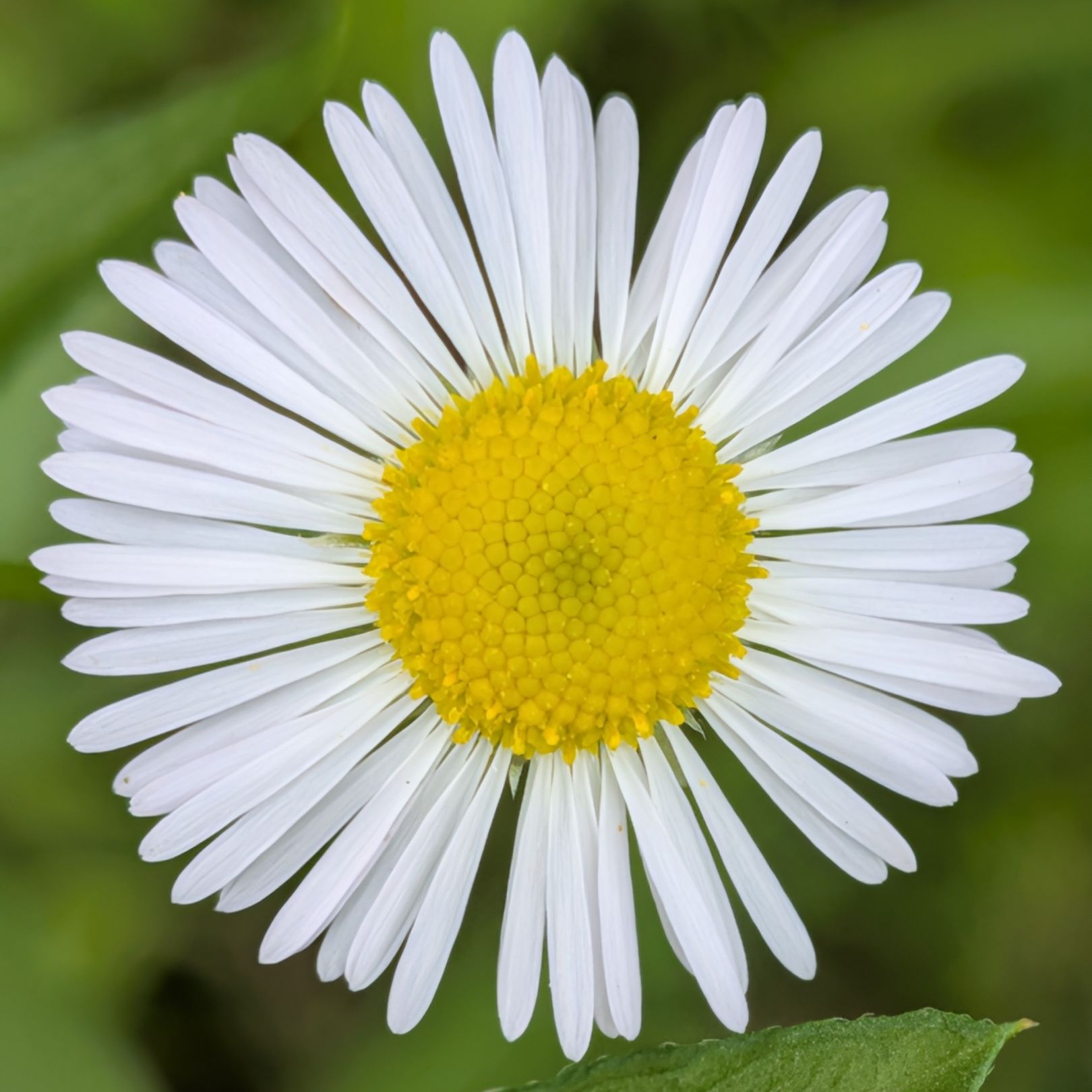
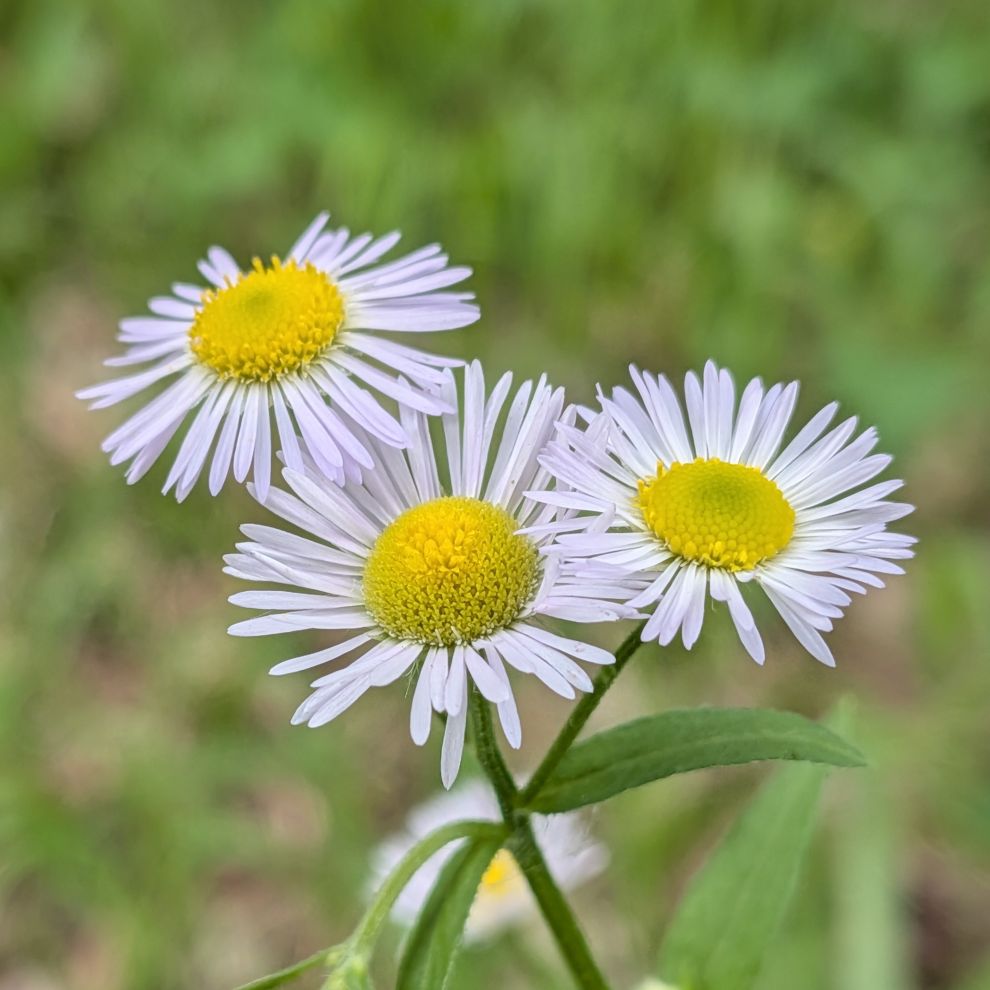
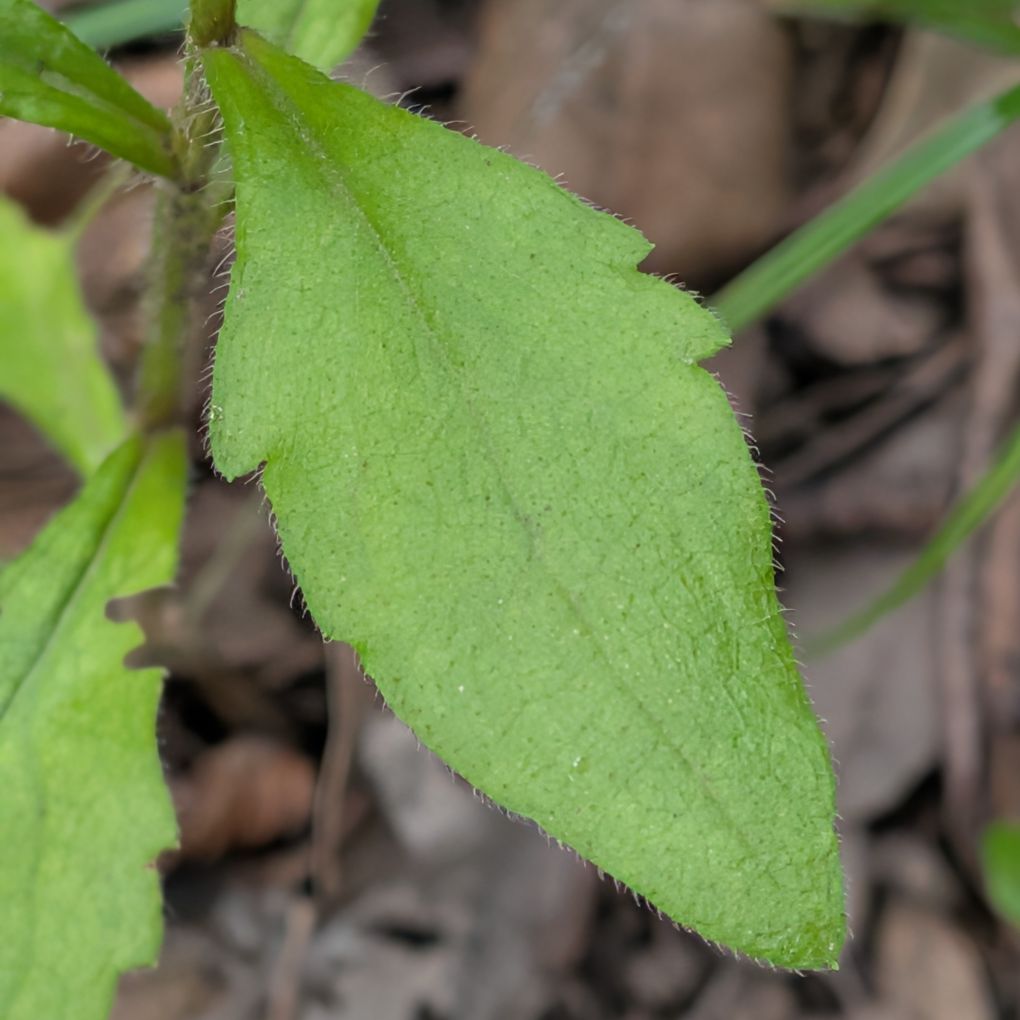
ヒメジョオンの根は主根が短く、側根が長く、細根が発達。茎は下方で直立、上方で分岐します。葉は卵形の根生葉で冬を越し、披針形の茎生葉が互生。花は真ん中が黄色の筒状花、周りが白色の舌状花です。花後は痩果を結実。綿のような冠毛で風に乗り、種子が遠くへ運ばれます。
ヒメジョオンの近縁
ヒメジョオンの近縁種「春紫菀」は姿形が似ていて、同じく北米原産の多年草。日本へは大正時代に渡来し、和名は「春に咲く紫菀」という意味です。花が4~6月と早く咲き、花冠が少し大きく、花弁が細く、糸のよう。草丈が低く、茎が中空で、葉が茎を抱き、蕾が下を向きます。
Annual Fleabane
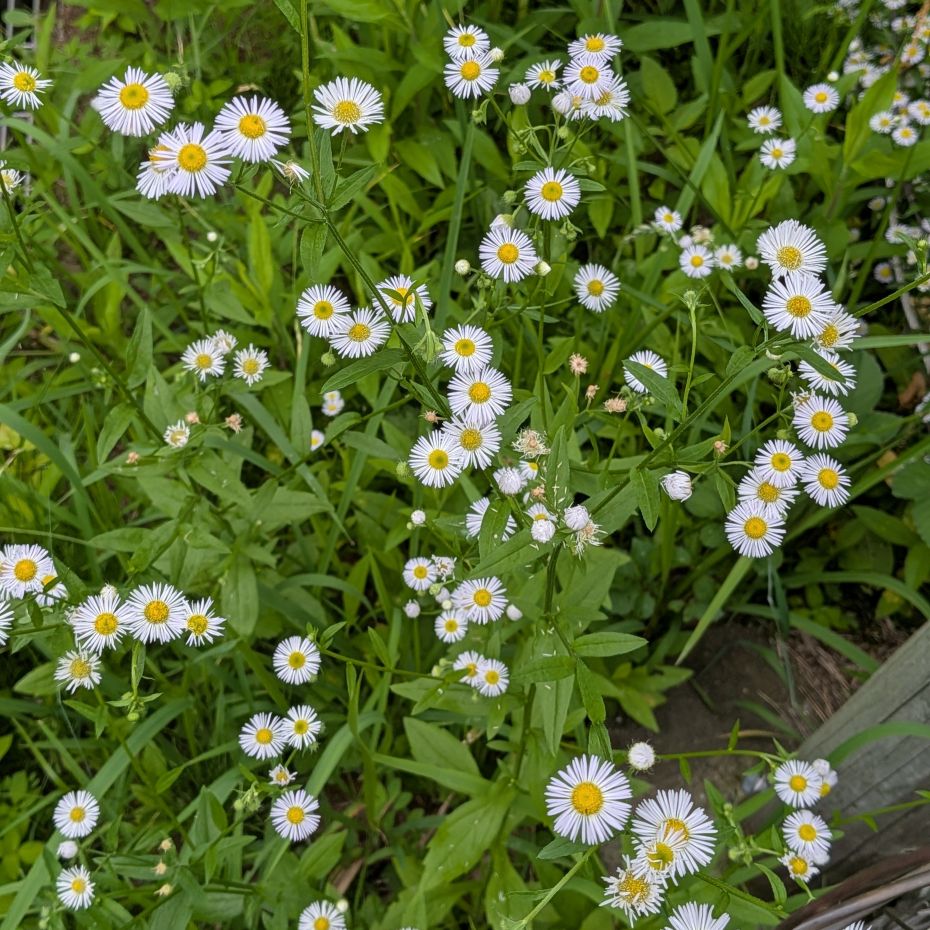
The annual fleabane (Erigeron annuus) is a plant belonging to the genus Erigeron in the family Asteraceae. Native to North America, it was introduced to Japan for ornamental purposes in the late Edo period. It is an invasive species that has spread nationwide, displacing native plants through its massive seed output and allelopathic effects. Yet, its unpretentious look has given it a flower meaning of “simplicity and purity.”
Its Japanese name translates roughly to “a small, lovely wild chrysanthemum.” It is also nicknamed “railway grass” because it frequently spread along railroad tracks. The genus name Erigeron means “early old man” (referring to the gray, hair-like pappus), while the specific epithet annuus means “annual.”
The plant forms a short taproot with long lateral roots and well-developed fine rootlets. The stem grows upright at the bottom and branches out near the top. It overwinters as a rosette of egg-shaped basal leaves, later producing lance-shaped stem leaves arranged alternately. The flower heads feature yellow disk florets in the center surrounded by white ray florets. After blooming, it sets fruit in the form of achenes; these seeds are carried far on the wind by cotton-like pappi.
A closely related species, Erigeron philadelphicus (Philadelphia fleabane), resembles the annual fleabane and is also a perennial native to North America. Introduced to Japan during the Taisho era, its Japanese name means “aster that blooms in spring.” It flowers earlier (April to June), has slightly larger flower heads, and features finer, thread-like petals. It is shorter in height, has hollow stems, leaves that clasp the stem, and drooping flower buds before blooming.