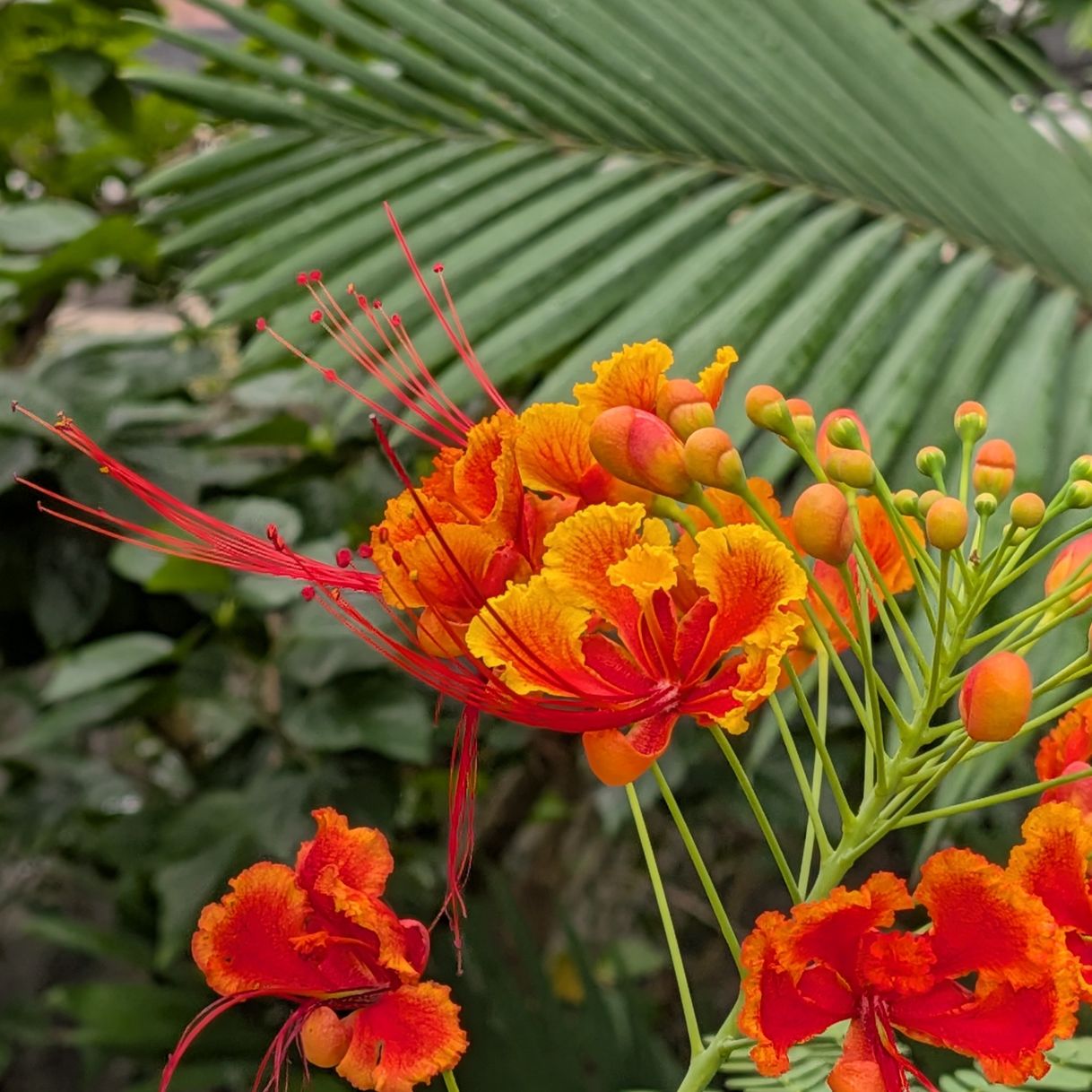
オウゴチョウの英名は「孔雀の花」という意味。可憐で品のある冠羽、流麗でしなやかな羽軸、絢爛で圧倒的な尾羽を思わせる美しい花です。
The name “Peacock Flower” comes from its breathtaking blossoms, which evoke the delicate, elegant crest, the fluid, supple shafts, and the brilliant, magnificent tail feathers of a peacock.
【仮名】オウゴチョウ, オオゴチョウ
【和名】黄胡蝶
【英名】Peacock Flower
【学名】Caesalpinia pulcherrima
【誕生】10/ 29
【開花】06, 07, 08, 09, 10月
【花色】Red, Yellow, Orange
オウゴチョウ
オウゴチョウの概要
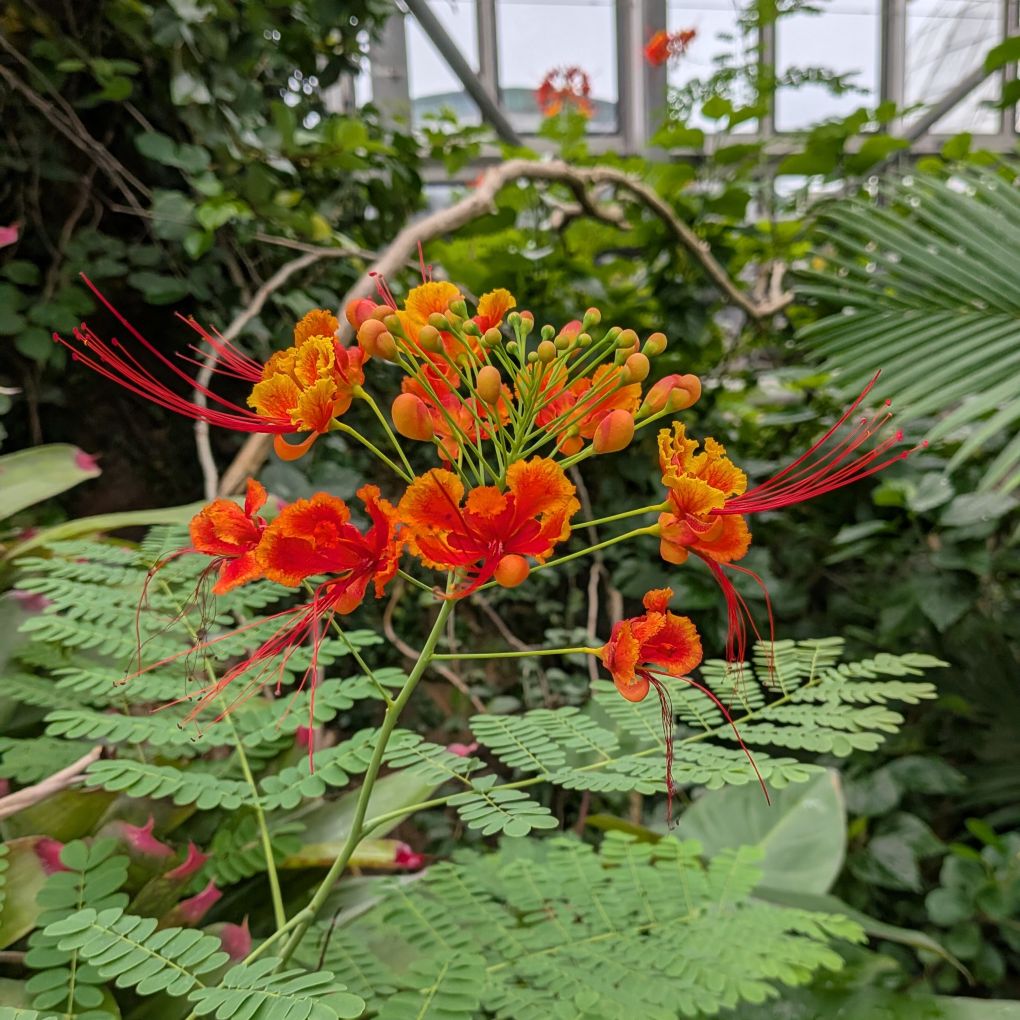
オウゴチョウはマメ科の低木~小高木。原産地は中南米で、世界の熱帯~亜熱帯域に分布し、日本では南西諸島で定着しました。英名ピーコックフラワーは「孔雀の花」という意味。可憐で品のある冠羽、流麗でしなやかな羽軸、絢爛で圧倒的な尾羽を思わせる、美しい花だからです。
オウゴチョウの名前
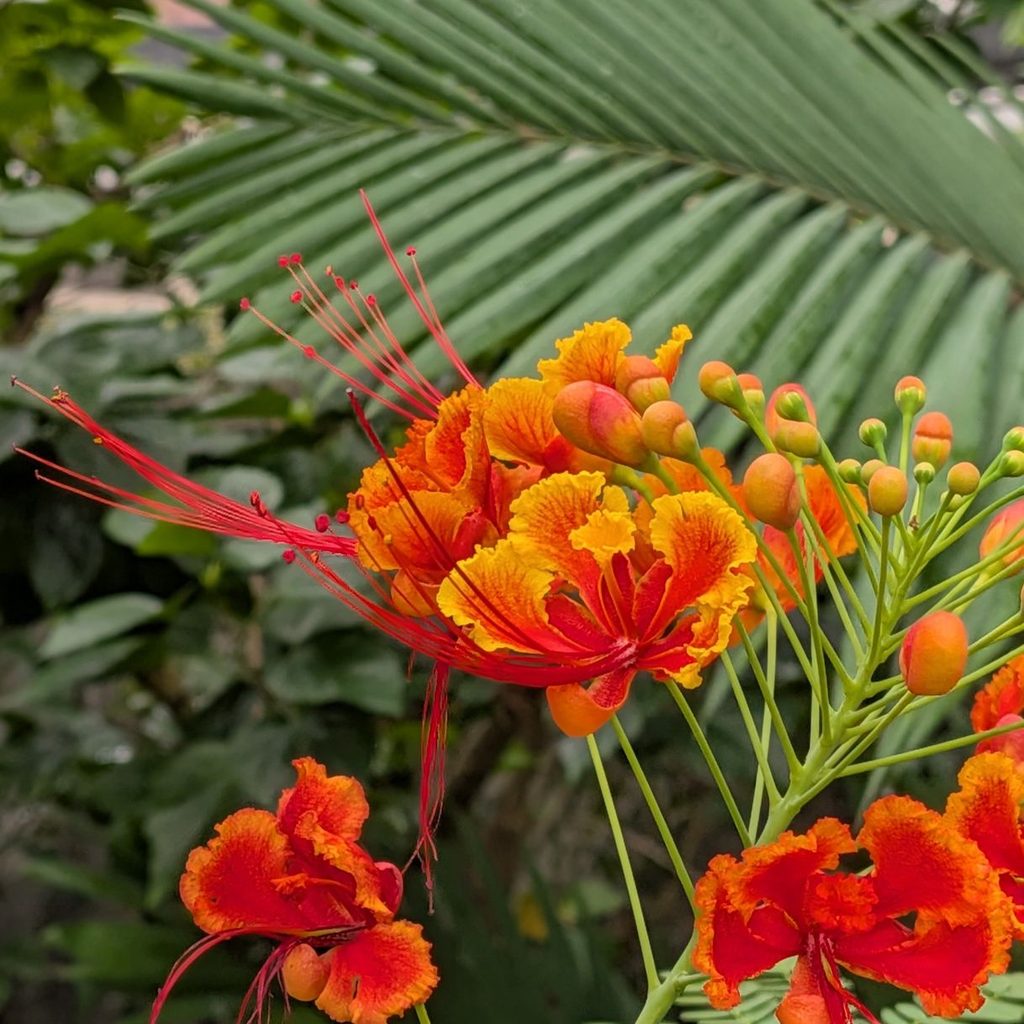
オウゴチョウの和名の由来は、鮮やかな黄色に縁取られた赤色の花被、長く突き出た雄しべと雌しべが、美しく舞い飛ぶ蝶(胡蝶)のようだから。属名カエサルピニアはイタリアの植物学者アンドレア・チェザルピーノへの献名です。種小名プルケリマは「極めて美しい」という意味。
オウゴチョウの姿形
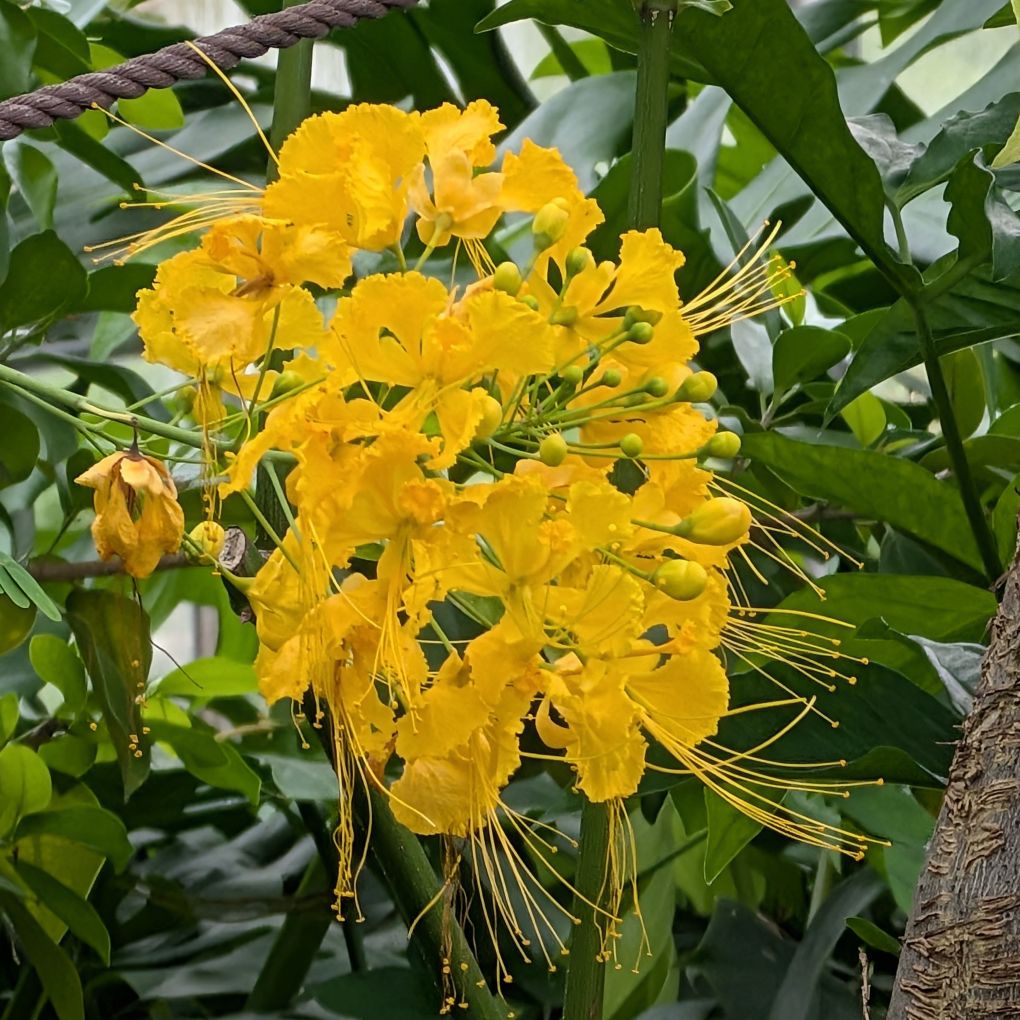
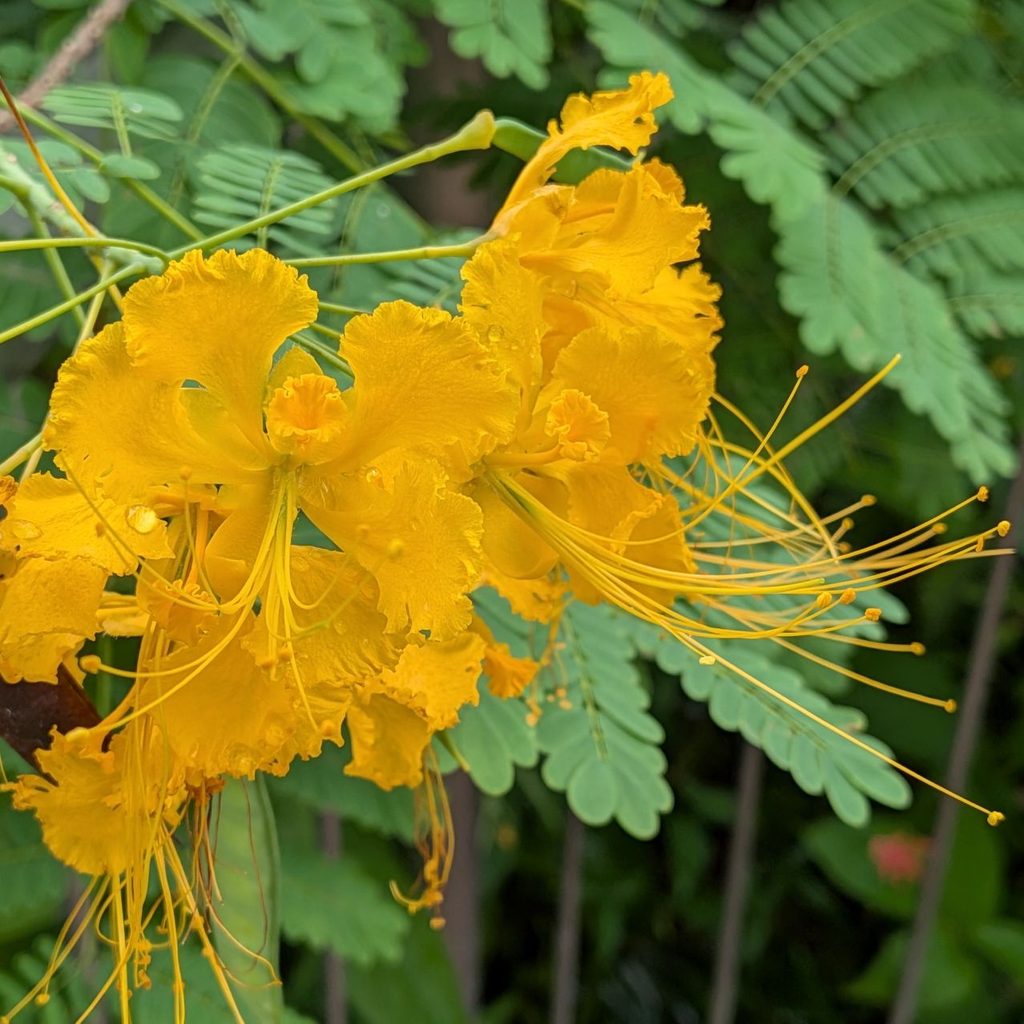
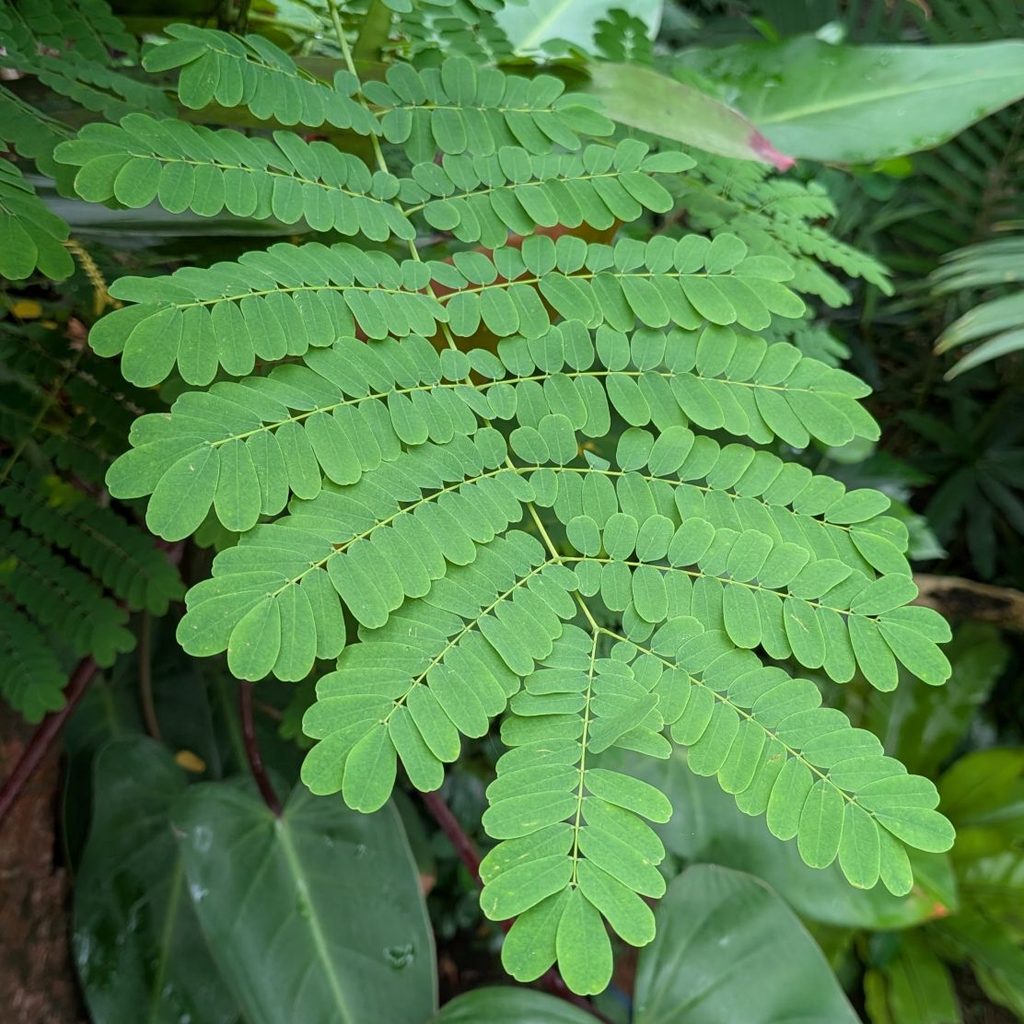
オウゴチョウの根は根粒を作らず、広く深く張ります。幹と枝は鋭い棘が散生。葉は互生の2回羽状複葉で、夜になると小葉が閉じます。花は花弁5枚が波打ち、雄しべ10本が雌しべとともに突出。枝先で傘房状に咲き上がります。花後の豆果は扁平で、熟すと莢が弾けて種子が飛散。
オウゴチョウの毒性
オウゴチョウは種子、莢、葉、樹皮、根に強い毒性があります。誤食によって嘔吐、腹痛、下痢のほか、重症化すると脱水症状、電解質異常、子宮収縮作用など。一方、伝統医薬に用いられたこともあり、抗炎症、抗酸化、抗腫瘍活性などの薬理作用について研究が進められています。
Peacock Flower
The Peacock Flower is a shrub or small tree in the legume family (Fabaceae). Native to Tropical America, it is widely naturalized across the world’s tropical and subtropical regions, including the Nansei Islands (Southwestern Islands) of Japan. Its English name derives from its striking blossoms, which bring to mind the delicate, refined crest, the flowing shafts, and the gorgeous, spectacular tail feathers of a peacock.
In Japan, it is known as Ki-kochō (literally “Yellow Butterfly”). This name was inspired by its red petals edged in vibrant yellow and its long, protruding stamens and pistils, which resemble a butterfly fluttering in flight. The genus name Caesalpinia honors the Italian botanist Andrea Cesalpino, while the specific epithet pulcherrima means “most beautiful.”
Unlike many legumes, the roots of the Peacock Flower do not form root nodules; instead, they spread wide and deep. Its trunk and branches are sparsely covered with sharp prickles. The leaves are alternate and bipinnately compound, with leaflets that fold close at night. Each flower features five ruffled petals and ten stamens that, along with the single pistil, extend far beyond the bloom. They flower in corymbs (umbrella-like clusters) at the branch tips. After flowering, the plant produces flat pods that split open explosively when ripe to scatter their seeds.
All parts of the Peacock Flower—including its seeds, pods, leaves, bark, and roots—are highly toxic. Ingestion can cause severe vomiting, abdominal pain, and diarrhea, with critical cases leading to dehydration, electrolyte imbalances, and uterine contractions. Despite its toxicity, the plant has a history of use in traditional medicine, and modern research is investigating its pharmacological potential, including anti-inflammatory, antioxidant, and anti-tumor properties.