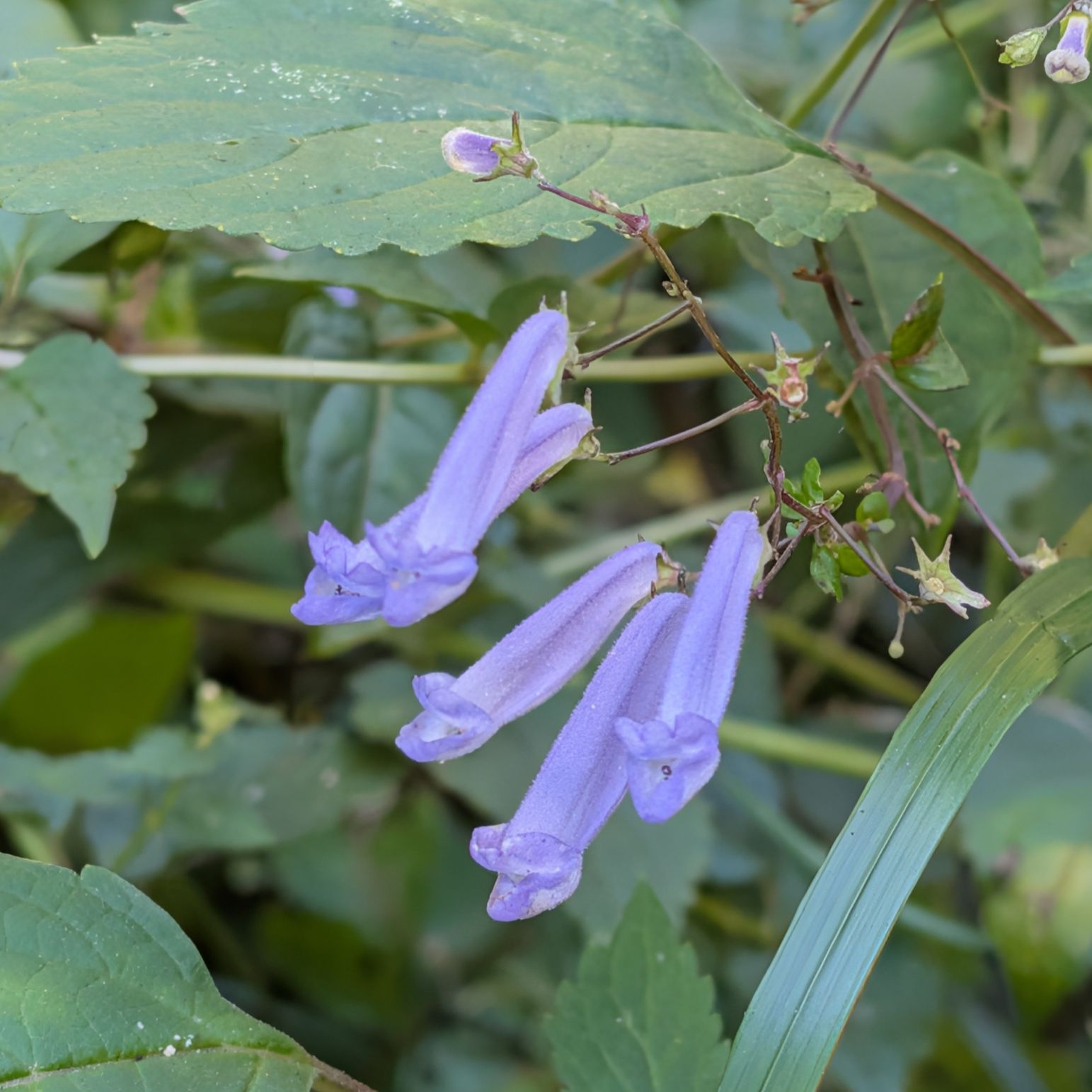
セキヤノアキチョウジは長く伸び出た花柄、林内でひっそりと揺れる唇形花。奥ゆかしい姿から「秘めやかな思い」という花言葉があります。
Isodon effusus features long flower stalks and delicate two-lipped flowers that sway quietly in the forest. Its elegant, understated beauty has given rise to its floriography (language of flowers): “secret thoughts.”
【仮名】セキヤノアキチョウジ
【和名】関屋の秋丁字
【英名】Isodon effusus
【学名】Isodon effusus
【誕生】10/ 13
【開花】09, 10月
【花色】Violet, Blue
セキヤノアキチョウジ
セキヤノアキチョウジの概要
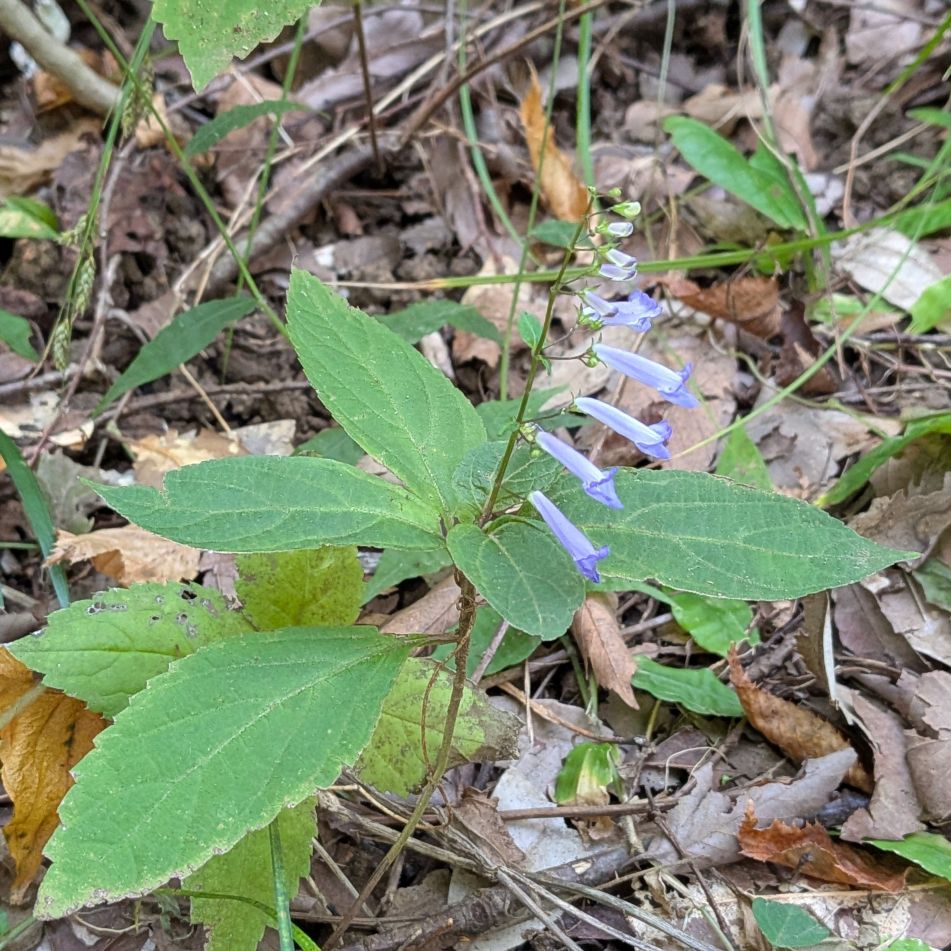
セキヤノアキチョウジはシソ科ヤマハッカ属の多年草。本州太平洋側の関東~近畿地方に分布し、山地の湿り気のあるところで自生しています。長く伸び出た花柄に筒状の花冠、林内でひっそりと揺れる唇形花。上品で奥ゆかしい姿から、「秘めやかな思い」という花言葉があります。
セキヤノアキチョウジの名前
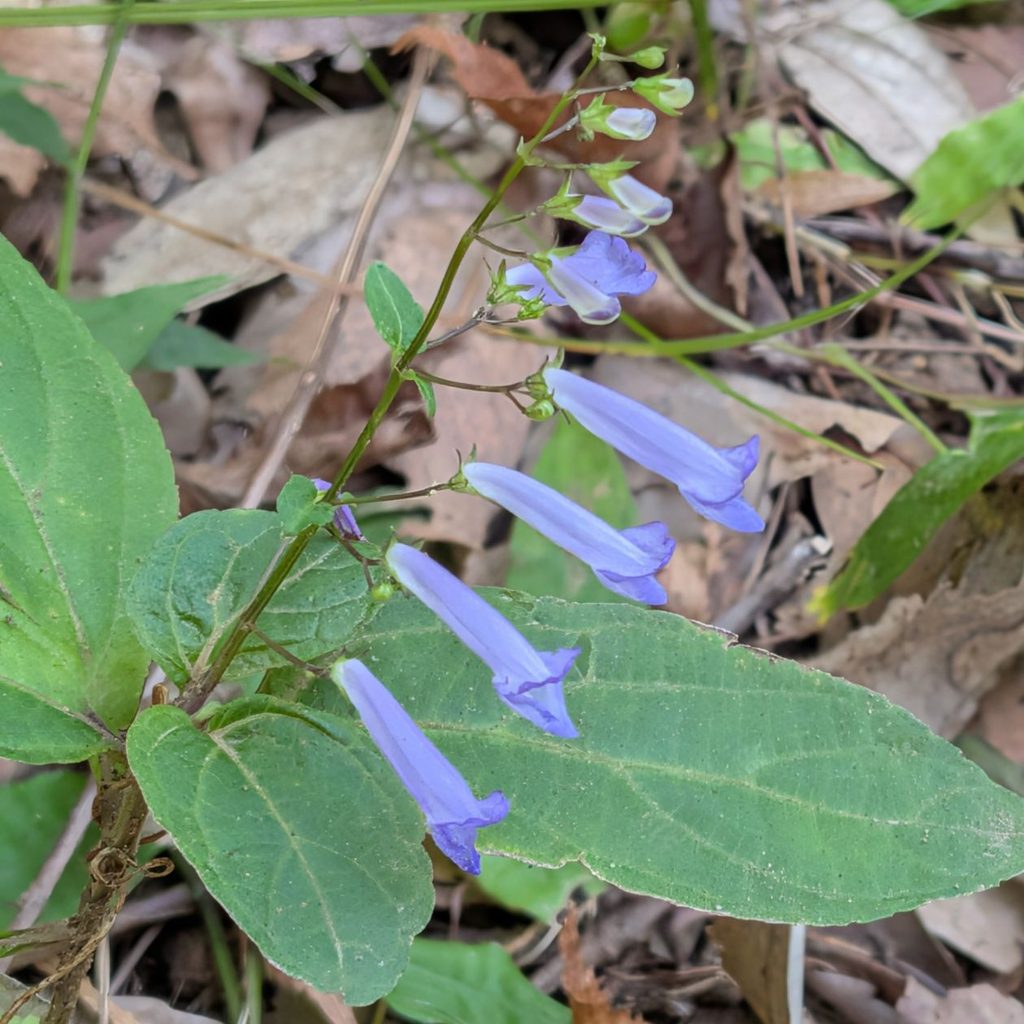
セキヤノアキチョウジの和名の「関屋」は関所のあった箱根の周辺で標本が採集されたからです。「秋丁字」は花が秋に咲き、丁子の蕾に似ていたから。属名イソドンは「均等な」という意味で萼の切れ込みに、種小名エフーサスは「広がり出た」という意味で花序の姿に由来します。
セキヤノアキチョウジの姿形
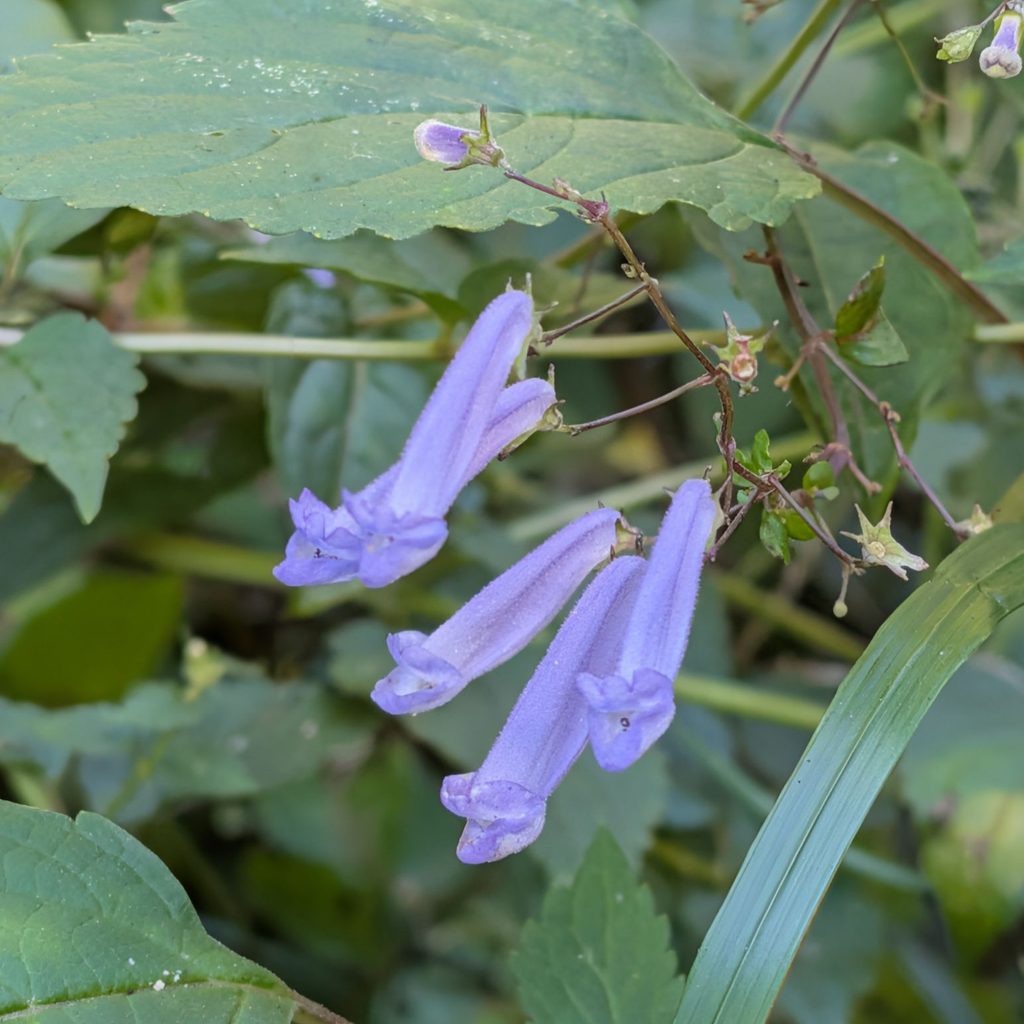
セキヤノアキチョウジは地下茎が多くの髭根を伸ばし、地上茎が四稜で直立。葉は対生の卵形で縁に粗い鋸歯があります。花は筒状の唇形花で、上唇が4裂、下唇が舟形で突出、雄しべが4本。長い柄の先で垂れ下がるように咲きます。花後は4分果を結び、熟すと風に揺られて散布。
セキヤノアキチョウジの近縁
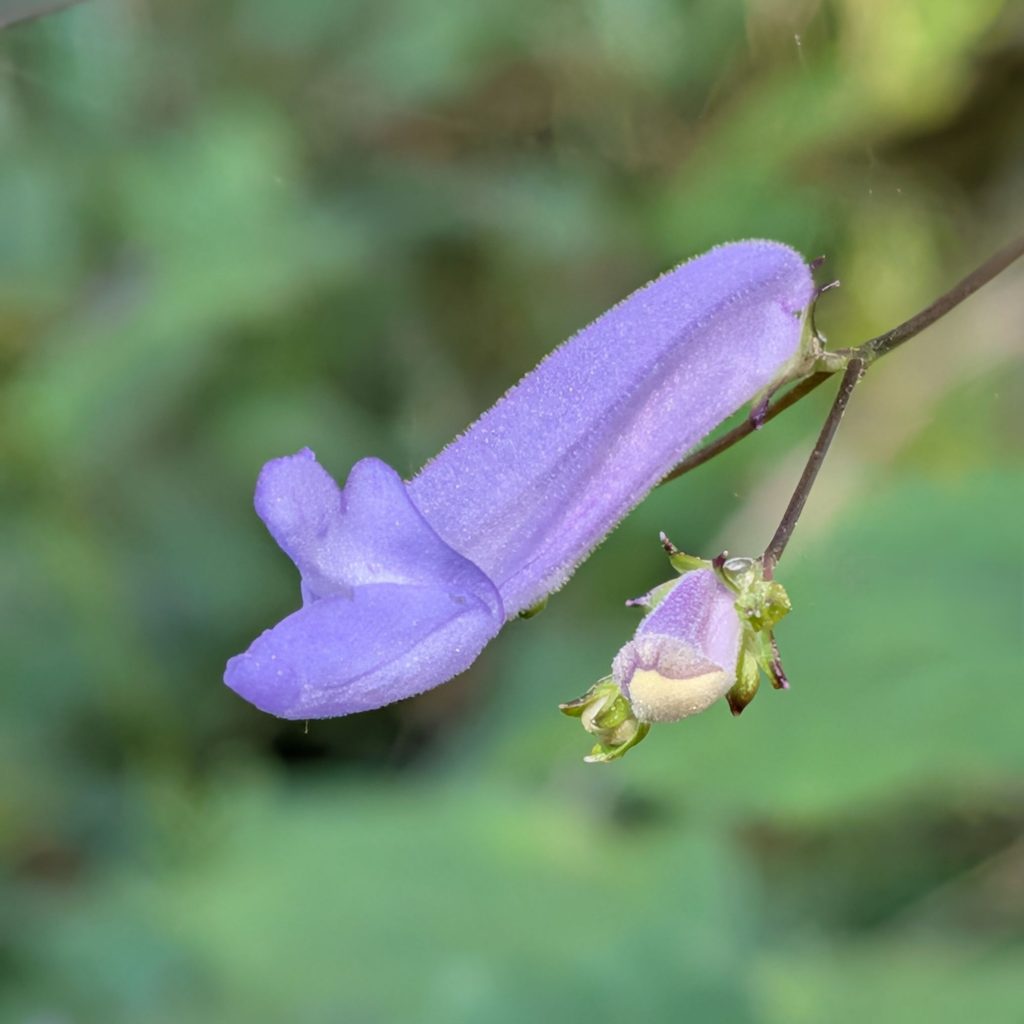
セキヤノアキチョウジの近縁種「秋丁字」も湿り気のあるところで自生。四稜の茎が直立し、卵形の葉が対生し、筒状唇形花が咲きます。種小名ロンギツブスは「長い管を持つ」という意味。一方、岐阜県以西の本州・四国・九州に分布し、花柄が短く、花序が引き締まって見えます。
Isodon effusus
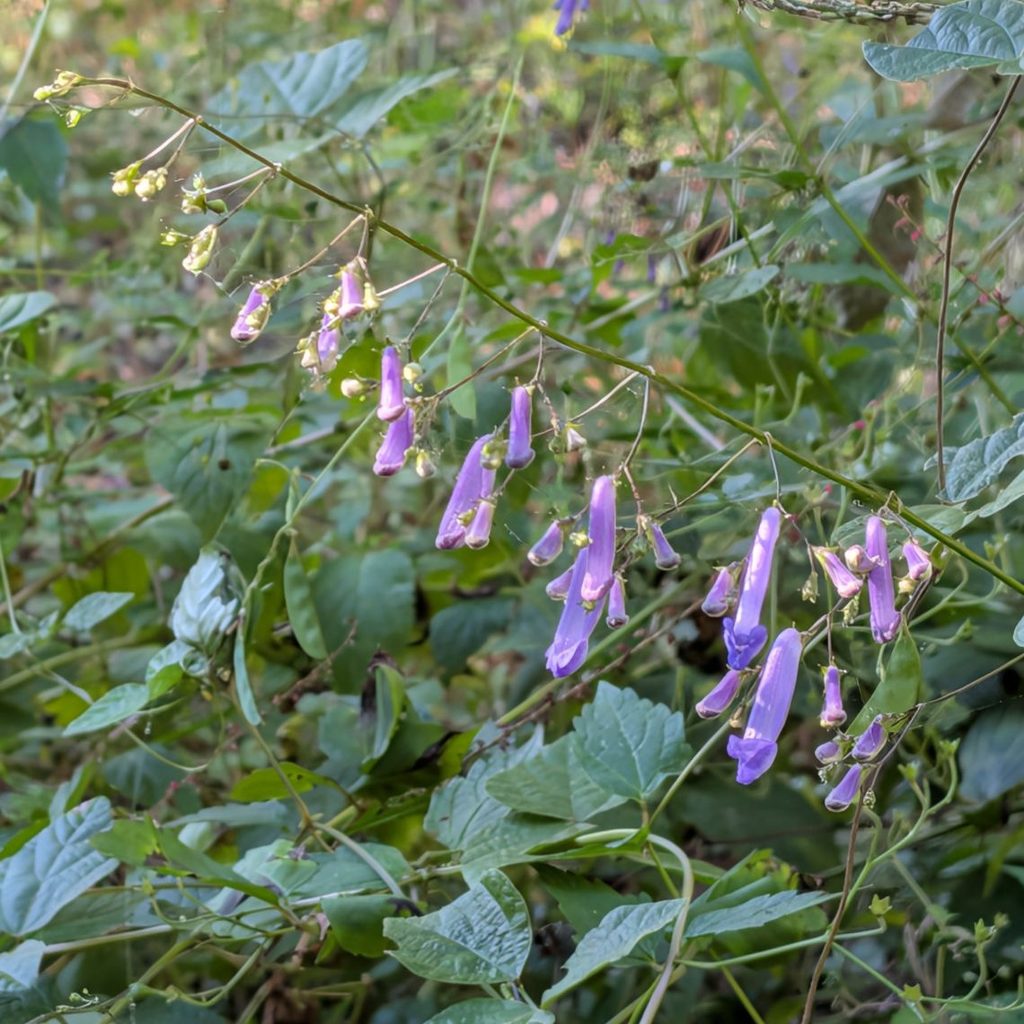
Isodon effusus is a perennial herb in the Lamiaceae (mint) family. It is native to the Pacific side of Honshu—ranging from the Kanto to the Kinki region—where it grows naturally in damp, mountainous areas. Characterized by long flower stalks, tubular corollas, and two-lipped flowers swaying gently in the woods, its graceful and modest appearance has earned it the symbolic meaning, “secret thoughts.”
The Japanese name Sekiya-no-aki-chōji (often called Sekiya) originates from the first specimens collected near Hakone, an area historically famous for its checkpoint (seki-sho or sekiya). “Aki-chōji” (autumn clove) refers to its autumn-blooming flowers, which resemble clove buds. The genus name Isodon—meaning “equal teeth”—refers to the uniform incisions on the calyx, while the specific epithet effusus—meaning “spread out”—describes the wide, loose structure of its inflorescence.
Isodon effusus produces numerous fibrous roots from its underground rhizomes, with upright, four-angled (square) aerial stems. The leaves are ovate, arranged in opposite pairs, with coarsely serrated margins. Its tubular, two-lipped flowers feature a four-lobed upper lip, a protruding boat-shaped lower lip, and four stamens, dangling gently from long stalks. After blooming, the flowers produce four small nutlets that are dispersed by the wind as the plant sways.
A closely related species, Isodon longitubus (also known as Aki-chōji), shares similar damp habitats, upright square stems, opposite ovate leaves, and tubular, two-lipped flowers. Its specific epithet, longitubus, means “long-tubed.” Distributed throughout Honshu (west of Gifu Prefecture), Shikoku, and Kyushu, it is distinguished by shorter flower stalks that give its inflorescence a denser, more compact appearance.