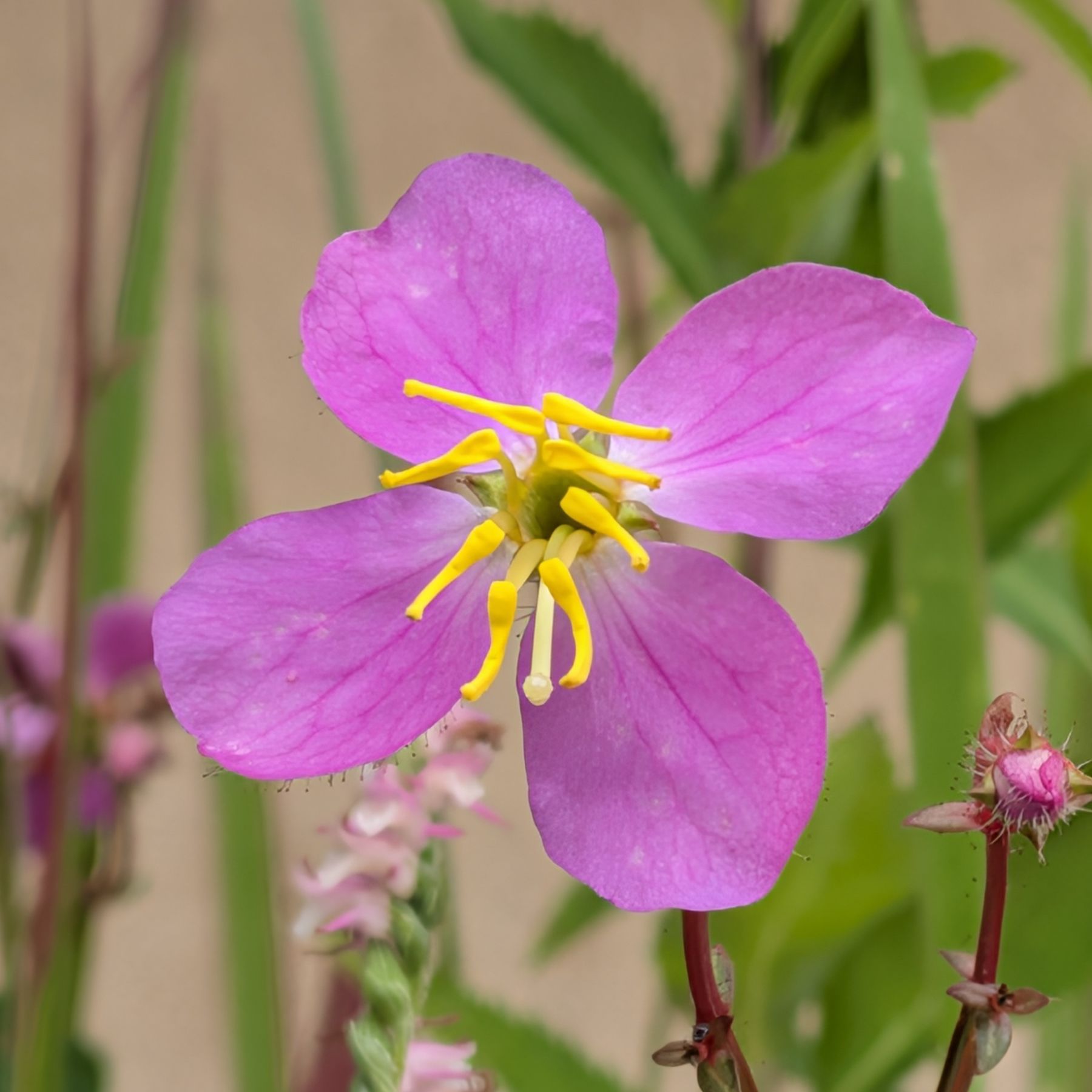
ヒメノボタンの和名の由来は野牡丹に似ながらお姫様のように可憐なお花だから。野牡丹は牡丹に劣らず美しく咲く野の花といった意味です。
The Japanese name for Osbeckia chinensis (commonly known as “Chinese Osbeckia”) originates from its resemblance to the Nobotan (Asian Melastome), combined with its delicate, princess-like beauty. The word Nobotan itself translates to “a wildflower that blooms as beautifully as a peony.”
【仮名】ヒメノボタン
【和名】姫野牡丹
【英名】Chinese Osbeckia
【学名】Osbeckia chinensis
【誕生】09/ 25
【開花】08, 09, 10月
【花色】Pink, Purple
ヒメノボタン
ヒメノボタンの概要
ヒメノボタンはノボタン科の常緑小低木。東アジア、東南アジア、南アジア、オセアニアに分布しています。日本では本州の紀伊半島から四国、九州、琉球諸島まで、日当たりがよく、湿り気のあるところで自生。昔は路傍などで普通にみられましたが、今は絶滅の恐れのある花です。
ヒメノボタンの名前
ヒメノボタンの和名の由来は、野牡丹に似ながらお姫様のように可憐なお花だから。野牡丹は「牡丹に劣らず美しく咲く野の花」といった意味です。属名オスベッキアはスウェーデンの植物学者ペール・オスベックへの献名。種小名チネンシスは標本採集地「中国の」という意味です。
ヒメノボタンの姿形
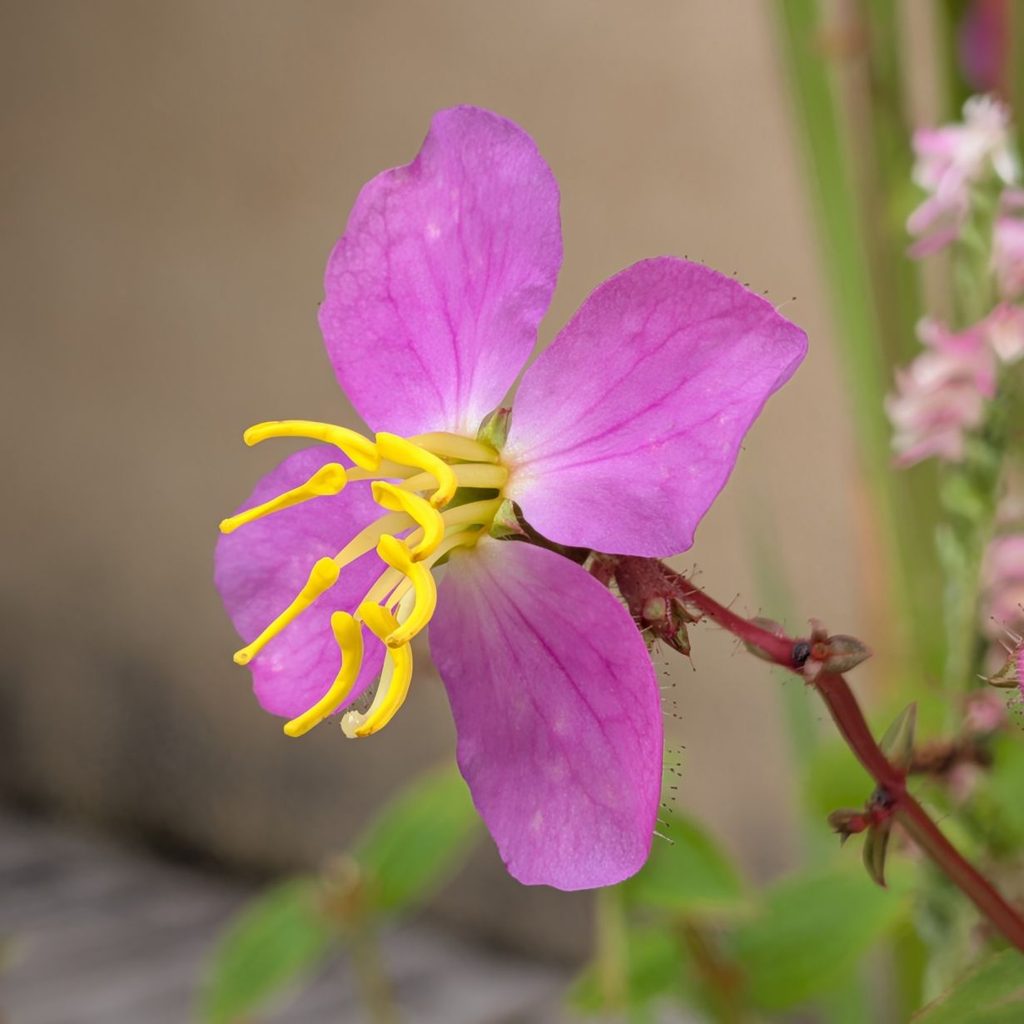
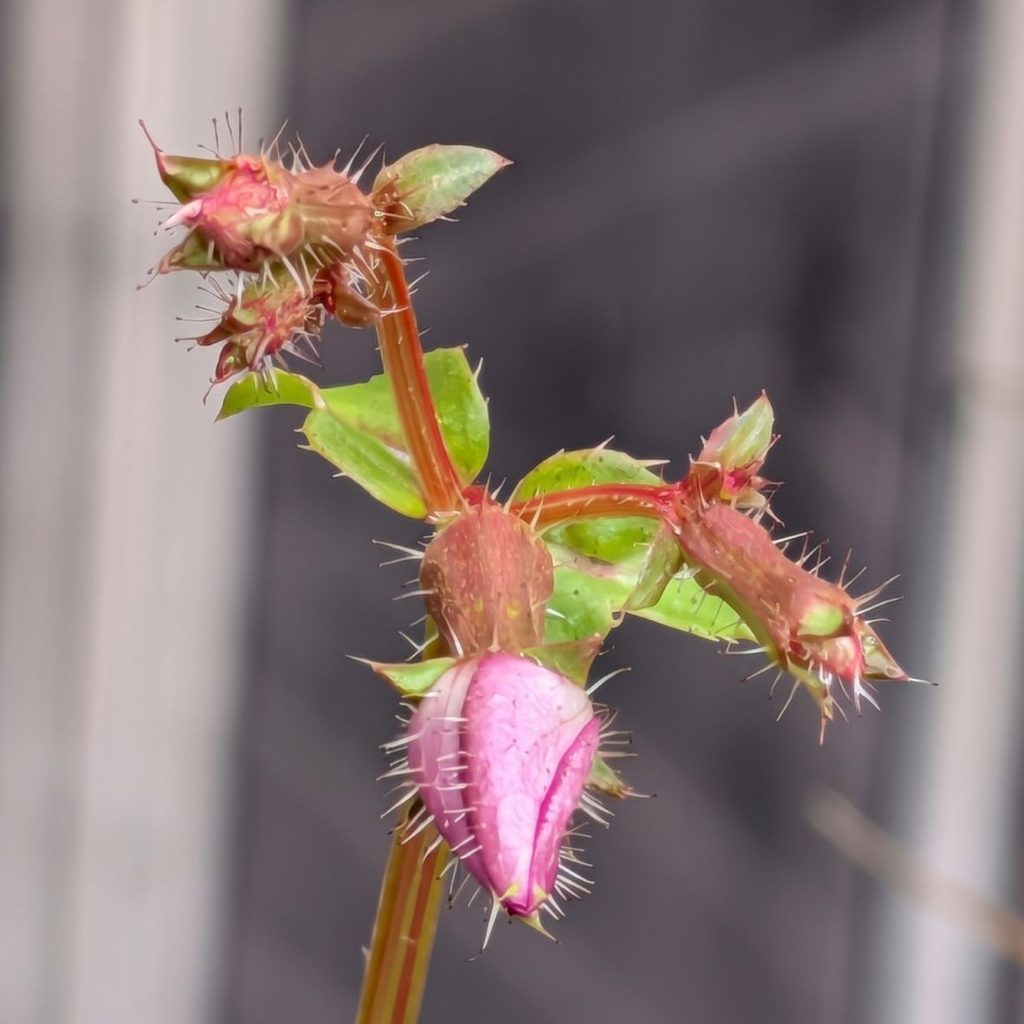
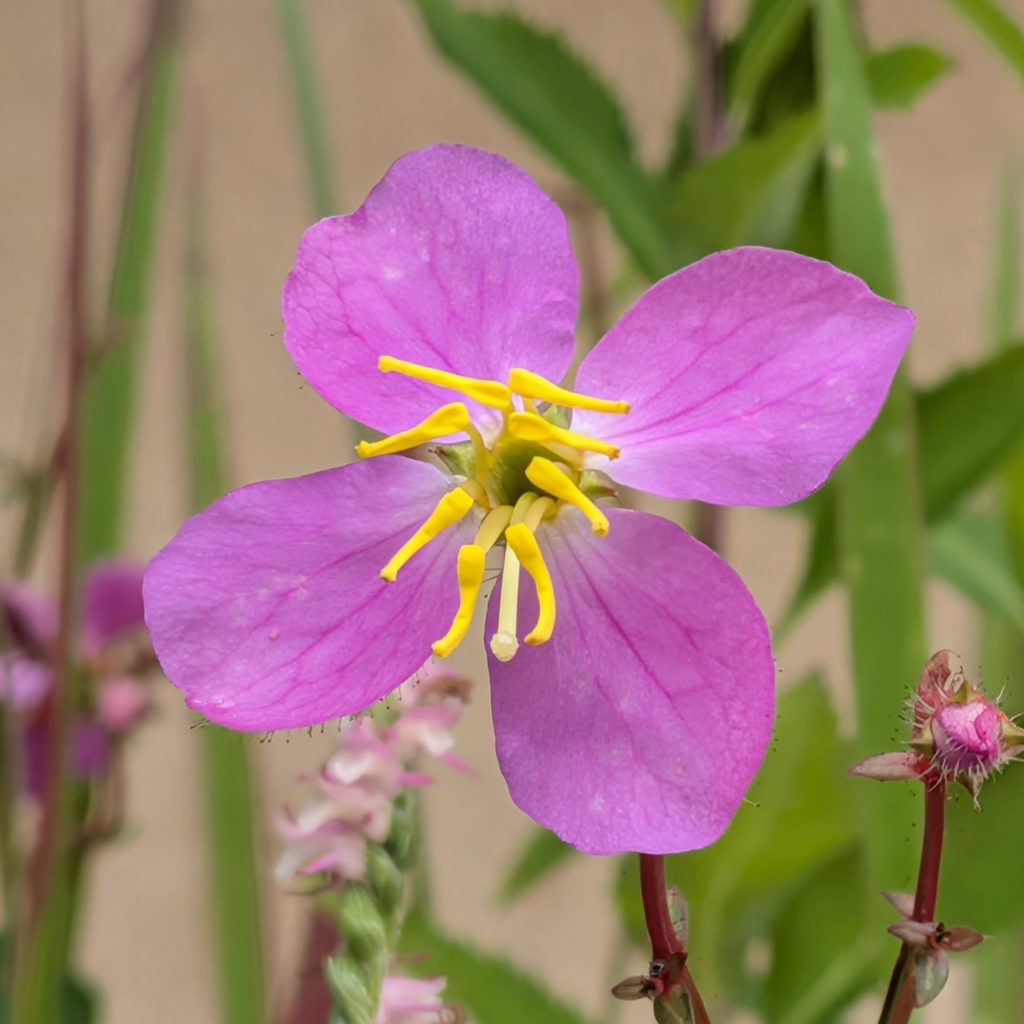
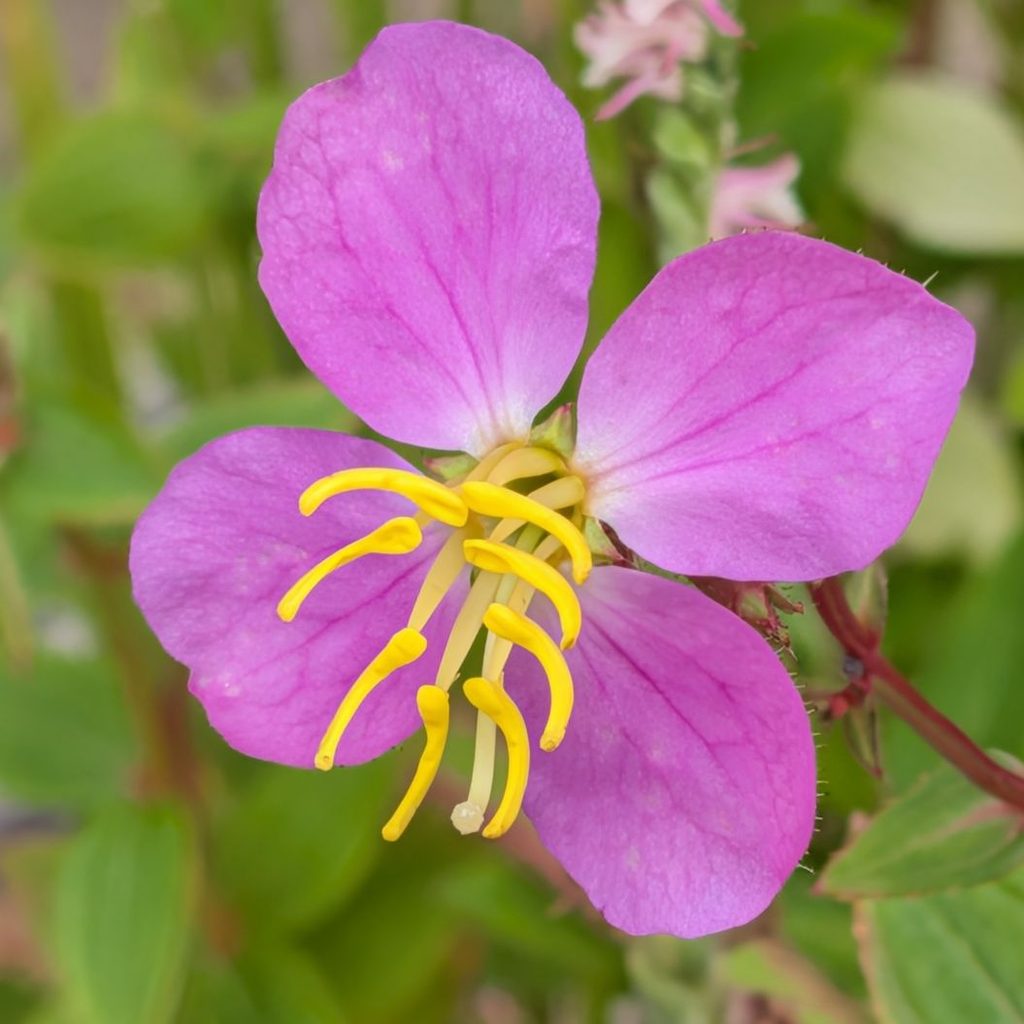
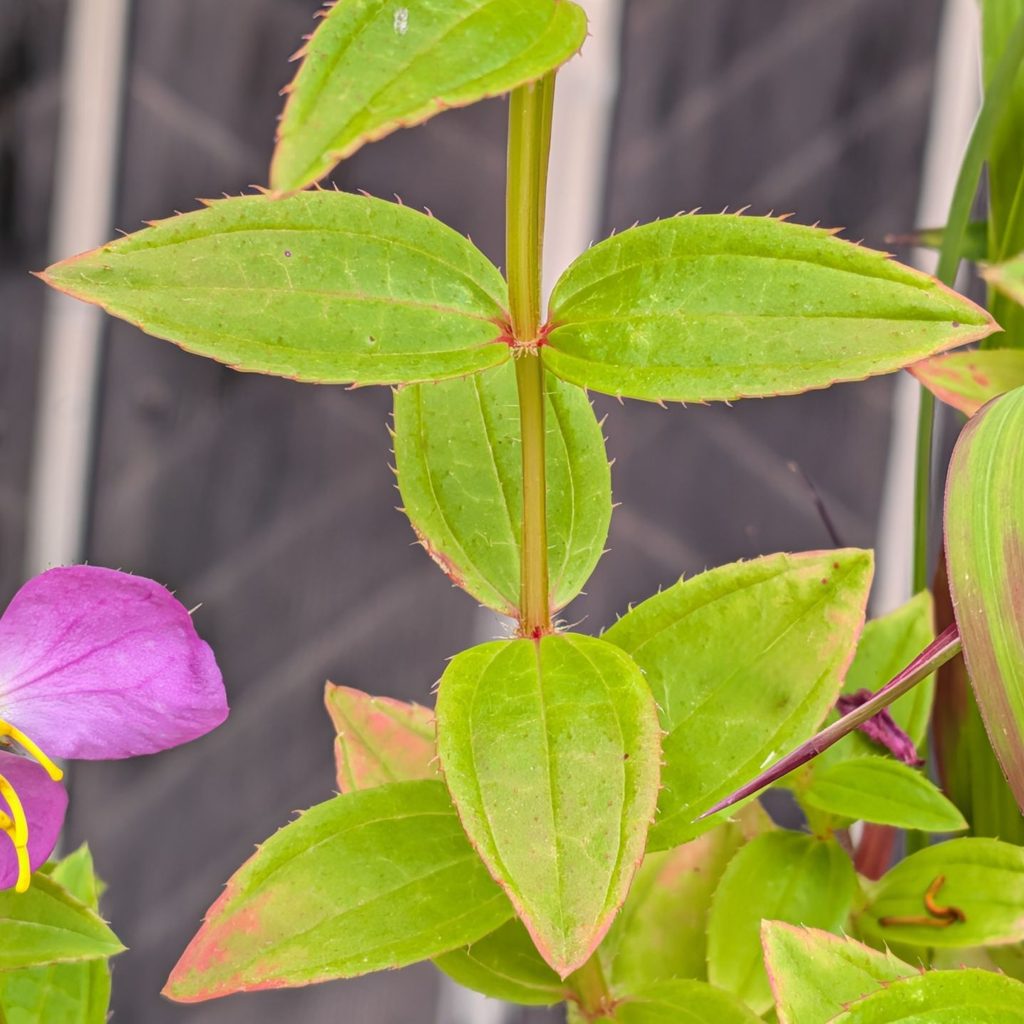
ヒメノボタンの根は細く、浅く張ります。茎は4稜で伏毛や剛毛が密生。葉は対生の披針形で縦脈が走り、剛毛が生えます。花は淡紅紫色の花弁が4枚、乳白色の雄しべが8本、先端で湾曲した鮮やかな黄色の葯。花後の蒴果は壺型の萼筒に包まれ、熟すと螺旋状の種子を散らします。
ヒメノボタンの利用
ヒメノボタンは生薬「金錦香」「朝天罐」として、全草が清熱解毒、止血・散瘀、利湿・健脾、鎮咳・去痰に用いられました。フラボノイド類、タンニン類、トリテルペノイド類などを含有。旅人が道端で摘み、煎じて飲んで咳を止めたり、生葉を揉んで傷口にあてて血を止めました。
Chinese Osbeckia
Osbeckia chinensis is a small, evergreen shrub in the family Melastomataceae, native to East, Southeast, and South Asia, as well as Oceania. In Japan, it grows wild in sunny, moist environments from the Kii Peninsula on Honshu down through Shikoku, Kyushu, and the Ryukyu Islands. Once a common sight along country roadsides, it is now considered a threatened species.
Its Japanese name, Hime-nobotan (literally “Princess Melastome”), captures its resemblance to the Nobotan alongside its dainty, princess-like elegance. The genus name Osbeckia honors the Swedish botanist Pehr Osbeck, while the specific epithet chinensis denotes China, where the original type specimen was collected.
The plant features a shallow, slender root system. Its stems are four-angled (quadrangular) and densely covered with stiff bristles and pressed hairs. The leaves grow in opposite pairs; they are lance-shaped (lanceolate) with distinct longitudinal veins and rough bristles. Each flower features four pale pinkish-purple petals and eight milky-white stamens topped with bright yellow, curved anthers. Following pollination, the pitcher-shaped calyx tube holds the capsule fruit, which releases spiral-shaped seeds upon ripening.
In traditional herbal medicine, the entire plant is used under Chinese medicine names such as Jin Jin Xiang (“Golden Brocade Fragrance”) and Chao Tian Guan. It has long been valued for its ability to clear heat, detoxify, stop bleeding, dissolve blood stasis, promote fluid balance, support digestive function, soothe coughs, and reduce phlegm. Rich in active compounds such as flavonoids, tannins, and triterpenoids, it was traditionally used by travelers who gathered the leaves by the roadside—brewing them into a tea to relieve coughs or crushing fresh leaves to apply directly to wounds to stop bleeding.