フユアオイは、中国最古の農書『斉民要術』では「野菜」として紹介され、日本最古の歌集『万葉集』では「あふひ(葵)」で詠まれました。
Cluster Mallow was documented as a “vegetable” in China’s oldest agricultural treatise, Qimin Yaoshu, and was celebrated under the name Aoi in the Manyoshu, Japan’s earliest poetry anthology.
【仮名】フユアオイ
【和名】冬葵
【英名】Cluster Mallow, Chinese Mallow
【学名】Malva verticillata
【誕生】02/ 22
【開花】03, 04, 05, 06月
【花色】White, Pink
フユアオイ
フユアオイの概要
フユアオイはアオイ科ゼニアオイ属の越年草です。原産地は中国~中央アジアで、東は朝鮮半島、日本、西は欧州、北米へと伝わり、温帯~亜熱帯域に分布。中国最古の農書『斉民要術』では「野菜」として紹介され、日本最古の歌集『万葉集』では「あふひ(葵)」で詠まれました。
フユアオイの名前
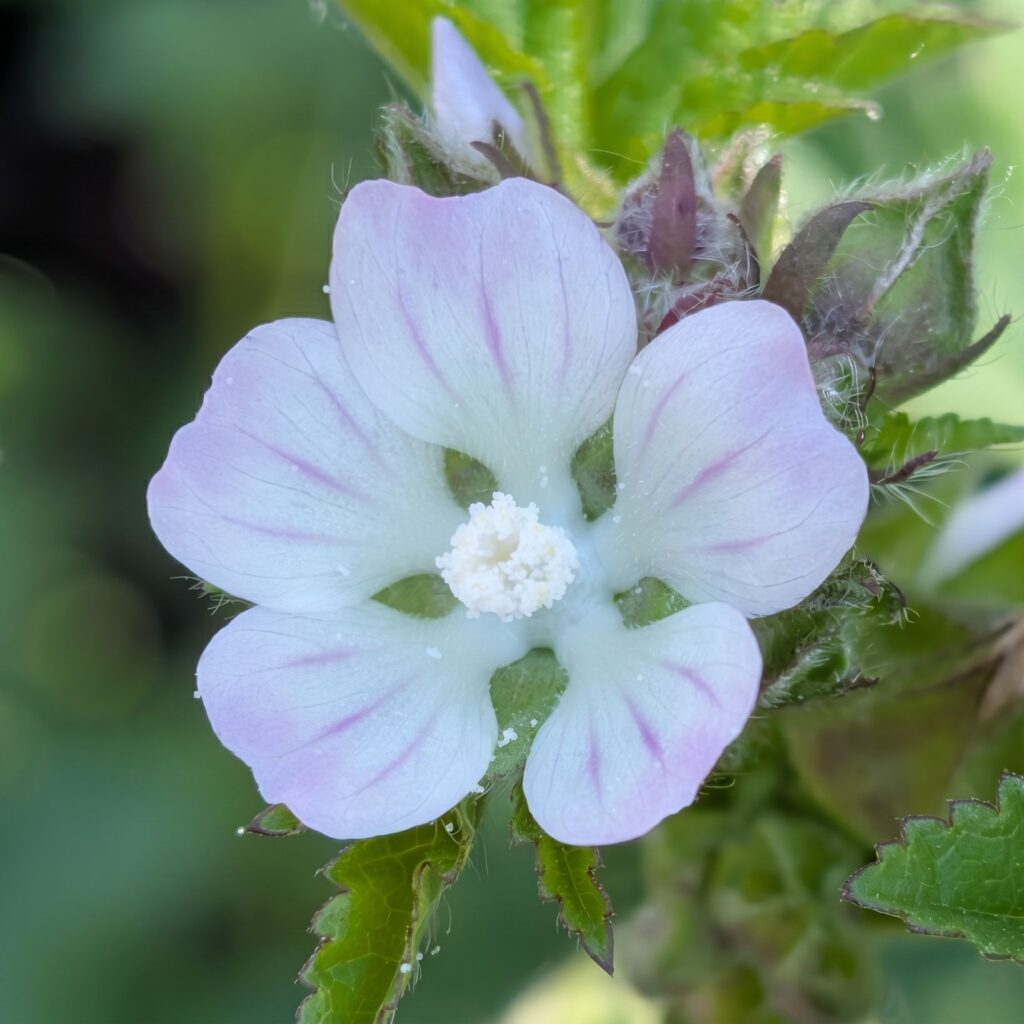
フユアオイの和名は「冬でも葉が枯れない葵」という意味です。葵は葉が太陽の動きを追う「あふひ(仰日)」に由来。属名マルバは「柔らかくする」という意味です。根に含まれる粘液に硬く締まったものを緩める効果があるから。種小名ベルティシラータは「輪生」という意味です。
フユアオイの姿形
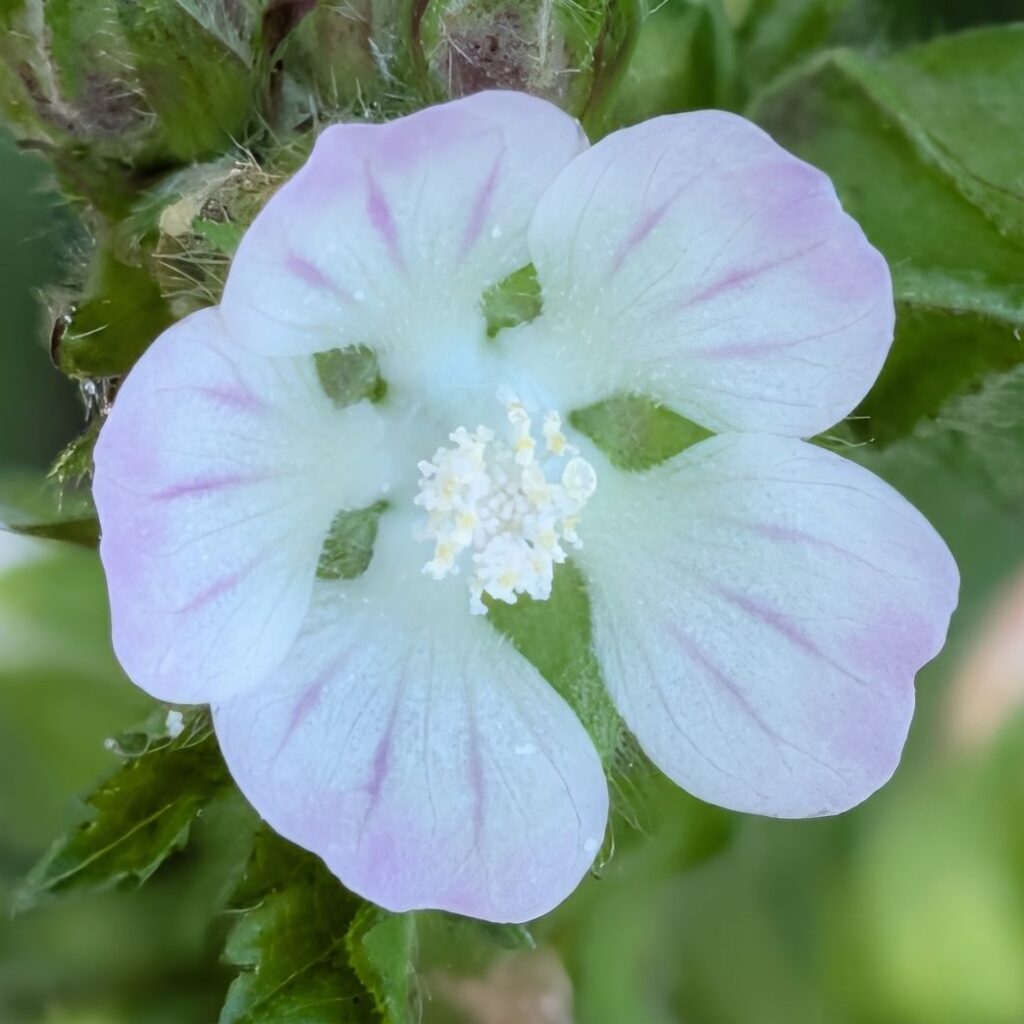
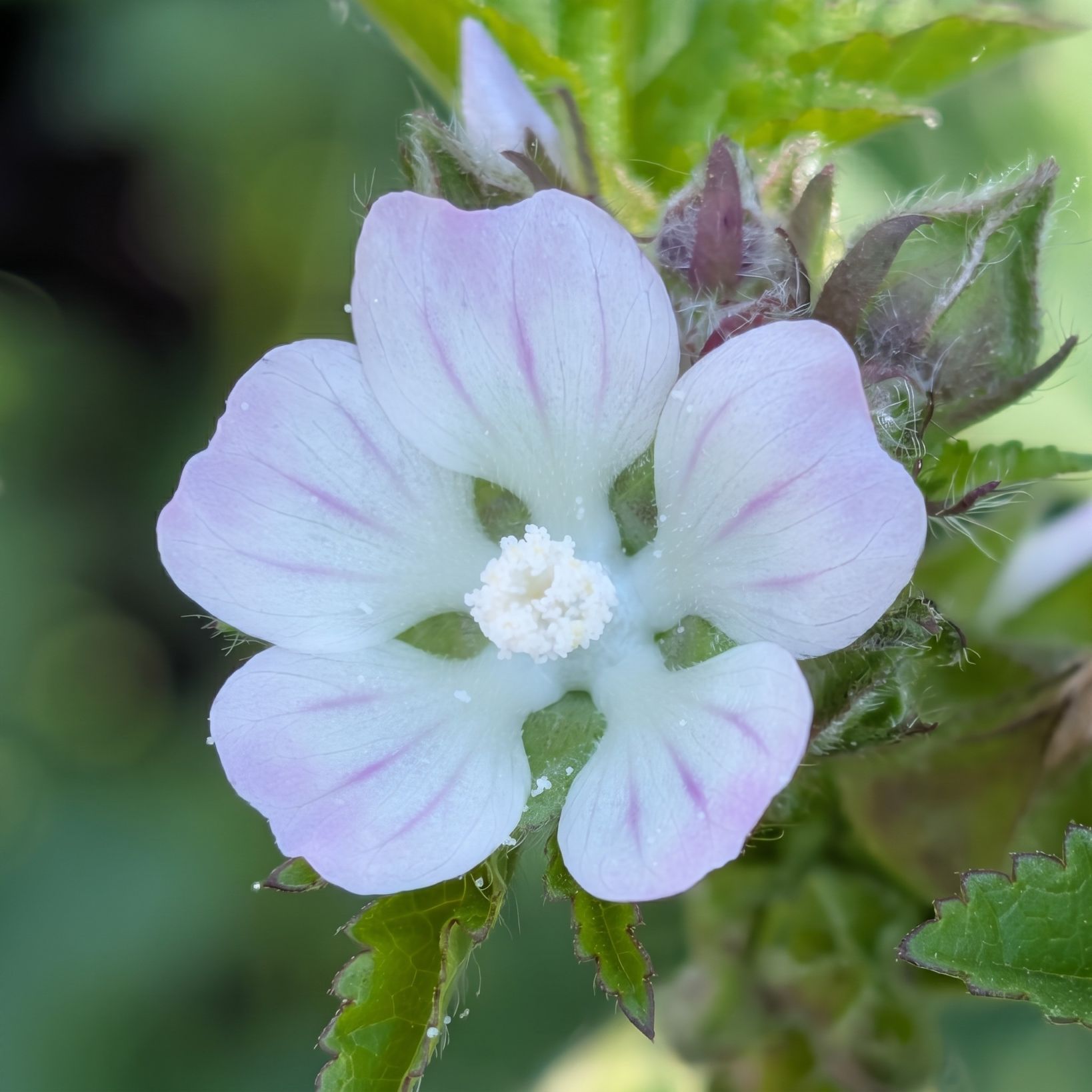
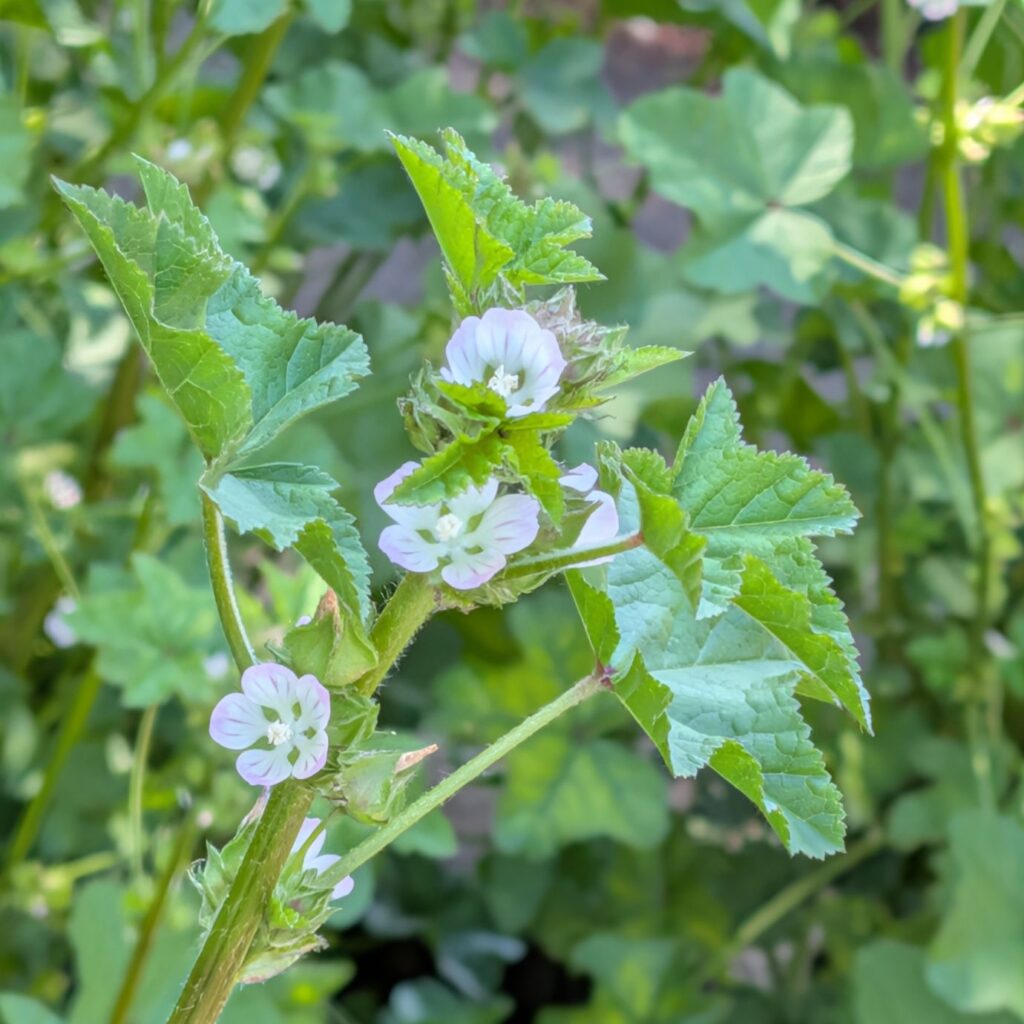
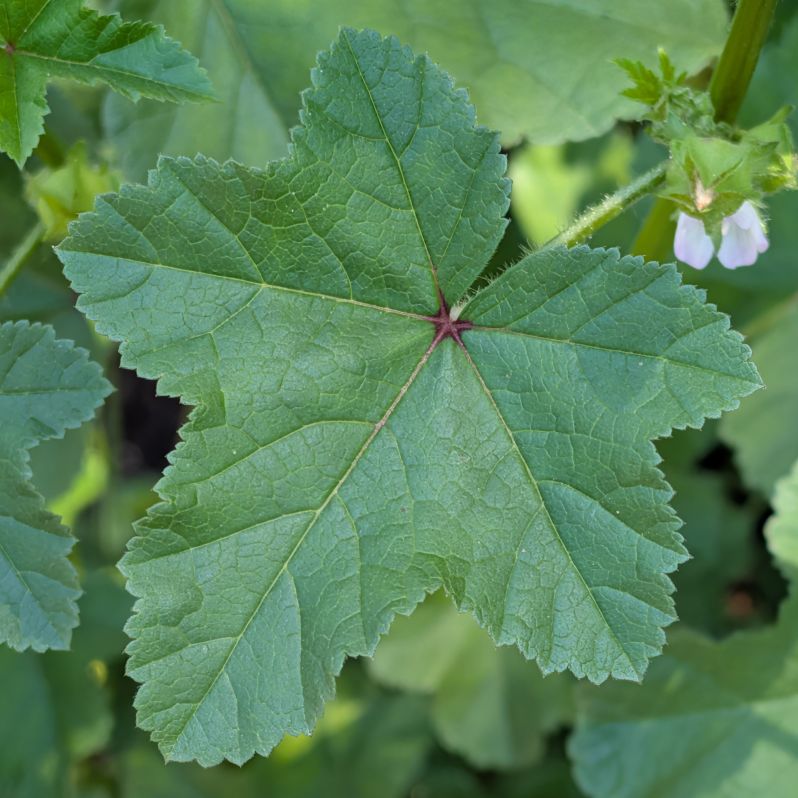
フユアオイは太い直根が地中深くまで伸長。茎は真っ直ぐ立ち上がります。葉は互生の腎臓形で掌状に浅裂。縁に細かい鋸歯があります。花は花弁が5枚、雄しべが筒状に合着し、雌しべの柱頭が多裂。花後は円盤状の割果を結び、10~12個の分果に腎臓形の種子が1粒ずつ入ります。
フユアオイの利用
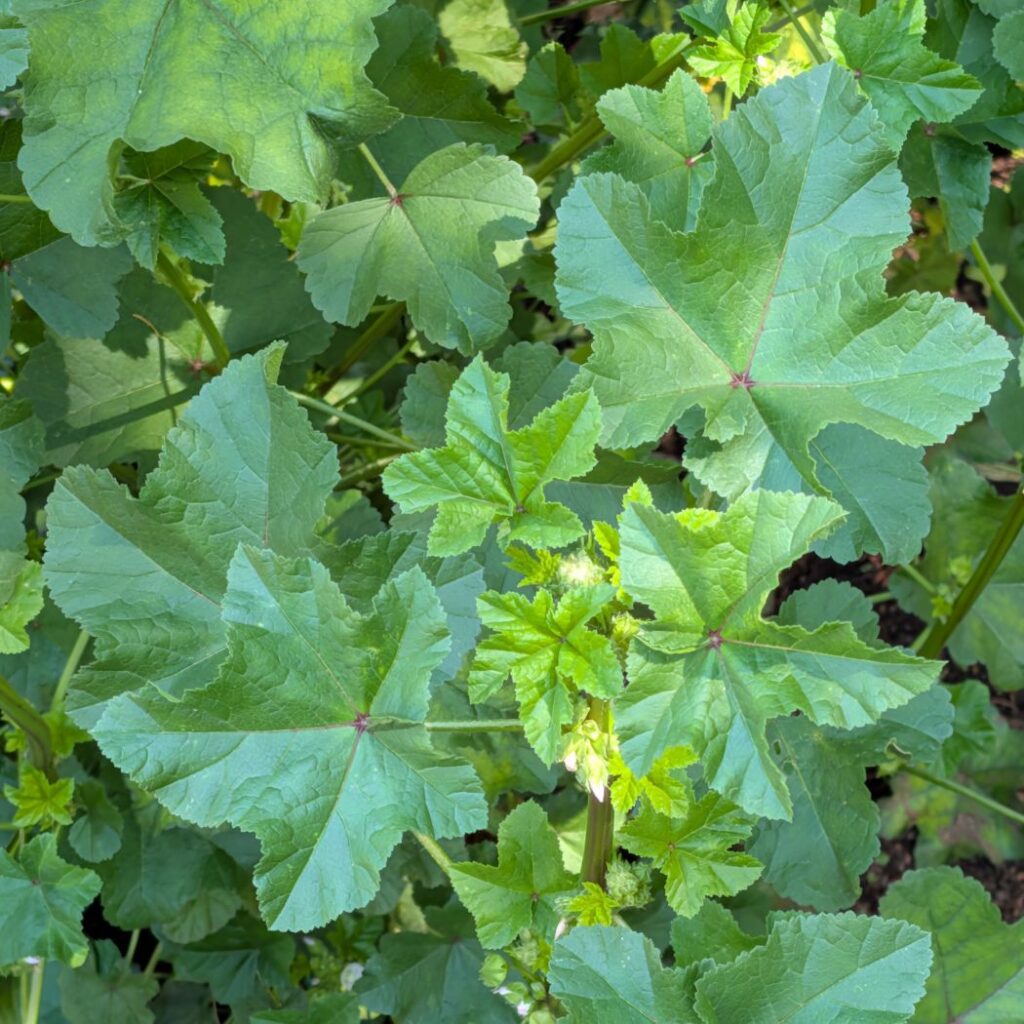
フユアオイは東アジアの伝統野菜です。若い茎葉をお浸し、炒め物、天ぷら、汁物などに。淡白でクセがなく、茹でるとぬめりが出ます。一方、古くから種子が利尿・通便・催乳に、葉が緩下に、根が解熱や解毒に用いられた薬草。寒さに強く、痩せ地で育つ救荒作物でもありました。
Cluster Mallow
The cluster mallow (Malva verticillata) is a biennial plant belonging to the Malvaceae family. Native to a region extending from China to Central Asia, it spread eastward to the Korean Peninsula and Japan, and westward to Europe and North America, and is now widely distributed across temperate and subtropical zones. It was documented as a “vegetable” in China’s oldest agricultural treatise, Qimin Yaoshu, and was celebrated under the name Aoi in the Manyoshu, Japan’s earliest poetry anthology.
The Japanese name for cluster mallow (Fuyu-aoi) translates to “the mallow whose leaves do not wither even in winter.” The name Aoi itself derives from afu-hi (facing the sun), referring to how its leaves turn to follow the sun’s movement. The genus name Malva comes from a word meaning “to soften,” inspired by the mucilage in its roots, which was traditionally believed to soften or loosen hardened tissues. The specific epithet verticillata means “whorled.”
This plant develops a thick taproot that grows deep into the ground, from which straight, upright stems emerge. Its leaves are arranged alternately, kidney-shaped, and shallowly lobed in a palmate pattern with finely serrated margins. The flowers feature five petals and a characteristic central tube formed by fused stamens, topped by a multi-lobed stigma. After flowering, it produces disc-shaped schizocarps that split into 10 to 12 segments, each containing a single, kidney-shaped seed.
The cluster mallow is a traditional East Asian vegetable. Its young stems and leaves are versatile in the kitchen, often parboiled, stir-fried, made into tempura, or added to soups. It has a mild, clean flavor and develops a pleasantly mucilaginous (slimy) texture when cooked. Beyond its culinary uses, it is a time-honored medicinal herb: historically, the seeds were used as a diuretic, laxative, and galactagogue (to promote lactation), the leaves as a mild laxative, and the roots to reduce fever and detoxify. Cold-hardy and resilient, it has also served as a vital famine food capable of thriving in poor soils.