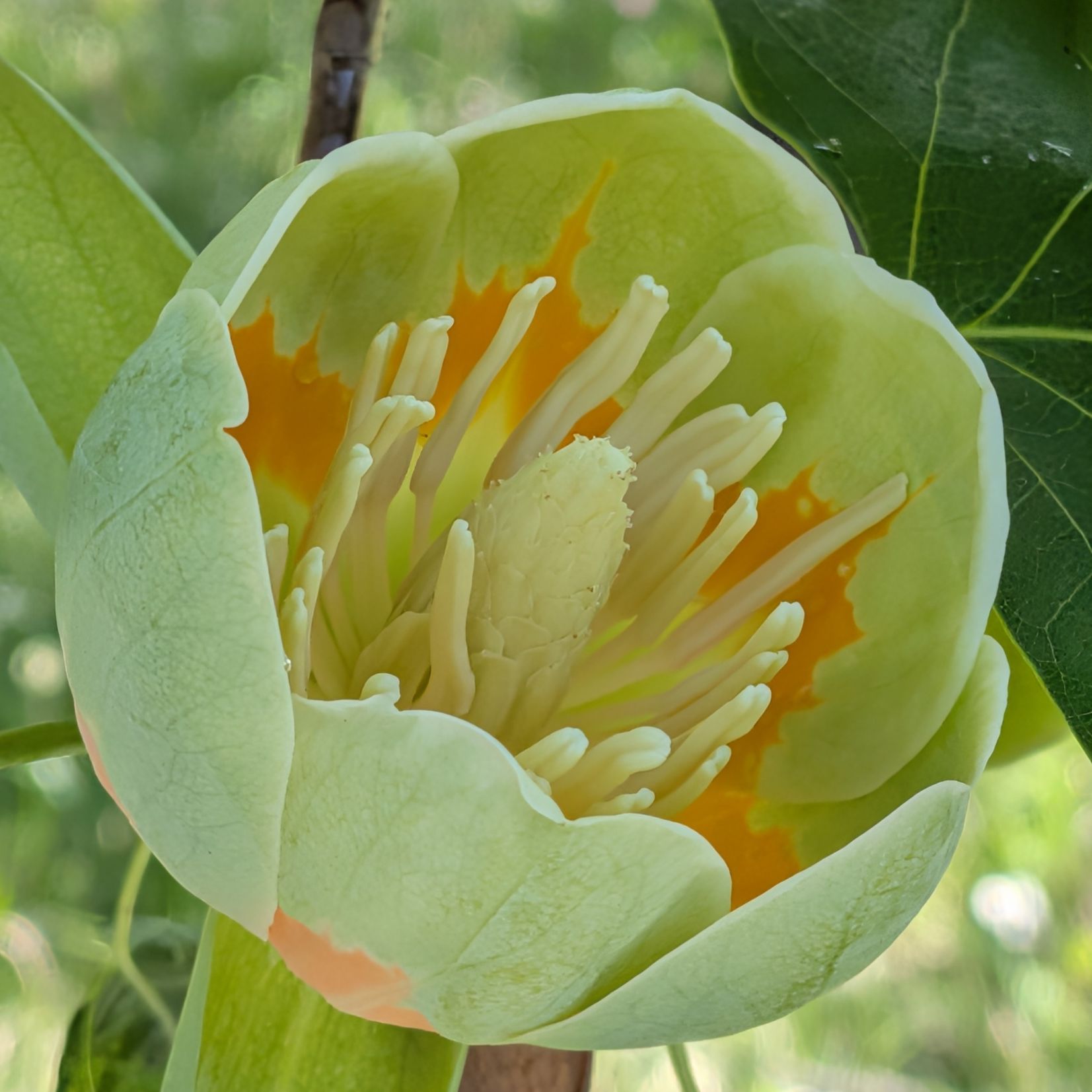
ユリノキは属名リリオデンドロンの直訳。天まで届きそうな枝を伸ばし、Tシャツのような葉を広げ、チューリップのような花を咲かせます。
The Japanese name for the Tulip Tree translates to “Lily Tree,” which is a direct translation of its genus name, Liriodendron. It extends its branches as if to reach the sky, spreads its T-shirt-shaped leaves, and blooms with tulip-like flowers.
【仮名】ユリノキ, ハンテンボク
【和名】百合の木, 半纏木
【英名】Tulip Tree, Yellow Poplar
【学名】Liriodendron tulipifera
【誕生】05/ 14, 05/ 17, 05/ 18
【開花】05, 06月
【花色】Green, Yellow, Orange
ユリノキ
ユリノキの概要
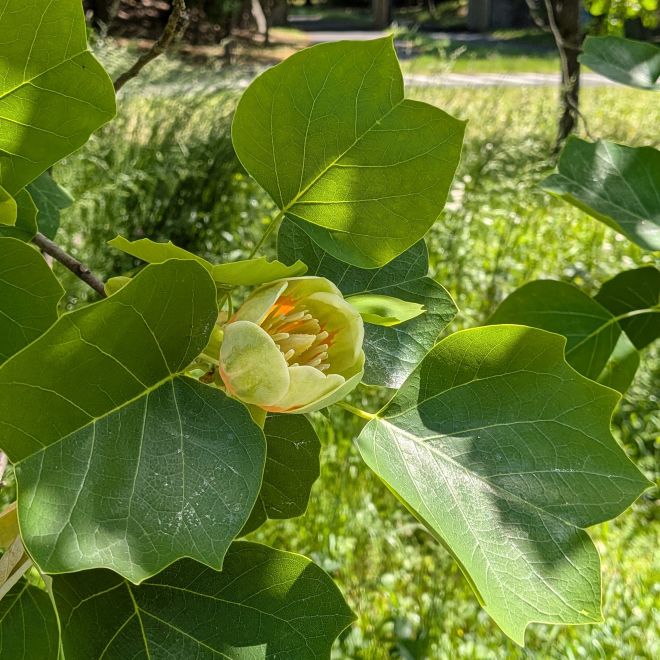
ユリノキはモクレン科の落葉高木です。原産地は北米東部で、日本へは明治時代に渡来。肥沃で水もちと水はけの良いところを好みます。古くから材木、蜜源、観賞樹、薬として利用。天まで届きそうな枝を伸ばし、Tシャツのような葉を広げ、チューリップのような花を咲かせます。
ユリノキの英名
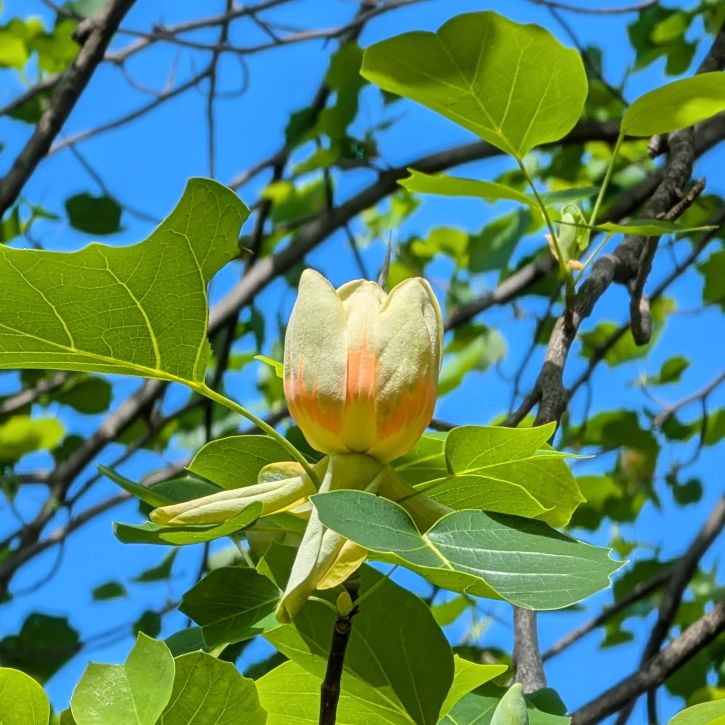
ユリノキは17世紀、北米の入植者が「チューリップの木」と呼び、それが英名になりました。18世紀、スウェーデンの博物学者カール・フォン・リンネが学名を記載。属名リリオデンドロンは「百合の木」、種小名チュリピフェラは「チューリップのような花が咲く」という意味です。
ユリノキの和名
ユリノキは19世紀に日本へ導入され、葉の形から「半纏木」などと呼ばれました。大正天皇が皇太子のときに小石川植物園でこの木の名前を御下問になるも、当時チューリップが知られていなかったため、植物学者は属名の直訳で啓上。以来「百合の木」と呼ばれるようになりました。
ユリノキの姿形
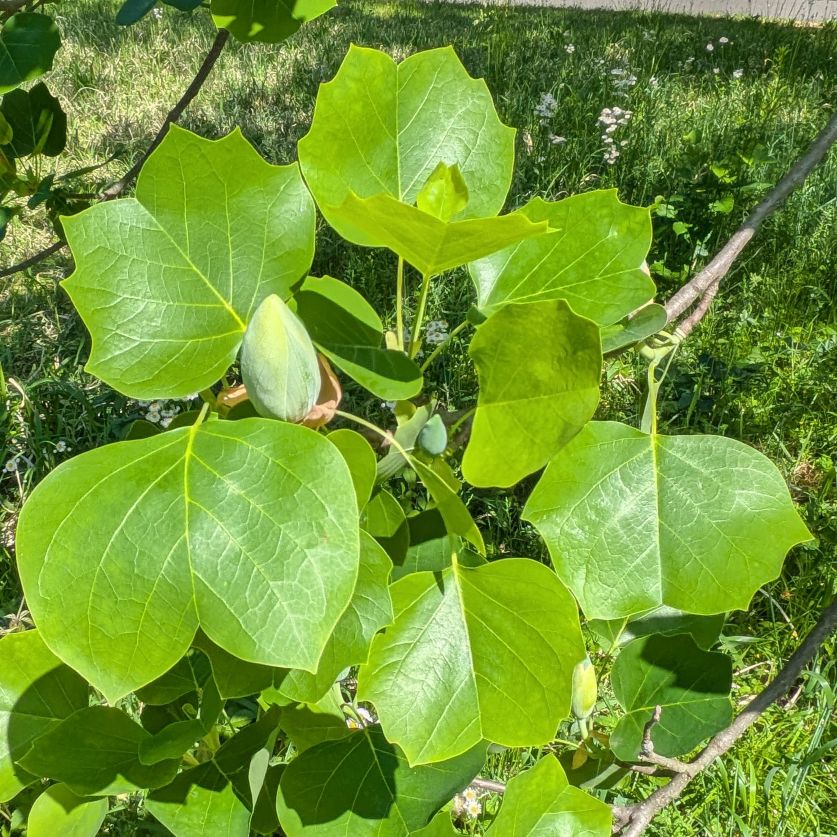
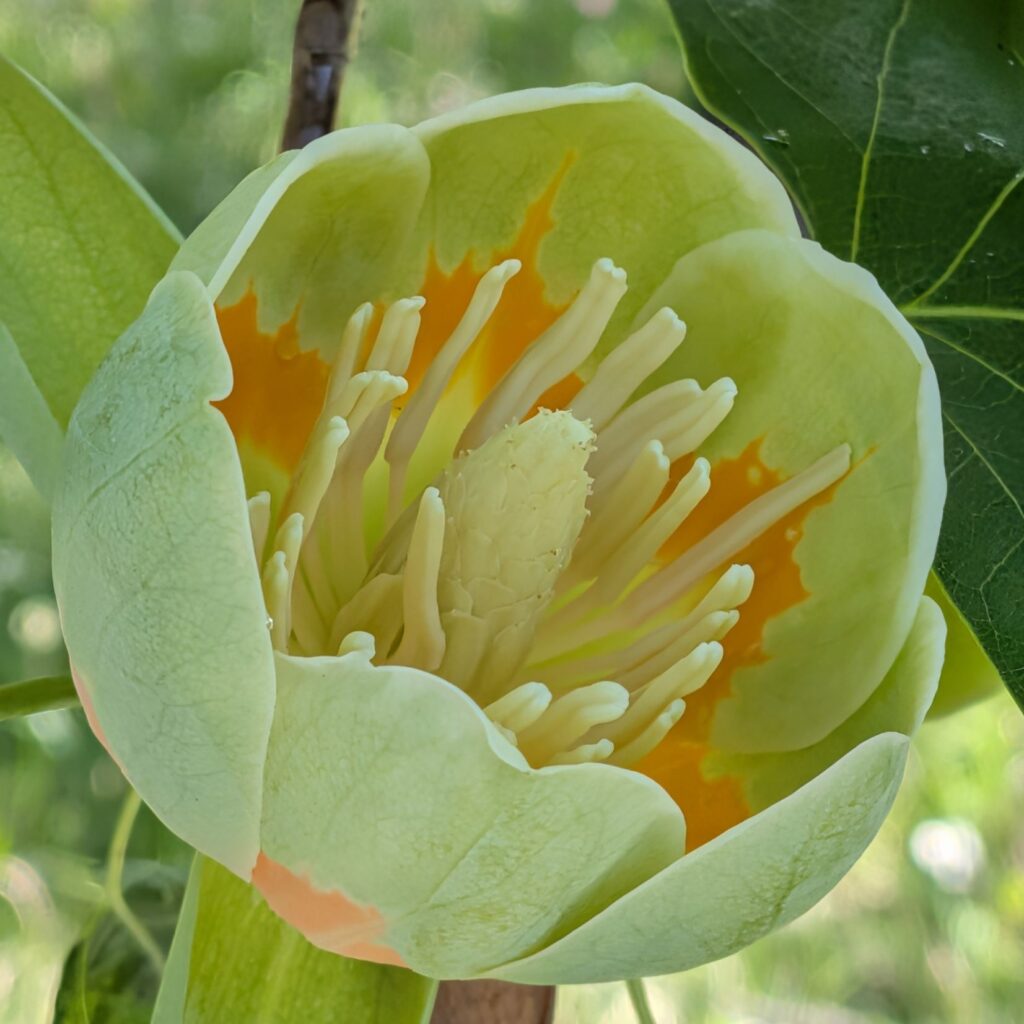
ユリノキは太く柔らかい直根が地中深く伸長。幹はまっすぐ伸び上がり、樹皮に縦の裂け目が入ります。葉は緩やかに切れ込み、基部で3裂、先端で2裂。花は萼片が3枚、花弁が6枚、雌しべが円錐状に直立し、雄しべが螺旋状に囲みます。花後は集合果を結び、熟すと翼果が飛散。
Tulip Tree
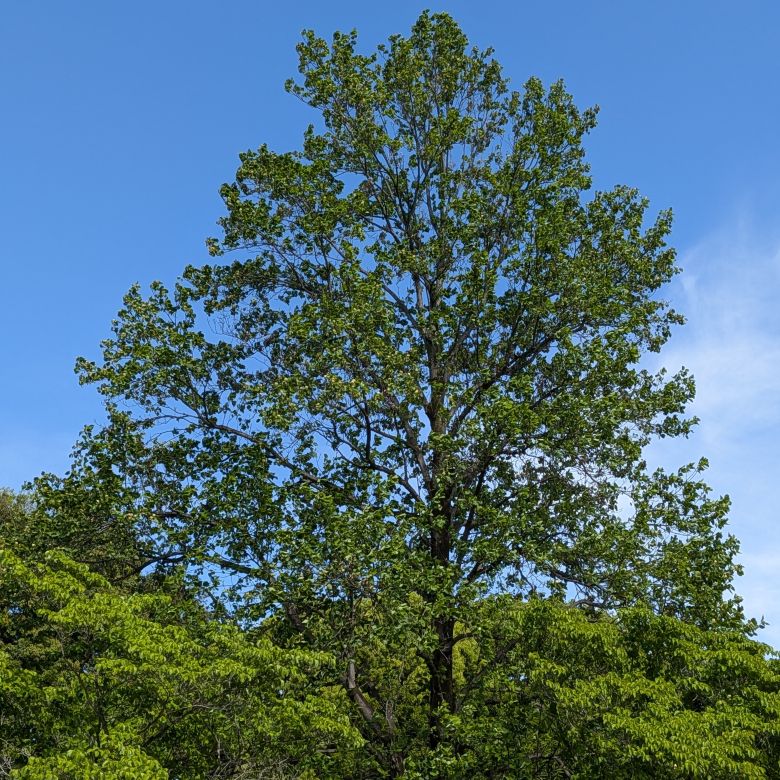
The Tulip Tree is a large deciduous tree belonging to the Magnoliaceae (magnolia) family. Native to eastern North America, it was introduced to Japan during the Meiji period. It thrives in fertile, moist, yet well-drained soil. Since ancient times, it has been utilized for timber, honey production (as a nectar source), ornamental purposes, and traditional medicine.
In the 17th century, North American settlers began calling the plant the “Tulip Tree,” which became its common English name. In the 18th century, the Swedish naturalist Carl Linnaeus formally described its scientific name. The genus name Liriodendron means “Lily Tree,” while the specific epithet tulipifera means “bearing tulips.”
When the Tulip Tree was introduced to Japan in the 19th century, it was colloquially referred to as the “Japanese short coat tree” (Hanten-boku) due to the unique shape of its leaves resembling a traditional hanten coat. When Emperor Taisho (then Crown Prince) visited the Koishikawa Botanical Garden and inquired about the tree’s name, tulips were still virtually unknown in Japan. Therefore, the botanist present presented the direct translation of its genus name. Since then, the tree has been widely known as the “Lily Tree” (Yuri-noki) in Japan.
The Tulip Tree develops a thick, fleshy taproot that grows deep into the ground. Its trunk rises straight up, with the bark developing deep vertical furrows as it matures. The leaves are lightly lobed, featuring three lobes at the base and two at the tip. Each flower consists of three sepals and six petals, with a conical, upright pistil surrounded by a spiral of stamens. After flowering, it bears aggregate fruits that release winged samaras (winged seeds) as they mature and scatter.