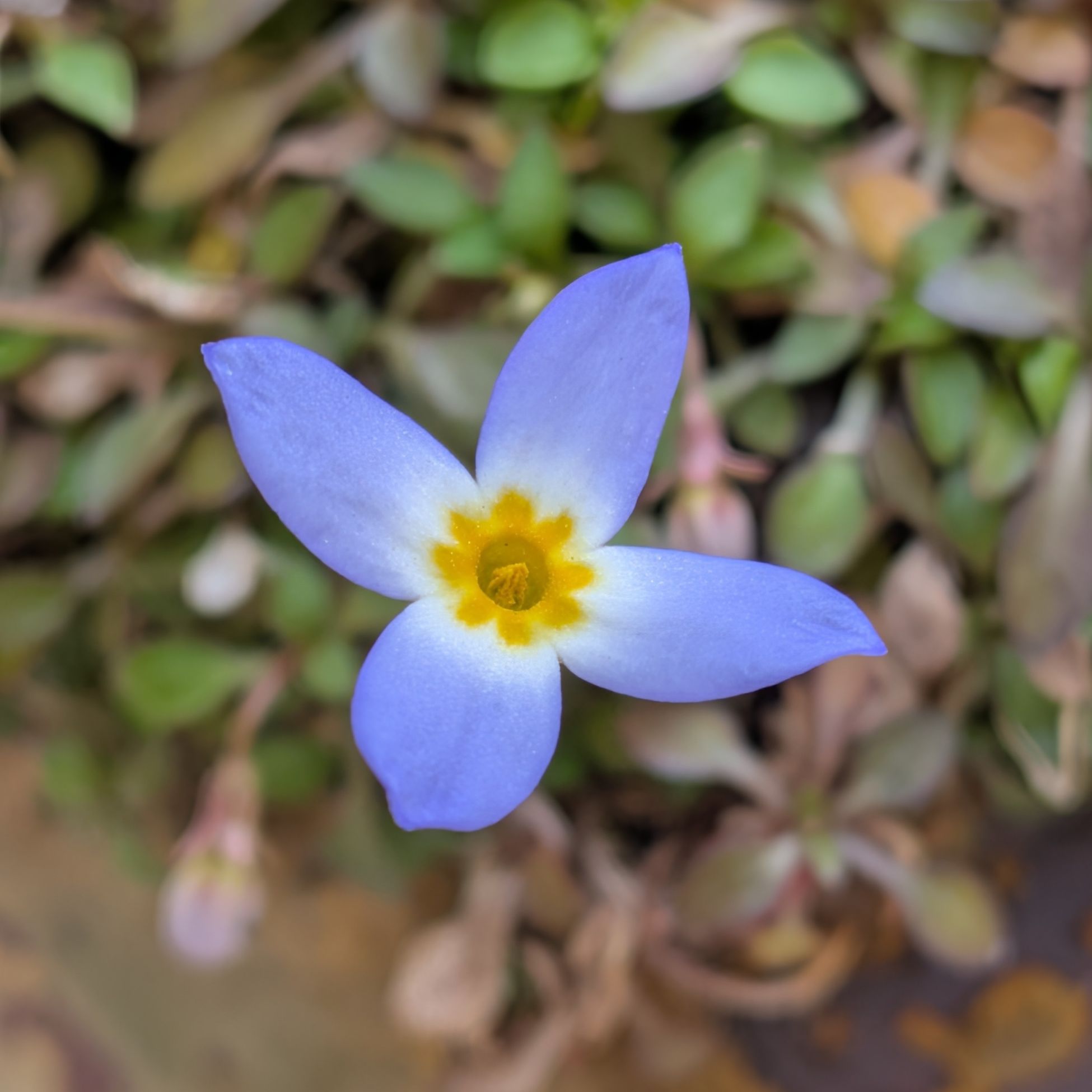
ヒナソウの和名は「花が小さく可愛らしい草」という意味。一方、英名ブルエッツはフランス語に由来し、「小さな青い花」という意味です。
The Japanese name for Bluets means “a small, lovely flowering herb.” The English name, Bluets, is derived from French and translates to “small blue flowers.”
【仮名】ヒナソウ, トキワナズナ
【和名】雛草, 常盤薺
【英名】Bluets, Quaker Ladies
【学名】Houstonia caerulea
【誕生】03/ 24, 03/ 31, 04/ 04, 04/ 14
【開花】03, 04, 05月
【花色】White, Violet, Blue
ヒナソウ
ヒナソウの概要
ヒナソウはアカネ科の多年草。原産地は北米の東部~中央部で、湿り気のある草原、開けた林縁、岩の多い斜面に群生。かつては、この花が野原に空色の絨毯を敷き、春の訪れを告げました。日本へは明治~大正時代に渡来。「甘い思い出」「諦めない心」といった花言葉があります。
ヒナソウの名前
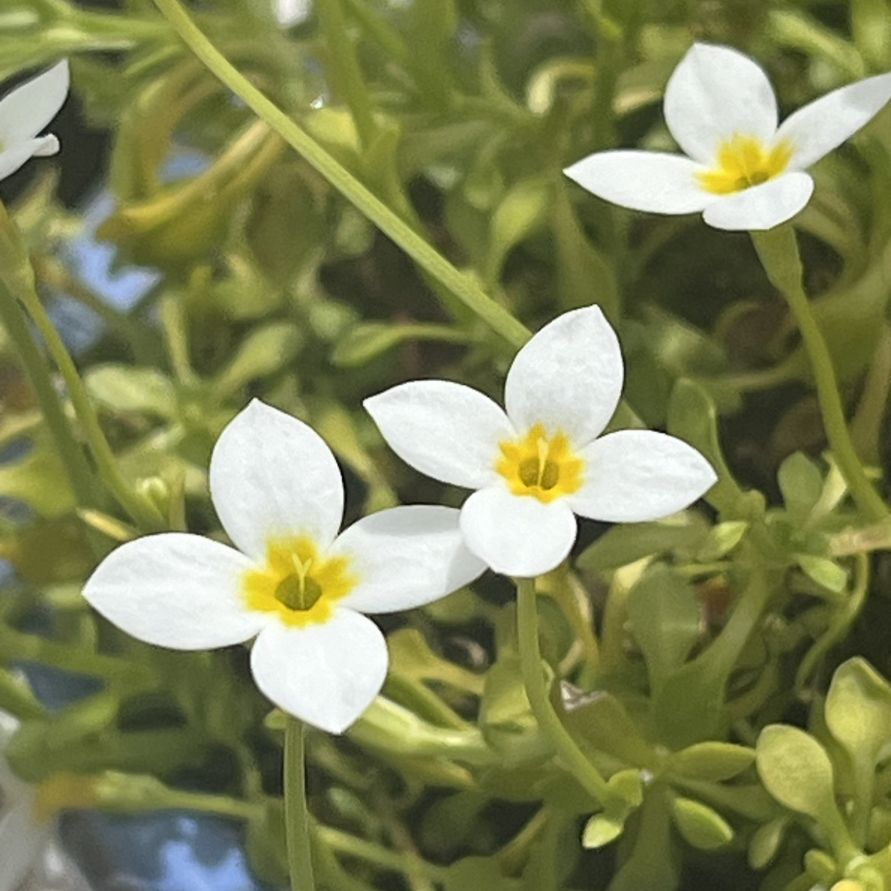
ヒナソウの和名は「花が小さく可愛らしい草」という意味。英名ブルエッツはフランス語に由来し、「小さな青い花」という意味です。種小名カエルレアも「空色の」という意味。属名ヒューストニアは18世紀初めのスコットランドの植物学者ウィリアム・ヒューストンへの献名です。
ヒナソウの姿形
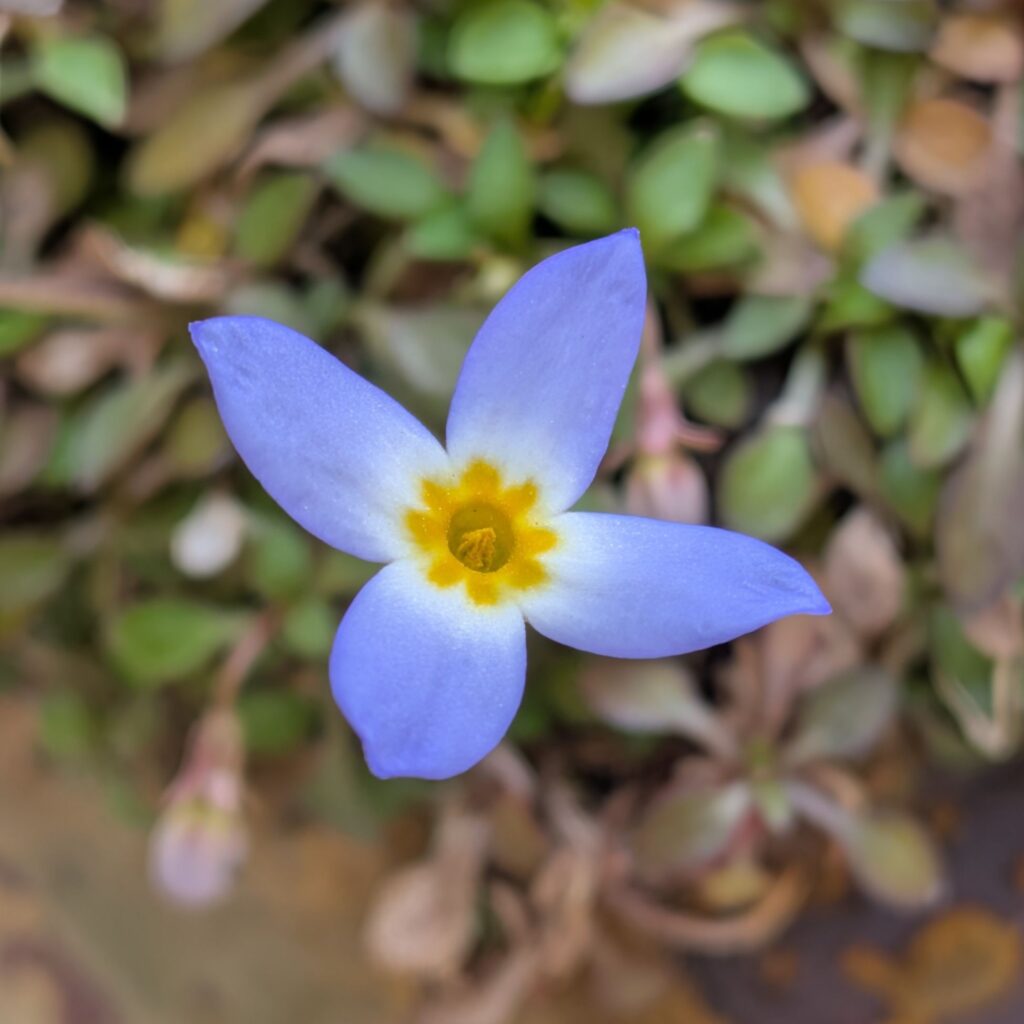
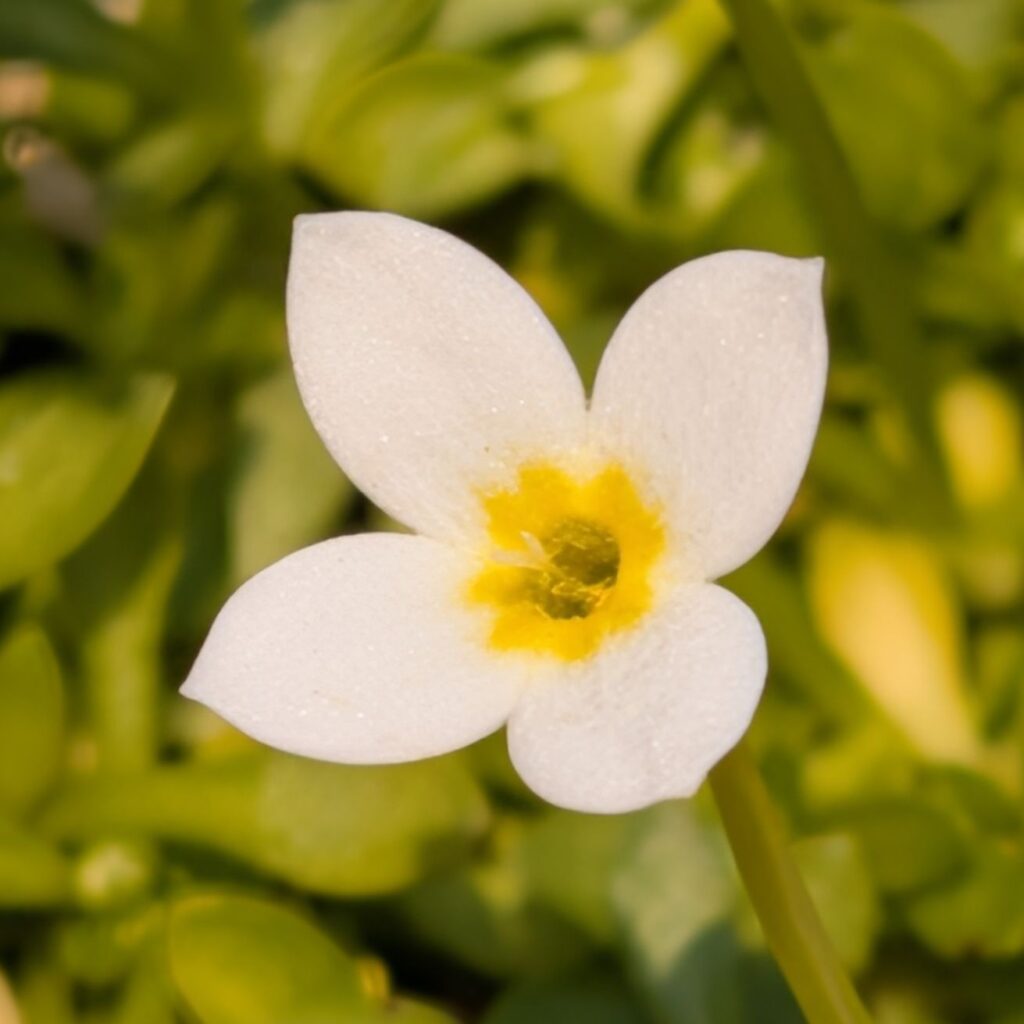
ヒナソウは細いひげ根が浅く広がってマット状。茎は細いものの、しっかり立ち上がります。葉はロゼット状の根生葉がへら形、対生の茎生葉が披針形。花は4裂で青色または白色、真ん中が黄色で、長花柱花と短花柱花が他家受粉を促します。蒴果は熟すと裂けて微細な種子を散布。
ヒナソウの逸話
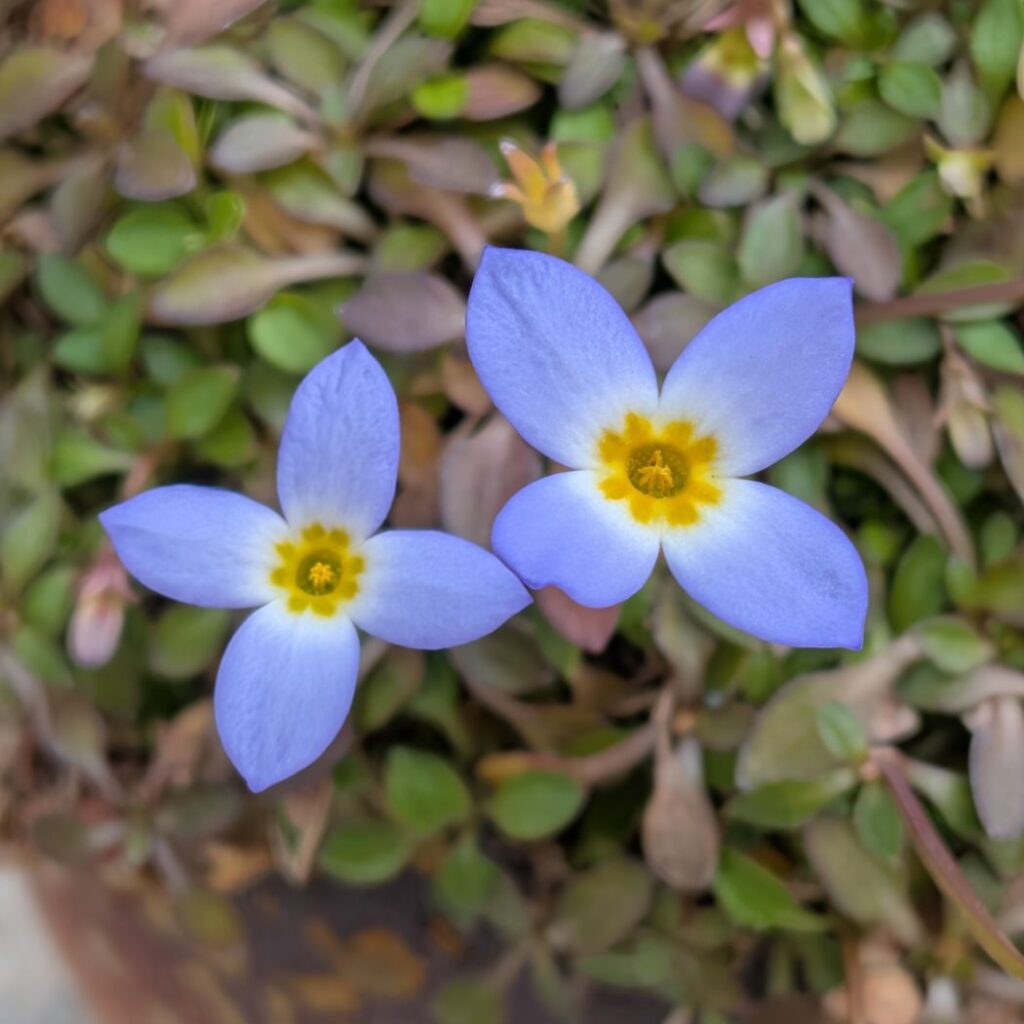
ヒナソウは英名で「クエーカーの女性たち」という別名があります。クエーカーはキリスト教プロテスタントの一派。信徒の帽子に花の形が似ていたから、または信徒の足跡に花が咲いたからとされます。北米では先住民が夜尿症に薬用。稀に見つかる5弁花は幸運の印とされました。
Bluets
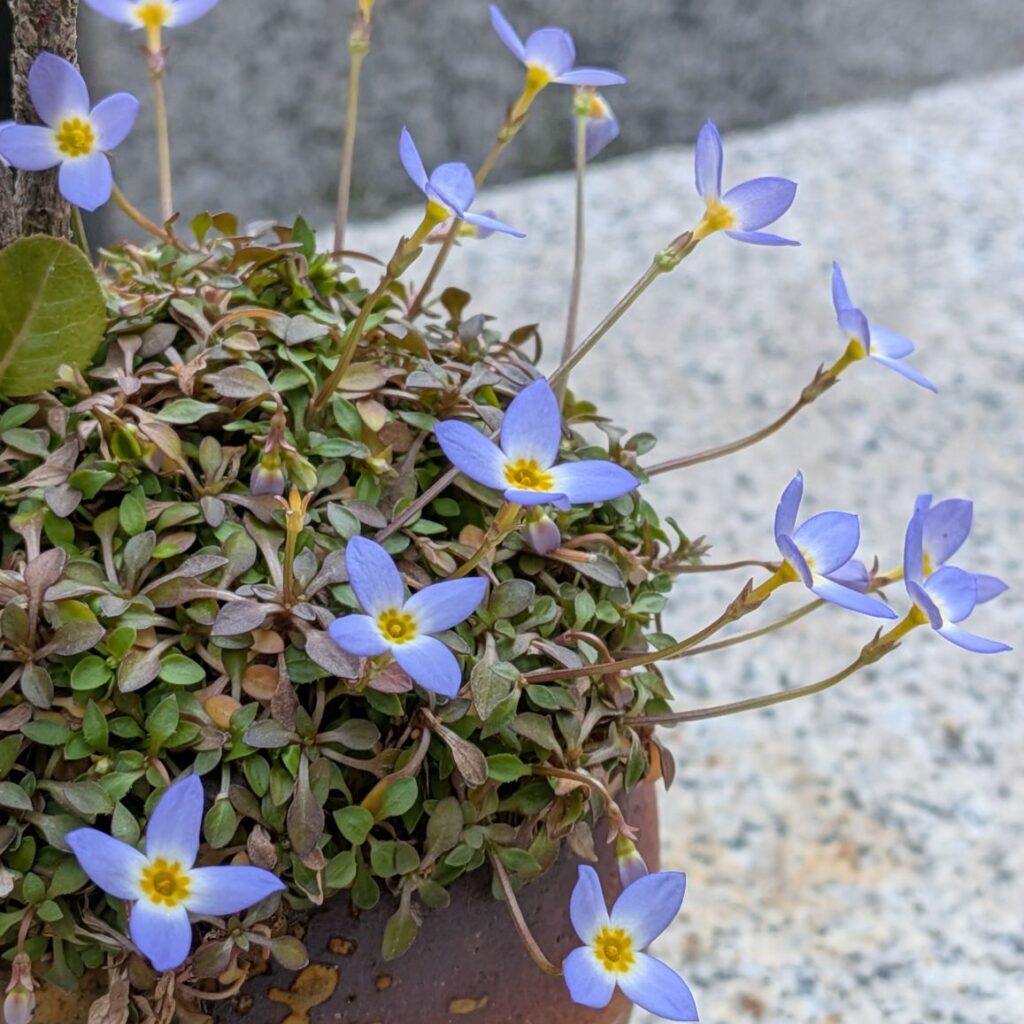
Bluets are perennial plants belonging to the Rubiaceae (madder) family. Native to eastern and central North America, they thrive in clusters across moist grasslands, open woodland edges, and rocky slopes. In their native habitat, these flowers once blanketed the fields like a sky-blue carpet, heralds of the arriving spring. They were introduced to Japan during the late 19th and early 20th centuries (the Meiji and Taisho eras). In the language of flowers, they symbolize “sweet memories” and “an unwavering spirit.”
As noted, the Japanese name describes a “small and pretty plant,” while the English “Bluets” comes from the French for “small blue.” The specific epithet, caerulea, also means “sky-blue.” The genus name, Houstonia, was given in honor of William Houston, a Scottish botanist of the early 18th century.
Bluets have a mat-like root system with thin, fibrous roots that spread shallowly. While the stems are slender, they stand firmly upright. The foliage consists of spatulate (spoon-shaped) basal leaves forming a rosette, with lanceolate (spear-shaped) leaves appearing oppositely along the stem. The four-lobed flowers range from blue to white with a distinct yellow center. The species exhibits heterostyly—having both long-styled and short-styled flowers—to encourage cross-pollination. Once ripe, the capsules split open to disperse their tiny seeds.
Bluets are also known by the charming nickname “Quaker Ladies.” This refers to the Quakers, a Christian denomination; the name is said to come from the flowers’ resemblance to the bonnets worn by Quaker women, or a legend that they bloomed in the footprints of the faithful. In North America, Native Americans traditionally used the plant as a remedy for bedwetting. Finding a rare five-petaled flower was once considered a sign of exceptional good luck.