イソギクの和名の由来は、海岸の岩場「磯」に生える「菊」だから。葉裏が白色の綿毛に覆われ、葉縁が磯の白波のようにも見えるからです。
The Japanese name for Pacific Chrysanthemum means “chrysanthemum growing on coastal rocks.” The undersides of the leaves are covered in white fluff, and the leaf edges resemble white waves on the shore.
【仮名】イソギク
【和名】磯菊
【英名】Pacific Chrysanthemum
【学名】Chrysanthemum pacificum
【誕生】10/ ??
【開花】10, 11, 12月
【花色】Yellow
イソギク
イソギクの概要
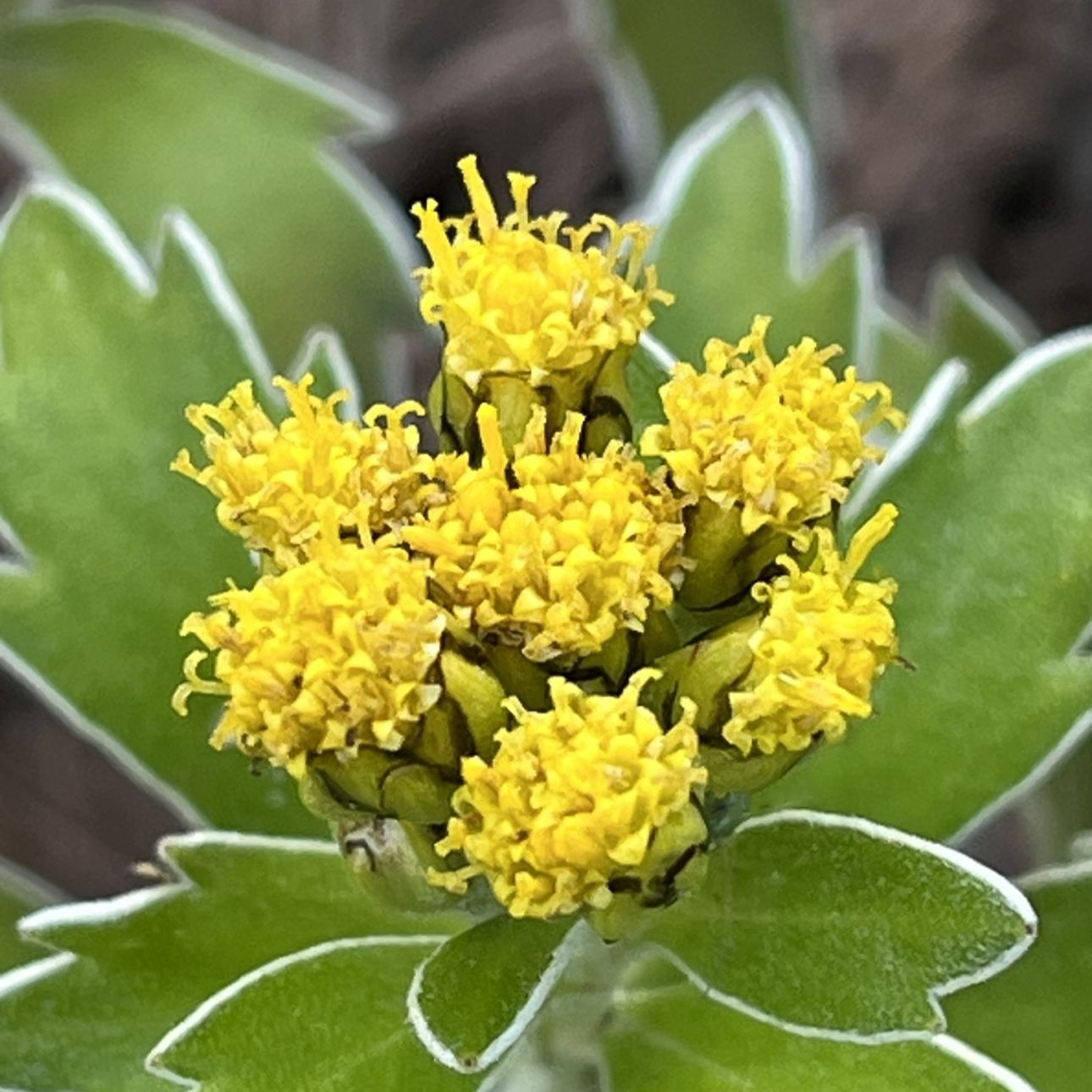
イソギクはキク科の多年草です。おもに太平洋側は千葉県の犬吠埼から静岡県の御前崎、愛知県の渥美半島、東京都の伊豆諸島まで広域に分布し、日本海側は京都府の丹後地域などに分布。海岸の岩場や崖地、砂浜に自生し、晩秋から初冬にかけて、海の近くを黄色の花々で彩ります。
イソギクの名前
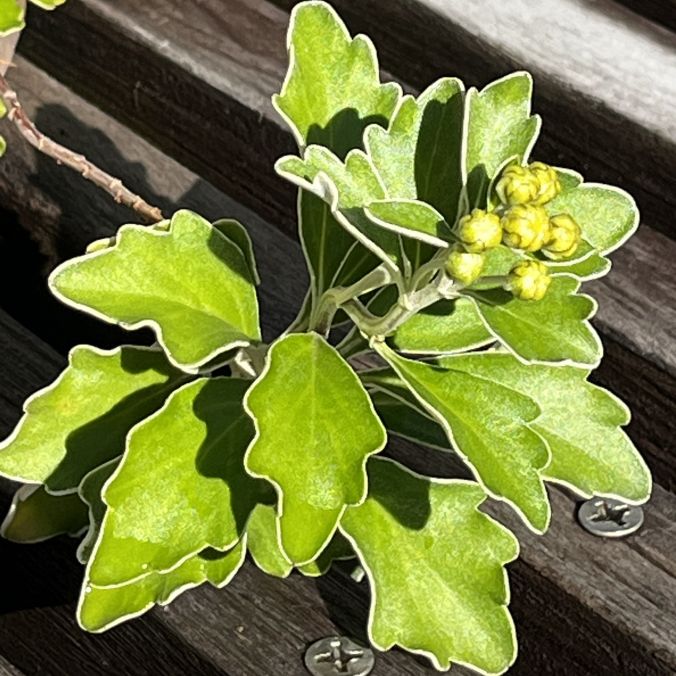
イソギクの和名の由来は、海岸の岩場「磯」に生える「菊」だから。また、葉裏が白色の綿毛に覆われ、葉縁が磯の白波のように見えるからです。ラテン語の属名クリサンテムムは「金色の花」という意味。種小名パシフィクムは「太平洋岸の」という意味で、自生地を示しています。
イソギクの姿形
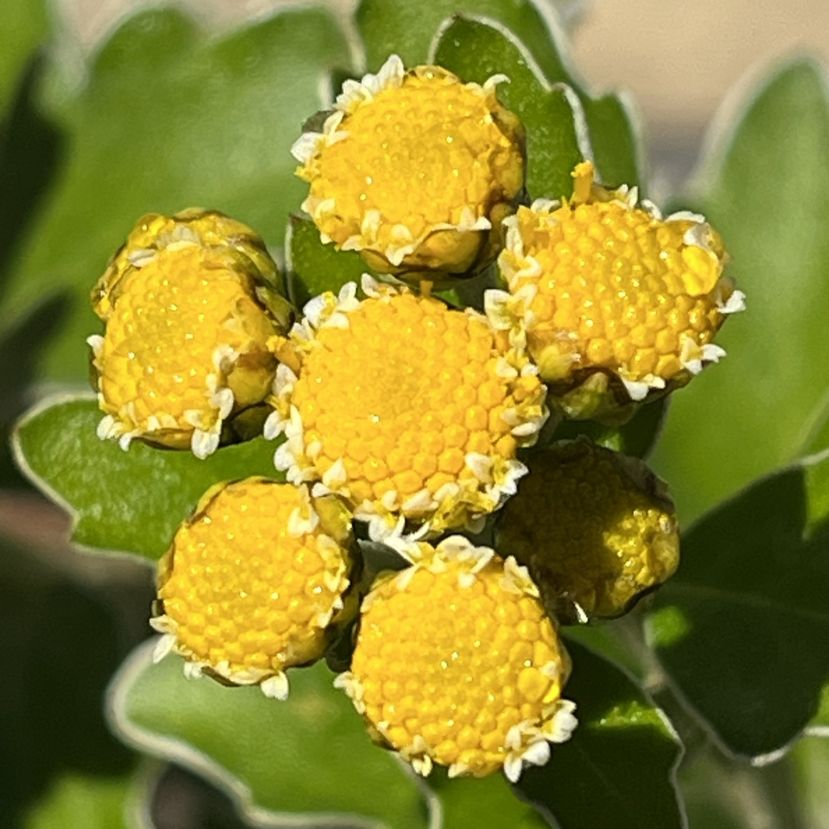
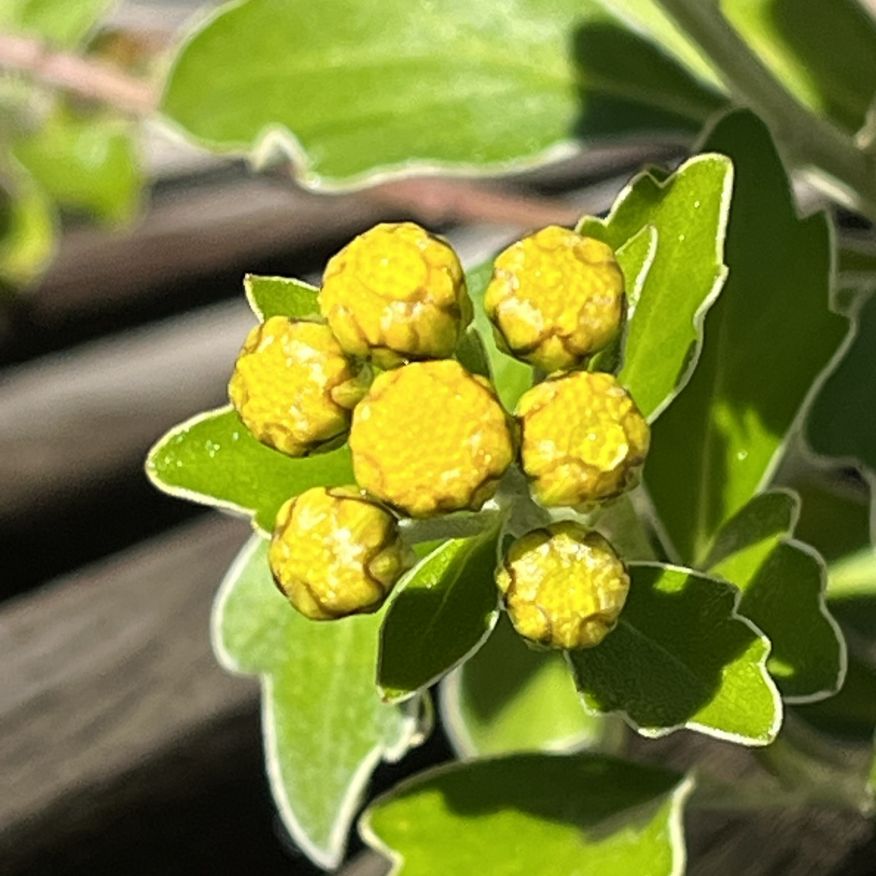
イソギクは地下茎が浅く這い広がり、地上茎が叢状に立ち上がります。葉は互生の倒卵形で、少し厚みのある多肉質。表面に光沢があり、裏面に白色の綿毛が密生します。花は舌状花がなく、筒状花だけ。茎先に集まって咲きます。花後は痩果を形成。冠毛で風にのり、散布されます。
イソギクの利用
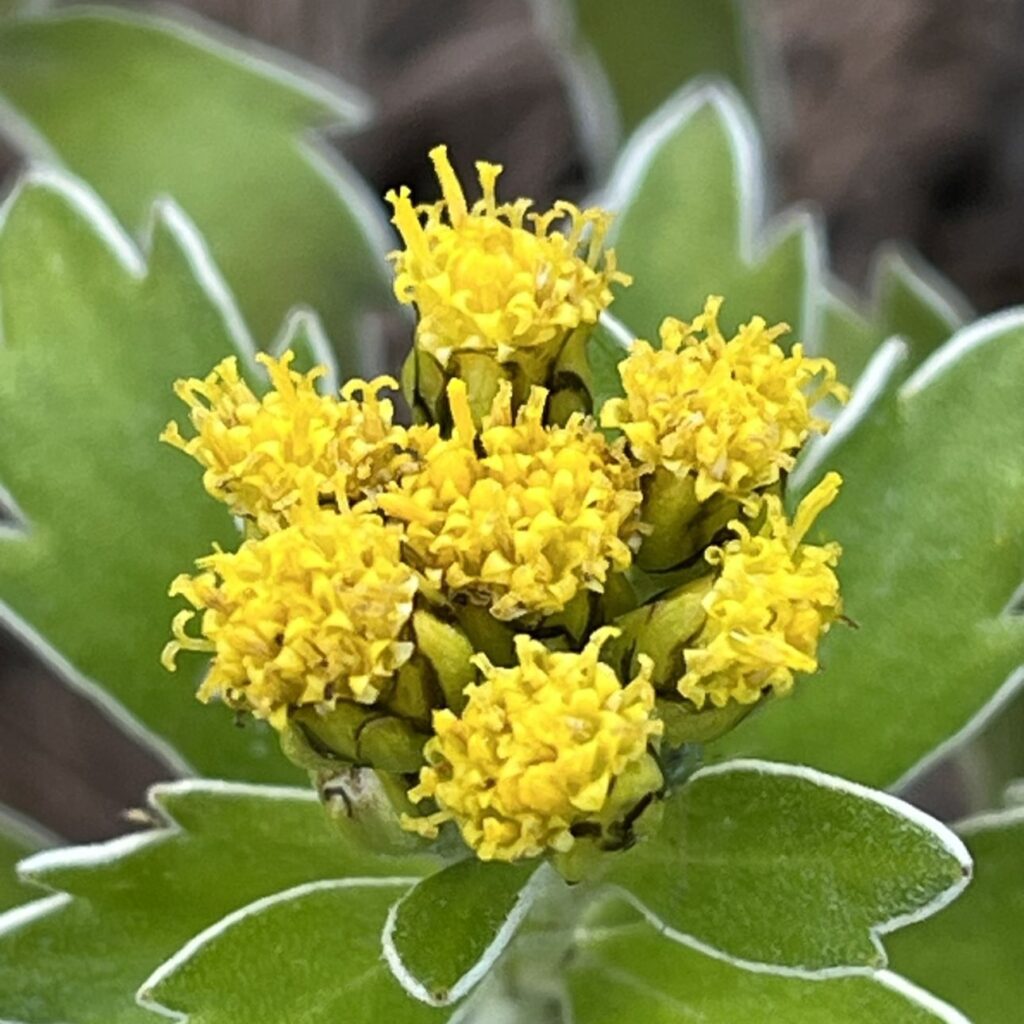
イソギクは耐塩性、耐乾性、耐風性に優れるため、海浜公園やロックガーデンなどで観賞用に植栽。舌状花を持たない花とともに、表面が濃緑色、裏面が銀白色の葉が愛でられます。春の若芽や若葉は山菜に。ほろ苦さと香りがあり、天ぷら、おひたし、和えものなどで食べられます。
Pacific Chrysanthemum
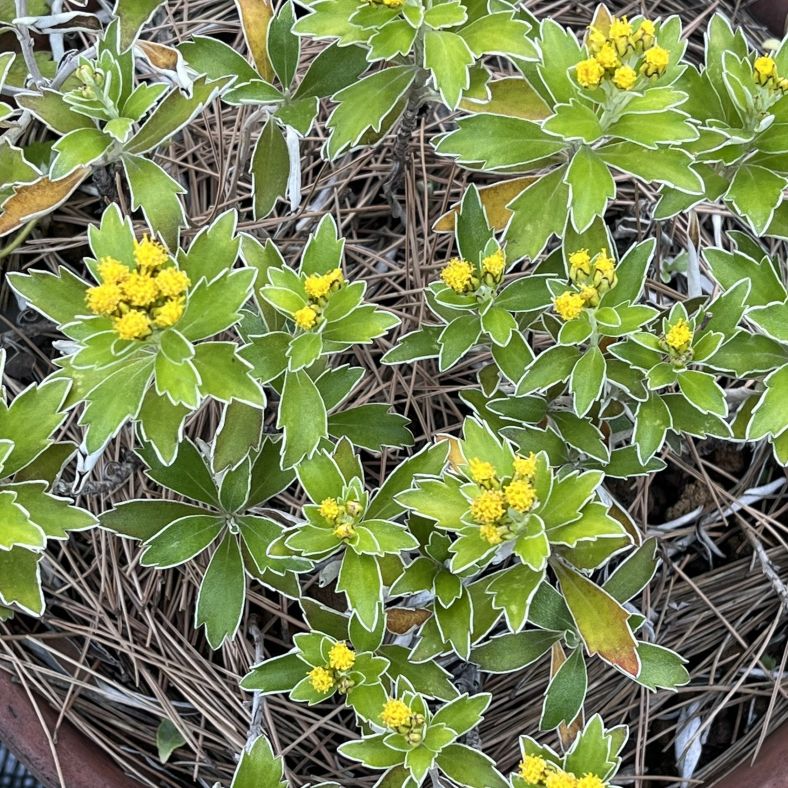
Pacific Chrysanthemum is a perennial plant in the Asteraceae family. It is found primarily along the Pacific coast, from Inubosaki in Chiba Prefecture to Omaezaki in Shizuoka Prefecture, the Atsumi Peninsula in Aichi Prefecture, and the Izu Islands in Tokyo. Along the Sea of Japan coast, it is found in areas such as the Tango region of Kyoto Prefecture. It grows wild on coastal rocks, cliffs, and sandy beaches, and from late autumn to early winter, it decorates the sea with its yellow flowers.
The Japanese name for Pacific Chrysanthemum means “chrysanthemum growing on coastal rocks.” The undersides of the leaves are covered in white fluff, and the leaf edges resemble white waves on the shore. Its Latin genus name, Chrysanthemum, means “golden flower.” The specific name, pacificum, means “Pacific Coast,” indicating its native habitat.
Pacific Chrysanthemum has shallow, creeping underground stems and clump-like stems above ground. The leaves are alternate, obovate, and slightly thick and fleshy. The leaves are glossy on the upper surface and densely covered with white fluff on the underside. The plant has only tubular flowers, lacking ray florets. The flowers bloom in clusters at the ends of the stems. After flowering, achenes form. The achenes are carried by the wind and dispersed by the pappus.
Pacific Chrysanthemum is tolerant of salt, drought, and wind, making it an ornamental plant in seaside parks and rock gardens. Its dark green upper surface and silvery-white underside, along with its ray-less flowers, are prized. Young spring shoots and leaves are used as wild vegetables. They have a bitter, fragrant taste and are enjoyed in tempura, boiled greens, and salads.