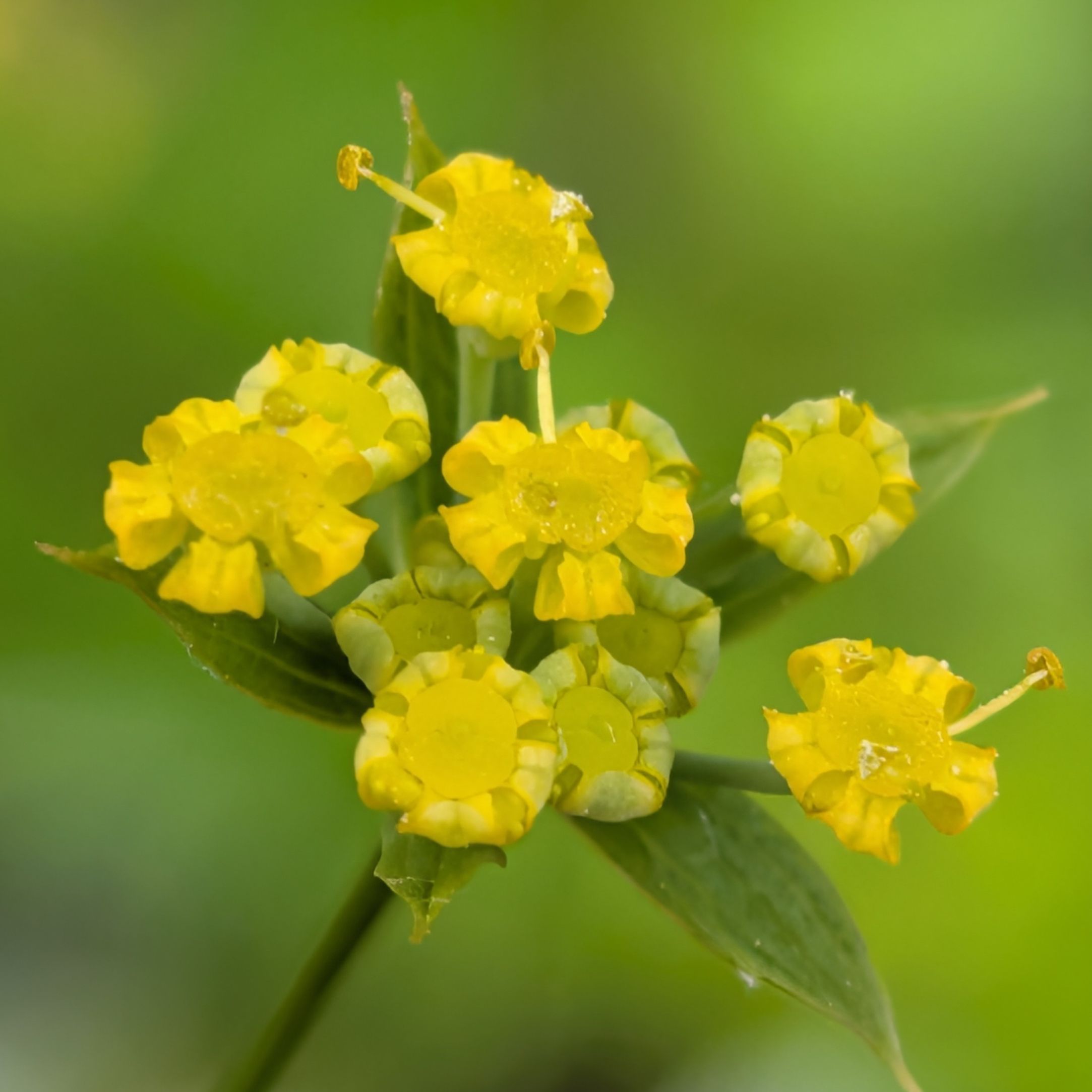
ミシマサイコは古くから用いられてきた薬草です。ごく小さく控えめに散りばめられた黄色の花々。「初めての恋」という花言葉があります。
Bupleurum falcatum is a medicinal herb that has been used since ancient times. It features tiny, delicately scattered yellow flowers, and in the language of flowers, it symbolizes “first love.”
【仮名】ミシマサイコ
【和名】三島柴胡
【英名】Bupleurum falcatum
【学名】Bupleurum stenophyllum
【誕生】10/ 28
【開花】08, 09, 10月
【花色】Yellow
ミシマサイコ
ミシマサイコの概要
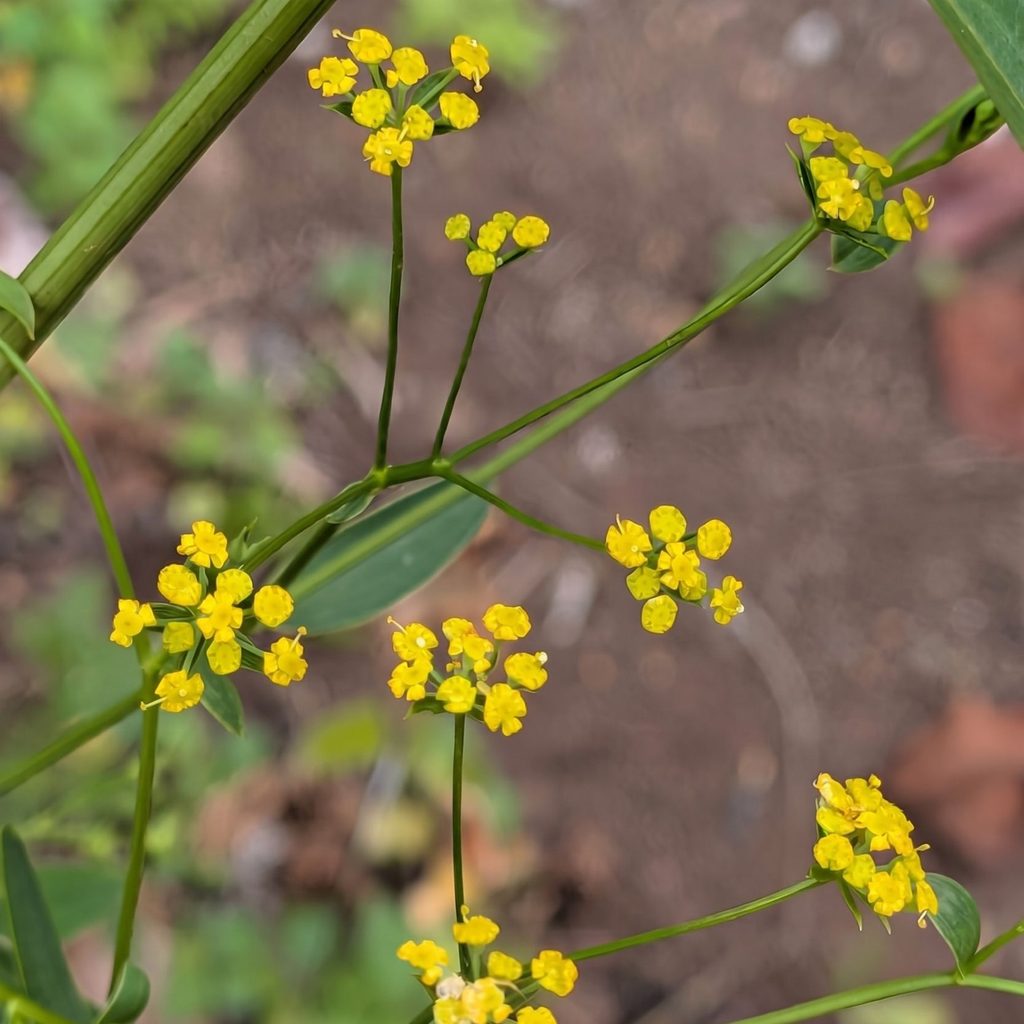
ミシマサイコはセリ科の多年草です。日本では本州、四国、九州、国外では朝鮮半島、中国に分布し、陽当たりの良い山野で自生。古くから根が解熱や鎮静など漢方に用いられてきた薬草です。ごく小さく控えめに散りばめられた黄色の花々。「初めての恋」という花言葉があります。
ミシマサイコの名前
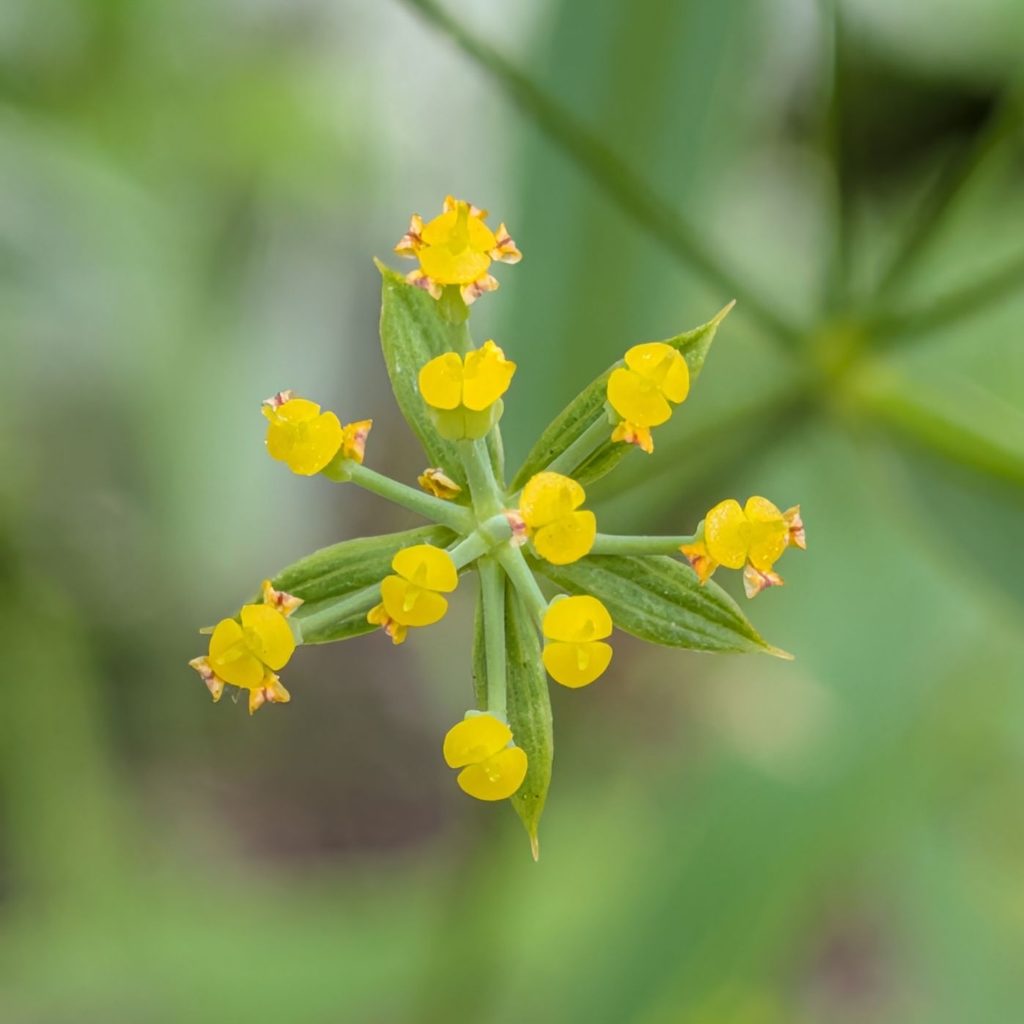
ミシマサイコの和名の由来は江戸時代に東海道の宿場町だった駿河国「三島」と生薬「柴胡」の組み合わせ。当時、三島産の柴胡の品質が最も優れていたからです。属名ブプレウルムは「牛の肋骨」という意味で葉脈を、種小名ステノフィラムは「細身の葉」という意味で葉身を形容。
ミシマサイコの姿形
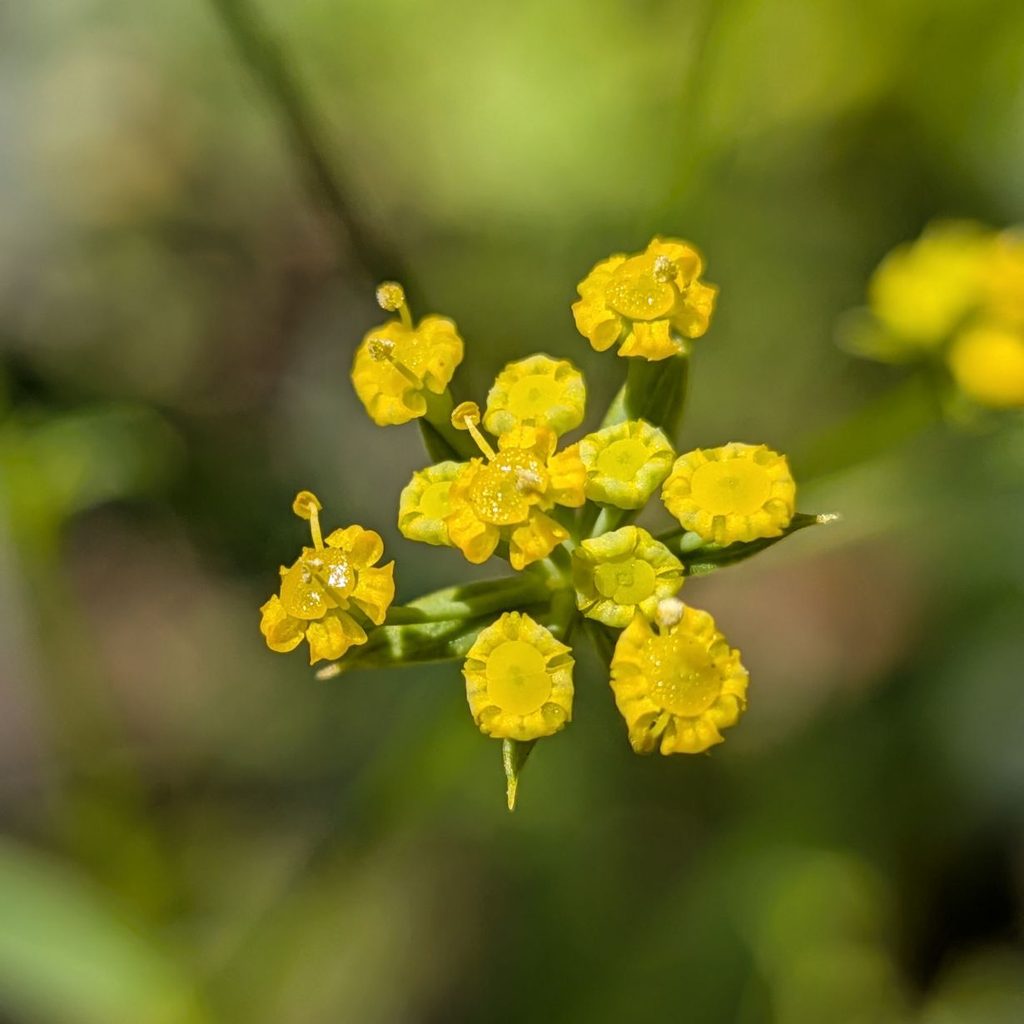
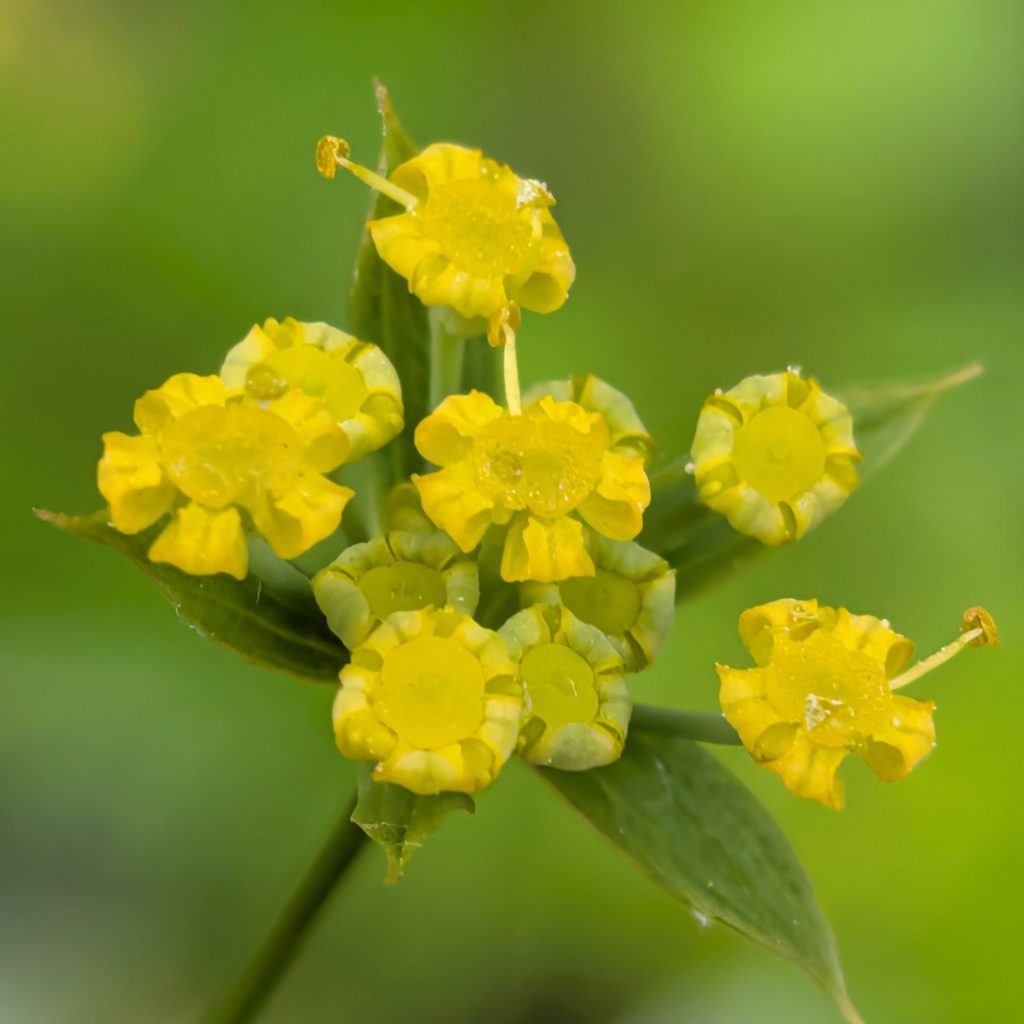
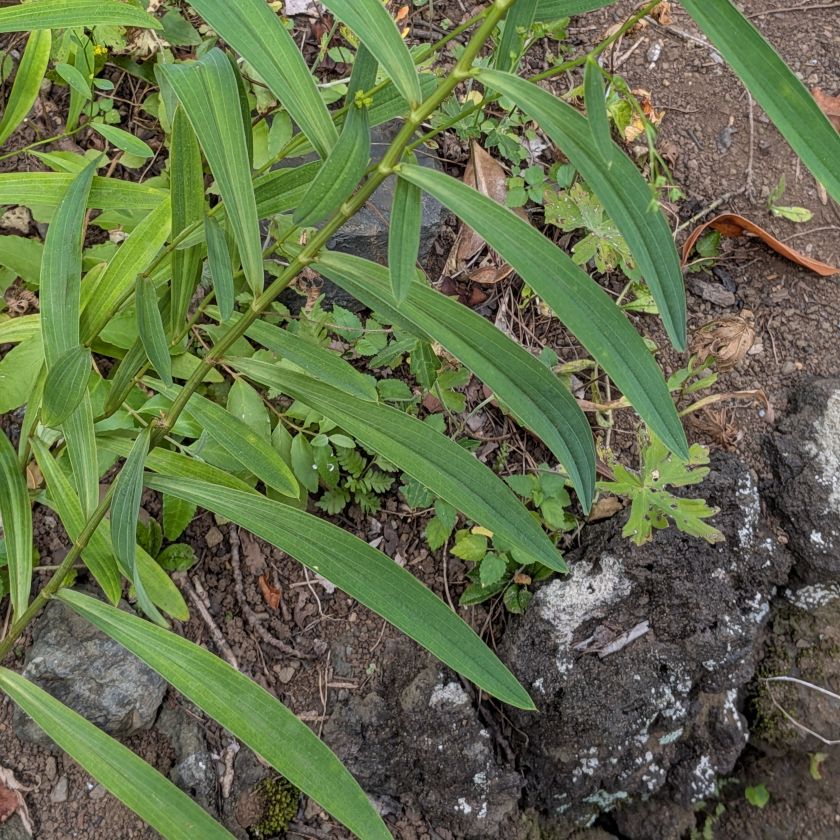
ミシマサイコは太い主根が長く伸び、根頭部から側根が伸びます。葉は根生葉が幅広の披針形、茎生葉が細長い披針形で互生。花は花弁5枚が内側に巻き込みます。雄しべが5本、雌しべの柱頭が2裂。小さな傘を寄せ集めたように咲きます。花後の双懸果は熟すと裂けて分果を散布。
ミシマサイコの利用
ミシマサイコは根が生薬「柴胡」として小柴胡湯、大柴胡湯、柴胡桂枝湯、加味逍遙散、補中益気湯、抑肝散などの漢方処方に配合。おもな有効成分はサイコサポニンで、抗炎症・解熱、肝臓保護、免疫調整、抗ストレス・鎮静に作用し、微量の精油成分が芳香療法にも用いられます。
Bupleurum falcatum
Bupleurum falcatum (Japan standard: Bupleurum stenophyllum) is a perennial plant in the Apiaceae (parsley) family. In Japan, it grows wild in sunny mountain areas across Honshu, Shikoku, and Kyushu, as well as on the Korean Peninsula and in China. Its roots have a long history of use in Kampo (traditional Japanese medicine) for their fever-reducing and soothing properties. It is characterized by small, understated yellow flowers and holds the romantic flower meaning of “first love.”
The Japanese name, Mishima-saiko, originates from a combination of “Mishima”—a famous post town in Suruga Province on the Tokaido road during the Edo period—and “Saiko,” the crude drug derived from its root. At the time, Saiko produced in Mishima was renowned as the highest quality. The genus name Bupleurum translates to “ox rib,” describing the prominent leaf veins, while the specific epithet stenophyllum means “narrow-leaved,” referring to the shape of the blades.
The plant develops a long, thick taproot with lateral roots extending from the root crown. Its basal leaves are broadly lanceolate, whereas the stem leaves are narrower and arranged alternately. The tiny flowers feature five petals that curl inward, five stamens, and a two-lobed stigma, blooming in delicate, umbrella-like clusters. After flowering, the schizocarp fruit splits upon ripening to release its seed segments (mericarps).
The dried roots are processed into the crude drug “Saiko” (Bupleurum root), a key ingredient in traditional Kampo formulas such as Sho-saiko-to, Dai-saiko-to, Saiko-keishi-to, Kami-shoyo-san, Hochu-ekki-to, and Yokukan-san. The primary active compounds are saikosaponins, which exert anti-inflammatory, antipyretic, liver-protective, immunomodulatory, anti-stress, and sedative effects. Additionally, trace amounts of essential oils from the root are utilized in aromatherapy.