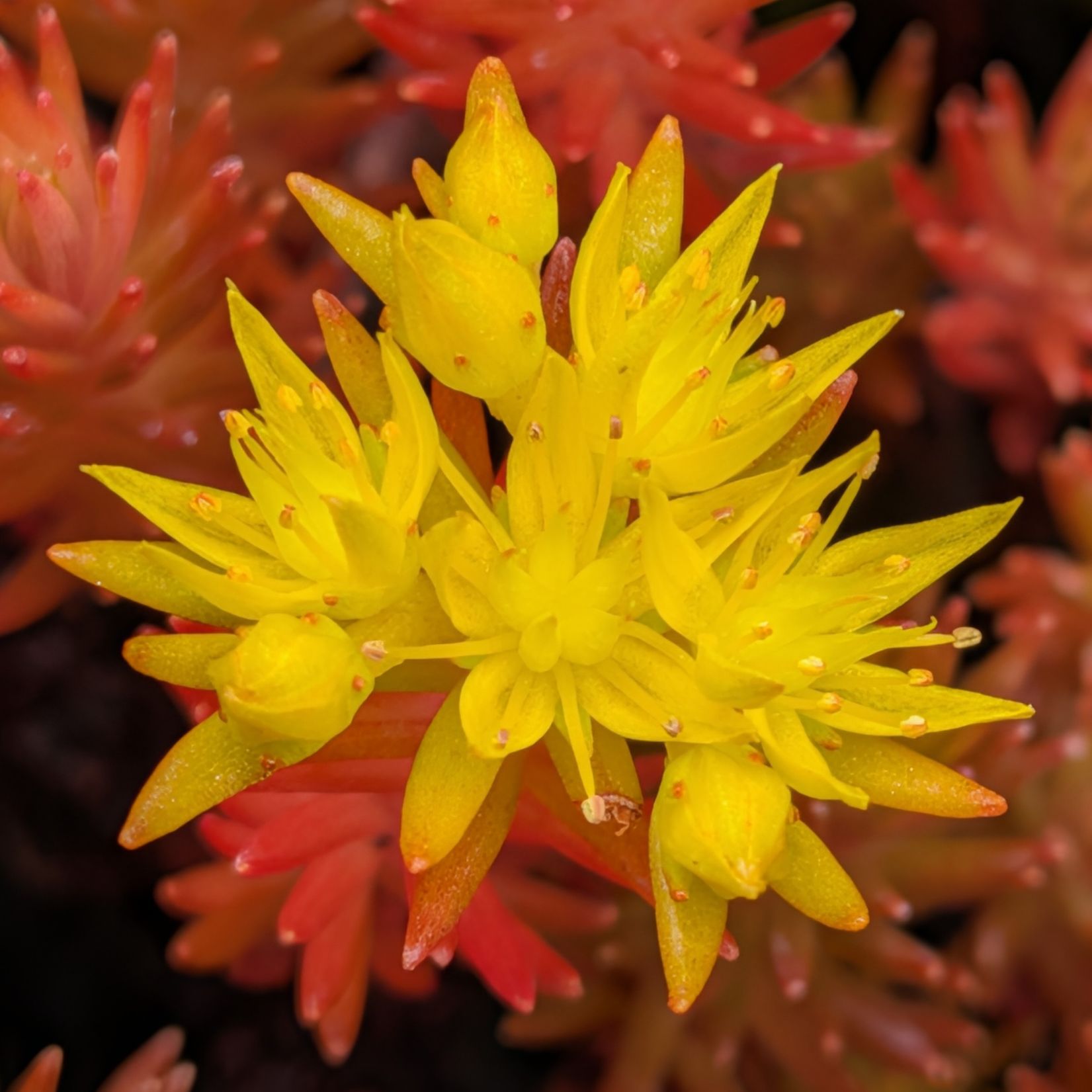
マツノハマンネングサの葉は先端が尖り、夏に緑色、冬に赤色。茎先で弾ける黄色の花々は、首飾りが解けて散らばる星の煌めきのようです。
The leaves of the Hakone Stonecrop are pointed, appearing green in summer and turning vibrant red in winter. The bright yellow flowers bursting at the stem tips resemble a scattering of sparkling stars from a broken necklace.
【仮名】マツノハマンネングサ, マツバマンネングサ
【和名】松の葉万年草, 松葉万年草
【英名】Hakone Stonecrop
【学名】Sedum hakonense
【誕生】05/ 25, 08/ 11
【開花】06, 07月
【花色】Yellow
マツノハマンネングサ
マツノハマンネングサの概要
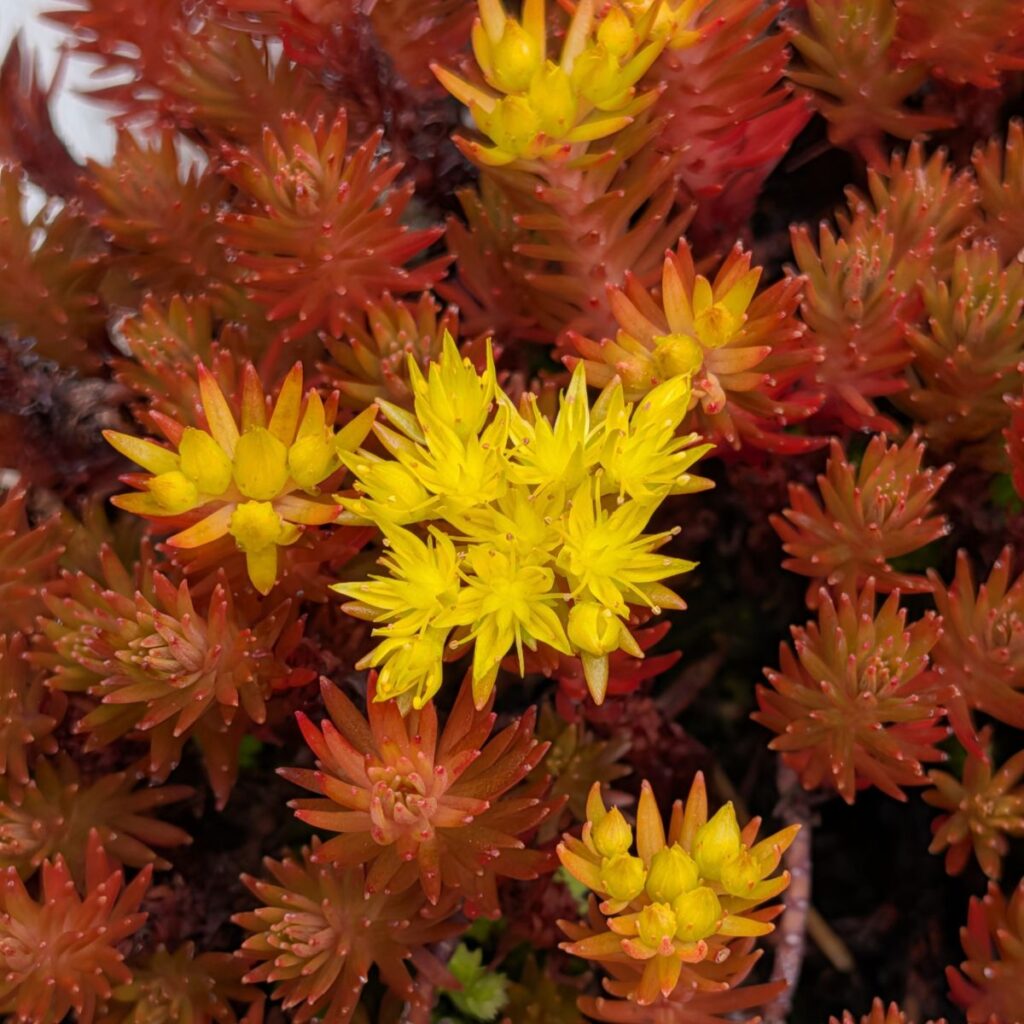
マツノハマンネングサはベンケイソウ科マンネングサ属の常緑多年草。本州の関東・中部・近畿・中国地方、四国の太平洋側に分布し、山地の湿潤な岩場で育ちます。葉は先端が尖り、夏に緑色、冬に赤色。茎先で弾ける黄色の花々は、首飾りが解けて散らばる星の煌めきのようです。
マツノハマンネングサの名前
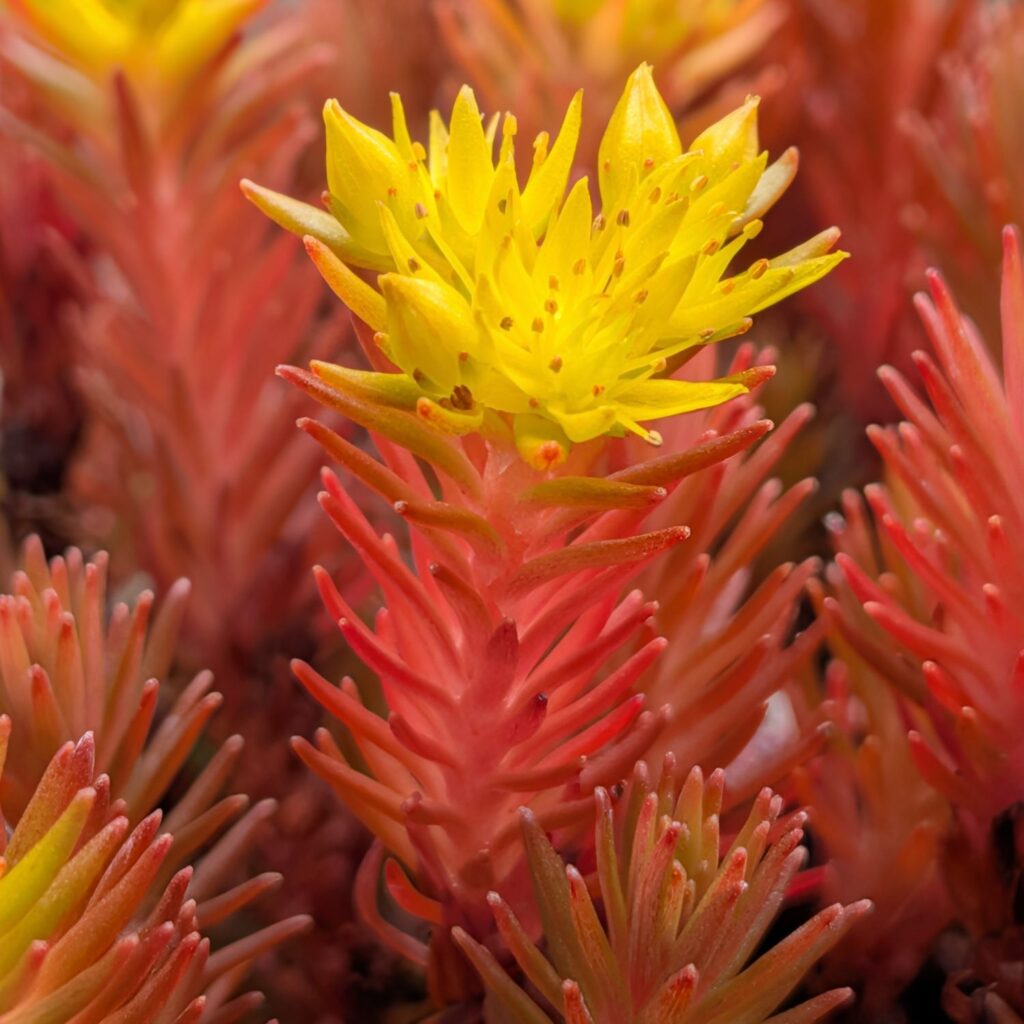
マツノハマンネングサの和名の由来は、木本の松と同じように葉が尖リ、枯れずに緑を保つからです。属名セダムは「座る」という意味で、岩に張り付いて育つから。種小名ハコネンセは箱根山で標本が採集されたからです。英名のストーンクロップは「岩に生える植物」という意味。
マツノハマンネングサの姿形
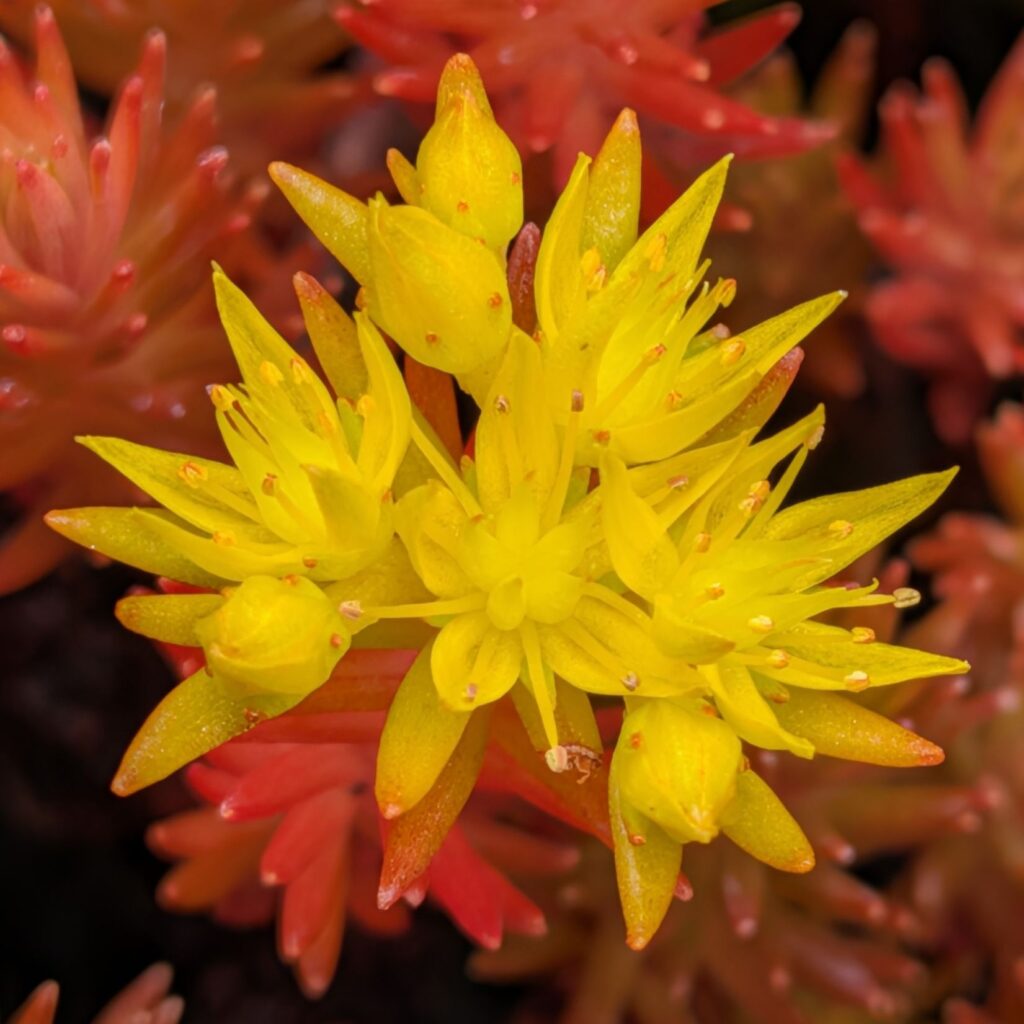
マツノハマンネングサは岩の上に気根を伸ばし、ひげ根で張り付き、茎が這い広がります。葉は互生の線形で多肉質。寒くなると紅葉します。花は茎先に集まって咲き、花被が5裂、雄しべが10本、雌しべの柱頭が5裂。花後は袋果が上を向き、熟すと割れて微細な種子を散らします。
マツノハマンネングサの逸話
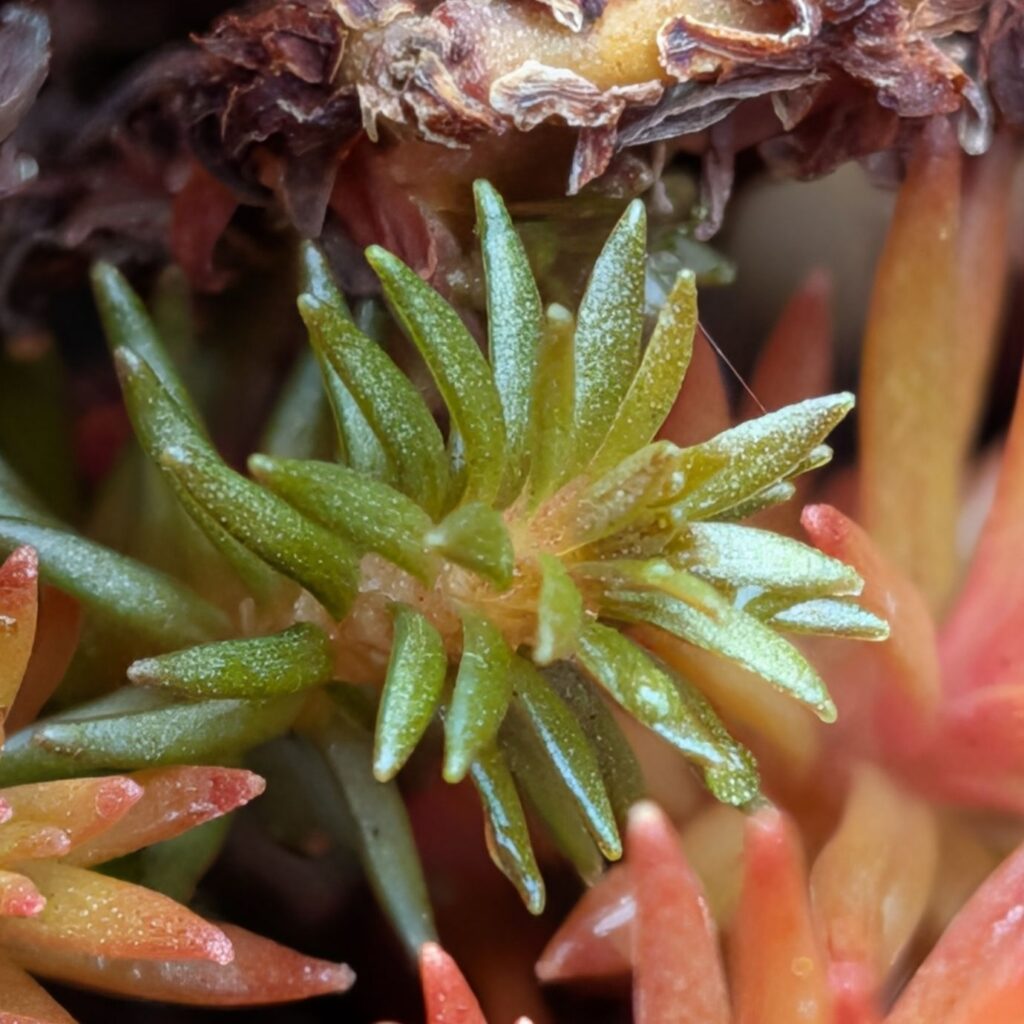
マツノハマンネングサは箱根で採集された標本により1901年、植物学者の牧野富太郎博士が『植物学雑誌』第15巻で発表。砂漠のような乾燥地を好むマンネングサ属では珍しく、渓流のような湿潤地を好みます。一方、かつての自生地は現在、温暖化によって沢が枯れるなどして衰退。
Hakone Stonecrop
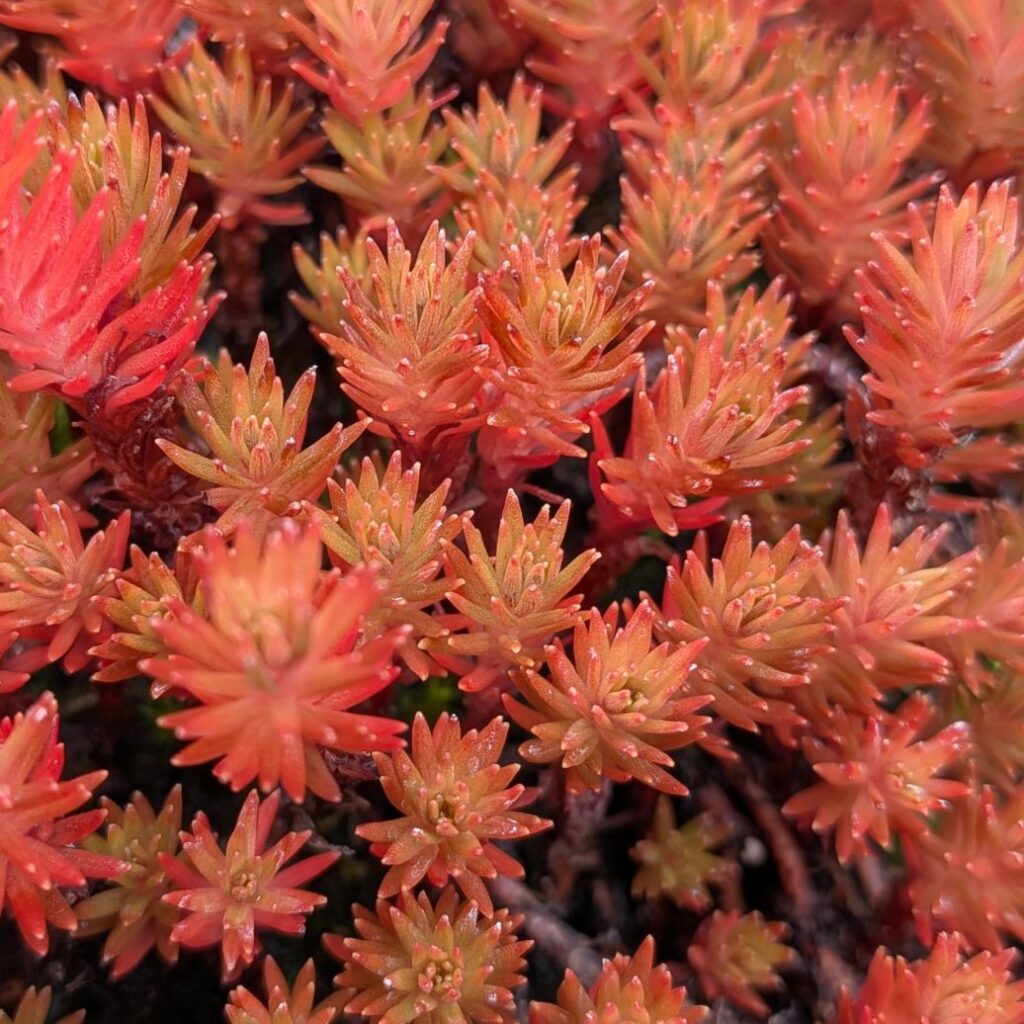
The Hakone Stonecrop (Sedum hakonense) is an evergreen perennial belonging to the Crassulaceae family. Native to the Kanto, Chubu, Kinki, and Chugoku regions of Honshu, as well as the Pacific side of Shikoku, it thrives on moist, rocky surfaces in mountainous areas. Its leaves are pointed, green in summer, and turn red in winter. The yellow flowers that burst into bloom at the stem tips look like a scatter of sparkling stars from a broken necklace.
The Japanese name translates to “a herb with pointed, evergreen leaves resembling pine needles.” The genus name Sedum means “to sit,” describing how the plant clings tightly to rocks as it grows. The specific epithet hakonense denotes that the type specimen was collected on Mount Hakone, while its common English name, “Stonecrop,” reflects its habit of growing on rocky terrain.
The Hakone Stonecrop spreads its creeping stems by extending aerial roots and anchoring itself with fibrous roots. Its fleshy, linear leaves are arranged alternately along the stem and turn a beautiful red during the cold season. The flowers cluster at the stem tips, featuring a 5-parted perianth (five petals/sepals), ten stamens, and five distinct pistils. After flowering, the upward-pointing follicles split open as they mature, scattering minuscule seeds.
The species was first described in 1901 by the renowned botanist Dr. Tomitaro Makino in Volume 15 of The Botanical Magazine, based on a specimen collected in Hakone. While most members of the Sedum genus favor arid, desert-like environments, this species uniquely prefers damp habitats, such as mountain streamsides. Tragically, its native habitats are currently in decline, threatened by drying streams linked to global warming.