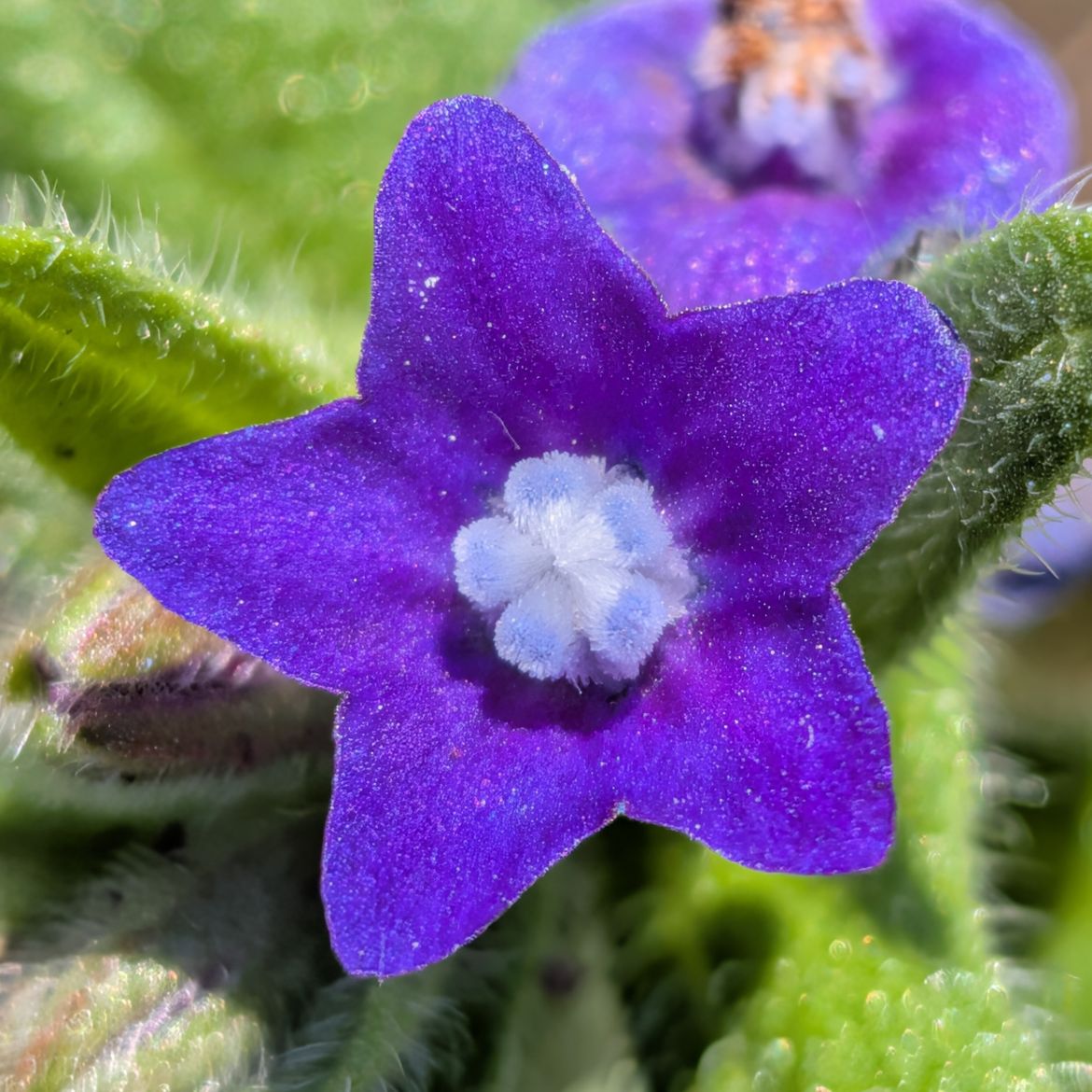
アルカネットの葉は牛の舌のように表面がザラつき、花は渦巻き状の蕾が解けるように平開。花の色が鮮やかな紫紺から群青へと移ろいます。
The leaves of the common alkanet have a rough, sandpapery texture resembling an ox’s tongue, while its flowers open flat, unfurling from tightly spiraled buds. Their color beautifully shifts from a vivid deep violet to a brilliant ultramarine.
【仮名】アルカネット
【和名】アルカネット
【英名】Common Alkanet, Bugloss
【学名】Anchusa officinalis
【誕生】01/ 31
【開花】05, 06, 07, 08, 09月
【花色】Purple, Violet, Blue
アルカネット
アルカネットの概要
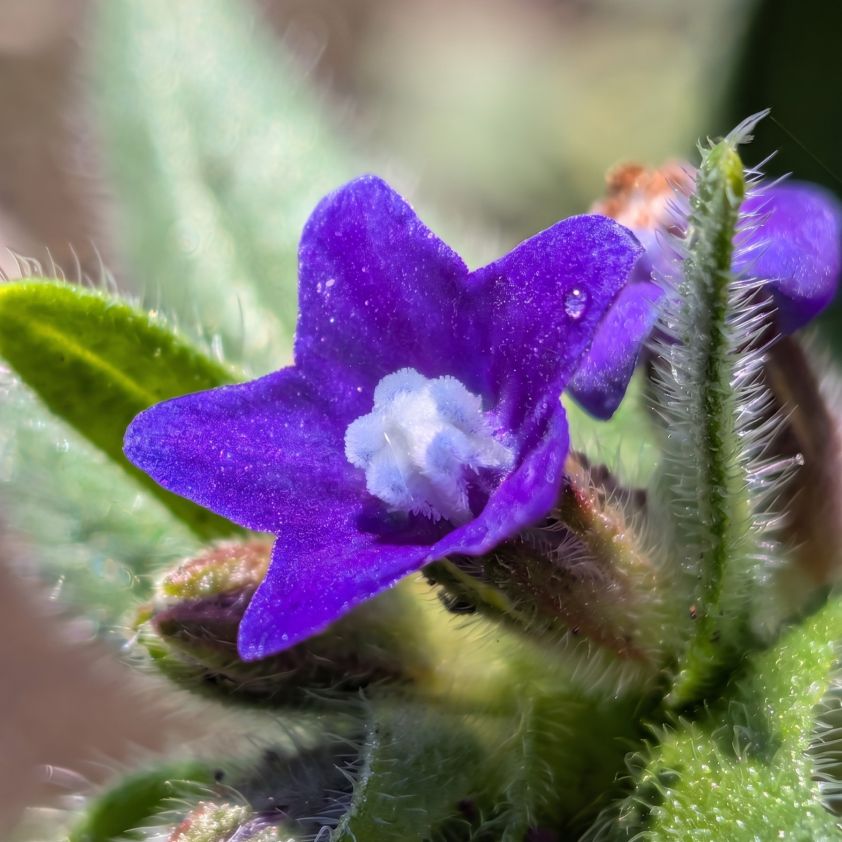
アルカネットはムラサキ科ウシノシタグサ属の多年草です。欧州~西アジアに分布し、北米などで野生化。日当たりがよく、乾いたところで自生しています。葉は牛の舌のように表面がザラつき、花は渦巻き状の蕾が解けるように平開。花の色が鮮やかな紫紺から群青へと移ろいます。
アルカネットの名前
アルカネットは英名に由来します。もともと中世アラブ世界で「植物染料」を意味したアル・ヒンナーが、中世ヨーロッパに伝わってアルカンナに、さらにアルカネットへと転訛。属名アンチューサは「赤色の染料」に由来し、種小名オフィキナリスは「薬効のある」という意味です。
アルカネットの姿形
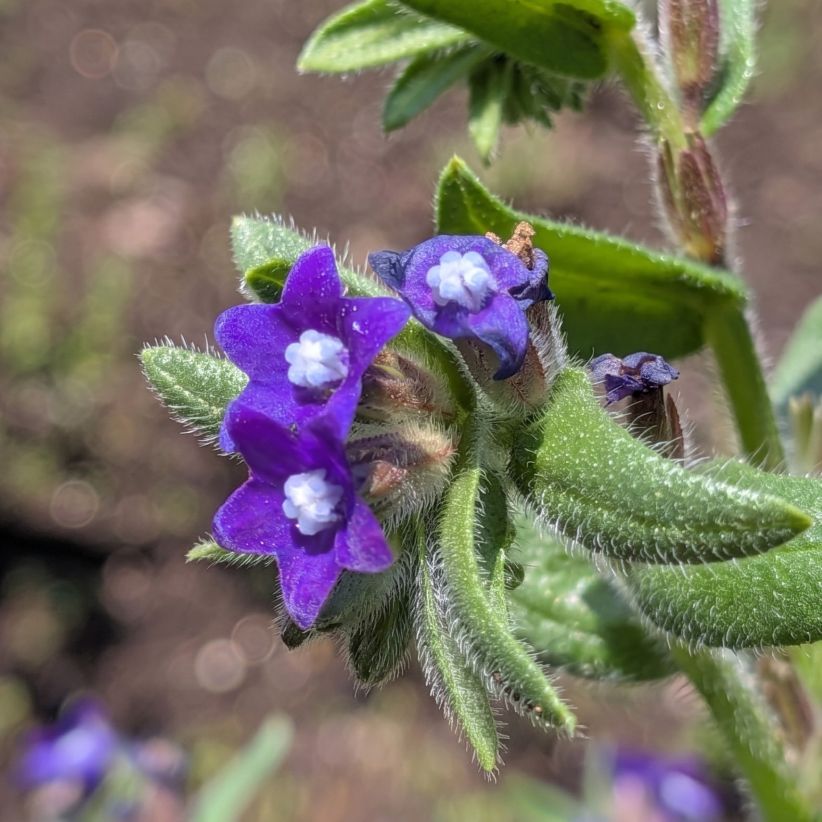
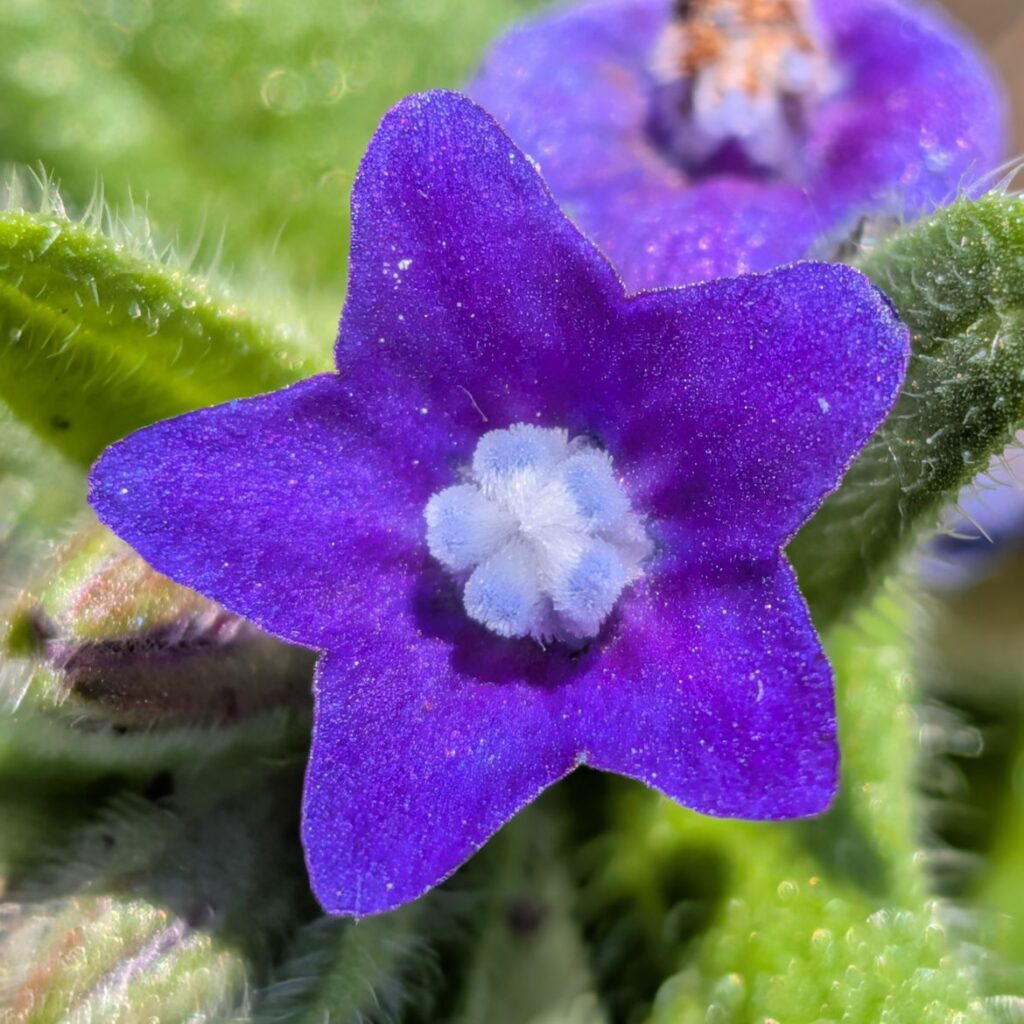
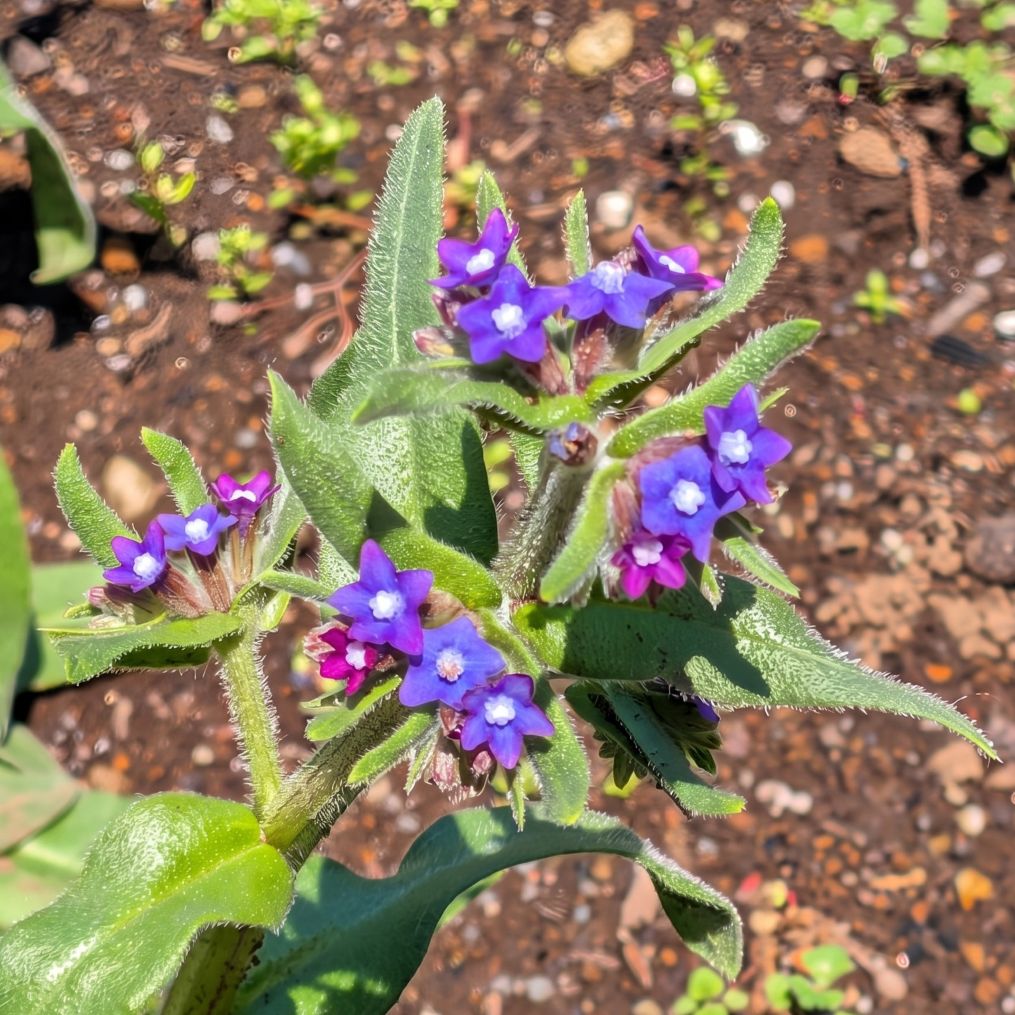
アルカネットは直根が伸び、茎が直立します。葉は長楕円形の根生葉、互生の茎生葉。茎も葉も剛毛が密生します。花は青紫色の花被が深く5裂、眉刷毛のような白色の鱗片が5つ。花後の分果に収められた小堅果は、栄養分に富む種枕が付着し、地面に落ちると蟻が遠くへ運びます。
アルカネットの利用
アルカネットは古くから蜜蝋などで根から赤色を抽出し、口紅などに利用。薬草として傷や皮膚炎、発熱や鬱血にも用いられました。中世ヨーロッパではマドンナ・ブルーの花で普及。今は化学染料に圧されて衰退したものの、修道院の跡地などで青紫色の花々に蜜蜂が飛び交います。
Common Alkanet
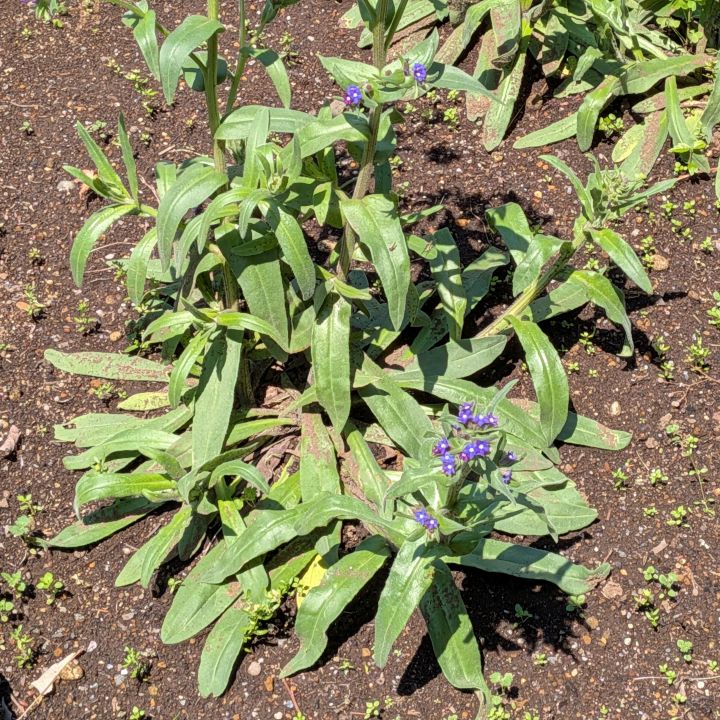
The common alkanet (Anchusa officinalis) is a perennial herb belonging to the borage family (Boraginaceae). Native to Europe and Western Asia, it has also become naturalized in parts of North America, thriving in sunny, well-drained, and dry locations. Its leaves have a rough surface reminiscent of an ox’s tongue, and the flowers unfurl flat from spiraled buds, changing in color from a vivid deep violet to ultramarine.
The name “alkanet” derives from al-hinnā’, the Arabic term for “plant dye” used in the medieval world. This word made its way into medieval Europe as alchanna before eventually evolving into “alkanet.” The genus name Anchusa stems from a word meaning “red dye,” while the specific epithet officinalis signifies its historical use as a “medicinal” plant.
The common alkanet develops a deep taproot and an upright, erect stem. Its foliage consists of oblong basal leaves and alternating stem leaves, both of which—along with the stems—are densely covered in stiff, bristly hairs. The blue-purple flowers feature a deeply five-lobed corolla adorned with five white, brush-like scales. After flowering, the plant produces small nutlets (contained within a schizocarp) that bear nutrient-rich appendages called elaiosomes. When these fall to the ground, ants eagerly carry them away, aiding in seed dispersal.
Since ancient times, a red pigment has been extracted from its roots—often using beeswax—to create cosmetics like lipstick. As a medicinal herb, it was traditionally used to treat wounds, dermatitis, fevers, and congestion. In medieval Europe, the plant became widely cherished for its “Madonna Blue” flowers. Although its practical use has declined with the rise of synthetic dyes, honeybees can still be seen flitting among its blue-purple blossoms around the ruins of old monasteries.