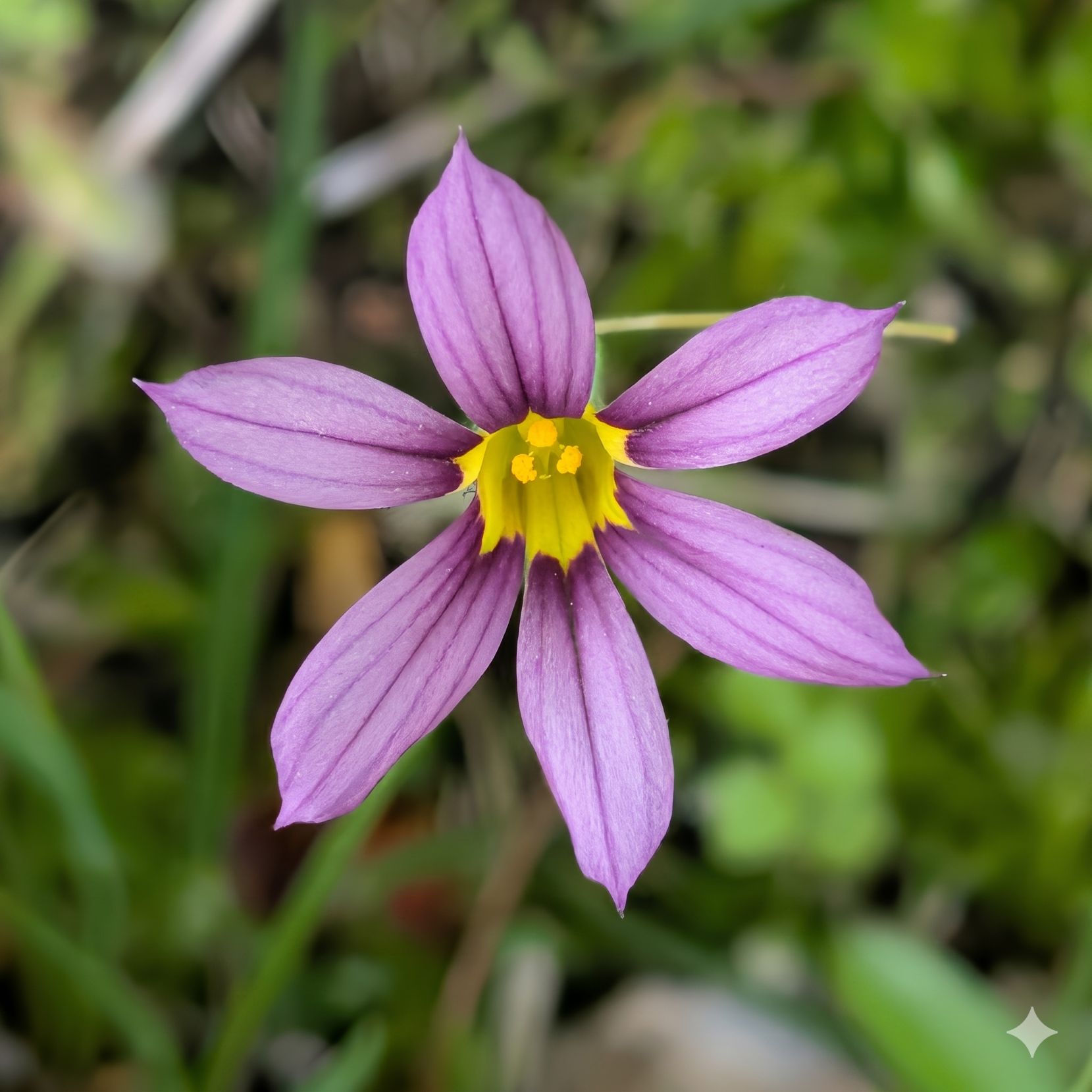
ニワゼキショウは朝方に咲いて夕方に萎れる一日花で、赤紫色の基本種に、変種の白花庭石菖が混生。「きらめき」という花言葉があります。
Blue-eyed Grass is an ephemeral flower that blooms in the morning and withers by evening, lasting only a single day. The typical purple flowers are often seen growing alongside the white-flowered variety. In the language of flowers, it symbolizes “sparkle.”
【仮名】ニワゼキショウ
【和名】庭石菖
【英名】Blue-eyed Grass, Annual Blue-eyed Grass
【学名】Sisyrinchium rosulatum
【誕生】05/ 14, 07/ 05
【開花】05, 06月
【花色】White, Purple, Violet
ニワゼキショウ
ニワゼキショウの概要
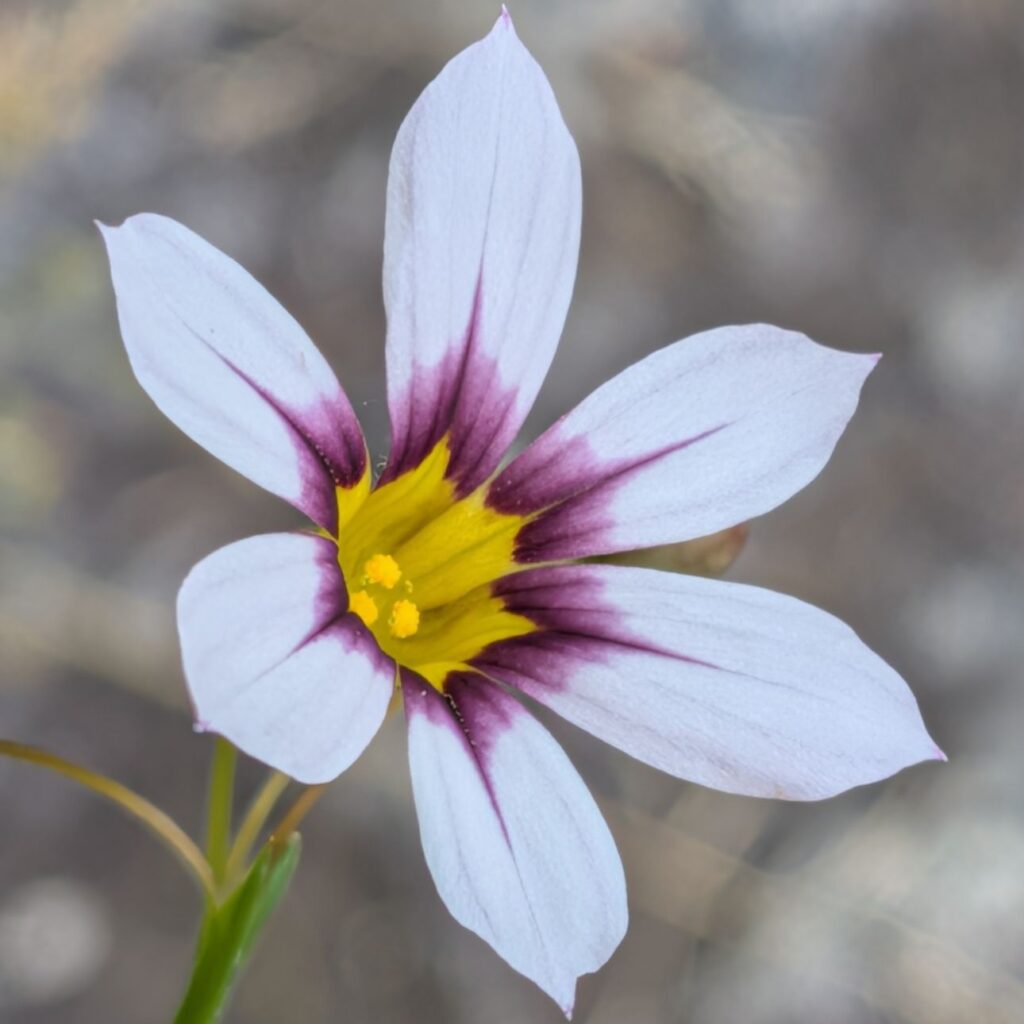
ニワゼキショウはアヤメ科ニワゼキショウ属の多年草です。原産地は北米南東部で、日本へは明治時代に観賞用で渡来。公園の芝生や牧草地など、陽当たりのよいところに自生しています。花が赤紫色の基本種に時折、変種の白花庭石菖が混生。「きらめき」という花言葉があります。
ニワゼキショウの名前
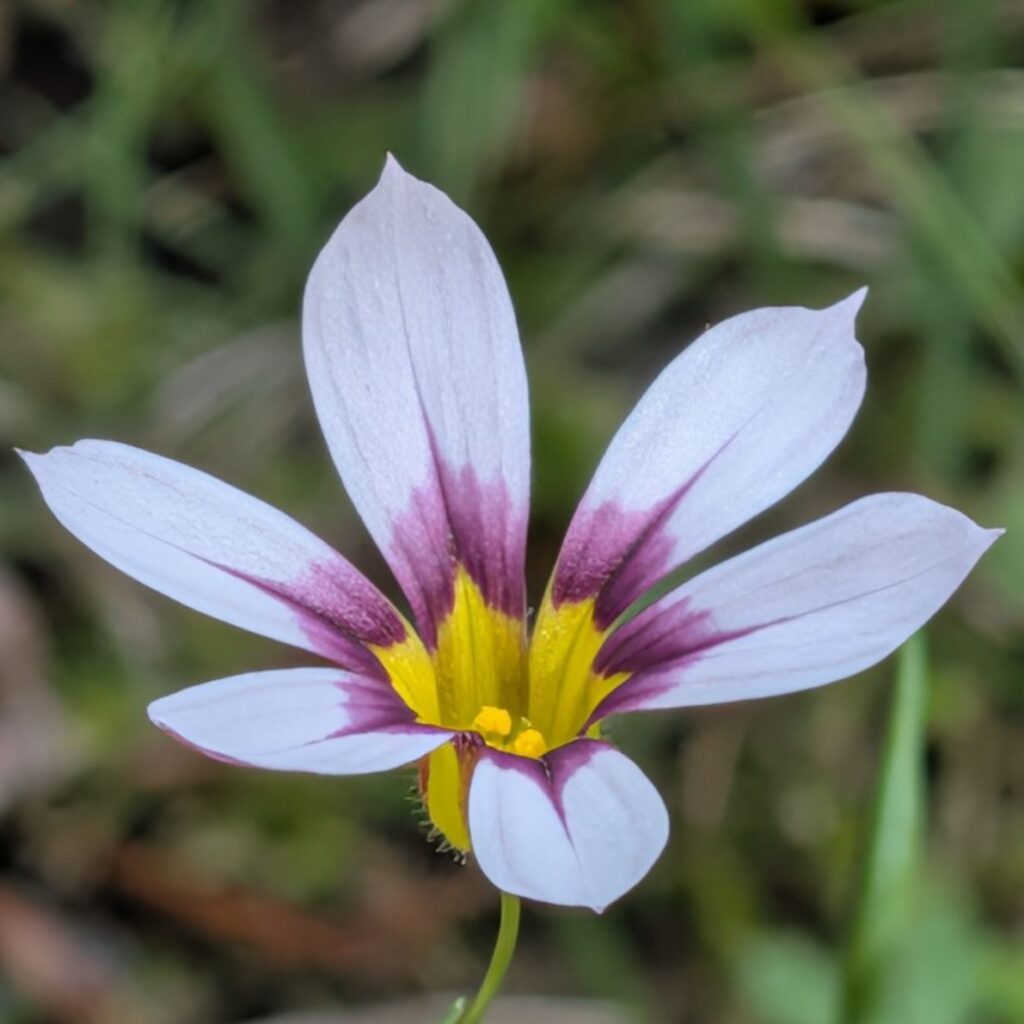
ニワゼキショウの和名の由来は身近な「庭」などに自生し、葉の形がショウブ科の「石菖」に似ているから。英名は「青色の瞳の草」という意味で、近縁種の花色に由来します。属名シシリンキウムはアヤメ科の球根植物の古称。種小名ロスラツムは「ロゼット状の」という意味です。
ニワゼキショウの姿形
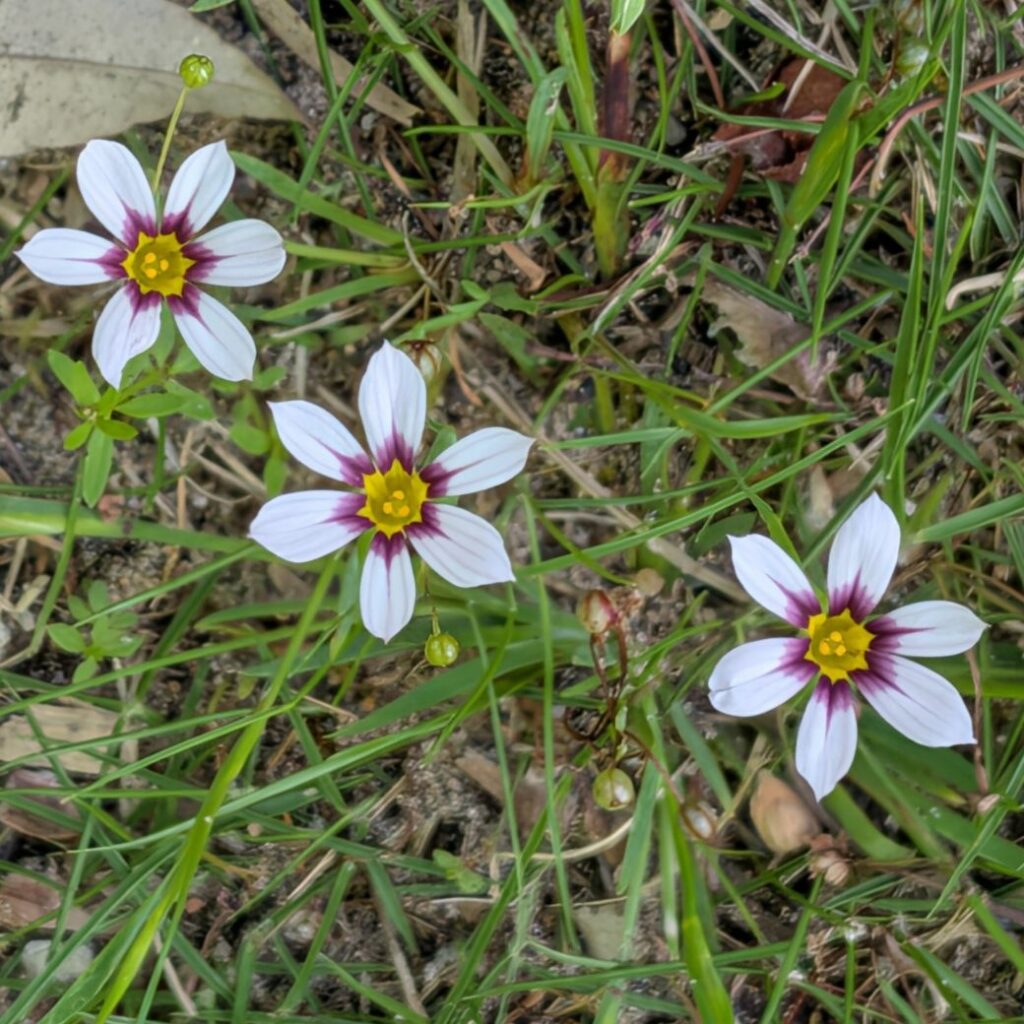
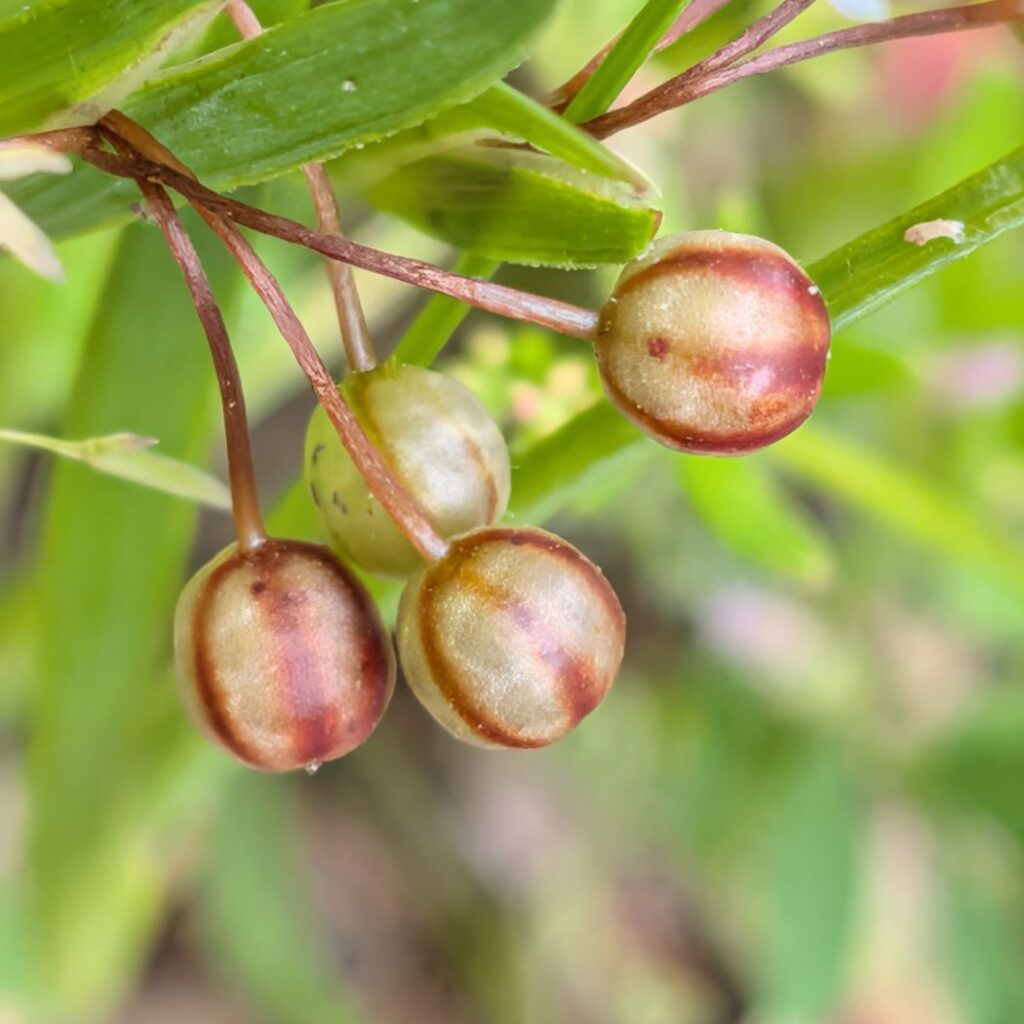
ニワゼキショウは短い根茎から髭根が伸長。茎は扁平で両側に翼があります。葉は剣状の線形で、根生葉が放射状、茎生葉が互生。基部が二つ折りで茎を抱きます。花は朝方に咲いて夕方に萎れる一日花で、花被片が6枚、 雄しべが3本。蒴果は熟すと3つに割れて種子を散らします。
ニワゼキショウの近縁
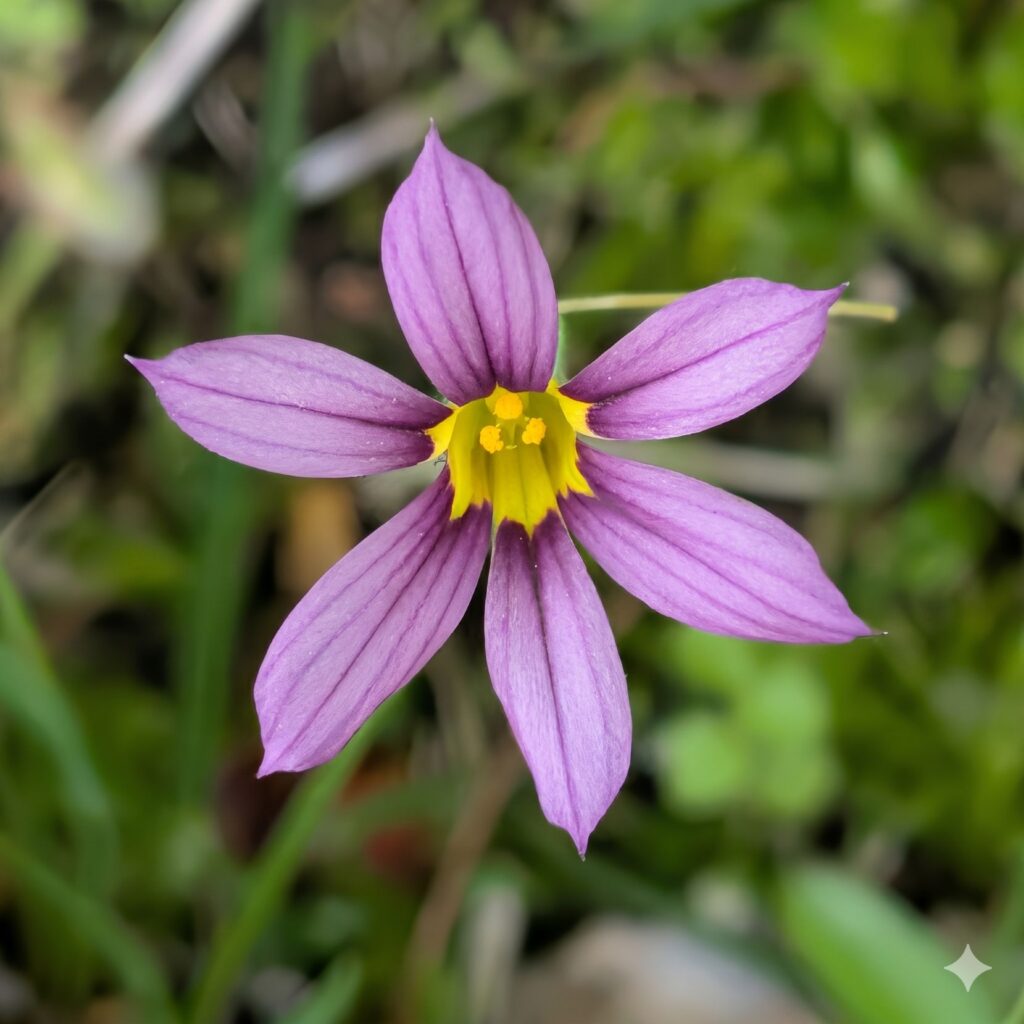
ニワゼキショウの近縁種「大庭石菖」も平たい茎の両側に翼をもち、線形の葉が扇状に広がる、花被片6枚の一日花です。一方、名前の通り丈が大きく、蒴果も大きく目立つものの、花は小さく、淡い青紫色。庭石菖と大庭石菖の交雑種「秋丸庭石菖」は両者の中間の草丈、花色です。
Blue-eyed Grass
Blue-eyed Grass is a perennial herb in the genus Sisyrinchium of the Iridaceae (Iris) family. Native to the southeastern United States, it was introduced to Japan during the Meiji era as an ornamental plant. Today, it grows wild in sunny areas such as lawns and meadows. While the standard form bears purple flowers, it is frequently found intermingled with its white-flowered variant.
The Japanese name, Niwa-zekisho, translates to “Garden Acorus gramineus.” This name reflects its habit of growing in common gardens and its leaf shape, which resembles Acorus gramineus (Japanese sweet flag) of the Acoraceae family. The English common name, “Blue-eyed Grass,” is derived from the flower color of its closely related species. The genus name Sisyrinchium is an ancient Greek name for bulbous plants in the Iris family, while the species epithet rosulatum means “rosette-forming.”
The plant features fibrous roots extending from short rhizomes. Its stems are distinctly flattened and “winged” on both sides. The leaves are linear and sword-shaped; the basal leaves are arranged in a radial pattern, while the stem leaves are alternate. The leaf bases are folded in half, sheathing the stem.
The flowers are diurnal—opening in the morning and closing by evening—and consist of six tepals (perianth segments) and three stamens. Upon maturity, the seed capsule splits into three sections to disperse its seeds.
A close relative, Sisyrinchium micranthum, also features winged, flattened stems and linear leaves that spread in a fan shape. Its Japanese name, O-niwa-zekisho, means “Large Sisyrinchium rosulatum.” True to its name, the plant and its capsules are larger and more conspicuous; however, its flowers are actually smaller and pale bluish-purple. Hybrids between S. micranthum and S. rosulatum also exist, displaying intermediate traits in both height and flower color.