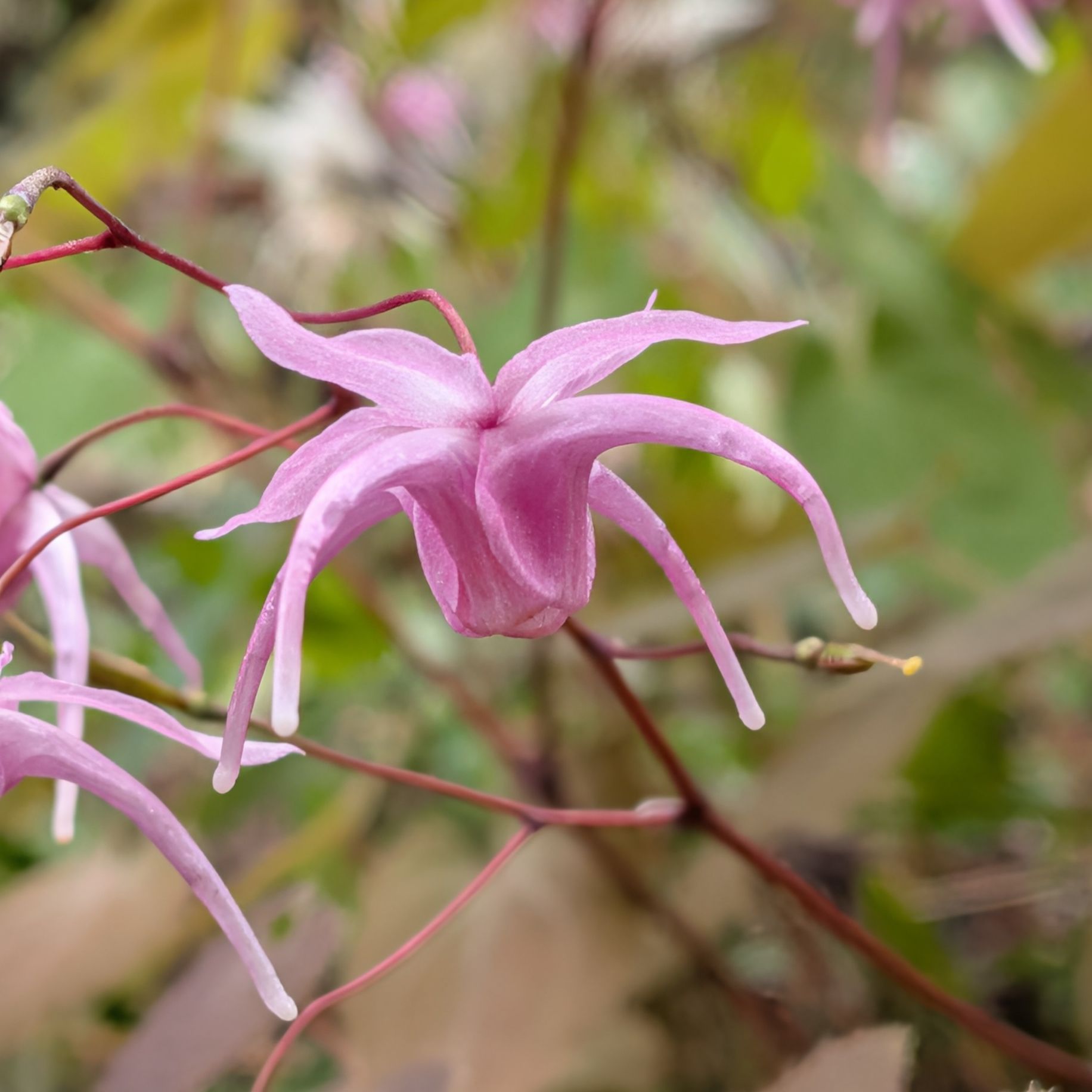
イカリソウは「日陰の宝石」と呼ばれます。茎先に吊り下がって咲き、花弁が4つ。それぞれ距が突き出し、舷部が4本の雄しべを囲みます。
Bishop’s Hat is often referred to as the “Jewel of the Shade.” Its flowers bloom in a nodding fashion from the tips of the stems, featuring four petals. Each petal is characterized by a protruding spur, with the limb (the flat part of the petal) encircling four stamens.
【仮名】イカリソウ
【和名】錨草, 碇草
【英名】Bishop’s Hat, Horny Goat Weed
【学名】Epimedium grandiflorum var. thunbergianum
【誕生】04/ 08, 04/ 13
【開花】04, 05月
【花色】White, Pink, Purple, Violet
イカリソウ
イカリソウの概要
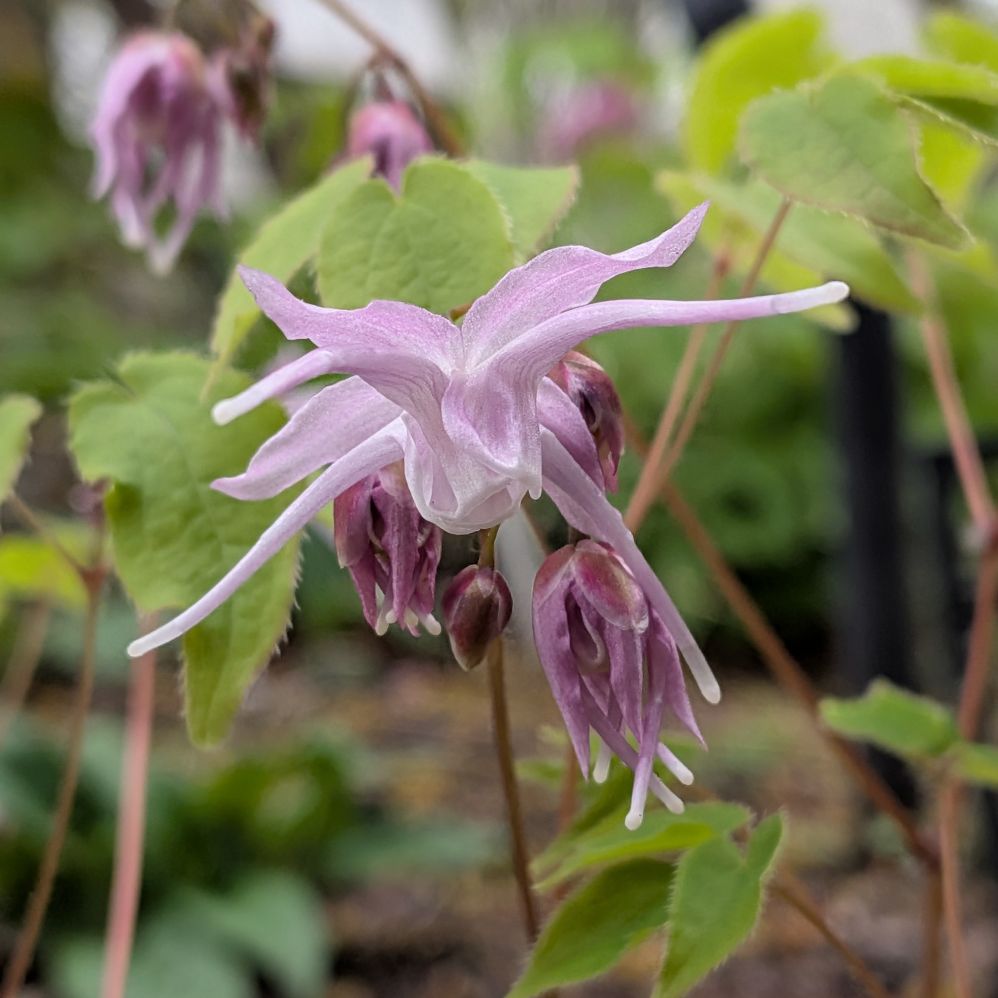
イカリソウはメギ科の落葉多年草。北海道南西部、本州、四国、九州の太平洋側に分布し、山地の林縁などで自生しています。花は茎先に吊り下がって咲き、花弁が4つ。それぞれ距が突き出し、舷部が4本の雄しべを囲みます。19世紀にドイツ人医師・博物学者のシーボルトが紹介。欧州で「日陰の宝石」と呼ばれました。
イカリソウの名前
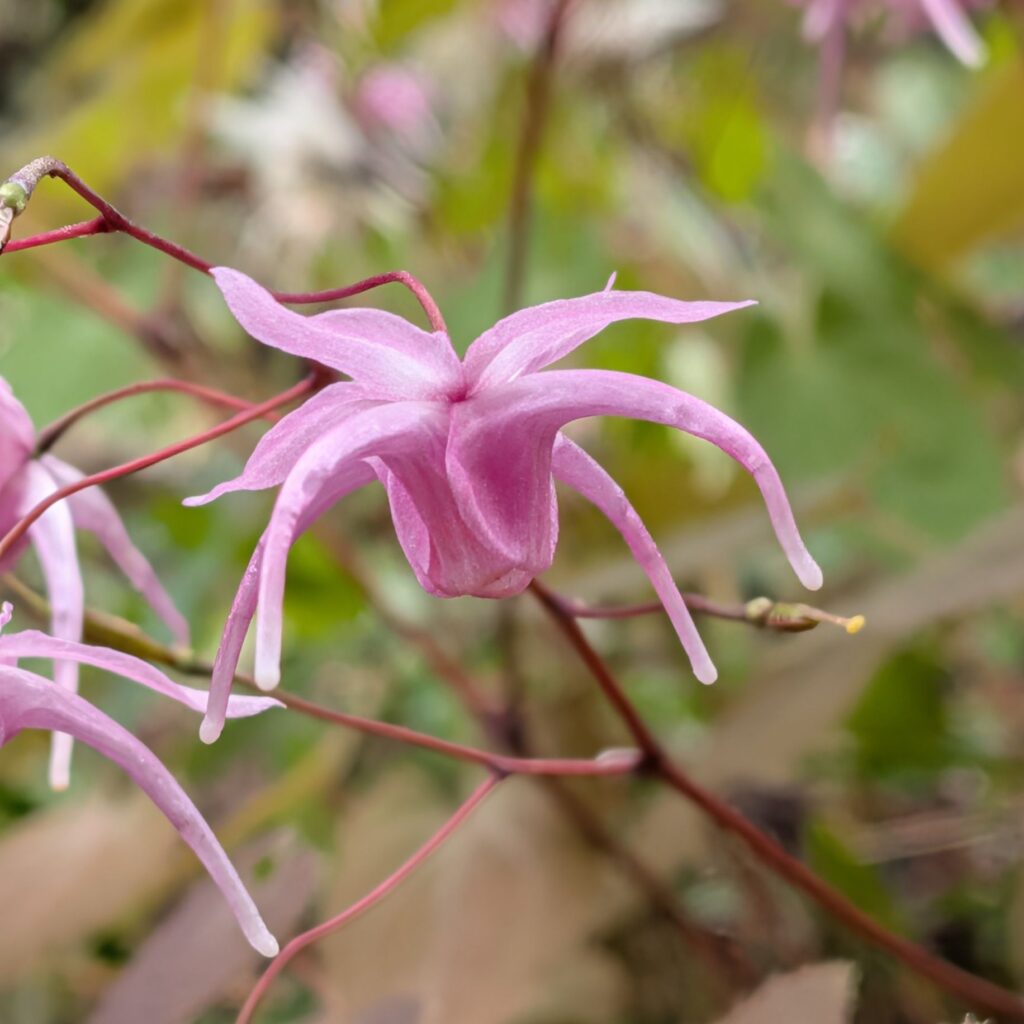
イカリソウの和名の由来は花の形が船の「錨」に似ているから。英名ビショップス・ハットも「司教の帽子」という意味で花の形に由来します。属名エピメディウムは「メディア地方の植物」、種小名グランディフロルムは「大きな花の」、変種名ツンベルギアーヌムはスウェーデンの植物学者カール・ツンベルクへの献名。
イカリソウの姿形
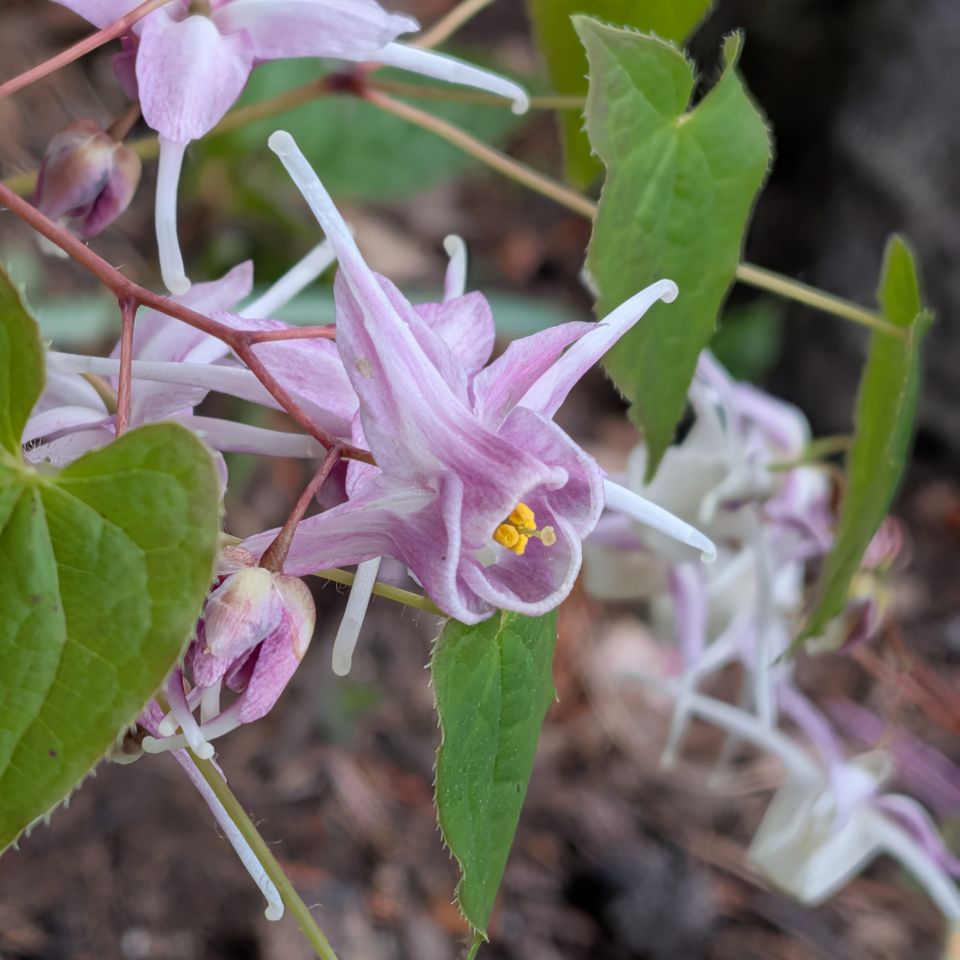
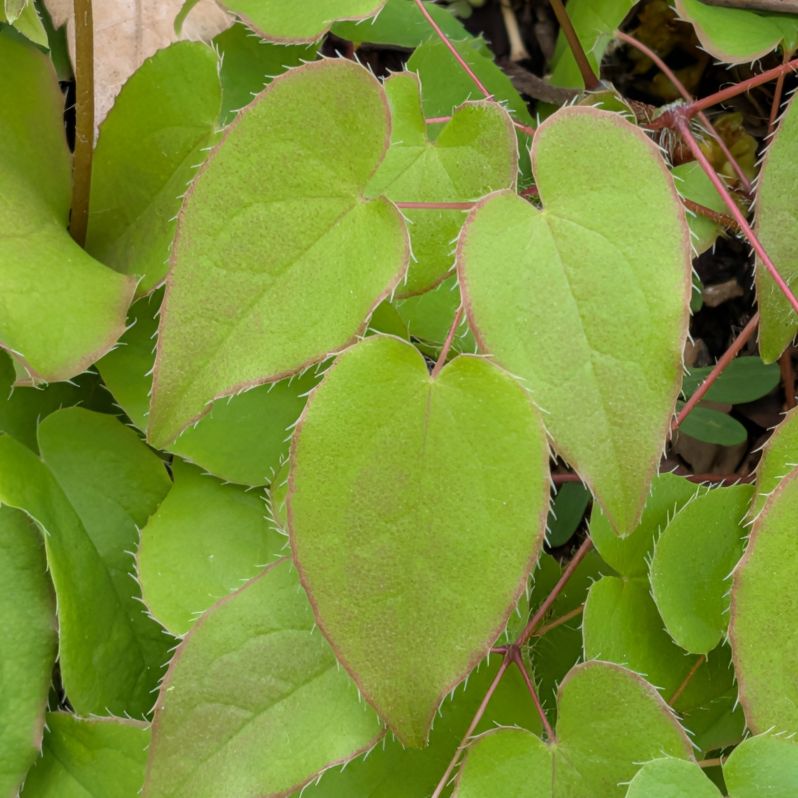
イカリソウは春、芽が丸まりながら伸びます。根茎は節々から髭根が伸長、茎は三出九葉で細かく分岐。葉は二回三出複葉で、心臓形の小葉に刺のような鋸歯があります。花は外萼片4枚が落ち、内萼片4枚が色づき、花弁が4つ。袋果に収められた種子は、栄養分に富む種枕が付着し、地面に落ちると蟻が遠くへ運びます。
イカリソウの利用
イカリソウは茎葉が生薬「淫羊藿」に用いられます。生薬名は「老いた羊が食べ、一日に百回も交尾した」という中国の逸話に由来。実際、血管拡張作用のあるフラボノイド配糖体イカリインが含まれます。効能は滋養強壮・強精、骨・関節の強化、血行促進。疲労、精力減退、足腰の衰え、低血圧、冷え性に用いられます。
Bishop’s Hat
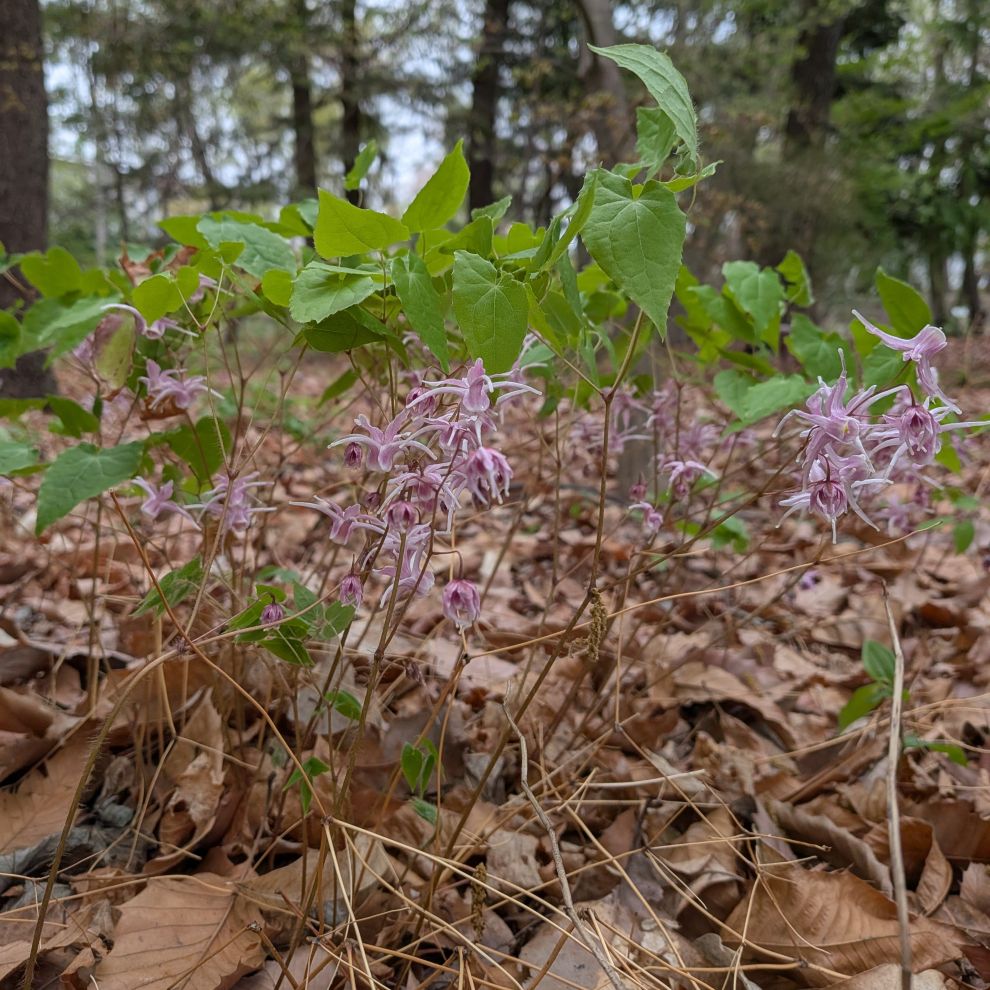
Bishop’s Hat (Epimedium) is a deciduous perennial herb in the Berberidaceae family. It is native to the Pacific side of southwestern Hokkaido, Honshu, Shikoku, and Kyushu, where it grows wild along the edges of mountain forests. The plant was introduced to Europe in the 19th century by the German physician and naturalist Philipp Franz Balthasar von Siebold, where it earned the poetic nickname “Jewels of the Shade.”
The Japanese name, Ikari-so, literally means “the herb with flowers shaped like a ship’s anchor.” Similarly, the English common name “Bishop’s Hat” is derived from the flower’s unique form. The genus name Epimedium refers to a plant from the Media region of ancient Greece, while the species name grandiflorum means “large-flowered.” The variety name thunbergianum is a tribute to the Swedish botanist Carl Peter Thunberg.
In spring, Bishop’s Hat emerges with buds that unfurl as they grow. Its rhizomes produce fibrous roots at each node, and the stems branch finely, typically bearing “biternate” leaves (arranged in groups of three leaflets, totaling nine). These heart-shaped leaflets feature delicate, thorn-like serrations along their margins. When in bloom, the four outer sepals fall away, leaving four colored inner sepals and four petals. The seeds are contained in follicles and are attached to an elaiosome—a nutrient-rich “seed cushion.” Once the seeds fall to the ground, ants are attracted to these appendages and carry the seeds away, aiding in their dispersal.
The stems and leaves of Bishop’s Hat have long been used in traditional herbal medicine. Its medicinal name (Yin Yang Huo) stems from a Chinese legend about an old goat (or sheep) that regained such vitality after eating the plant that it mated a hundred times a day. Scientific study confirms that the plant contains icariin, a flavonoid glycoside with vasodilating properties. It is used as a tonic to enhance vitality, strengthen bones and joints, and promote blood circulation. It is also prescribed for fatigue, low libido, weakness in the lower back and legs, low blood pressure, and poor circulation (sensitivity to cold).