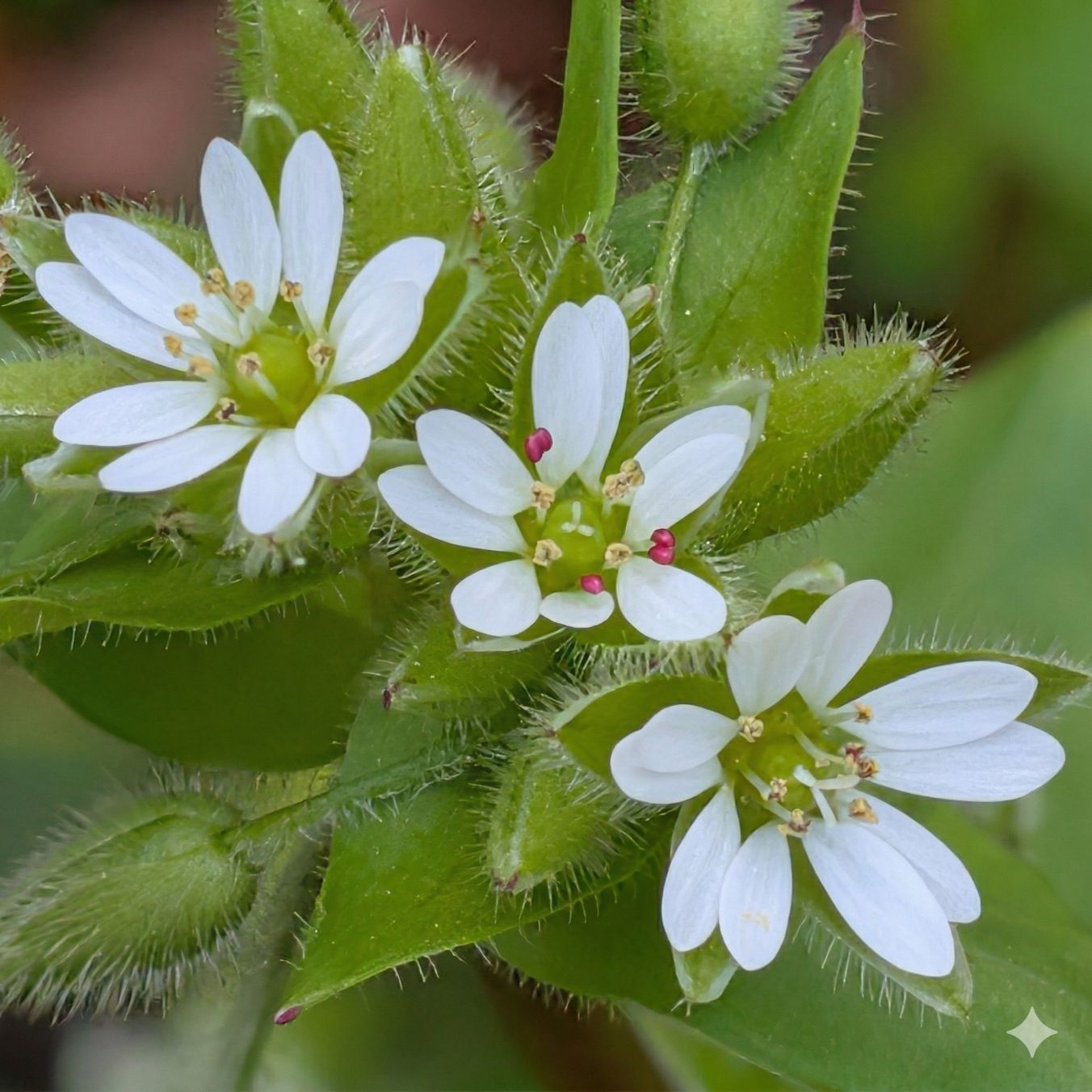
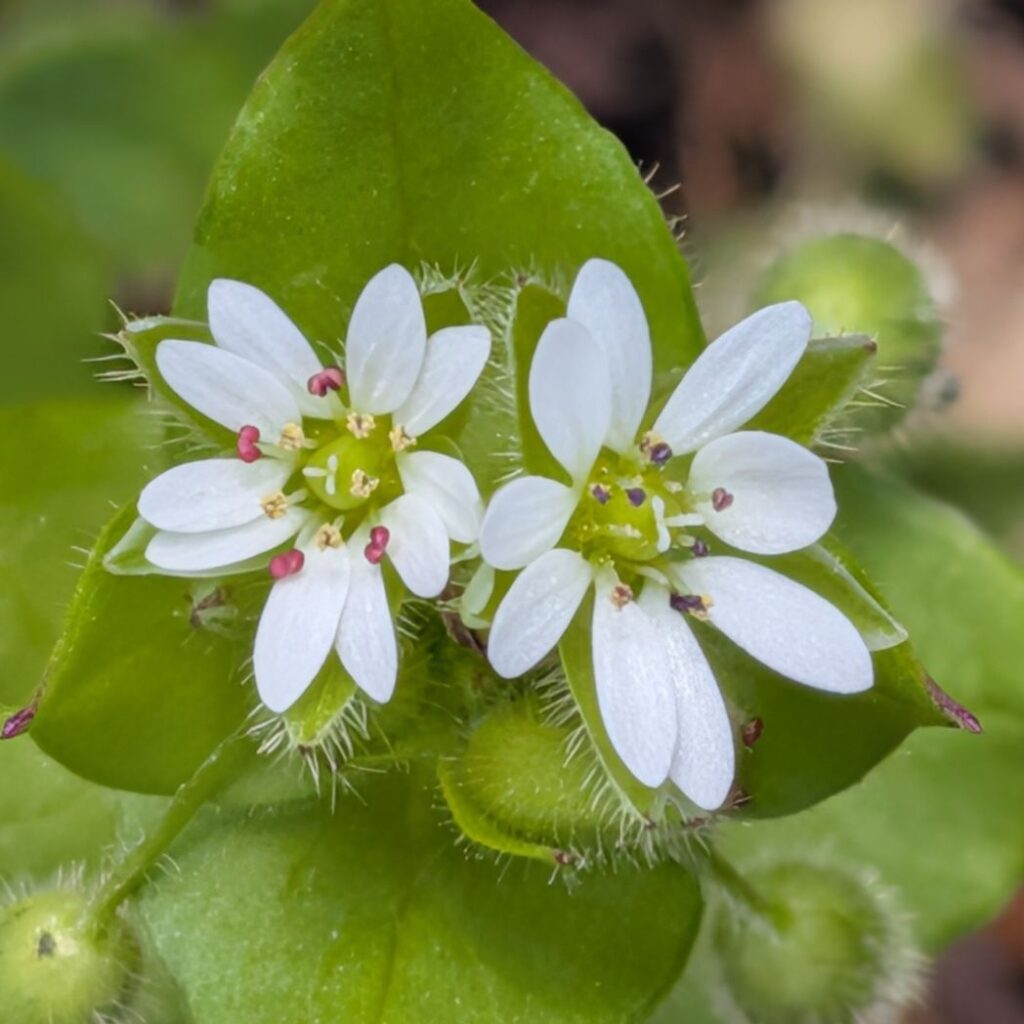
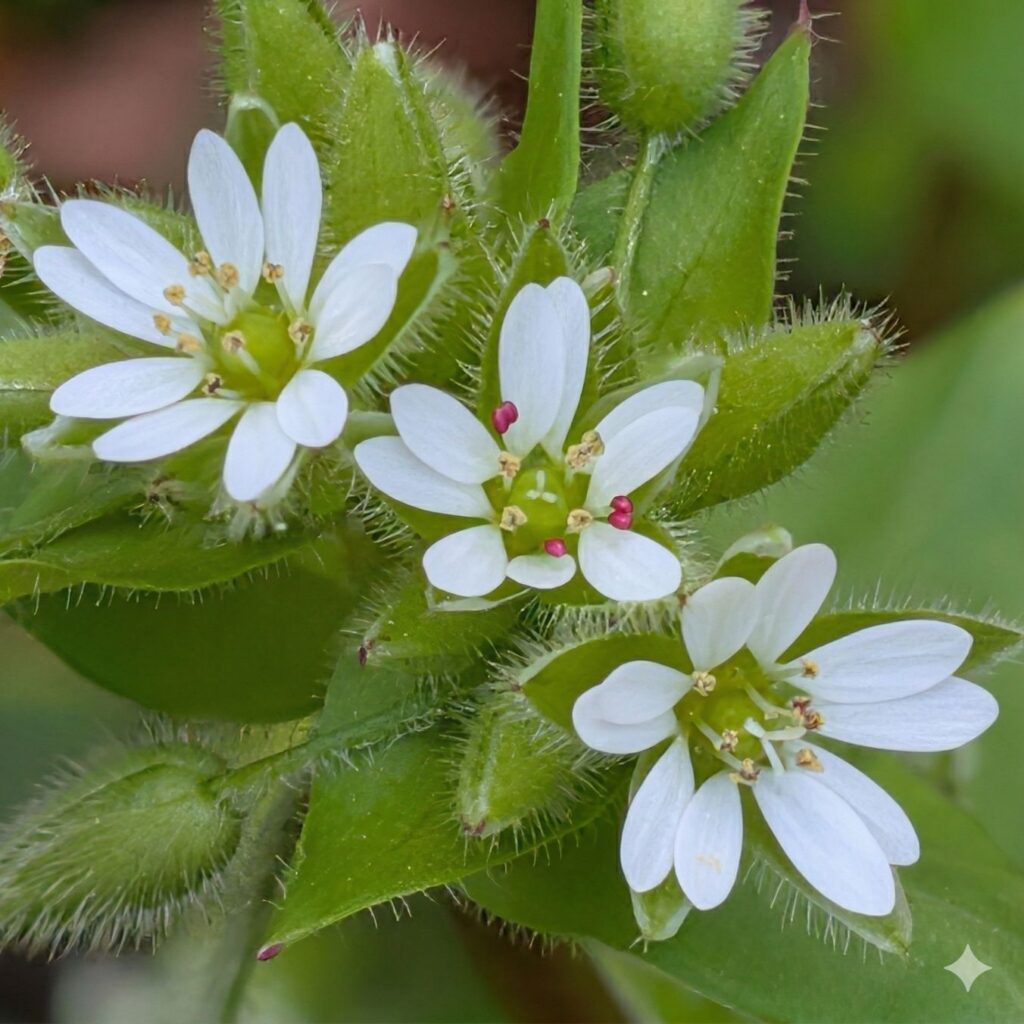
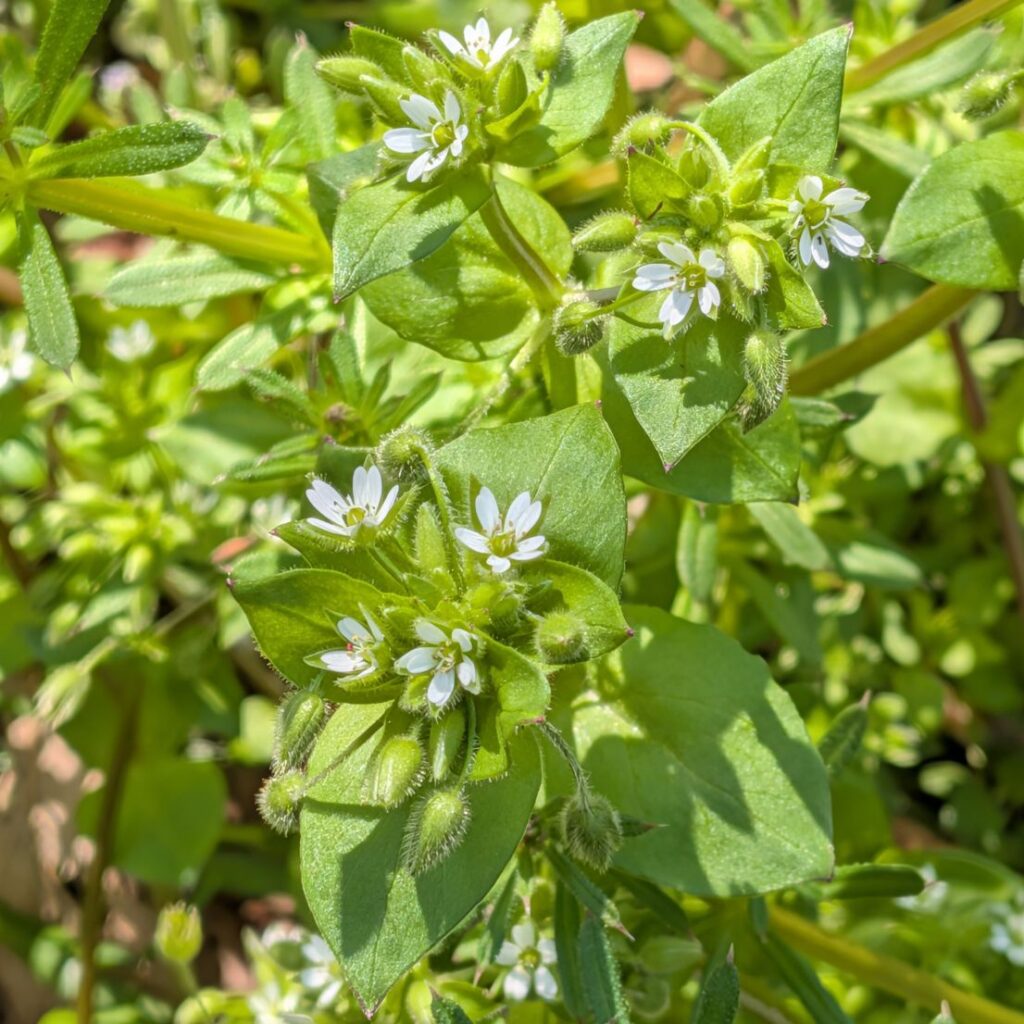
コハコベの花は、花弁5枚が深く2裂し、全部で10枚に見えます。雄しべは3~5本、雌しべは柱頭が3裂。控えめで可憐な花を咲かせます。
Common Chickweed flowers feature five petals that are so deeply cleft they appear as ten. They typically have three to five stamens and a pistil with a three-lobed stigma. These modest, delicate flowers add a touch of charm to the landscape.
【仮名】コハコベ
【和名】小繁縷
【英名】Common Chickweed
【学名】Stellaria media
【誕生】01/ 25, 01/ 30, 02/ 16
【開花】03, 04, 05月
【花色】White
コハコベ
コハコベの概要
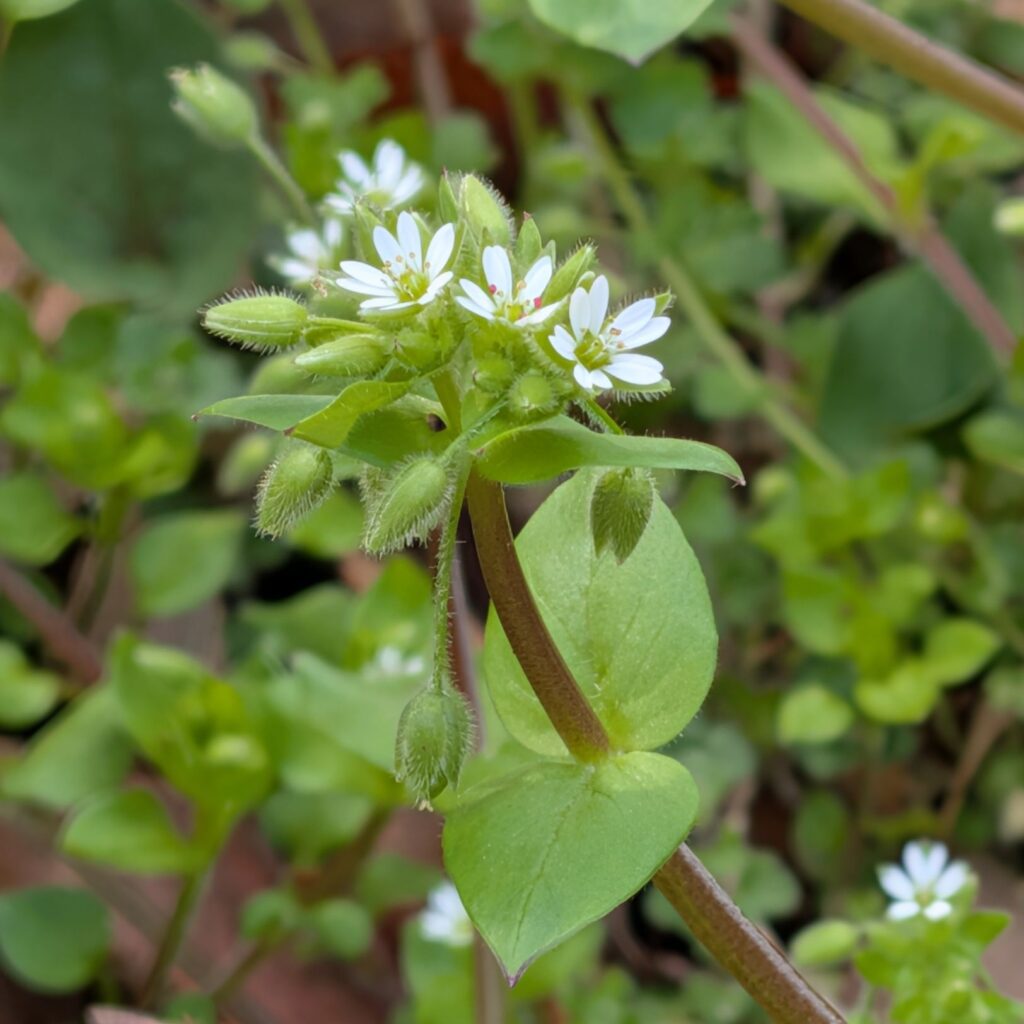
コハコベはナデシコ科ハコベ属の越年草。原産地の欧州~西アジアから世界中に広がりました。日本へは弥生時代に稲作とともに渡来し、田畑や屋敷の周りなどで定着。「いったん根付くと四半世紀は消えない」といわれるほど環境適応力がある一方、控えめで可憐な花を咲かせます。
コハコベの名前
コハコベの和名の由来は近縁種「緑繁縷」よりも小ぶりだから。繁縷の読みは「蔓延り」からの転訛です。繁縷の漢字は葉が繁り、茎の維管束が縷(糸)のようだから。英名チックウィードは「鶏が好む草」、属名ステラリアは「星」、種小名メディアは「中くらい」という意味です。
コハコベの姿形
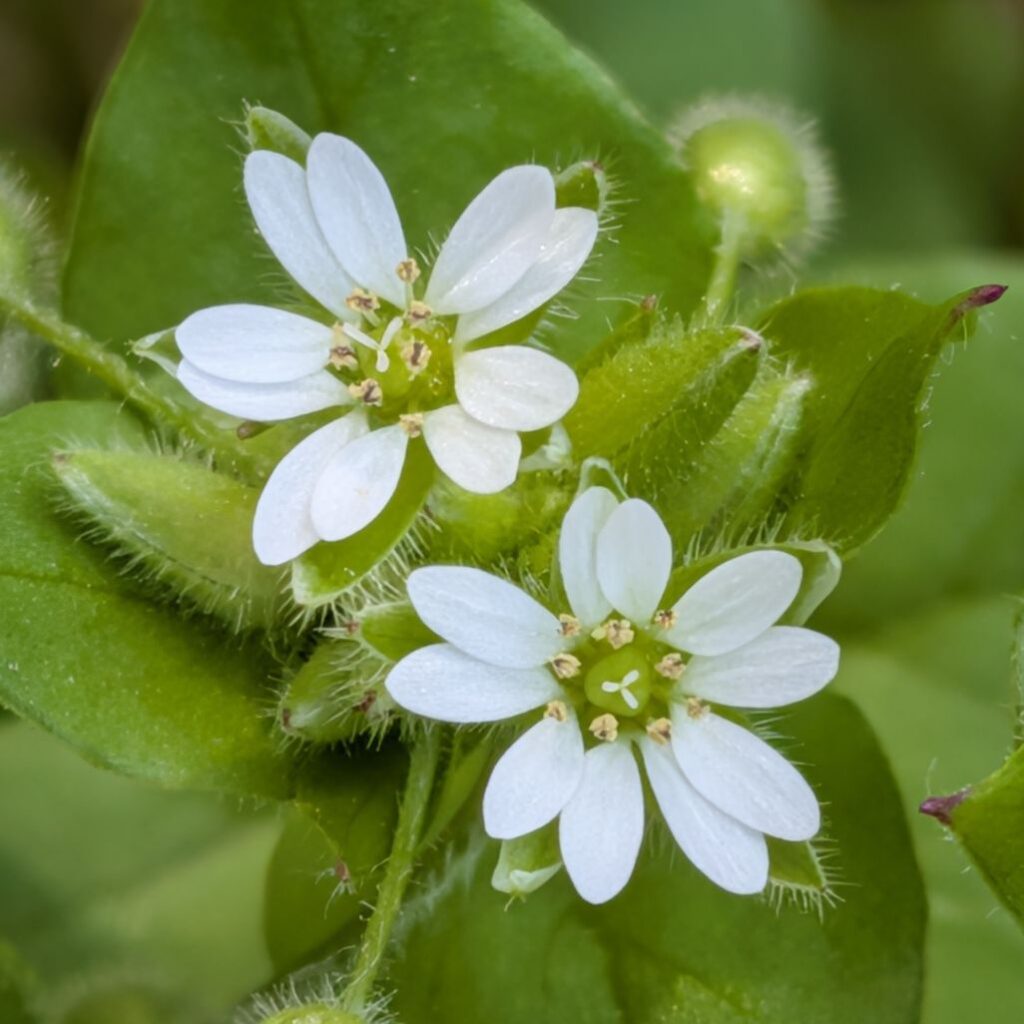
コハコベは茎が地表を這い広がり、節々から髭根が浅く伸長。茎は赤紫色を帯び、片側に偏毛が生え、雨水を株元へ導きます。葉は先の尖った卵形で対生。花は花弁5枚がそれぞれ深く2裂し、全部で10枚に見えます。雄しべは3~5本、雌しべは柱頭が3裂。花後は蒴果を結びます。
コハコベの利用
コハコベは「春の七草」の一つ。七草粥の「はこべら」は江戸時代まで在来の緑繁縷でしたが、明治時代から外来の小繁縷が用いられるようになりました。ビタミン類やミネラル類など機能成分も豊富。薬草として消炎や浄血、利尿や緩下、産後の催乳、歯磨きなどに用いられました。
Common Chickweed
A biennial plant in the Caryophyllaceae (pink) family, Common Chickweed spread across the globe from its native range in Europe and Western Asia. It is believed to have arrived in Japan during the Yayoi period alongside rice cultivation, establishing itself in fields and around residential areas. Known for its remarkable resilience, it is often said that once it takes root, the seeds can remain viable in the soil for a quarter-century. Despite this toughness, it continues to produce small, lovely blooms.
The Japanese name for Common Chickweed (Ko-hakobe) literally means “little Stellaria,” as it is smaller than its close relative, Stellaria neglecta (Midori-hakobe). The name Stellaria itself originates from the Latin word for “star,” while the species name media means “medium.” In Japanese, the name Hakobe is derived from a word meaning “to spread” or “pervasive.” The kanji characters for the plant describe its lush foliage and the thread-like vascular bundle found within its stem.
The stems of the Common Chickweed creep along the ground, sending out shallow fibrous roots from the nodes. These stems often take on a reddish-purple hue and feature a single line of fine hairs on one side, which helps guide rainwater down to the base of the plant. The leaves are oval-shaped with pointed tips and grow in opposite pairs. After the flowering stage, the plant produces seed capsules.
Common Chickweed is celebrated as one of the “Seven Edible Wild Herbs of Spring” (Nanakusa). While Stellaria neglecta was traditionally used for the symbolic seven-herb rice porridge (Nanakusa-gayu) until the Edo period, the naturalized Stellaria media became the more common choice from the Meiji period onward.
Rich in vitamins and minerals, it is highly nutritious. Historically, it has been used as a medicinal herb for its anti-inflammatory and blood-purifying properties. It has also served as a diuretic, a mild laxative, a supplement to promote lactation after childbirth, and even as an ingredient in traditional tooth powder.