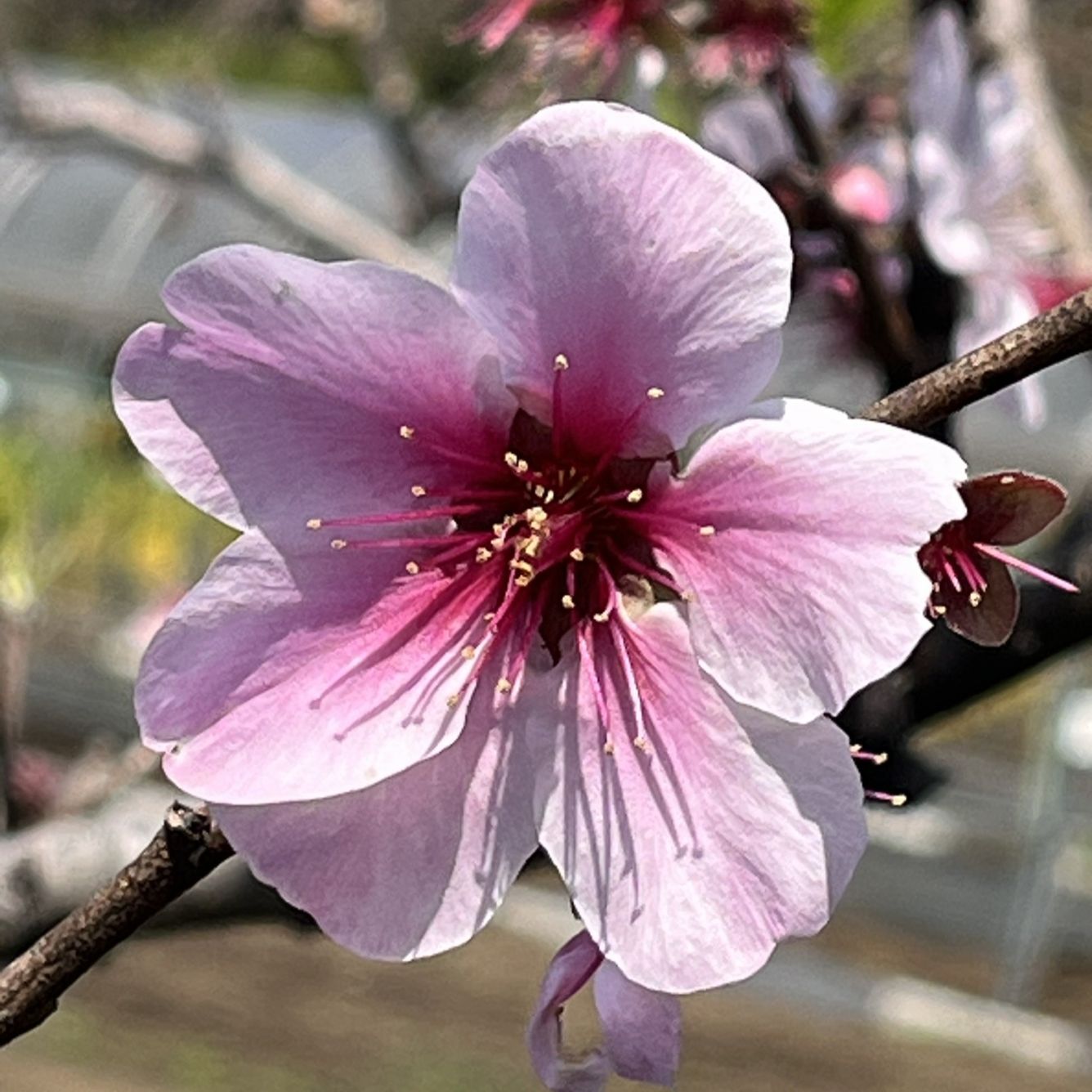
アーモンドの花は、濃紅色の萼片が5枚、薄紅色の花弁が5枚、雄しべが20~30本。桃に似ながら、桃より早く咲きます。花言葉は「希望」。
Almond flowers feature five deep-red sepals, five pale-pink petals, and 20 to 30 stamens. While they closely resemble peach blossoms, they are among the first to bloom in early spring. In the language of flowers, they symbolize “hope.”
【仮名】アーモンド, ヘントウ, ハタンキョウ
【和名】扁桃, 巴旦杏
【英名】Almond
【学名】Prunus dulcis
【誕生】03/ 14
【開花】03, 04月
【花色】White, Pink
アーモンド
アーモンドの概要
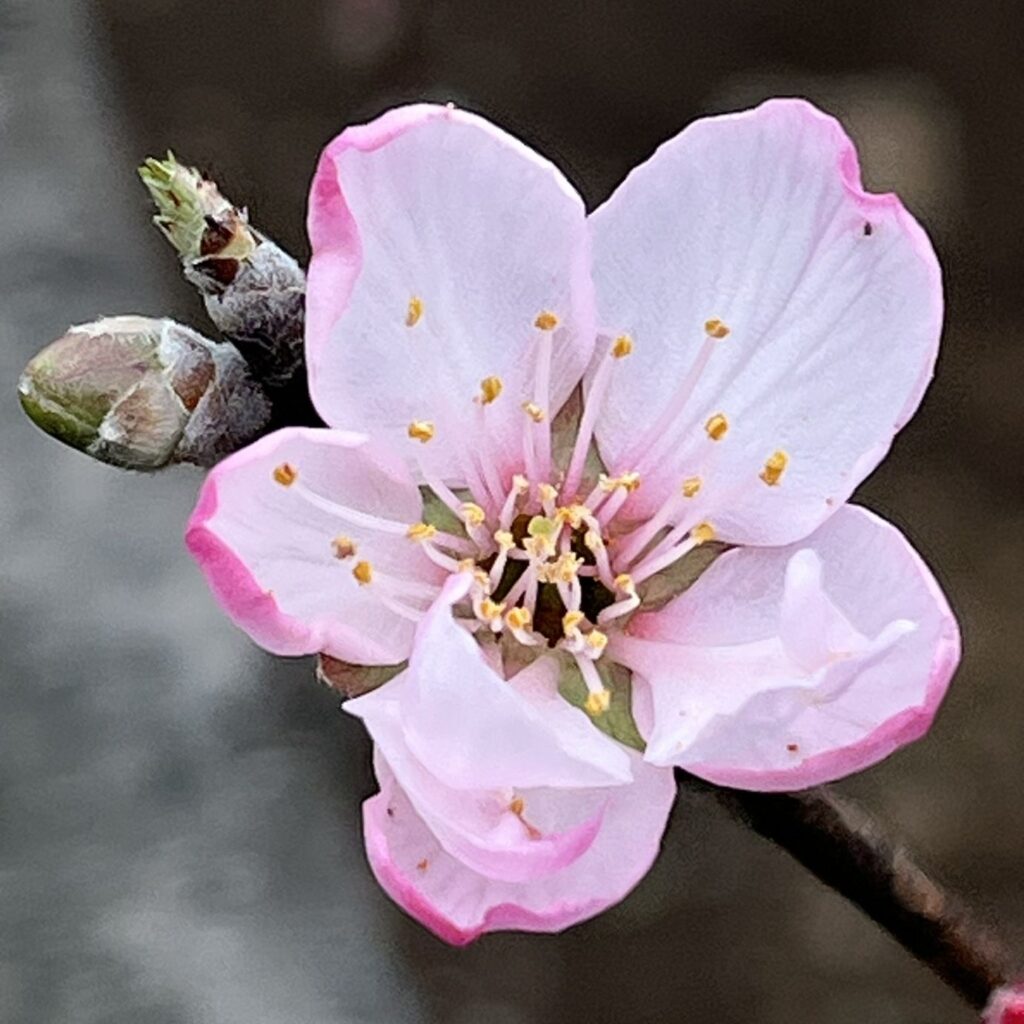
アーモンドはバラ科の落葉高木です。原産地は西南〜中央アジア。紀元前3000~4000年に栽培が始まって地中海沿岸に伝わり、18世紀には北米の西海岸まで広がりました。日本へは江戸時代に薬用、明治時代に食用で渡来。花が桃に似ながら、桃より早く咲きます。花言葉は「希望」。
アーモンドの名前
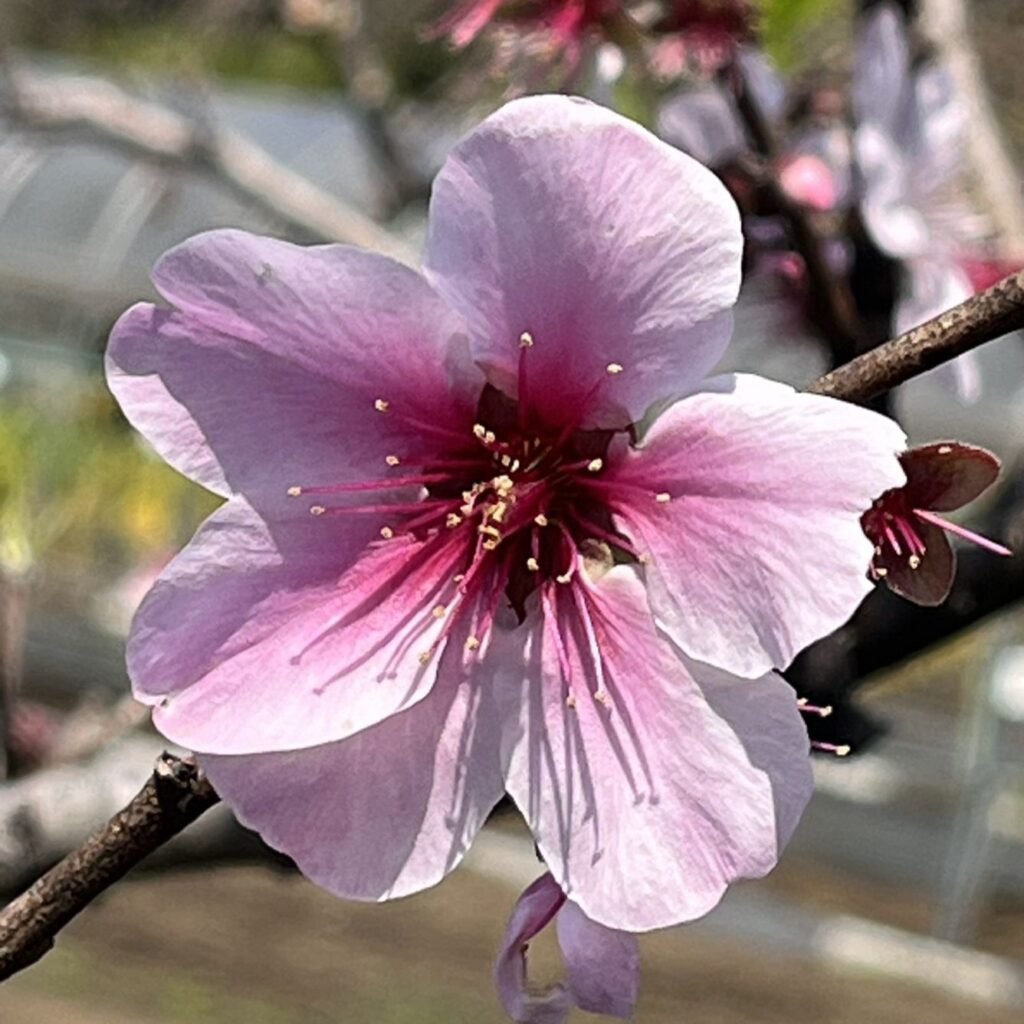
アーモンドの名前はラテン語「アミグダラ」に由来する古フランス語「アルマンド」からの転訛。属名プルヌスは「李」、種小名ドゥルキスは「甘い」という意味です。和名「扁桃」は「平べったい桃」という意味。喉の扁桃腺や脳の扁桃体はその形が種子(仁)に似ているからです。
アーモンドの姿形
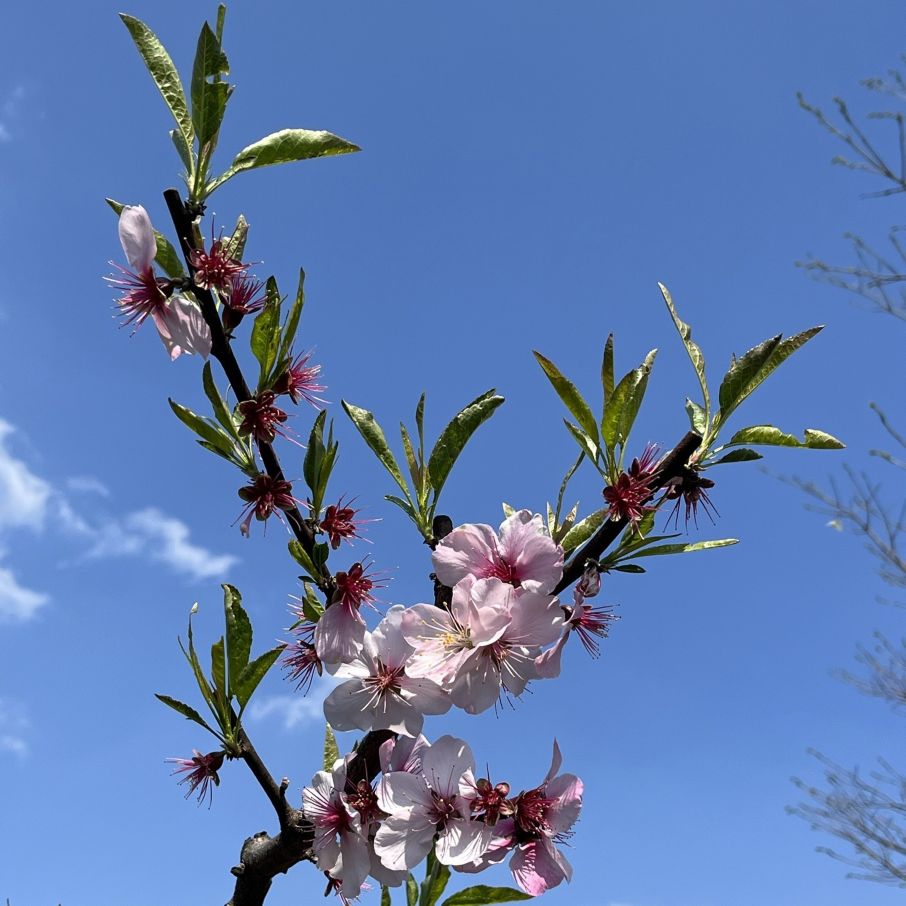
アーモンドは直根性ですが、桃が台木に用いられ、根が横に広がります。幹や枝は成長とともに樹皮が灰褐色に。葉は互生の披針形で、縁に鋸歯があります。花は濃紅色の萼片が5枚、薄紅色の花弁が5枚、雄しべが20~30本。花後は核果を結び、熟すと果肉が裂けて種子が現れます。
アーモンドの利用
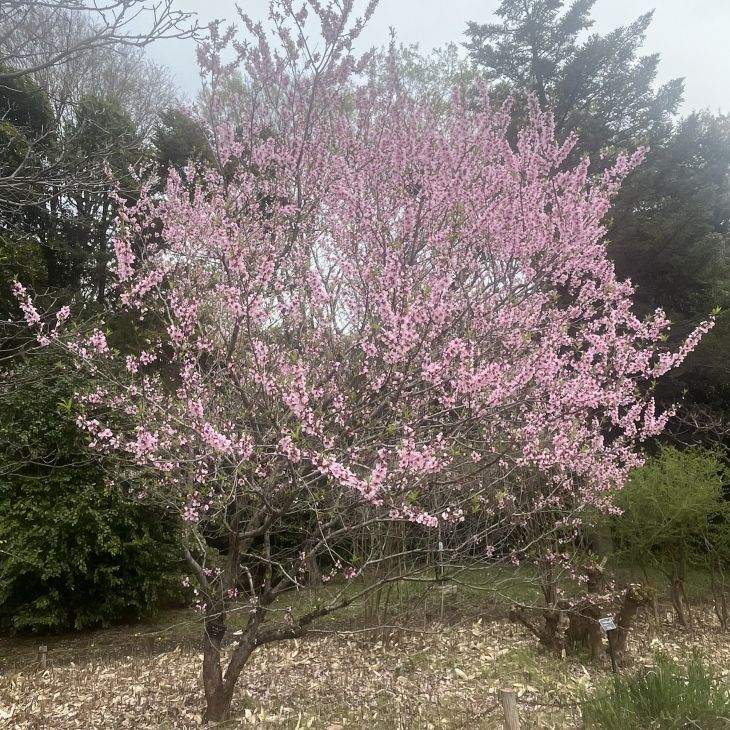
アーモンドの仁は抗酸化作用のあるビタミンE、整腸作用のある食物繊維、オレイン酸などの不飽和脂肪酸に富み、焙煎や製菓用のほか、代替ミルクやオイルなどに加工されます。糖質に富む外皮は家畜の飼料に、硬い殻は敷料に。早春に咲く花は蜜蜂にとって貴重な蜜源になります。
Almond
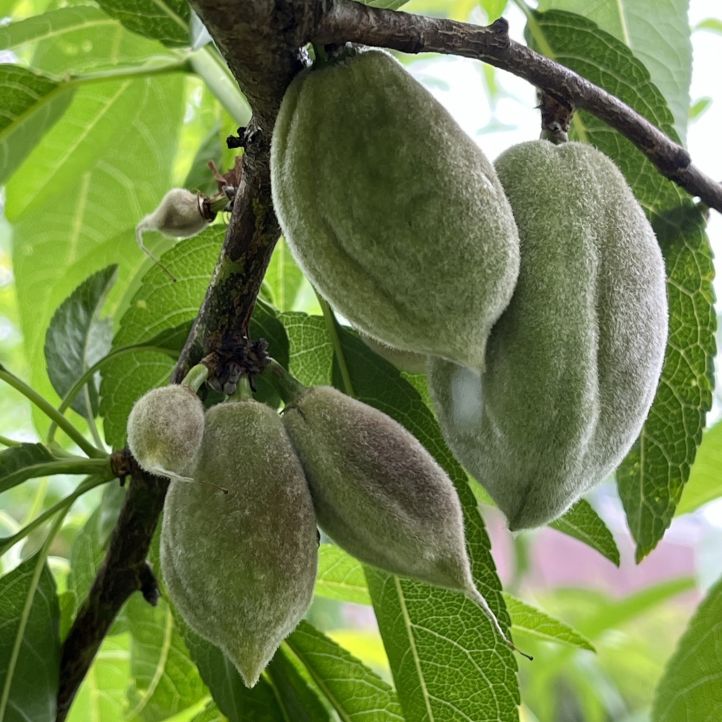
The almond is a deciduous tree belonging to the Rosaceae (rose) family, native to Southwest and Central Asia. Its cultivation dates back to 3000–4000 BC, eventually spreading along the Mediterranean coast and reaching the West Coast of North America by the 18th century. It was introduced to Japan during the Edo period for medicinal purposes and later in the Meiji period as a food source. Although the flowers look like peach blossoms, the almond tree blooms earlier in the season.
The name “almond” evolved from the Old French almande, derived from the Latin amygdala. Its scientific name, Prunus dulcis, combines Prunus (meaning “plum”) and dulcis (meaning “sweet”). In Japanese, it is called hentō (扁桃), which literally translates to “flat peach.” This same term is used in Japanese for both the tonsils and the brain’s amygdala, as their shapes are said to resemble almond seeds.
While almonds naturally grow a taproot, they are often grafted onto peach rootstocks, which causes the roots to spread horizontally. As the tree matures, the bark of the trunk and branches turns a grayish-brown. The leaves are alternate and lanceolate with serrated (sawtooth) edges. After flowering, the tree produces a drupe; once ripe, the fleshy hull splits open to reveal the seed.
Almond seeds are rich in antioxidant Vitamin E, digestive-friendly dietary fiber, and unsaturated fatty acids such as oleic acid. In addition to being roasted or used in confectionery, they are processed into almond milk and oil. The sugar-rich hulls are utilized as livestock feed, while the hard shells are often used as animal bedding. Furthermore, these early spring blossoms serve as a vital nectar source for honeybees.