ヒメオドリコソウは春早く、褐色の地上に緑色の絨毯を敷き、赤紫色に着飾った小さな踊り子たちが、銘々に桃色の花を携えて並び立ちます。
In early spring, the Red Dead-nettle blankets the dormant brown earth in a carpet of green. Like tiny dancers dressed in purple, they stand together, each holding a delicate pink bloom.
【仮名】ヒメオドリコソウ
【和名】姫踊子草
【英名】Red Dead-nettle
【学名】Lamium purpureum
【誕生】03/ 10, 03/ 20
【開花】03, 04, 05月
【花色】White, Pink, Purple
ヒメオドリコソウ
ヒメオドリコソウの概要
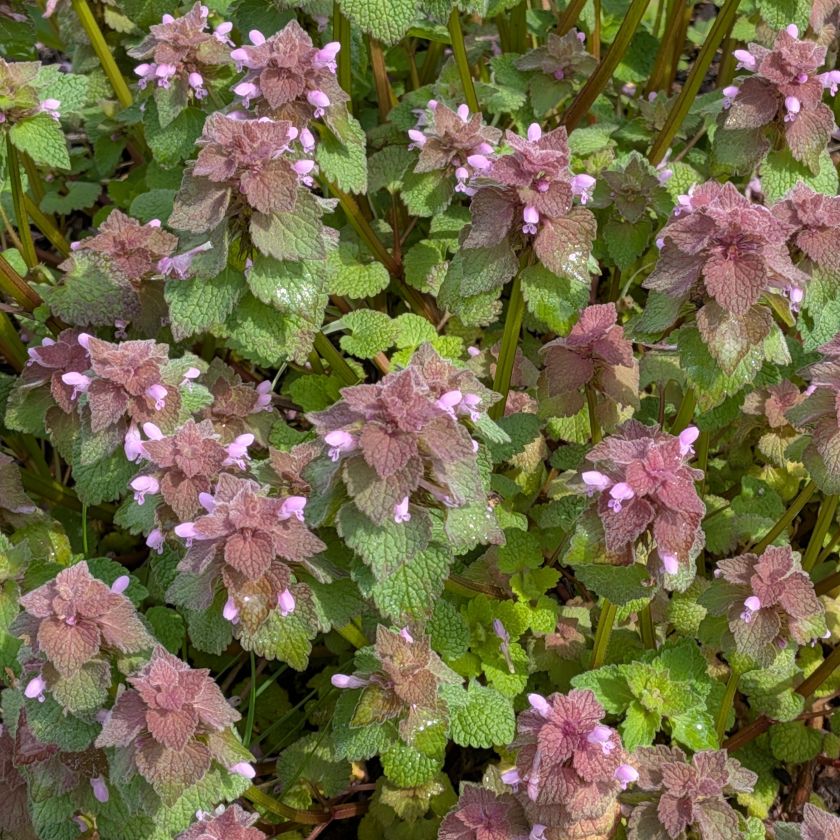
ヒメオドリコソウはシソ科の越年草です。原産地は欧州で、世界中の温帯域に拡大。日本では明治時代に野生化が確認されました。花言葉は「快活」「陽気」「愛嬌」。春早く、褐色の地上に緑色の絨毯を敷き、赤紫色に着飾った小さな踊り子たちが、桃色の花を携えて並び立ちます。
ヒメオドリコソウの名前
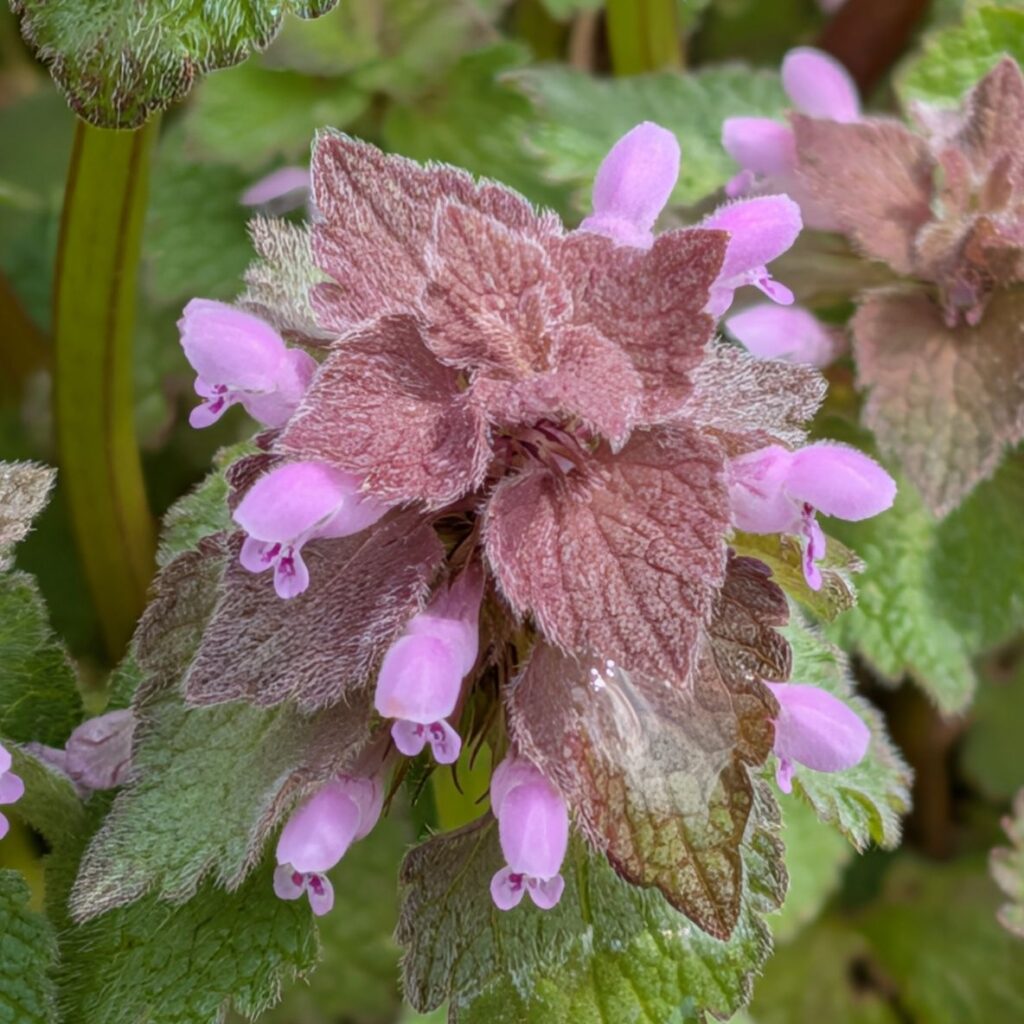
ヒメオドリコソウの和名は「可愛らしい踊子草」という意味。踊子草は同属異種の在来多年草です。英名デッドネトルは「刺さない刺草」という意味で、刺草に似ながら、棘がないから。属名ラミウムは「喉」、種小名プルプレウムは「赤紫色」という意味で、花の形と色を表します。
ヒメオドリコソウの姿形
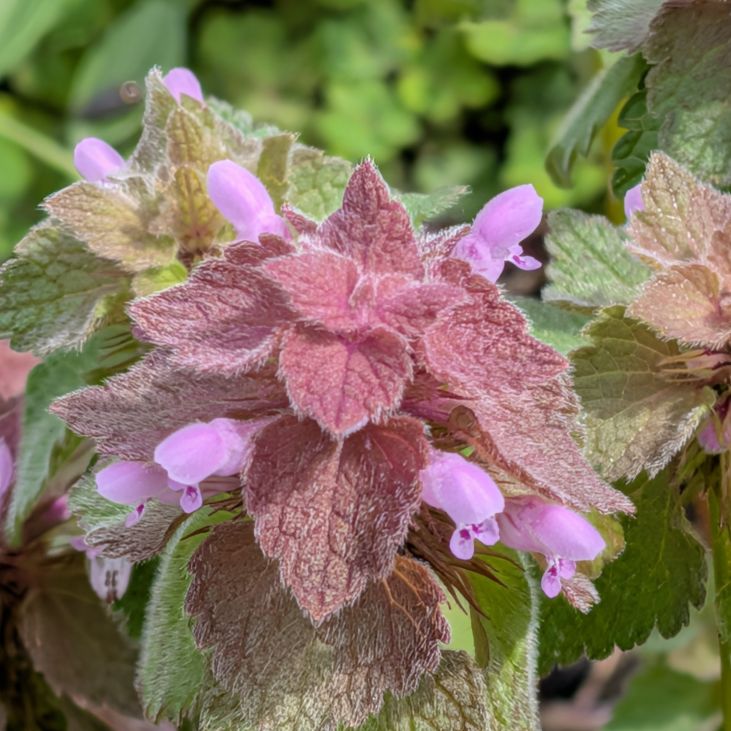
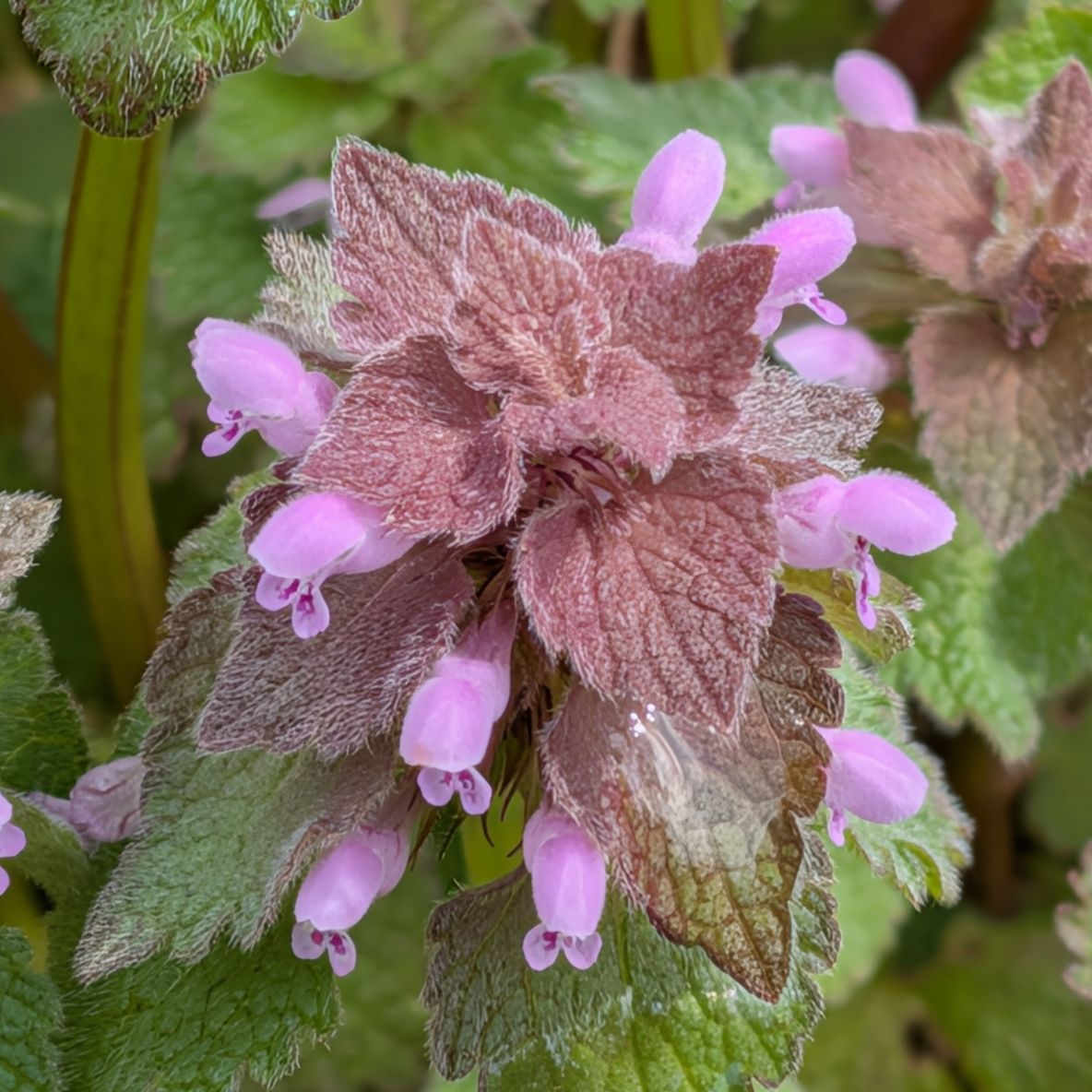
ヒメオドリコソウは短い主根から細い側根が浅く広がります。茎は四稜で直立。葉は十字対生の心臓形で、上部が赤紫色です。花は輪生の唇形花で桃色。上唇が兜形、下唇が3裂です。花後は四分果を結び、種子に種枕が付着。種枕は脂質や糖質に富み、蟻が種子ごと遠くへ運びます。
ヒメオドリコソウの利用
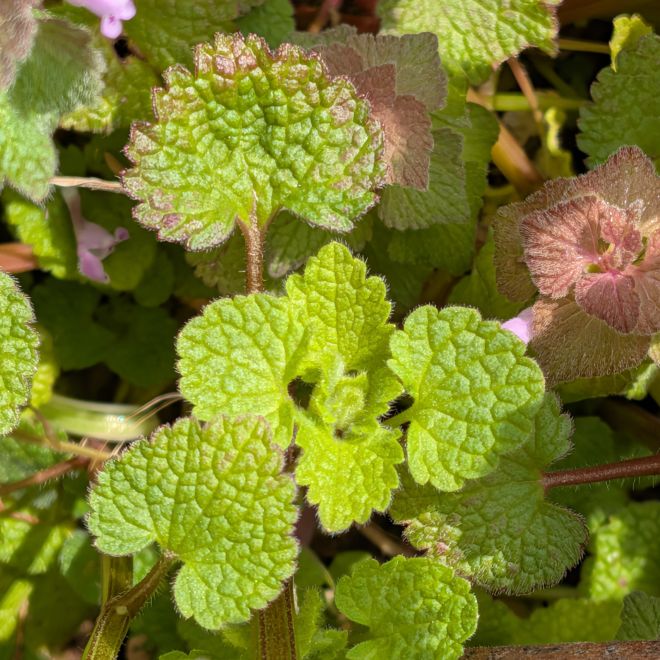
ヒメオドリコソウは春先の柔らかい若葉を摘み取って天ぷらに。沸騰したお湯でサッと茹でて灰汁抜きし、お浸し、和えものなどでいただきます。花はエディブルフラワーとしてサラダやスイーツの飾りに。収斂・利尿・発汗・抗炎症作用もあり、古くから薬草として用いられました。
Red Dead-nettle
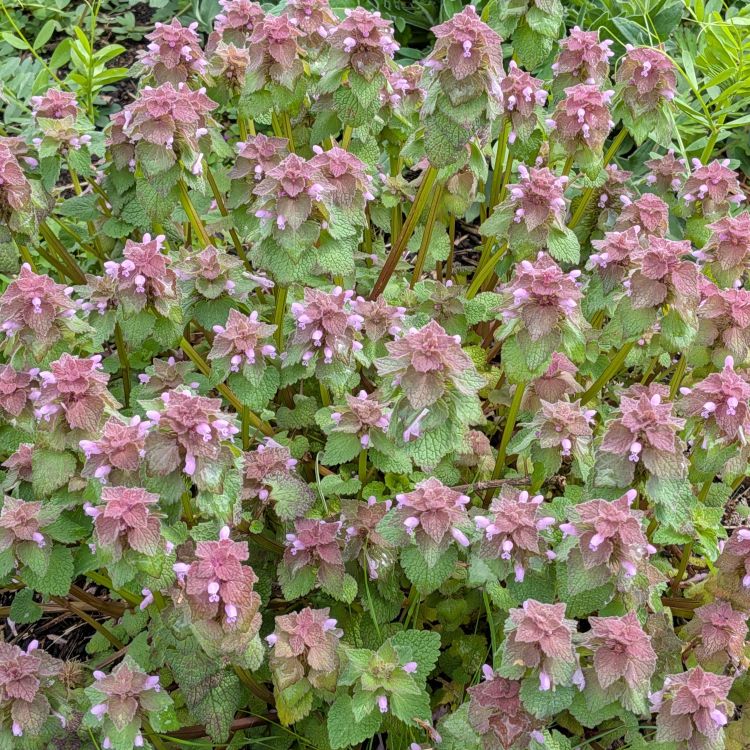
The Red Dead-nettle is a biennial herb in the Lamiaceae (mint) family. Native to Europe, it has naturalized in temperate regions across the globe. In Japan, it was first recorded as a naturalized species during the Meiji era. In the language of flowers, it represents “cheerfulness,” “gaiety,” and “charm.” In the early days of spring, these plants spread a lush green carpet over the bare ground, appearing like miniature dancers adorned in purple, standing side-by-side with pink flowers in hand.
The Japanese name for Red Dead-nettle (Hime-odorikoso) literally translates to “dainty dancing-girl herb.” The “Dead-nettle” part of its English name refers to its resemblance to the stinging nettle, but without the sting (hence “dead”). Its genus name, Lamium, is derived from the Greek word for “throat,” referring to the shape of the flower, while the species name, purpureum, denotes its purple hue.
Red Dead-nettle features a short taproot with shallow, slender lateral roots. Its stems are quadrangular (four-angled) and grow upright. The heart-shaped leaves grow in opposite pairs (decussate), with the upper leaves often tinged with deep purple. The pink, labiate (lipped) flowers grow in whorls; the upper lip is helmet-shaped, while the lower lip is three-lobed. After flowering, it produces four-parted fruits containing seeds equipped with an elaiosome (a nutrient-rich appendage). These elaiosomes are rich in fats and sugars, encouraging ants to carry the seeds away to new locations.
In early spring, the tender young leaves can be harvested for tempura. They can also be briefly blanched in boiling water to remove any bitterness, then enjoyed as ohitashi (soaked in dashi) or in various dressed salads. The flowers are edible and make a lovely garnish for salads and desserts. Historically, the plant has also been valued as a medicinal herb for its astringent, diuretic, diaphoretic, and anti-inflammatory properties.