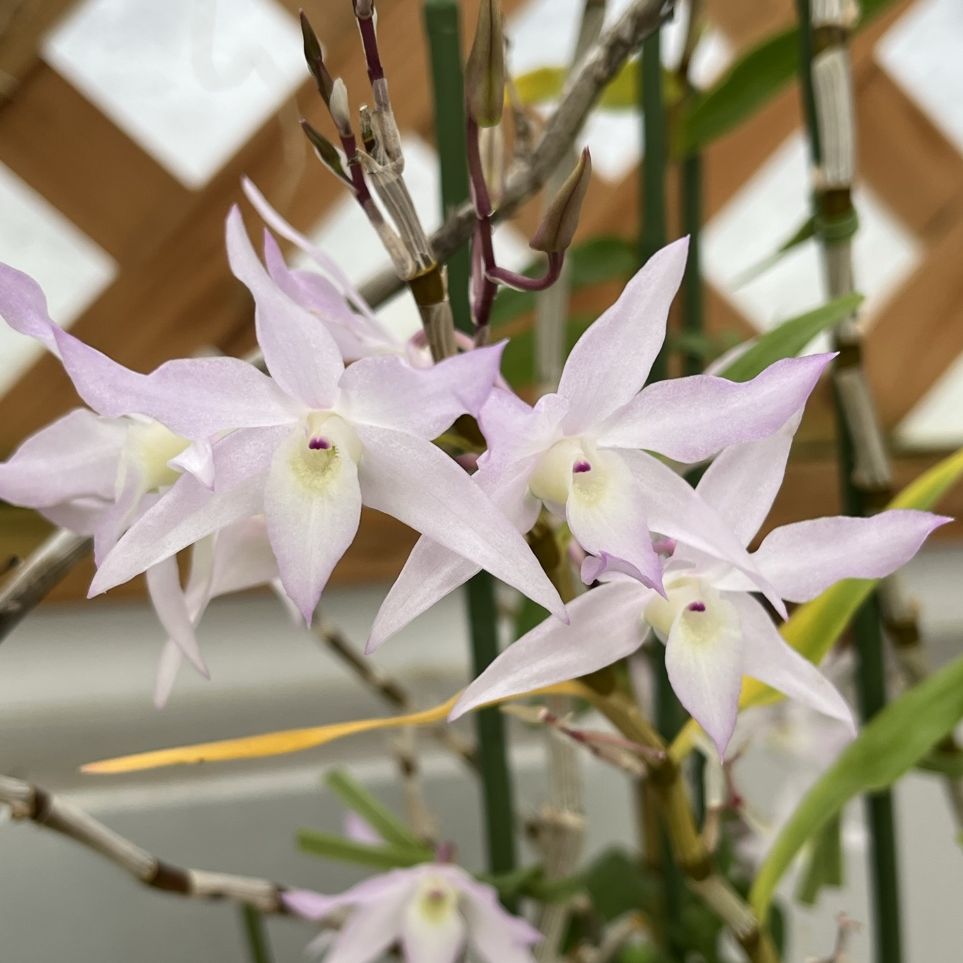
セッコクは江戸時代に観賞用で流行し、たくさんの園芸系統が作出。花色の変化や葉の斑入りといった、微妙で繊細な表情が珍重されました。
Japanese Dendrobiums were popular for ornamental purposes during the Edo period, and many horticultural strains were developed. Their subtle and delicate features, such as varying flower colors and variegated leaves, are highly prized.
【仮名】セッコク, チョウセイラン
【和名】石斛, 長生蘭
【英名】Japanese Dendrobium
【学名】Dendrobium moniliforme
【誕生】05/ ??
【開花】05, 06月
【花色】White, Pink
セッコク
セッコクの概要
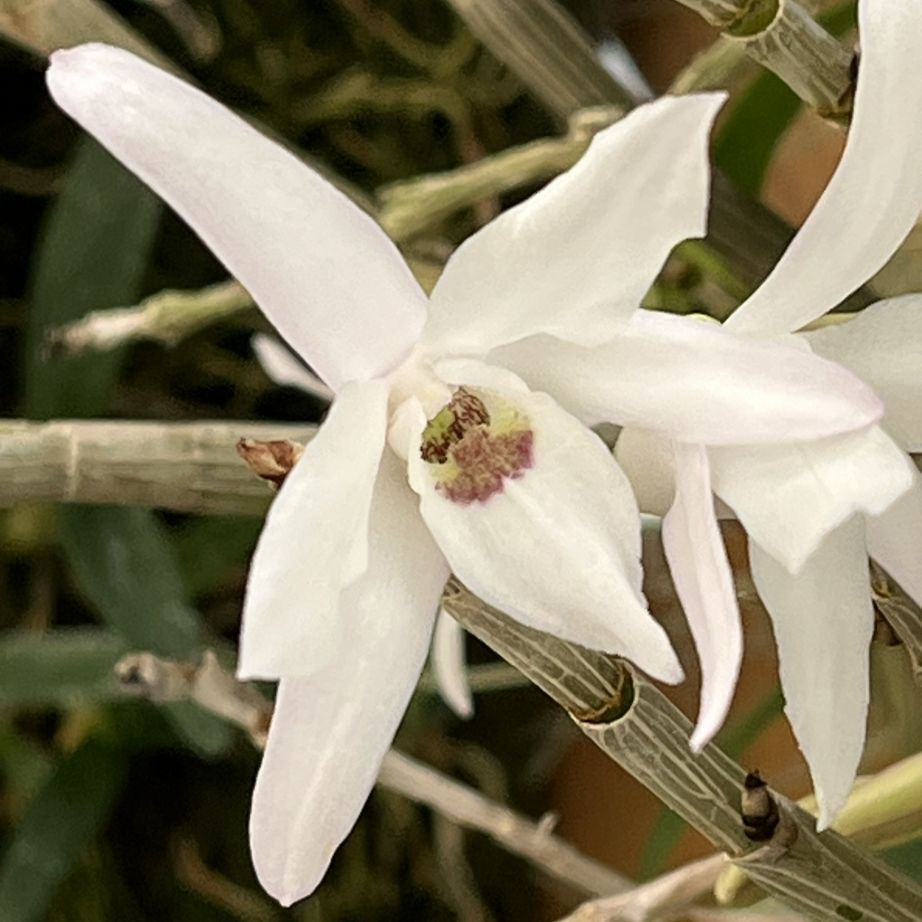
セッコクはラン科の着生植物です。日本では本州の岩手県以南、四国、九州、沖縄県、国外では朝鮮半島、中国に分布。樹林内の老木や岩場の上で育ちます。江戸時代に観賞用で流行し、多くの園芸系統が作出。花色の変化や葉の斑入りといった、微妙で繊細な表情が珍重されました。
セッコクの名前
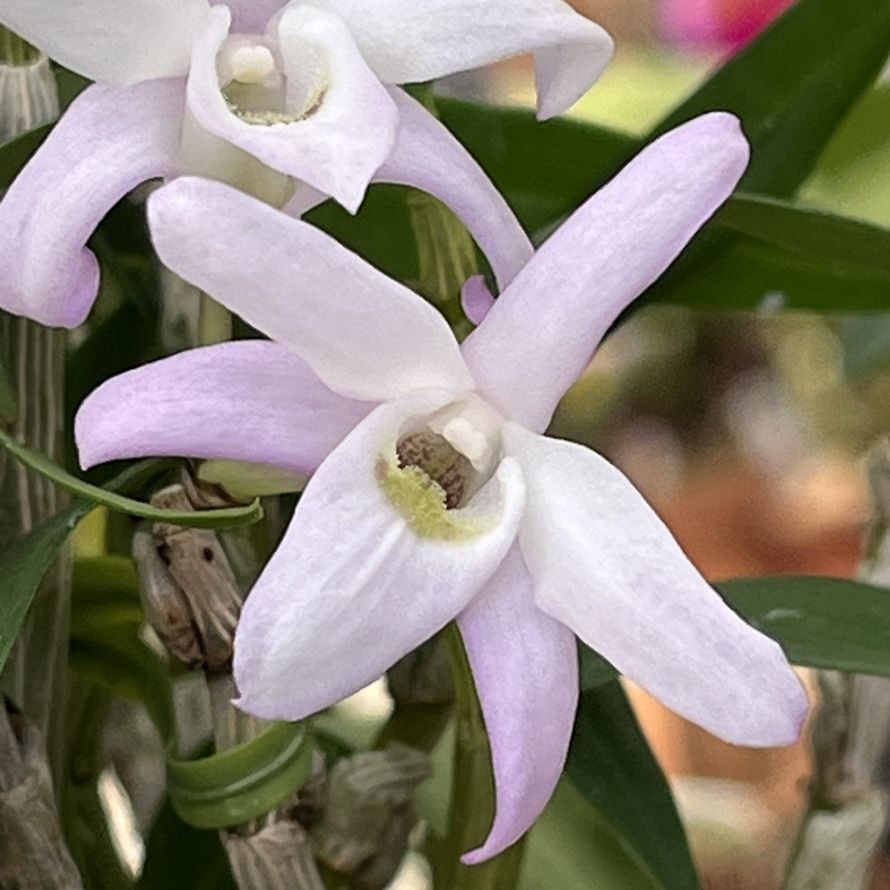
セッコクの和名の由来は中国名「石斛」の音読みで、「石に生える蘭類」という意味。別名「長生蘭」の由来は丈夫で枯れない蘭だからです。属名デンドロビウムは「木の上で生きるもの」という意味。種小名モニリフォルメは「数珠状の」という意味で、細い根茎が連なるからです。
セッコクの姿形
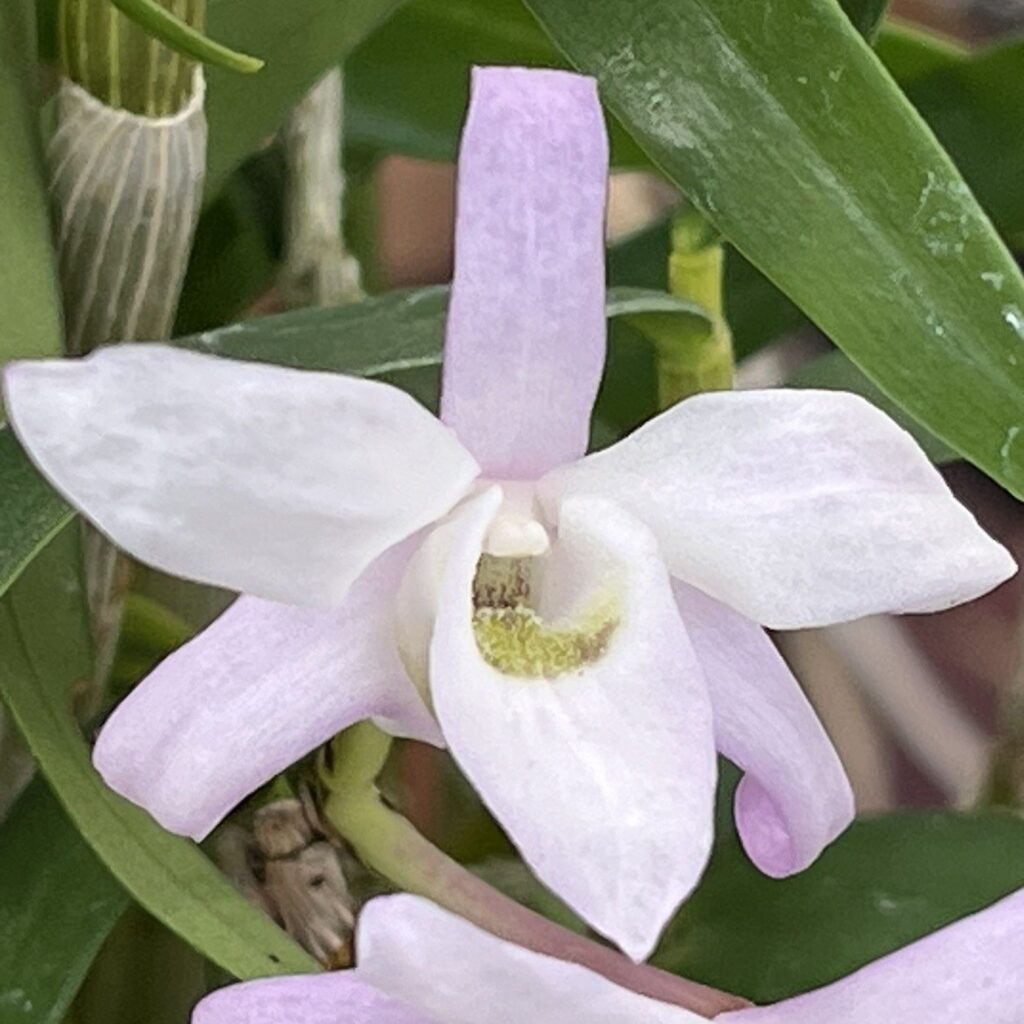
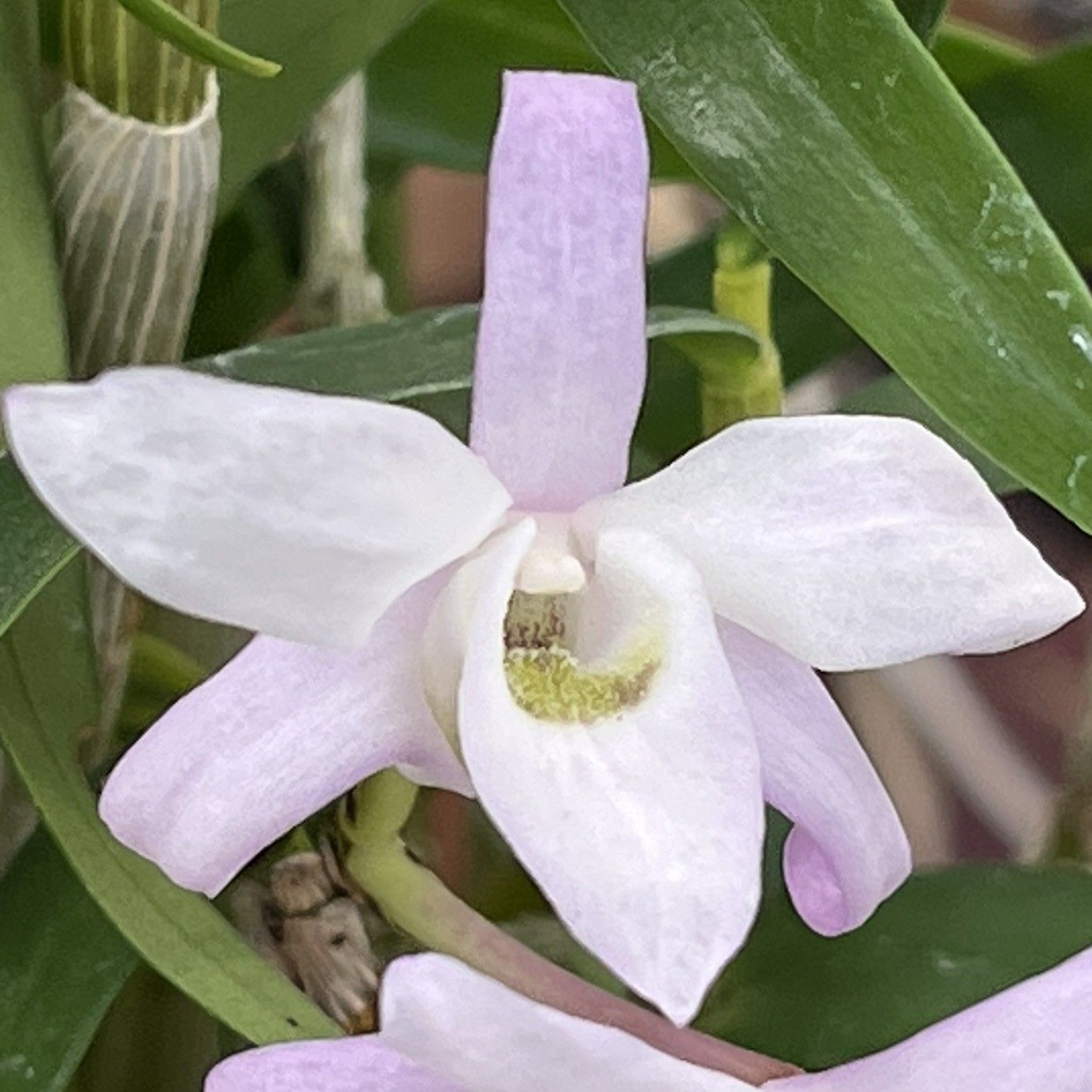
セッコクは短い根茎から細い根が伸長。木や岩にしがみつき、吸水します。茎は束生の棒状。中央が少し膨らみます。葉は互生の披針形。革質で厚く、光沢があります。花は背萼片1枚、側萼片2枚、側花弁2枚、唇弁1枚。細長い蒴果を結び、熟すと裂けて微細な種子を散らします。
セッコクの利用
セッコクは中国の後漢時代(1~2世紀頃)に編纂された『神農本草経』で、長期服用しても害がなく、養生・滋養に優れる「上品」とされ、胃を益し、体を潤し、虚弱を補う…と記述。薬用では、茎を螺旋状に加工して湯に浸し、服用する方法もあり、長寿への願いが込められました。
Japanese Dendrobium
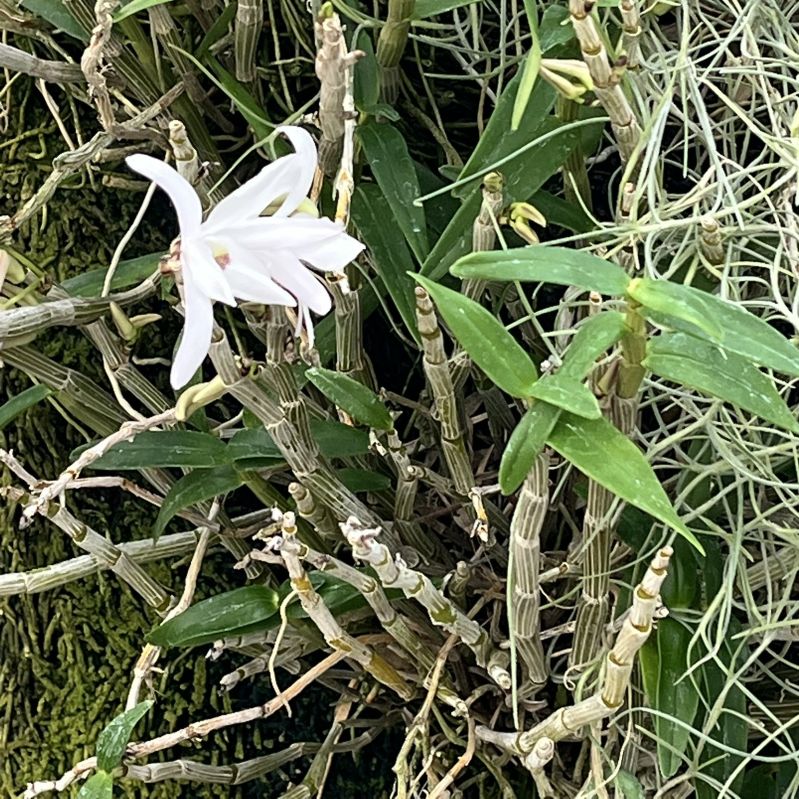
Japanese Dendrobiums are epiphytes of the Orchidaceae family. In Japan, they are found south of Iwate Prefecture on Honshu, as well as Shikoku, Kyushu, and Okinawa, and overseas as far as the Korean Peninsula and China. They grow on old trees in forests and on rocky outcrops. They were popular for ornamental purposes during the Edo period, and many horticultural strains were developed. Their subtle and delicate features, such as varying flower colors and variegated leaves, are highly prized.
The Japanese name for Japanese Dendrobium comes from the on-reading of its Chinese name and means “orchids that grow on stones.” Because they are hardy and do not wither, they are also known as “long-lived orchids.” The genus name Dendrobium means “tree-dwelling.” The specific name moniliforme means “bead-like,” referring to the long, slender rhizomes.
Japanese dendrobium grows thin roots from short rhizomes. The roots cling to trees and rocks and absorb water. The stems are fascicled and rod-shaped, slightly swollen in the center. The leaves are alternate, lanceolate, leathery, thick, and glossy. The flowers have one dorsal sepal, two lateral sepals, two lateral petals, and one lip. They produce elongated capsules that split open upon ripening, scattering tiny seeds.
In the Shennong Bencaojing, a Chinese text compiled around the 1st or 2nd century, Japanese dendrobium is described as being harmless even with long-term use, and as being excellent for health and nutrition, benefiting the stomach, nourishing the body, and relieving weakness. For medicinal purposes, the stems can be spirally spiraled and steeped in hot water, a method of ingestion that symbolizes a desire for longevity.