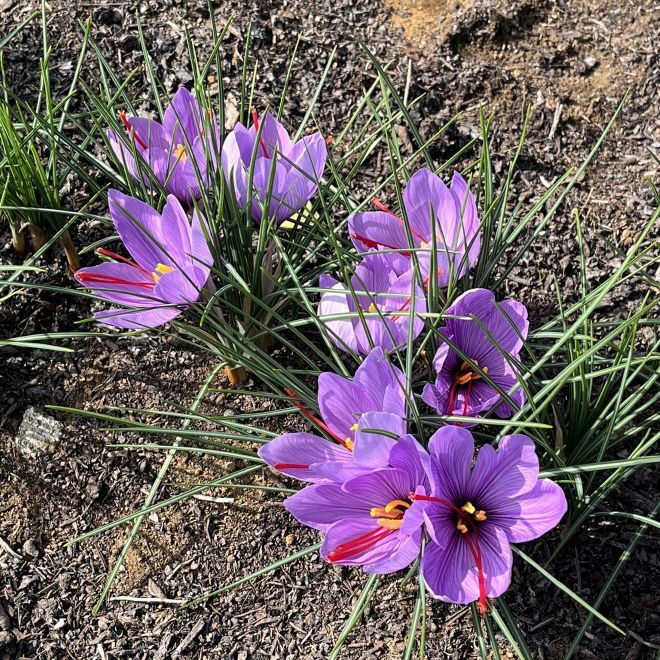
サフランの花は、外花被片が3枚、内花被片が3枚、雄しべが3本、雌しべの柱頭が突き出て3裂。花被片が柔らかな甘い香りを漂わせます。
Saffron flowers have three outer tepals, three inner tepals, three stamens, and a protruding, three-lobed pistil stigma. The tepals give off a soft, sweet fragrance.
【仮名】サフラン, バンコウカ
【和名】番紅花, 蕃紅花, 洎夫藍
【英名】Saffron, Saffron Crocus
【学名】Crocus sativus
【誕生】11/ 04
【開花】10, 11月
【花色】Purple, Violet
サフラン
サフランの概要
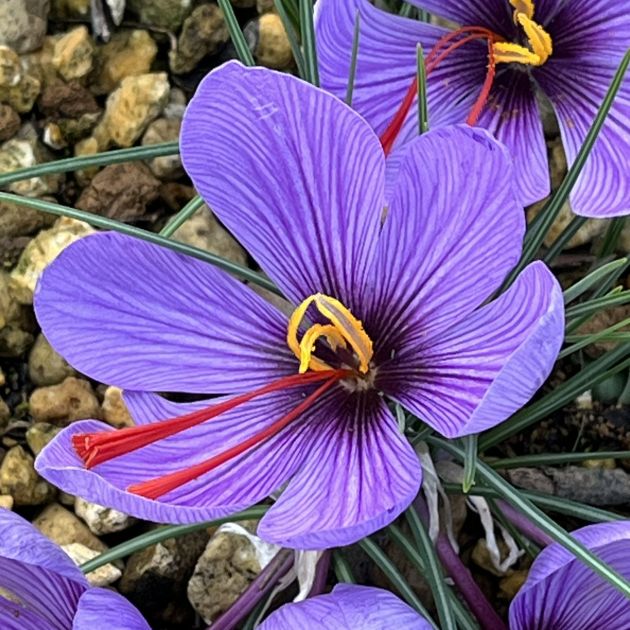
サフランはアヤメ科クロッカス属の作物です。原産地は定まっていないものの、最近の研究では地中海東部のギリシャに自生するカルトライティアス種を祖先とする変異体(三倍体)という説が有力。3500年以上前から栽培され、世界中で着色料、着香料、薬として重用されています。
サフランの名前
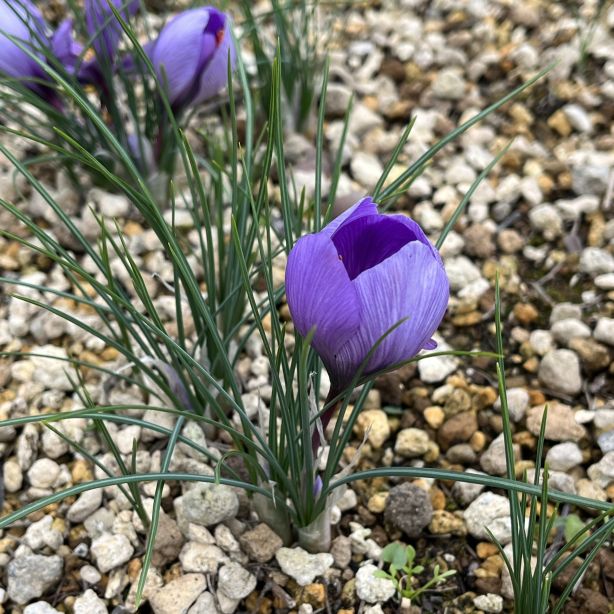
サフランは英名で、アラビア語のザアファラーンに由来し、「黄色」を意味するアスファルの派生語。一方、和名の番紅花は「外来の赤色の花」という意味です。ラテン語の属名クローカスは「糸」という意味で、雌しべを形容。種小名サティーヴスは「栽培された」という意味です。
サフランの姿形
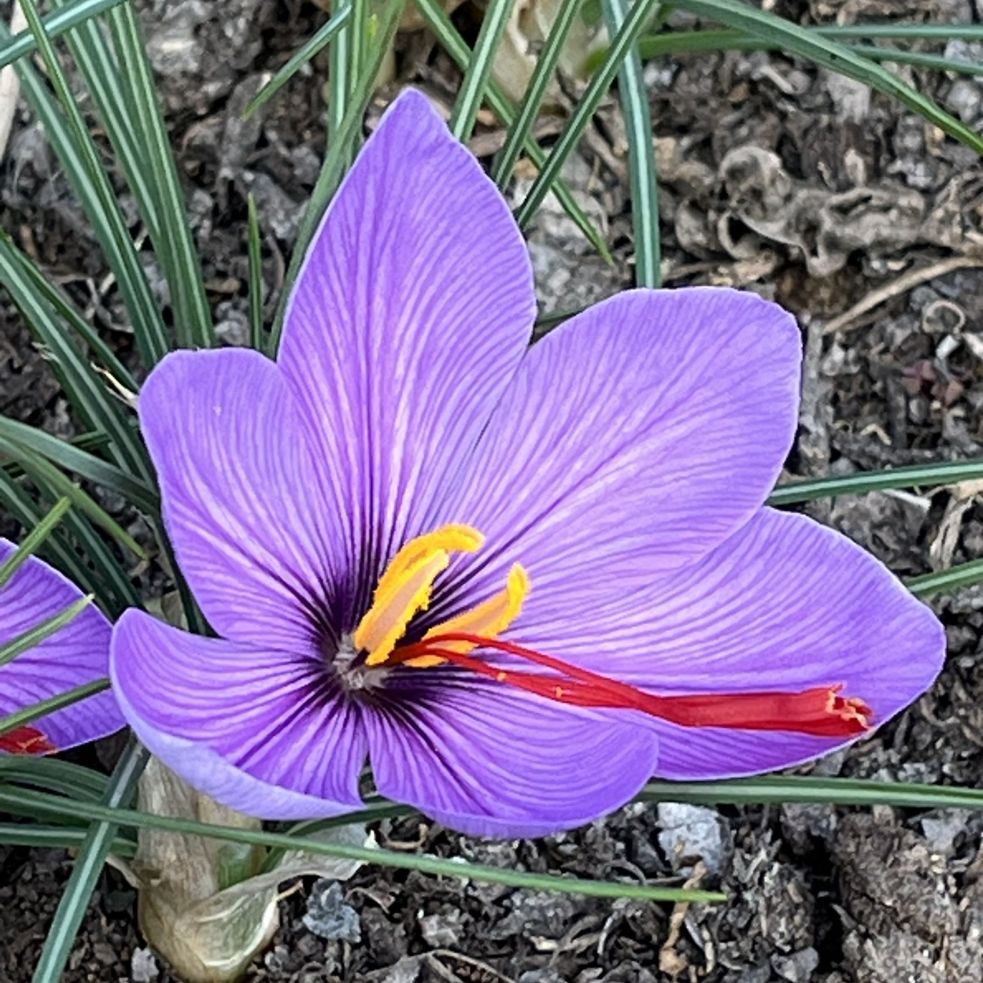
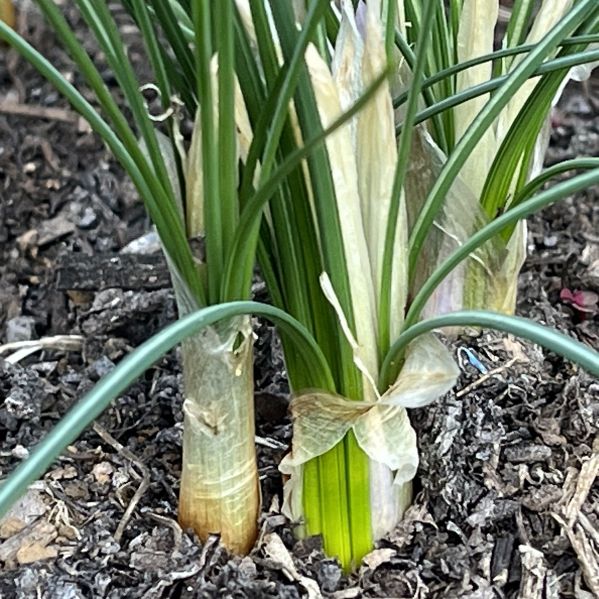
サフランは冬をまたいで育ち、夏に休眠します。繊維質の薄皮に覆われた球茎に栄養を蓄積。地下に細い不定根を伸ばし、地上に細い線形葉を束生します。花は外花被片が3枚、内花被片が3枚、雄しべが3本、雌しべの柱頭が突き出て3裂。花被片が柔らかな甘い香りを漂わせます。
サフランの利用
サフランは花の雌しべ(赤色の柱頭)が料理の着色や着香に用いられます。カロテノイド系色素クロシン、香気成分サフラナールを含み、パエリア、ブイヤベース、サフランライス、クスクスなどに。また、生薬「番紅花」として鎮静、鎮痛、消化促進、血行改善などに用いられます。
Saffron
Saffron is a crop of the Iridaceae family. While its origin is uncertain, recent research has suggested that it is a triploid mutant descended from Crocus cartwrightianus, which grows wild in eastern Mediterranean Greece. It has been cultivated for over 3,500 years and is valued worldwide for its coloring, flavoring, and medicinal properties.
The name “saffron” comes from the Arabic word za’farān, a derivative of aṣfar, meaning “yellow.” The Japanese name, “saffron,” translates to “foreign red flower.” The Latin genus name, Crocus, means “thread,” describing the pistil. The specific epithet, sativus, means “cultivated.”
Saffron grows through the winter and goes dormant in the summer. It stores nutrients in corms covered with a thin, fibrous skin. It grows thin adventitious roots underground and produces clusters of thin, linear leaves above ground. Each flower has three outer tepals, three inner tepals, three stamens, and a protruding, three-lobed pistil stigma. The tepals give off a soft, sweet fragrance.
The pistil (red stigma) of saffron flowers is used to color and flavor dishes. It contains the carotenoid pigment crocin and the aromatic compound safranal, and is used in dishes such as paella, bouillabaisse, saffron rice, and couscous. It is also used as an herbal medicine for sedation, pain relief, digestion, and improving blood circulation.