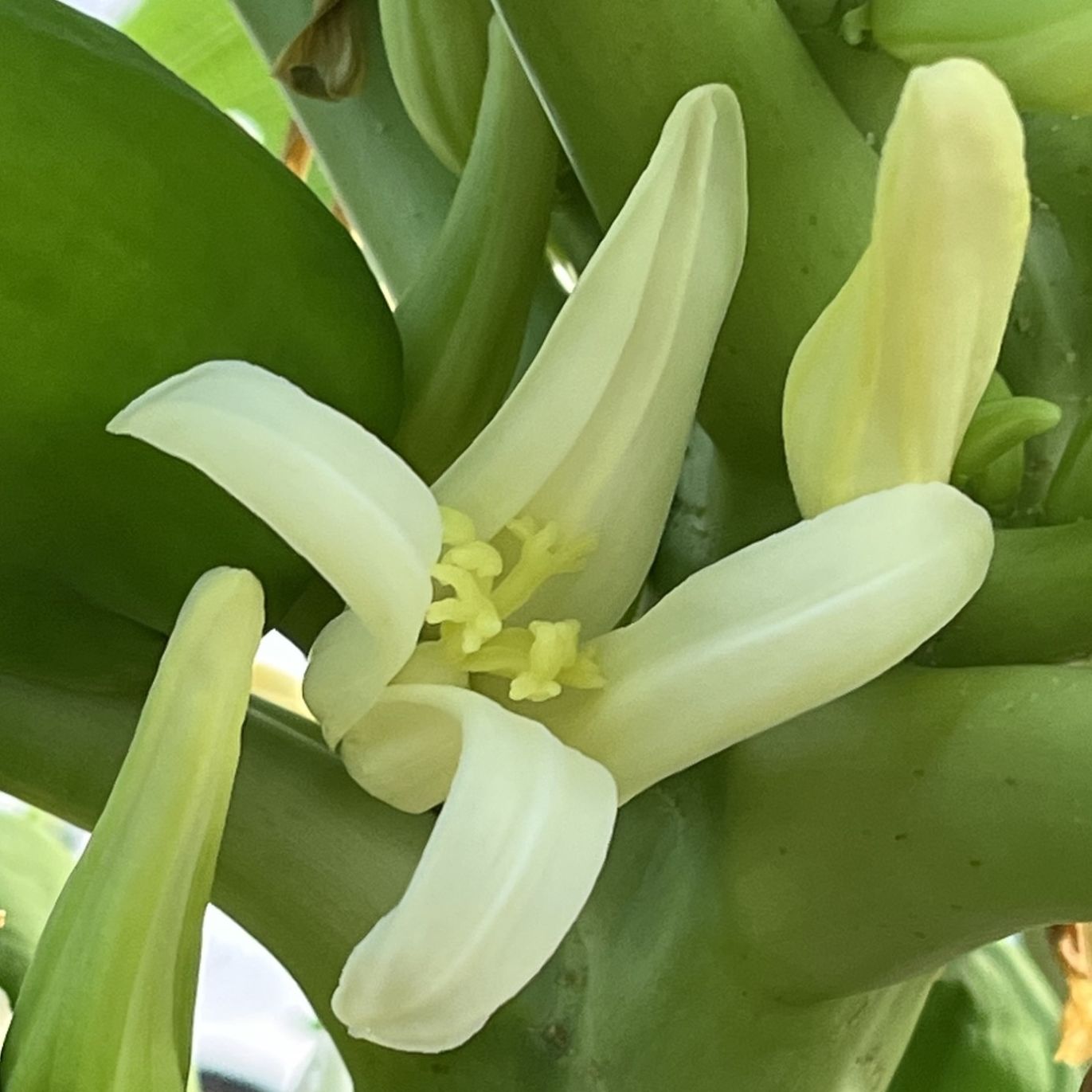
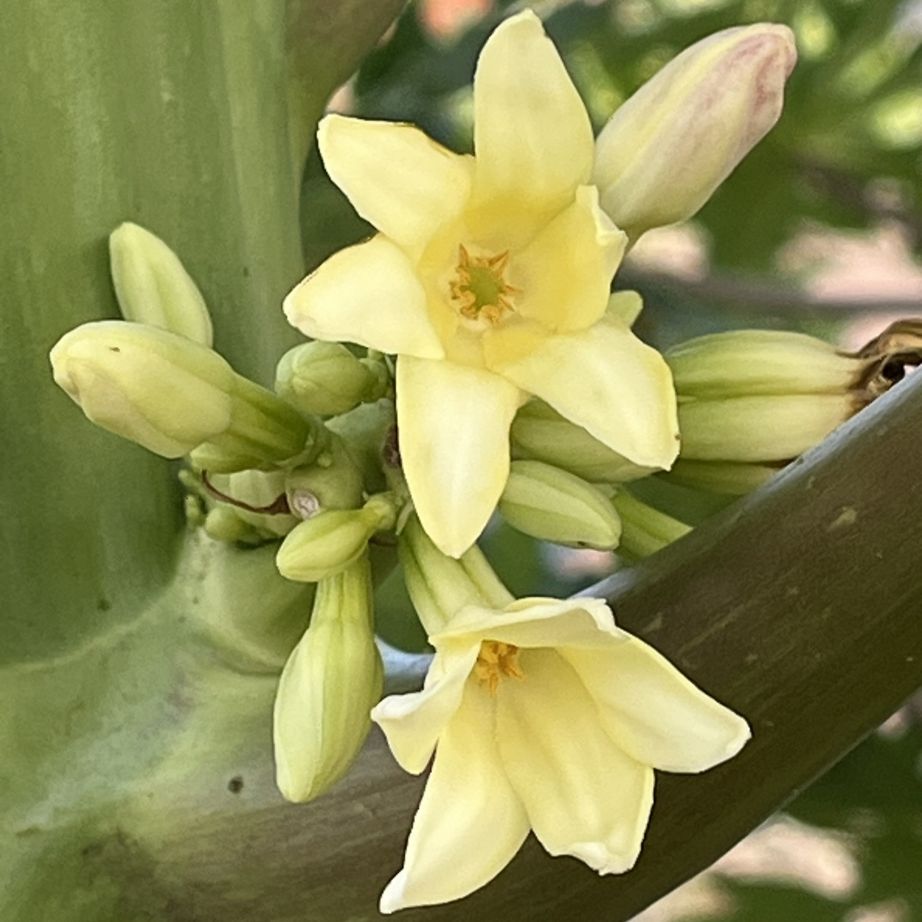
パパイヤの花は花弁が5枚、雄しべが10本、雌しべの柱頭が5裂。雌雄異株で雄花は房状に集まり、雌花と両性花は葉腋に1つずつ咲きます。
Papaya flowers have five petals, ten stamens, and a five-lobed pistil stigma. Papaya is dioecious; male flowers bloom in clusters, while female and bisexual flowers bloom singly in the leaf axils.
【仮名】パパイヤ, パパイア, バンカジュ, マンジュカ
【和名】蕃瓜樹, 万寿果
【英名】Papaya
【学名】Carica papaya
【誕生】06/ ??
【開花】06, 07, 08, 09, 10月
【花色】White, Yellow
パパイヤ
パパイヤの概要
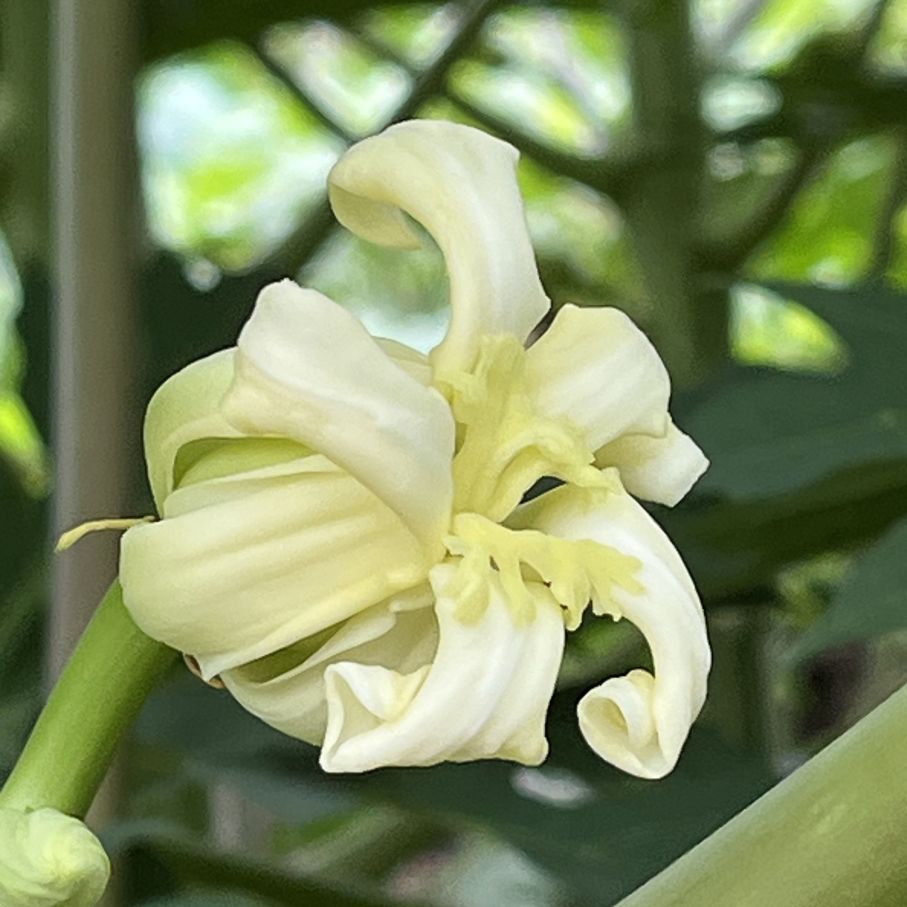
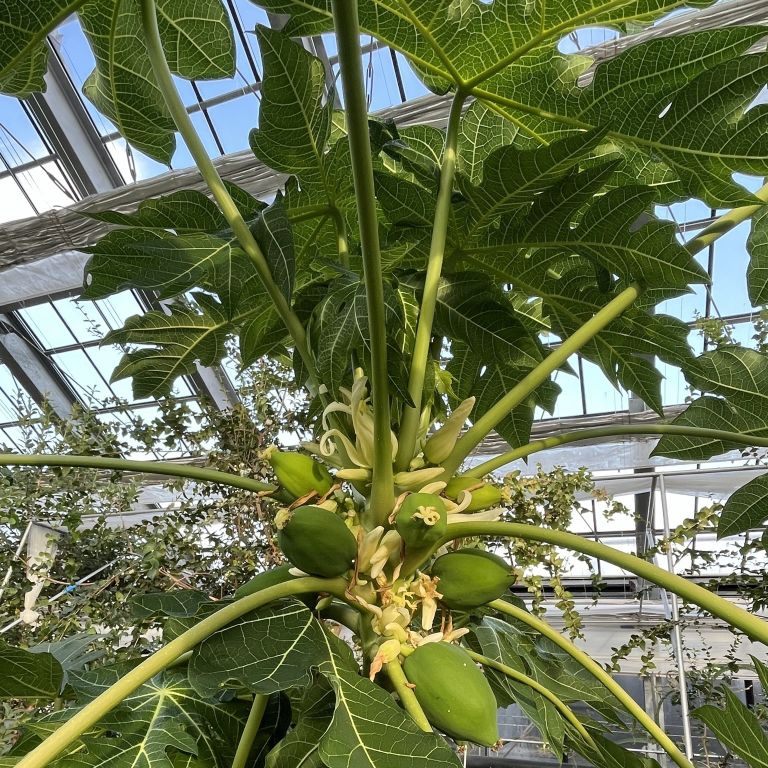
パパイヤはパパイヤ科の常緑果樹。原産地は中米で、日本へは江戸時代の終わりに渡来し、南西諸島で栽培が広がりました。雌雄異株で、雄花は小さく、房状に集まり、雌花と両性花は大きく、葉腋に1つずつ。液果は熟すと果皮が橙色になり、果肉が柔らかくなって芳香を放ちます。
パパイヤの名前
パパイヤの和名の由来は英語のパパイア。ラテン語の属名カリカは「無花果」という意味で、果実の外観や乳汁の性質が似ているからです。種小名パパイアは原産地での古称「パアパイア」に由来。漢字の蕃瓜樹は「外来の瓜の樹」、万寿果は「長寿の果実」という意味の当て字です。
パパイヤの姿形
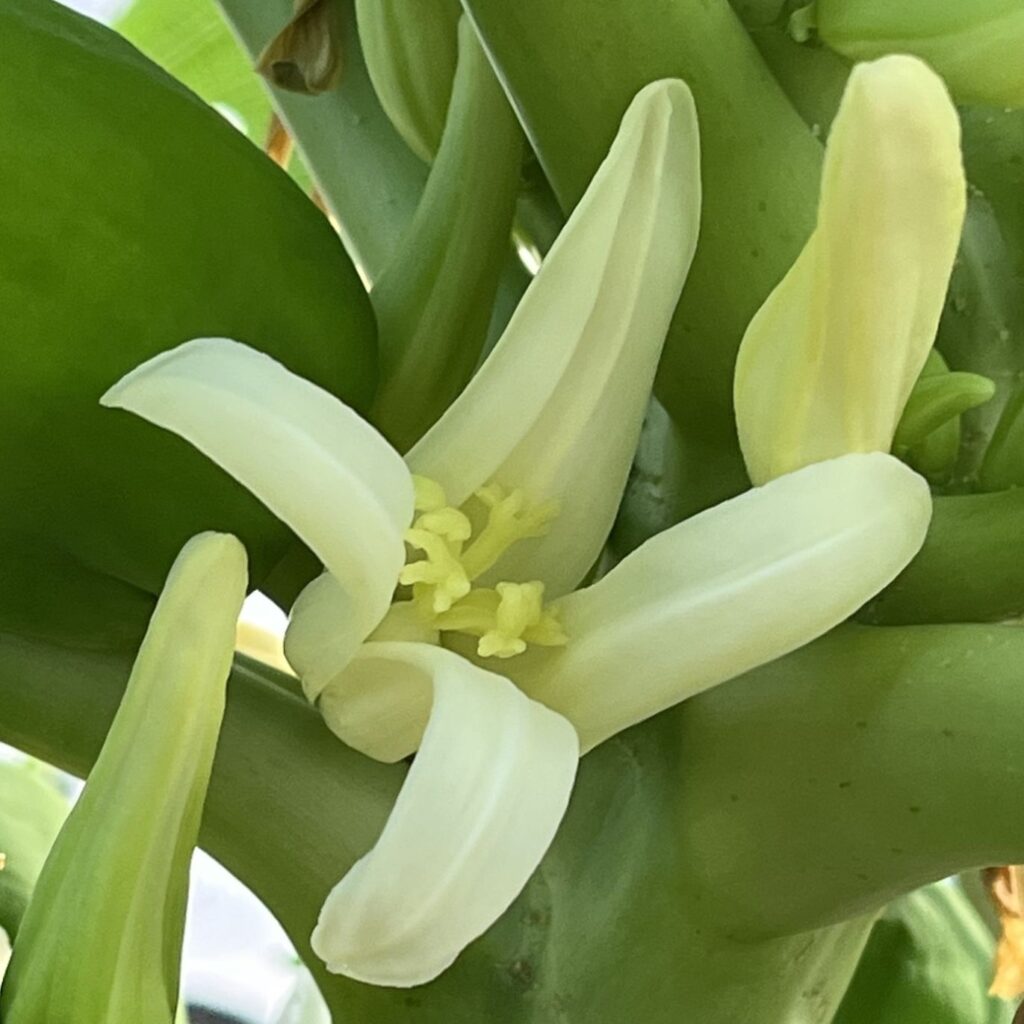
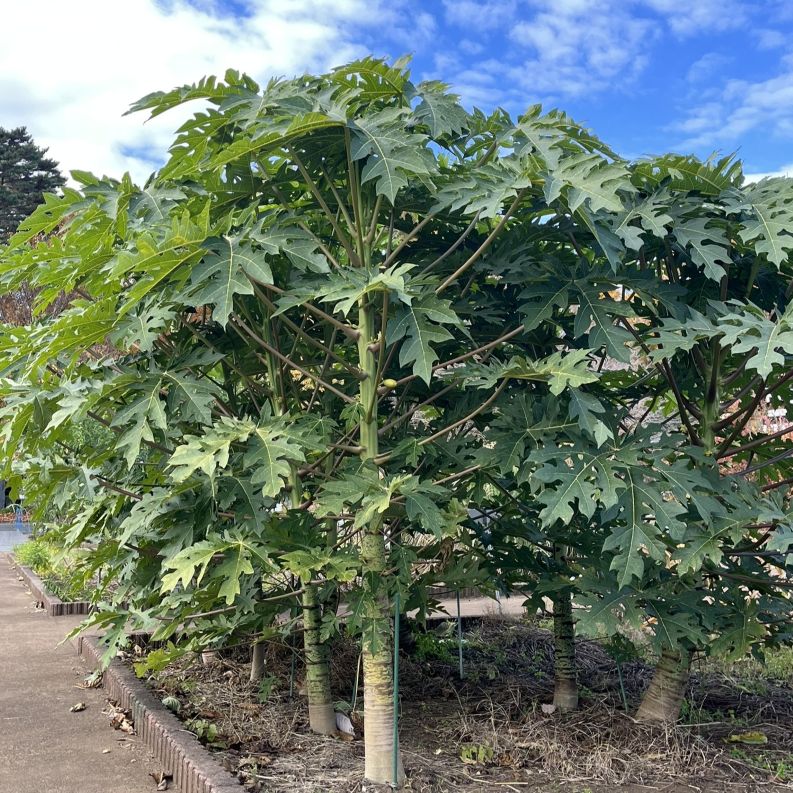
パパイヤは細かい根が地表近くに広がります。茎は太く、柔らかいスポンジ状。真っ直ぐ立ち上がります。葉は柄が長く、互生の掌状。縁に鋸歯があります。花は筒状で、花弁が5枚、雄しべが10本、雌しべの柱頭が5裂。液果は中心部が空洞で、内壁に黒色の種子が詰まっています。
パパイヤの利用
パパイヤの完熟果はまったりとして酸味がなく、あっさりとして滑らかな甘味があります。生食のほか、ジュースやジャムなどに加工。乳汁にタンパク質を分解する酵素パパインが含まれ、肉を軟らかくしたり、消化を補います。未熟果は野菜として炒めたり、煮たり、サラダなどに。
Papaya
Papaya is an evergreen fruit tree in the Caricaceae family. Native to Central America, it was introduced to Japan at the end of the Edo period and its cultivation spread to the Ryukyu Islands. Papaya is dioecious; small male flowers bloom in clusters, while large female and bisexual flowers bloom singly in the leaf axils. The berries turn orange when ripe, and the flesh softens and releases a fragrant aroma.
The Latin genus name for papaya, Carica, means “fig,” referring to the similar appearance of the fruit and the milky properties of its juice. The specific name, papaya, comes from the ancient name of its native habitat. The Chinese characters for papaya mean “foreign melon tree” or “fruit of longevity.”
Papaya has fine roots that spread close to the ground. The stems are thick and soft, like sponges. They grow upright. The leaves are long-stalked, palmate, and alternate with serrated edges. The flowers are tubular with five petals, ten stamens, and a five-lobed stigma. The berries are hollow, with black seeds packed into the inner walls.
Fully ripe papaya has a smooth, light, and sweet flavor with no sourness. In addition to being eaten raw, it is also processed into juice and jam. The milky juice contains the protein-breaking enzyme papain, which tenderizes meat and aids digestion. Unripe papaya can be used as a vegetable, stir-fried, stewed, or in salads.