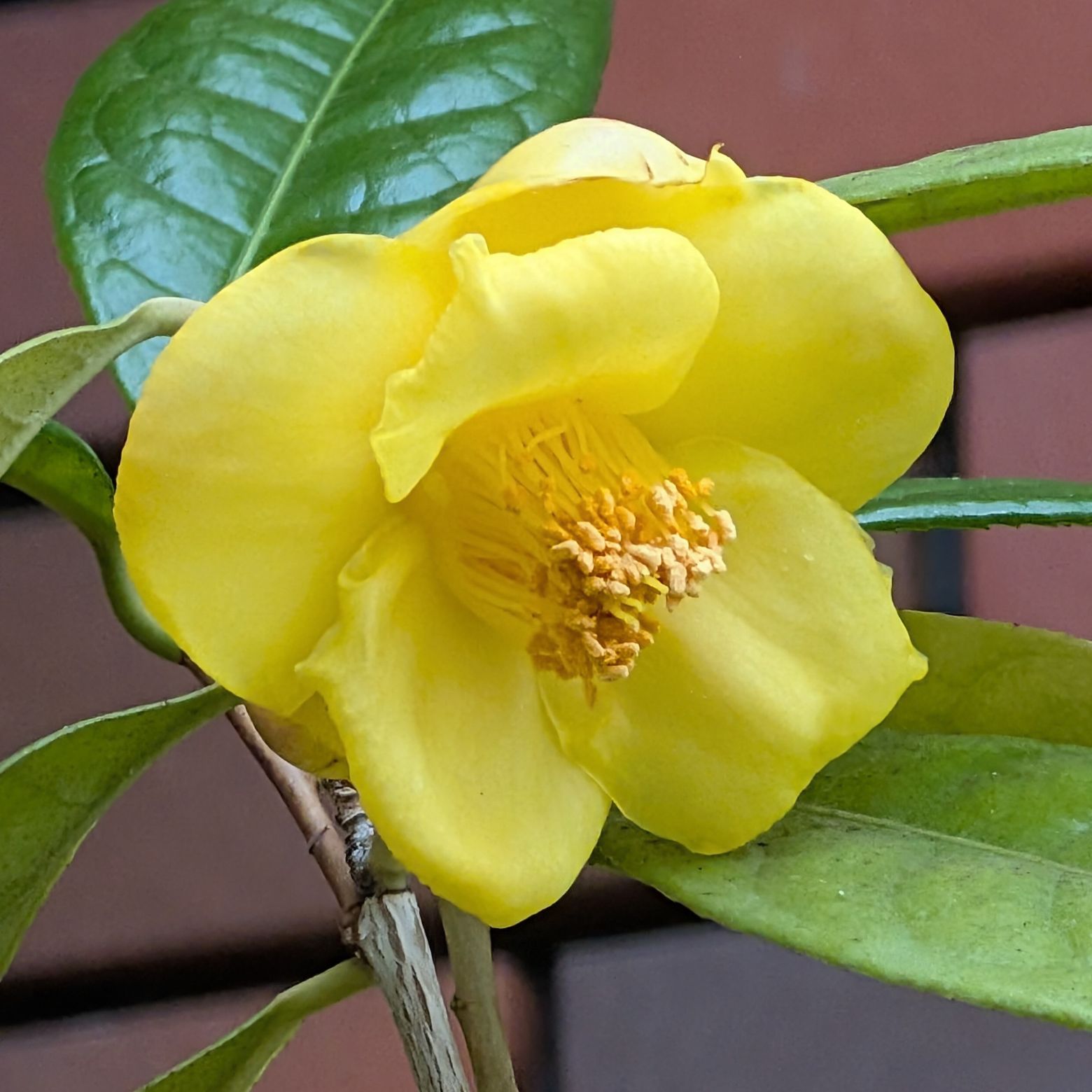
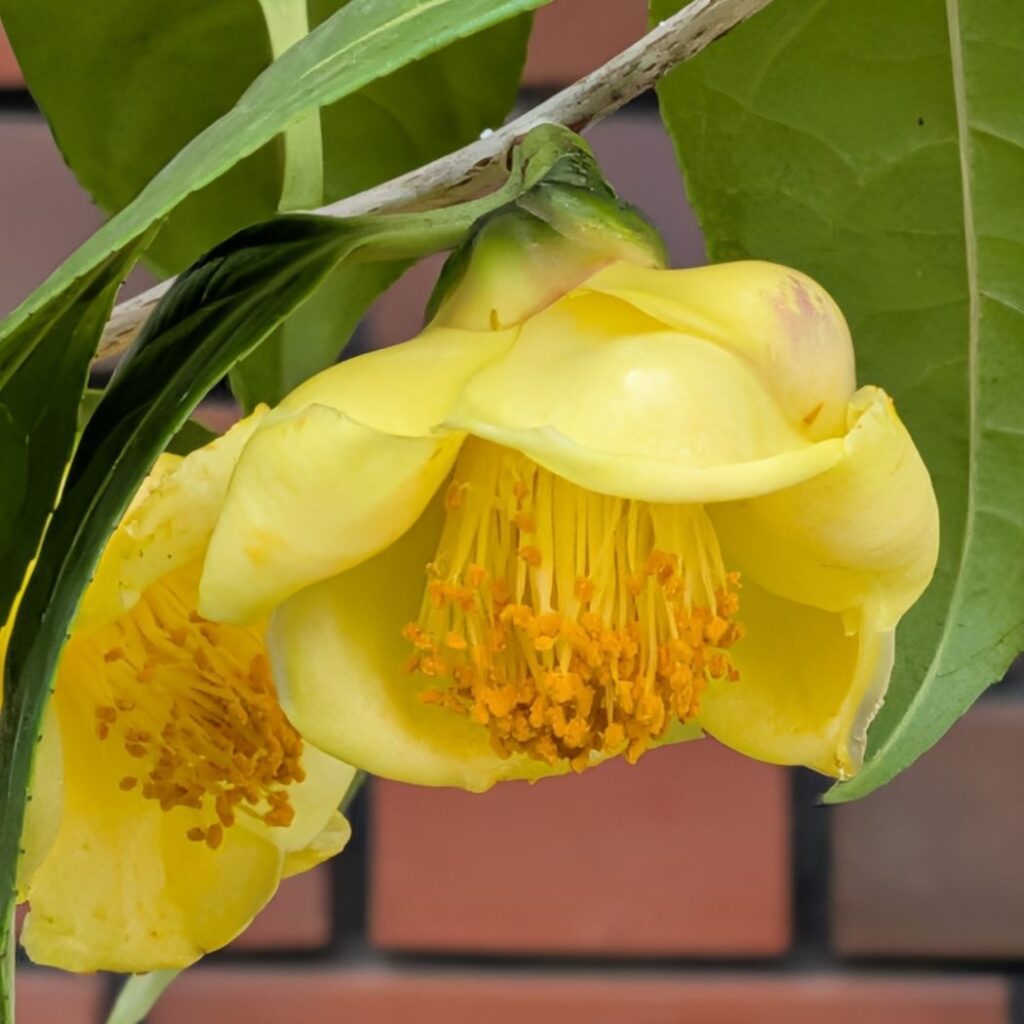
キンカチャは「黄金色の花が咲く椿」という意味です。花は肉厚の花弁が10枚前後、雄しべがたくさん。俯くように半開し、芳香を放ちます。
The Japanese name for Golden Camellia means “camellia with golden flowers,” which is almost identical to its English name. The flowers have around 10 fleshy petals and numerous stamens. They hang half-open and give off a fragrant fragrance.
【仮名】キンカチャ
【和名】金花茶
【英名】Golden Camellia
【学名】Camellia petelotii
【誕生】11/ ??
【開花】01, 02, 03, 11, 12月
【花色】Yellow
キンカチャ
キンカチャの概要
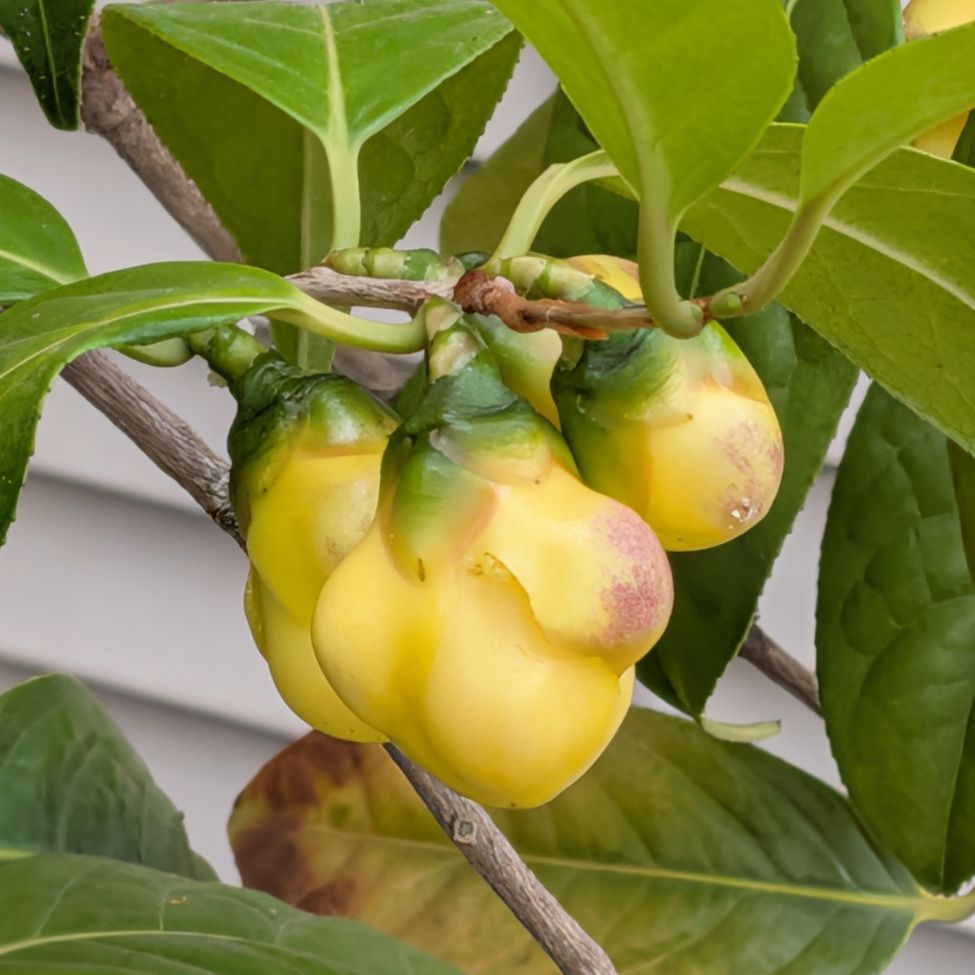
キンカチャはツバキ科の常緑低木です。中国南部~ベトナム北部の亜熱帯域に分布し、湿潤な森林で自生。日本へは1978年に種子が渡り、温室内に鉢植えされました。一方、藪椿や雪椿などとの交雑によって寒さに強く、花が黄色の椿品種「初黄」などが作出。花言葉は「円満」です。
キンカチャの名前
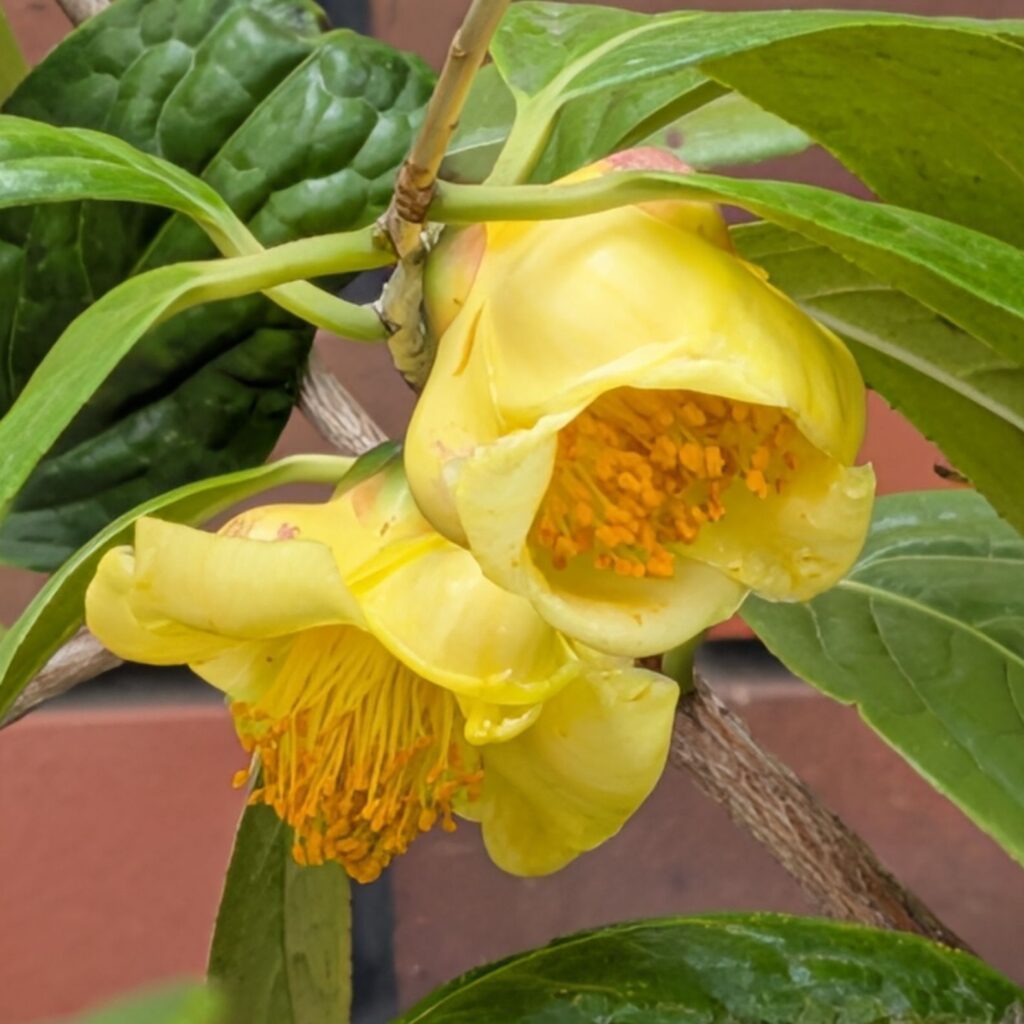
キンカチャは中国名の音読みで、「黄金色の花が咲く椿」という意味です。英名ゴールデン・カメリアも「黄金の椿」という意味。属名カメリアはチェコスロバキアの宣教師ゲオルグ・ヨーゼフ・カメル、種小名ペテロティーはフランスの植物学者アルフレッド・ペテロへの献名です。
キンカチャの姿形
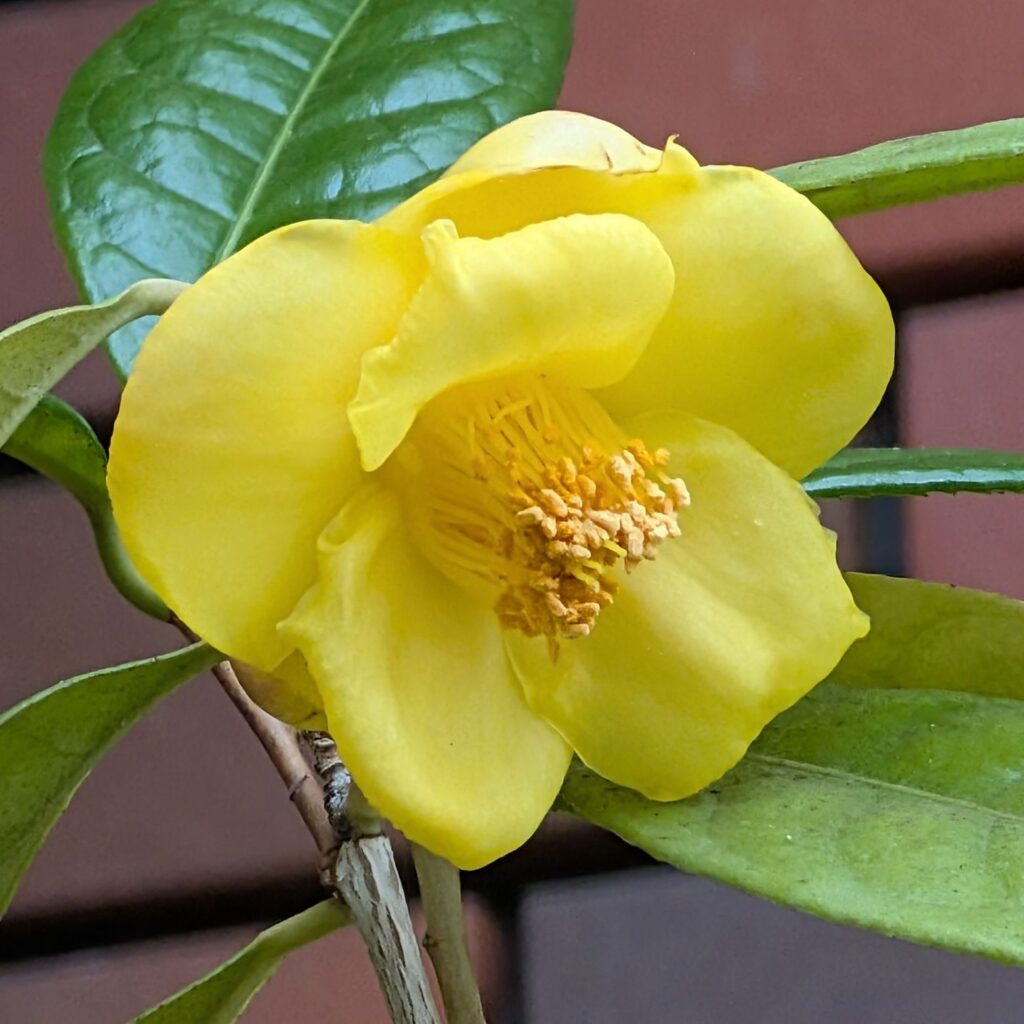
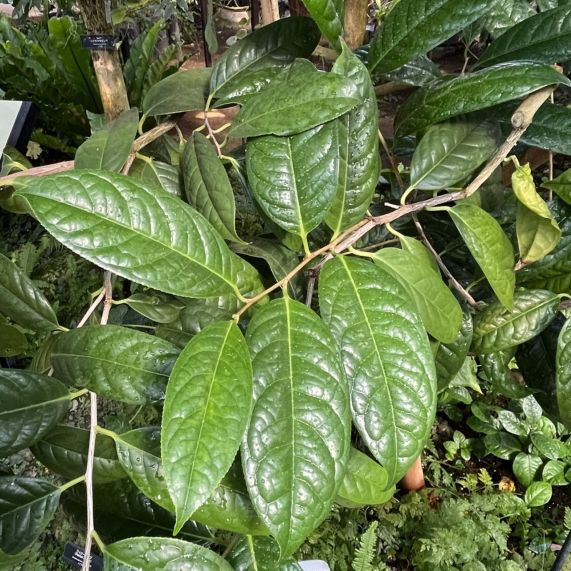
キンカチャは根が酸性の土壌を好み、枝が温暖な気候を好みます。葉は互生の長楕円形。葉面に光沢があり、葉脈が浮き上がります。花は肉厚の花弁が10枚前後、雄しべがたくさん。俯くように半開し、芳香を放ちます。花後は小さな丸い蒴果が結実。熟すと裂けて種子を散らします。
キンカチャの逸話
キンカチャはかつて「伝説の椿」でした。日本の植物分類学者・津山尚が文献や伝承などから考察し、1949年に著書『幻想の黄色山茶』で実在の可能性を示唆。中国の植物分類学者・胡先粛が広西で採集された標本により、1965年に学術誌『植物分類学報』で新種として記載しました。
Golden Camellia
Golden Camellia is an evergreen shrub in the Theaceae family. It grows naturally in the subtropical regions of southern China and northern Vietnam, in humid forests. Seeds were imported to Japan in 1978 and planted in greenhouses. Meanwhile, hybridization with Camellia japonica has led to the development of the cold-hardy, yellow-flowered variety “Camellia ‘Shoko’.” The flower’s meaning is “harmony.”
The Japanese name for Golden Camellia is derived from its Chinese name. It means “camellia with golden flowers,” which is almost identical to its English name. The genus name Camellia is named after Czechoslovakian missionary Georg Joseph Kamel, and the specific name petelotii is named after French botanist Alfred Pételot.
Golden Camellia’s roots prefer acidic soil, while its branches prefer warm climates. The leaves are alternate and oblong. They are glossy with prominent veins. Flowers have around 10 fleshy petals and many stamens. They hang half-open and give off a fragrant fragrance. After flowering, small, round capsules form that split open and scatter seeds when ripe.
Golden Camellia was once a legendary camellia. Japanese plant taxonomist Dr. Takashi Tsuyama considered the plant based on literature and legends, and in 1949 suggested its possible existence in his book “The Imaginary Yellow Camellia.” In 1965, Chinese plant taxonomist Hu Xiansu described it as a new species in the academic journal “Acta Phytotaxonomica Sinica” based on specimens collected in Guangxi.