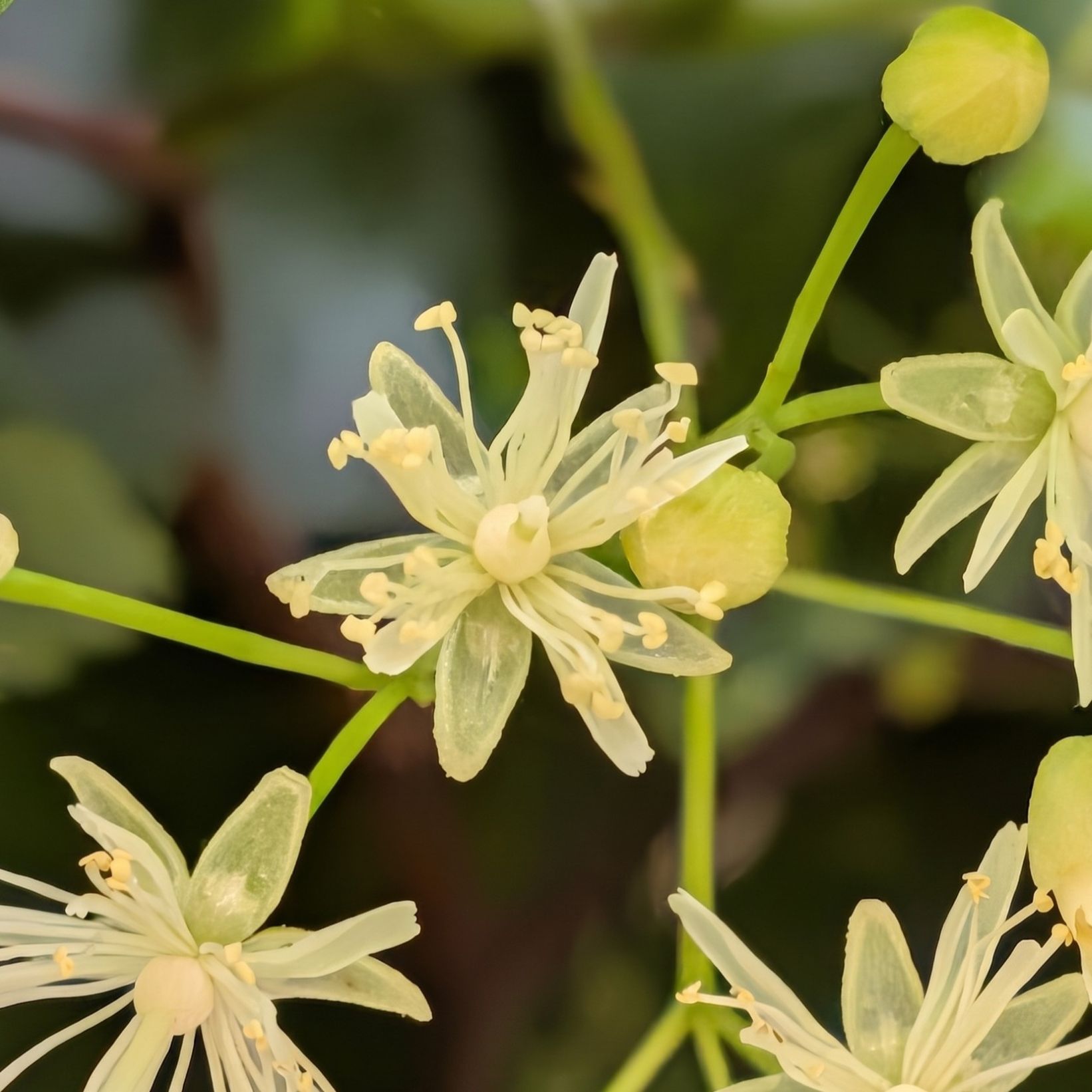
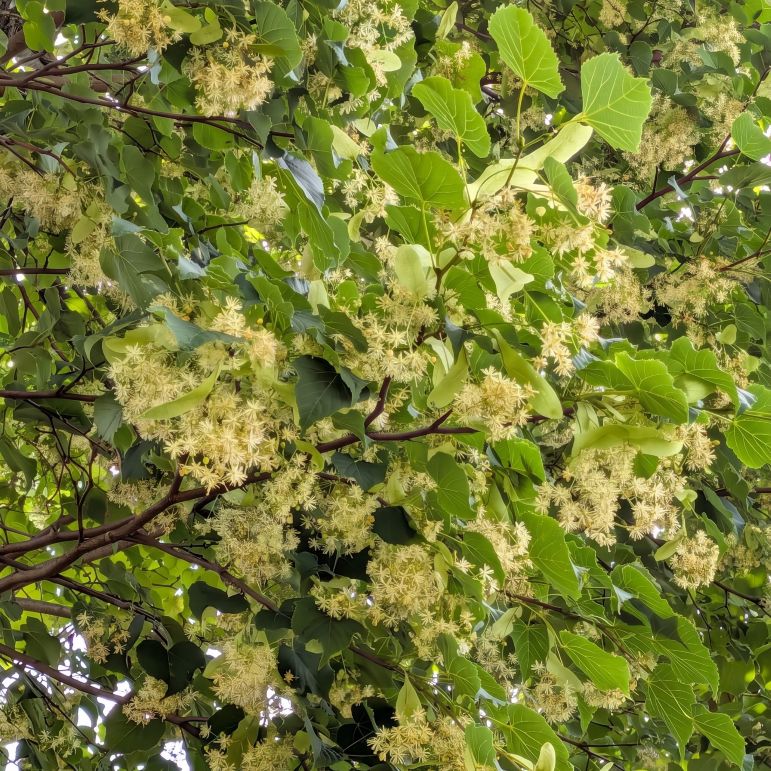
シナノキの和名の由来は、木が折れずに「しなる」から。黄白色の花が梢を埋め尽くすように咲き、濃厚な蝋質の芳香を遠くまで漂わせます。
The Japanese name for this tree, Shinanoki (Japanese linden), translates to “the tree that bends without breaking.” Its yellowish-white blossoms blanket the treetops, dispersing a rich, honey-like fragrance far and wide.
【仮名】シナノキ
【和名】科の木, 信濃の木
【英名】Japanese Linden
【学名】Tilia japonica
【誕生】10/ 20, 11/ 19
【開花】06, 07月
【花色】White, Yellow
シナノキ
シナノキの概要
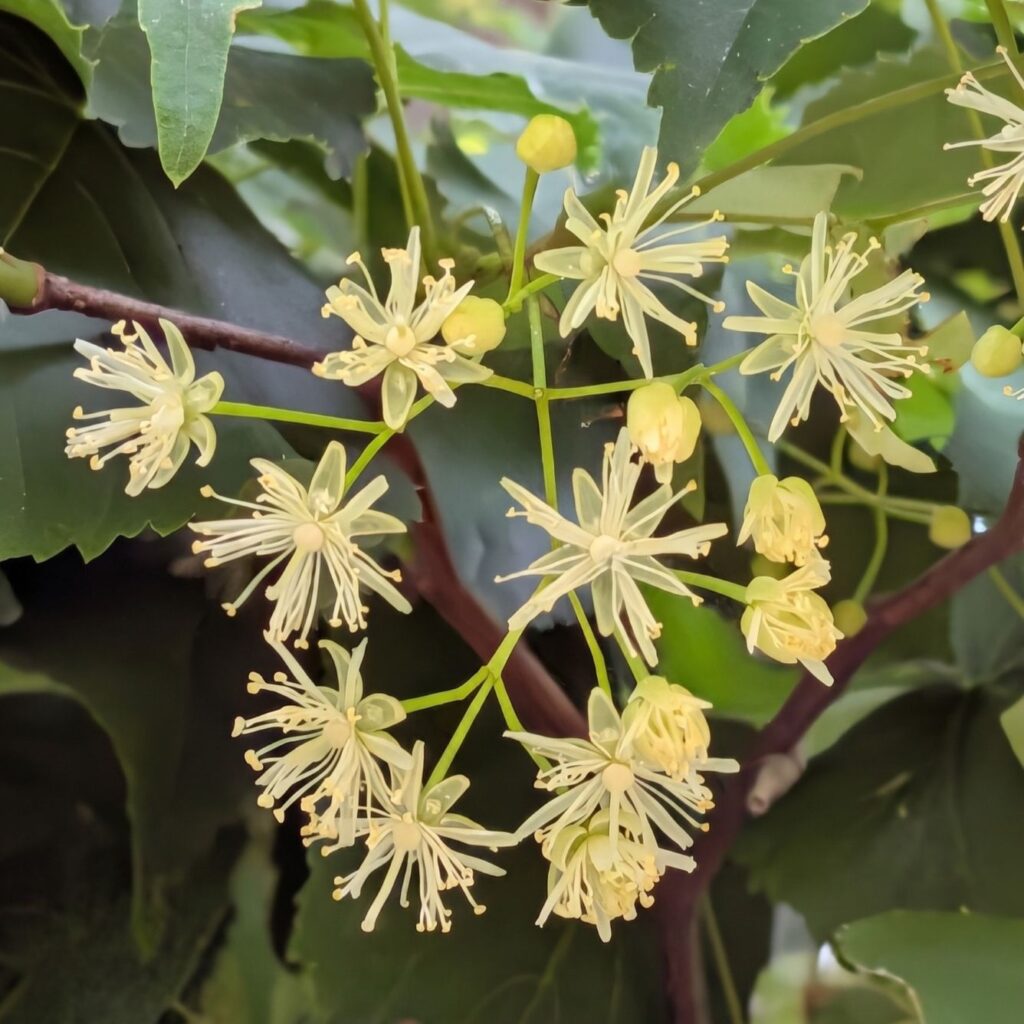
シナノキはアオイ科の落葉高木です。北海道、本州、四国、九州の冷涼地に分布。大きく育って長く生き、長野県に樹齢八百年の巨木もあります。古くからの有用樹で縄文時代の遺跡から編布が出土。黄白色の花が梢を埋め尽くすように咲き、濃厚な蝋質の芳香を遠くまで漂わせます。
シナノキの名前
シナノキの和名の由来は、樹皮の強靭な繊維により、木が折れずに「しなる」から。漢字の科は「分類」という意味の当て字です。英名のリンデンの由来もゲルマン系の古語で「しなやかな繊維」という意味。属名ティリアは古典ラテン語で「西洋科の木」「菩提樹」という意味です。
シナノキの姿形
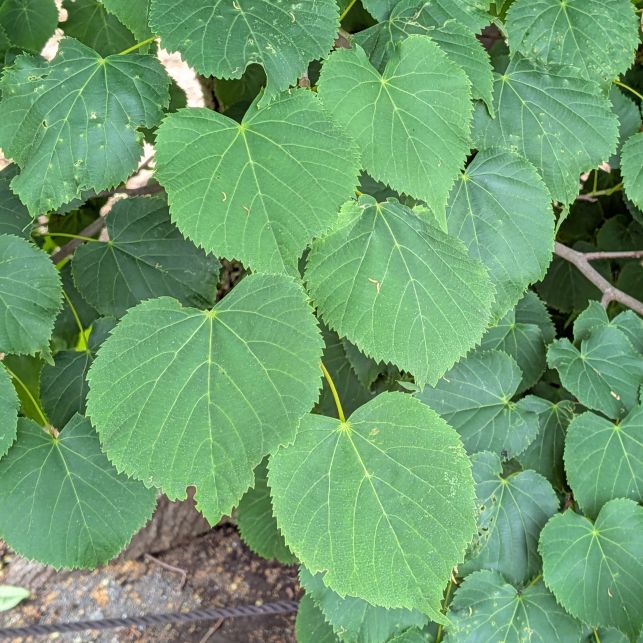
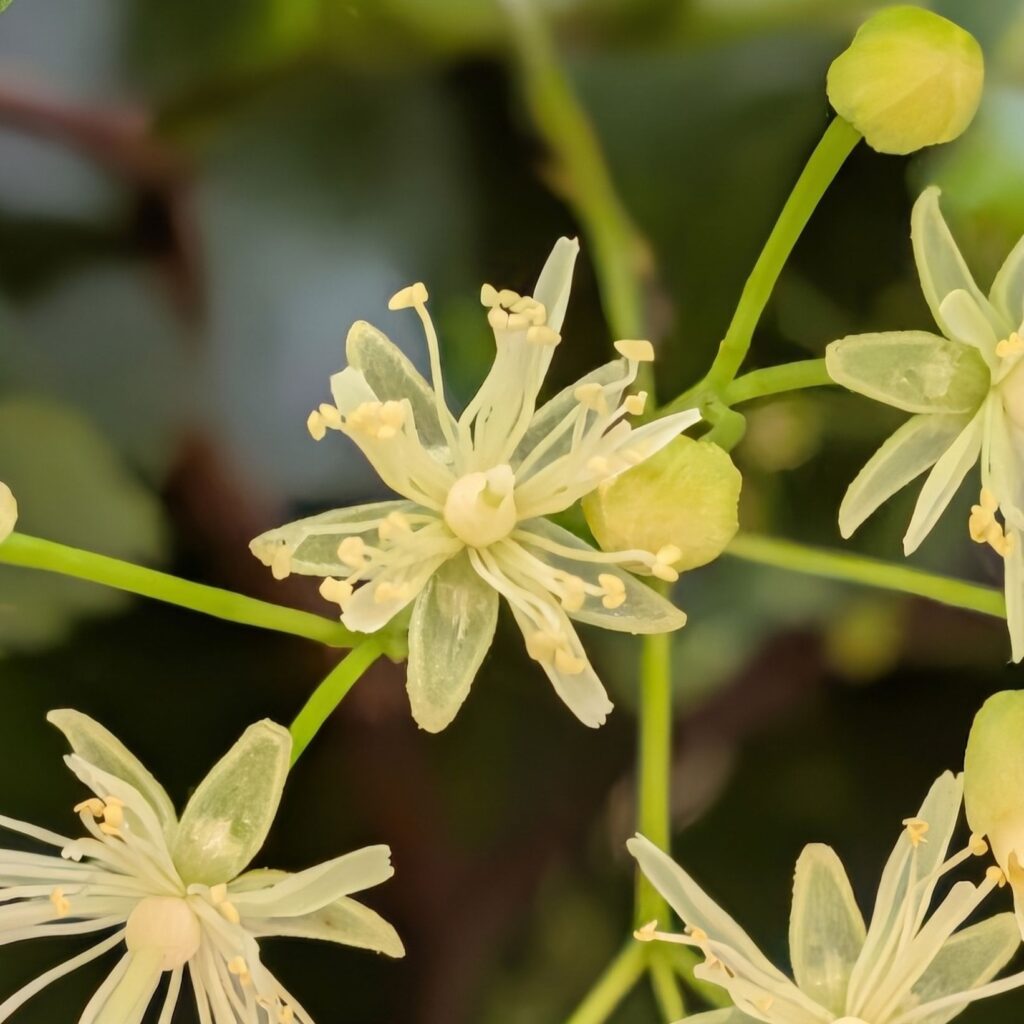
シナノキは根が深く張り、木が高く大きく枝を広げます。葉は互生の心臓形。脈腋に茶色の毛が束生し、縁に鋸歯があります。花は集まって咲いて吊り下がり、萼片が5枚、花弁が5枚、雄しべが多数。花後の堅果は熟すと離れ、ヘラ状の苞葉を回して風に乗り、遠くまで運ばれます。
シナノキの利用
シナノキの樹皮は強靭な繊維が水に強く、古くから織物や衣類、縄や紐などに用いられました。木材は白色で柔らかく均質なため、内装用の合板、家具、木彫り、製紙原料などに。花から採れる蜂蜜は爽やかな強い香り、コクのある甘みに、ほんのりとした柑橘系の清涼感があります。
Japanese Linden
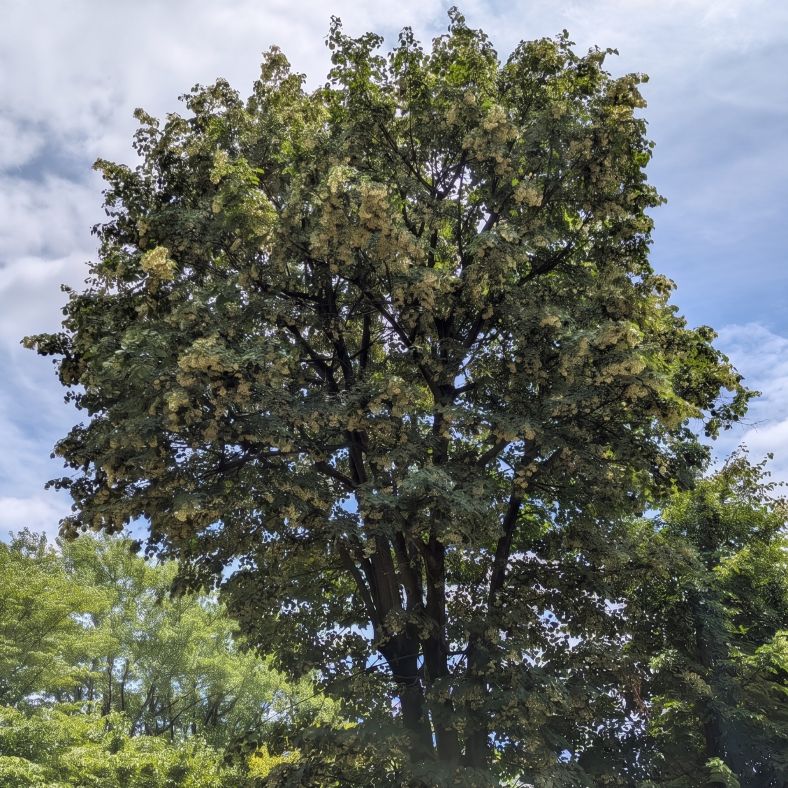
The Japanese linden (Tilia japonica) is a large deciduous tree belonging to the mallow family (Malvaceae). It thrives in the cooler regions of Hokkaido, Honshu, Shikoku, and Kyushu. Known for its impressive size and longevity, a grand specimen in Nagano Prefecture is estimated to be around 800 years old. This tree has deep historical roots in Japan; woven textiles crafted from its fibers have even been unearthed at archaeological sites dating back to the Jomon period. During its blooming season, the canopy fills with a profusion of yellowish-white flowers that release a dense, sweet, and waxy aroma into the air.
The name Shinanoki reflects its “pliant yet unbreakable” nature, a characteristic derived from the incredibly tough fibers in its bark. Interestingly, the English word “linden” shares a similar heritage, originating from an old Germanic root meaning “pliant fiber.” Meanwhile, the genus name Tilia comes from Classical Latin, traditionally referring to the European linden or lime tree.
The Japanese linden establishes a deep root system, growing into a stately, towering tree with a wide-spreading canopy. Its heart-shaped (cordate) leaves are arranged alternately along the branches, featuring distinct serrated edges and tiny tufts of brown hair (pubescence) in the vein axils. The flowers bloom in drooping, pendulous clusters, each featuring five sepals, five petals, and a multitude of stamens. After the flowering season, the small, nut-like fruits mature and detach. Attached to a ribbon-like, spatula-shaped bract, they helicopter through the air, riding the wind to propagate far and wide.
The bark’s resilient, water-resistant fibers have been harvested since ancient times to produce textiles, traditional clothing, ropes, and cordage. The wood itself is pale white, soft, and remarkably uniform in texture, making it highly prized for interior plywood, fine furniture, woodcarving, and paper pulp. Additionally, the honey harvested from its blossoms is exceptional—boasting a bold, refreshing aroma, a rich, full-bodied sweetness, and a subtle, cooling hint of citrus.