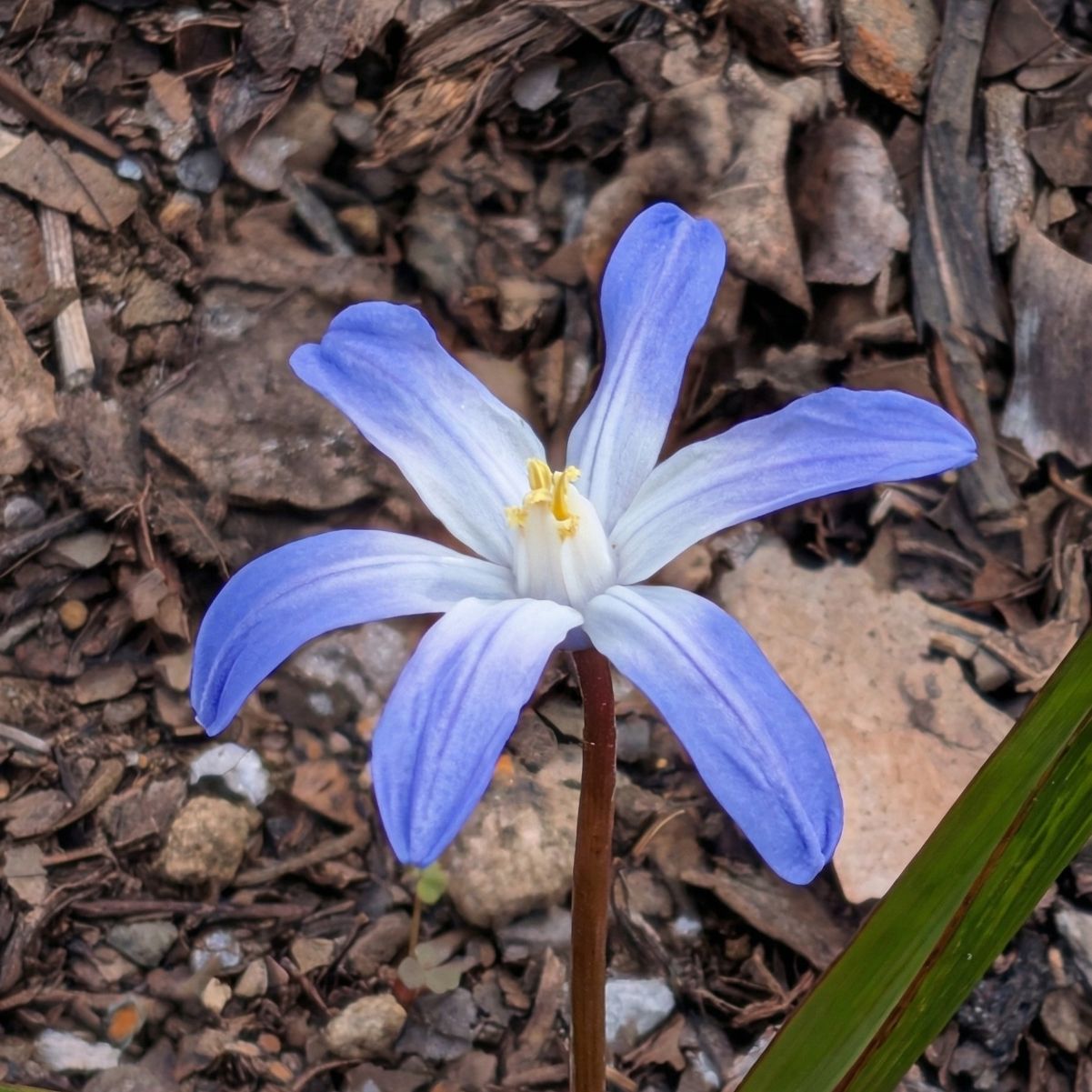
チオノドクサは名前の響きが日本語のようですが、ラテン語の古い属名で、「雪の輝き」という意味。雪が残る早春に空色の花を咲かせます。
In Japan, “Glory of the snow” is commonly known by its former genus name, Chionodoxa. This name is derived from Greek, meaning “glory of the snow.” True to its name, it produces beautiful sky-blue flowers in early spring, often while patches of snow still remain on the ground.
【仮名】チオノドクサ, ユキゲユリ
【和名】雪解百合
【英名】Glory of the snow, Chionodoxa
【学名】Scilla luciliae, Chionodoxa luciliae
【誕生】02/ 05, 02/ 24, 03/ 10, 03/ 20, 03/ 25
【開花】02, 03, 04月
【花色】White, Pink, Purple, Violet, Blue
チオノドクサ
チオノドクサの概要
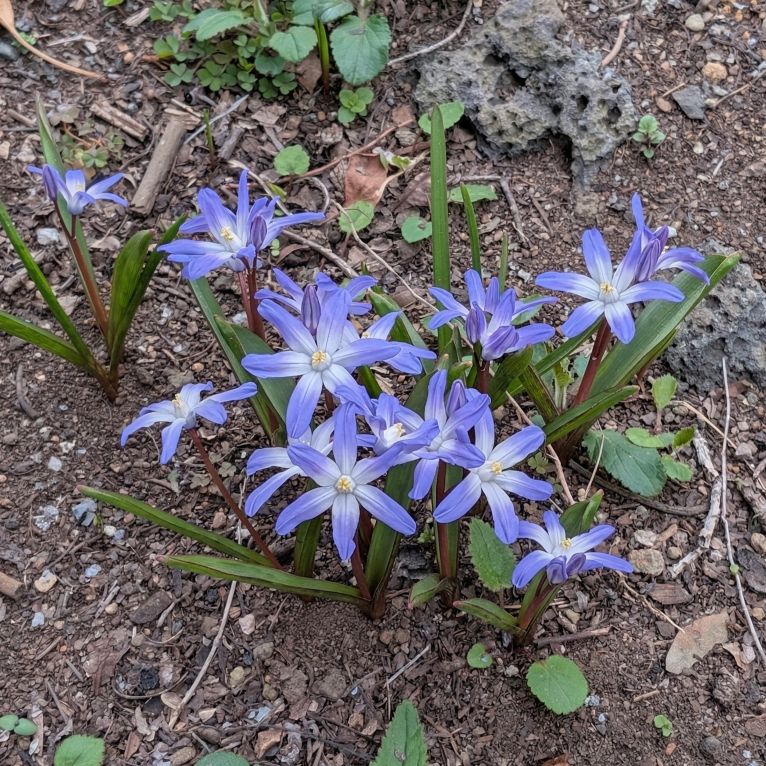
チオノドクサはクサスギカズラ科ツルボ属の小球根植物です。原産地はトルコ西部の高山帯で、湿ったガレ場や草地に自生。日本へは明治時代~大正時代に渡来しました。名前の響きが日本語のようですが、古い分類体系によるラテン語の属名。雪が残る早春に空色の花を咲かせます。
チオノドクサの命名
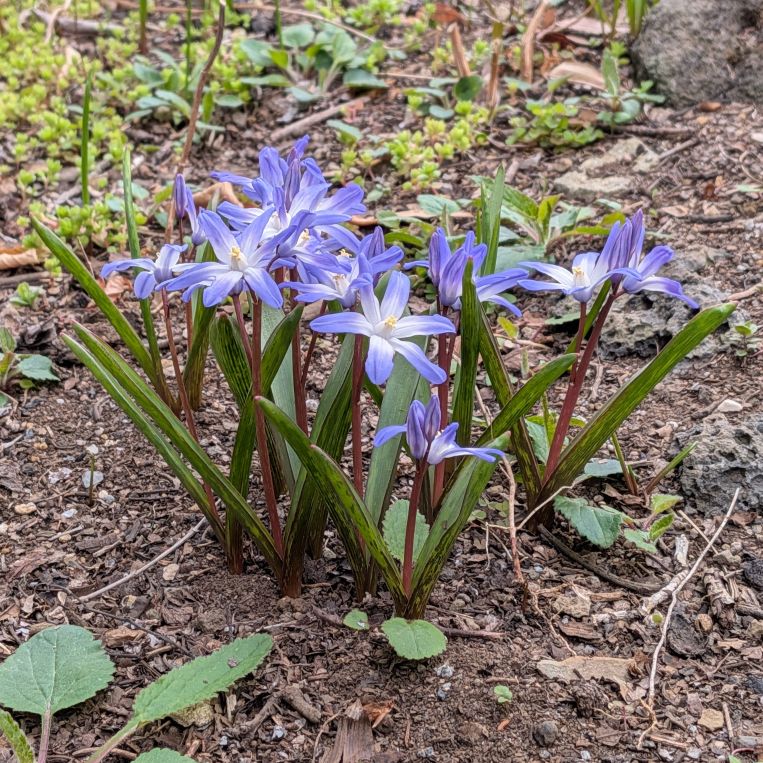
チオノドクサの名前は古い属名に由来し、ラテン語で「雪の輝き」という意味。スイスの植物学者ピエール・エドモン・ボワシエが1842年、トルコ西部のトモルス山で発見し、命名しました。種小名も妻の名前からルシリアエに。しかし7年後、妻ルシルは腸チフスで亡くなりました。
チオノドクサの名前
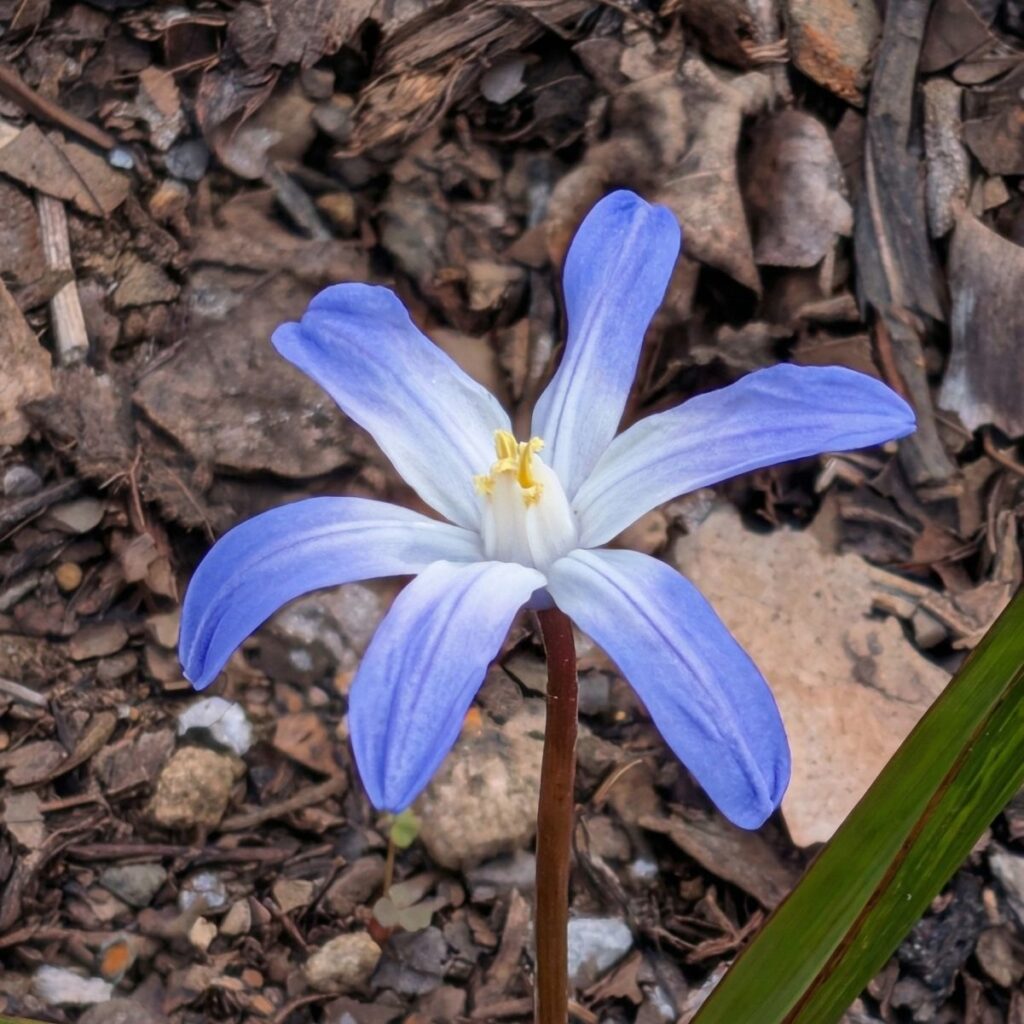
チオノドクサの英名グローリー・オブ・ザ・スノーも「雪の栄光」という意味で、古い属名に由来。標準和名「雪解百合」の由来は旧分類のユリ科で、雪解けのころに花が咲くからですが、ほとんど使われていません。学名は2009年のAPG体系第3版でユリ科ユキゲユリ属から改変。
チオノドクサの姿形
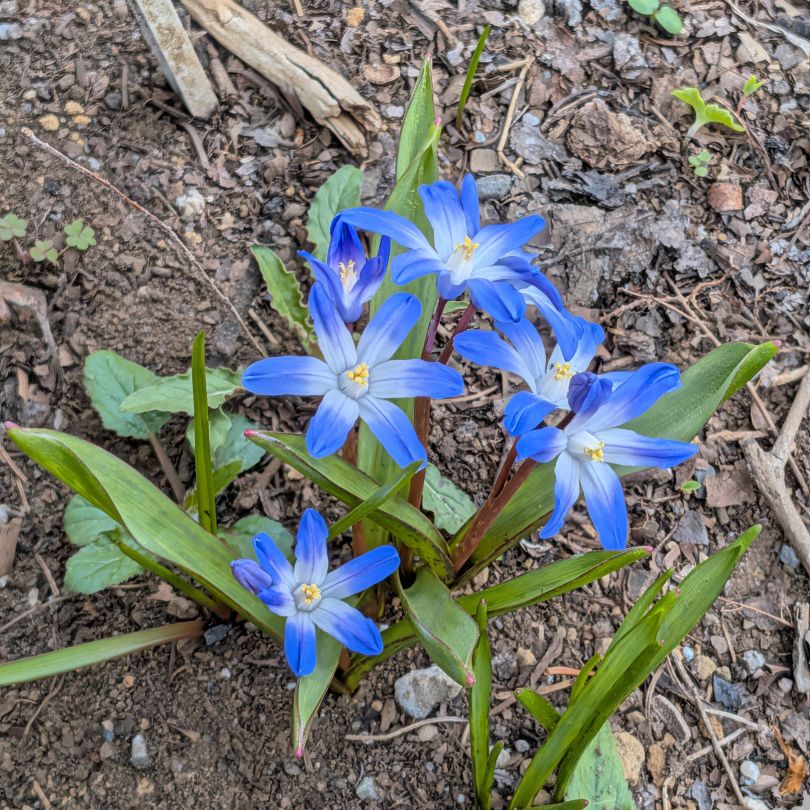
チオノドクサは有皮鱗茎から髭根が伸び、花茎が直立。葉は根生の線形で光沢があり、肉厚です。花は上を向いて咲き、外花被が3枚、内花被が3枚、板状の雄しべが6本。花後の蒴果は熟すと裂け、種枕が付着した種子を落とします。種枕は栄養分に富み、蟻が種子ごと遠くへ運搬。
Glory of the Snow
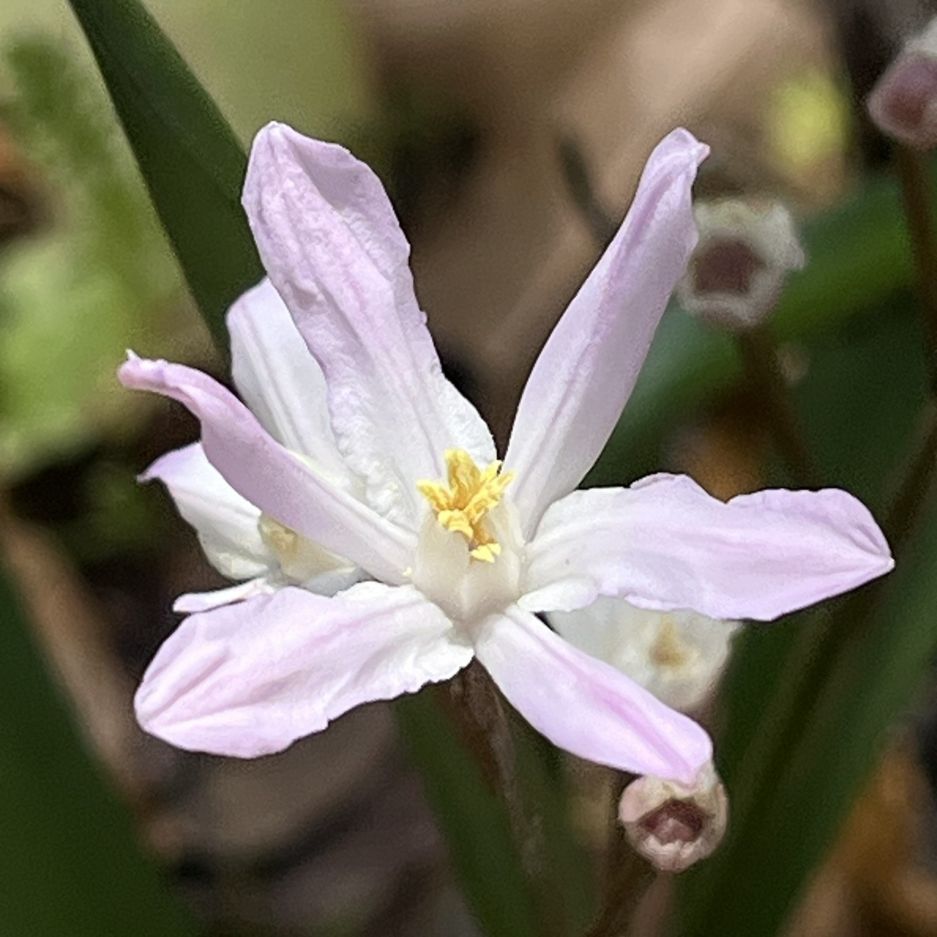
Glory of the snow is a small bulbous perennial belonging to the genus Scilla in the family Asparagaceae. It is native to the alpine regions of western Turkey, where it grows wild in damp scree slopes and meadows. The plant was introduced to Japan during the Meiji and Taisho eras. While it is still widely referred to as Chionodoxa in Japan, that name refers to its classification under an older taxonomic system.
The name Chionodoxa comes from the Greek words for “snow” (chion) and “glory” (doxa). The plant was first discovered and described in 1842 by the Swiss botanist Pierre Edmond Boissier on Mount Tmolus in western Turkey. He chose the specific epithet luciliae in honor of his wife, Lucile. Tragically, Lucile passed away from typhoid fever only seven years later.
The English common name, “Glory of the snow,” shares the same meaning as the old genus name. Although there is a formal Japanese name that translates to “the lily that blooms when snow melts,” it is seldom used in common parlance. Under the APG III classification system established in 2009, the plant was reclassified from the family Liliaceae and the genus Chionodoxa to its current standing.
The plant grows from a tunicated bulb with fibrous roots and features an upright flower stalk. Its basal leaves are linear, glossy, and fleshy. The upward-facing flowers consist of six tepals (three outer and three inner) and six flattened, plate-like stamens. After flowering, the seed capsules ripen and split to release seeds attached to elaiosomes. These nutrient-rich appendages attract ants, which help disperse the seeds over a wide area.