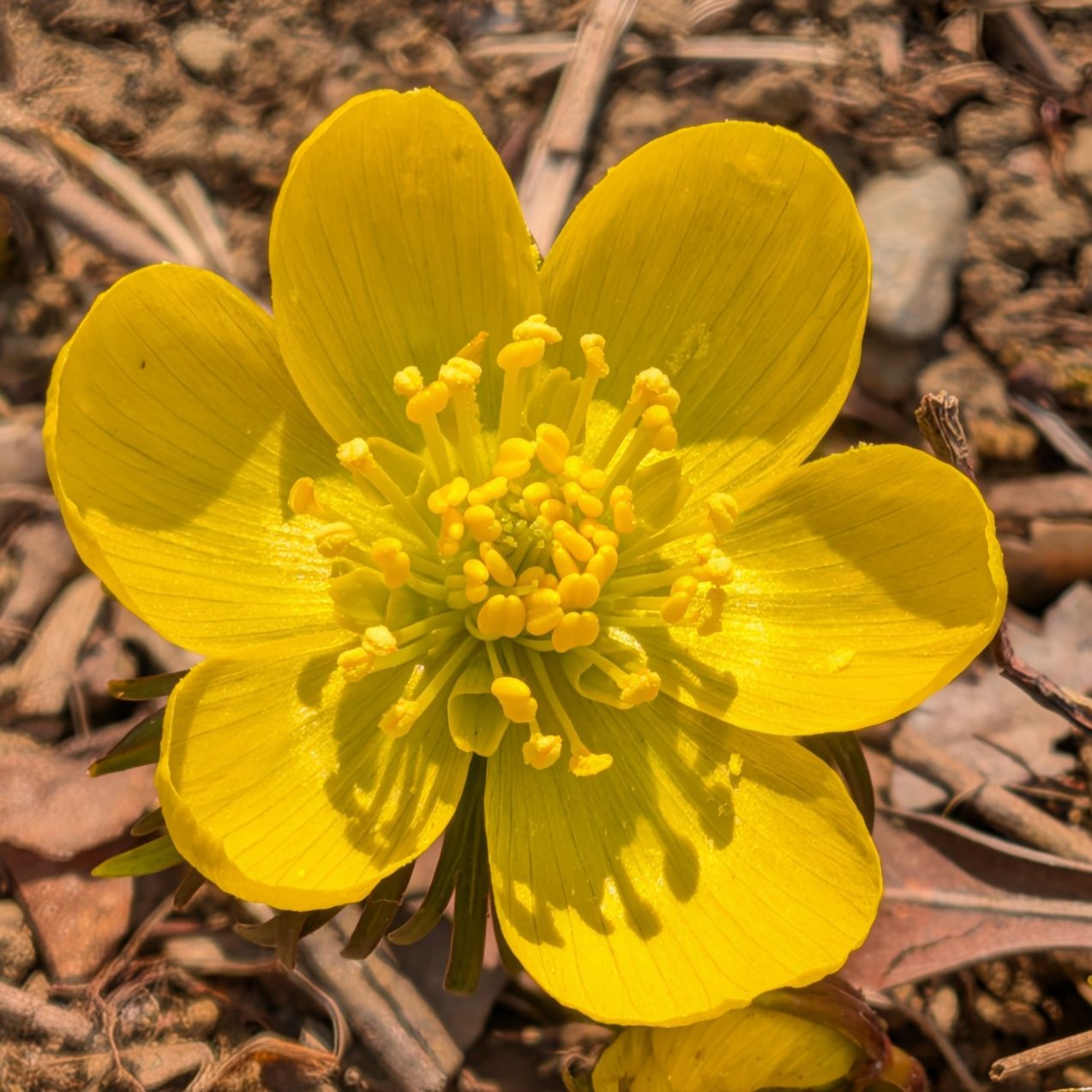
キバナセツブンソウの属名エランティスは「春の花」、種小名ヒエマリスは「冬に咲く」という意味。歌うように、黄色の花々を咲かせます。
The Genus name Eranthis means “spring flower,” while the species epithet hyemalis means “winter-blooming.” These plants produce bright yellow flowers that seem to bloom as if they are singing.
【仮名】キバナセツブンソウ
【和名】黄花節分草
【英名】Winter Aconite
【学名】Eranthis hyemalis
【誕生】02/ 07, 02/ 11
【開花】01, 02, 03月
【花色】Yellow
キバナセツブンソウ
キバナセツブンソウの概要
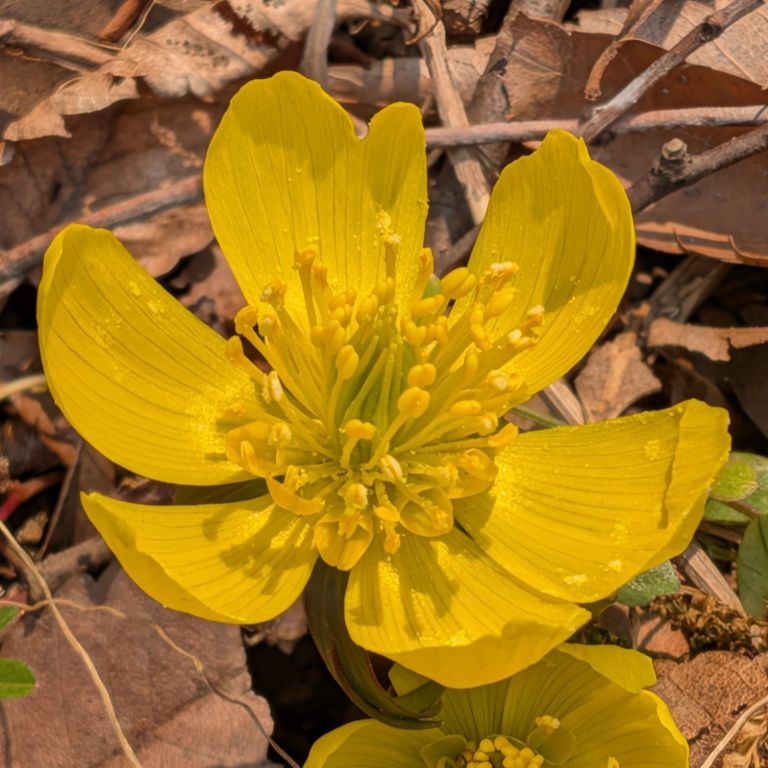
キバナセツブンソウはキンポウゲ科の多年草。原産地は南欧~小アジアで、日本へは明治時代に渡来しました。秋に茎を伸ばし、葉を広げて冬を越し、春に花が咲いて塊茎で夏を越す「スプリング・エフェメラル(春の妖精)」の一つ。歌うように、鮮やかな黄色の花々を咲かせます。
キバナセツブンソウの名前
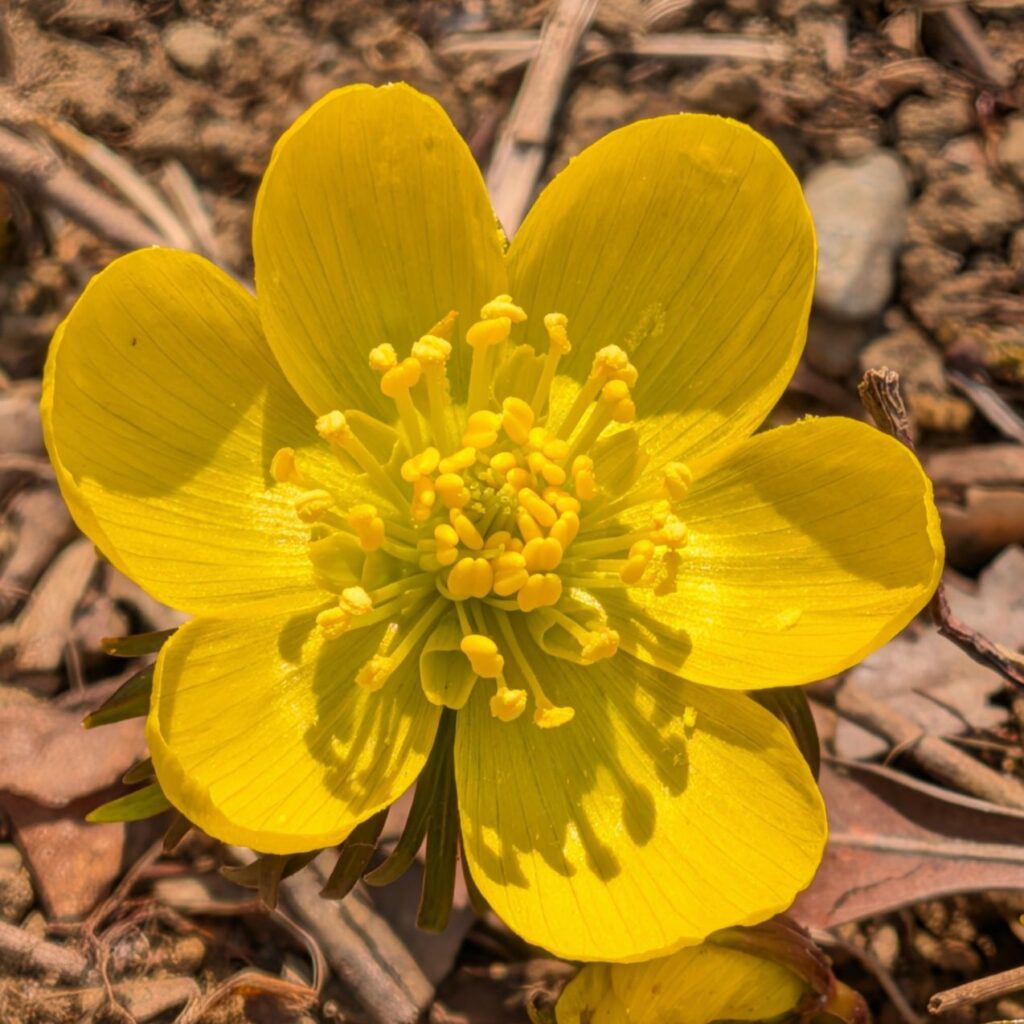
キバナセツブンソウの和名の由来は、節分草に似ながら、花が黄色だから。英名ウィンター・アコナイトは「冬の鳥兜」という意味で、葉の形が鳥兜に似ているからです。属名エランティスは「春の花」、種小名ヒエマリスは「冬に咲く」という意味。冬の終わりに花が咲くからです。
キバナセツブンソウの成長
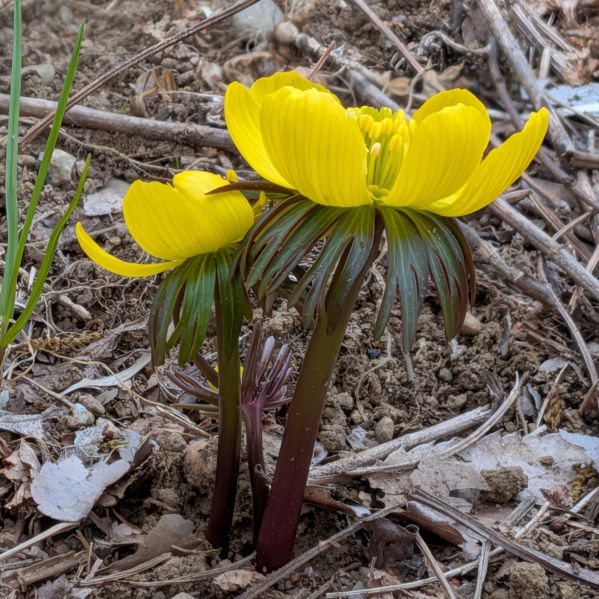
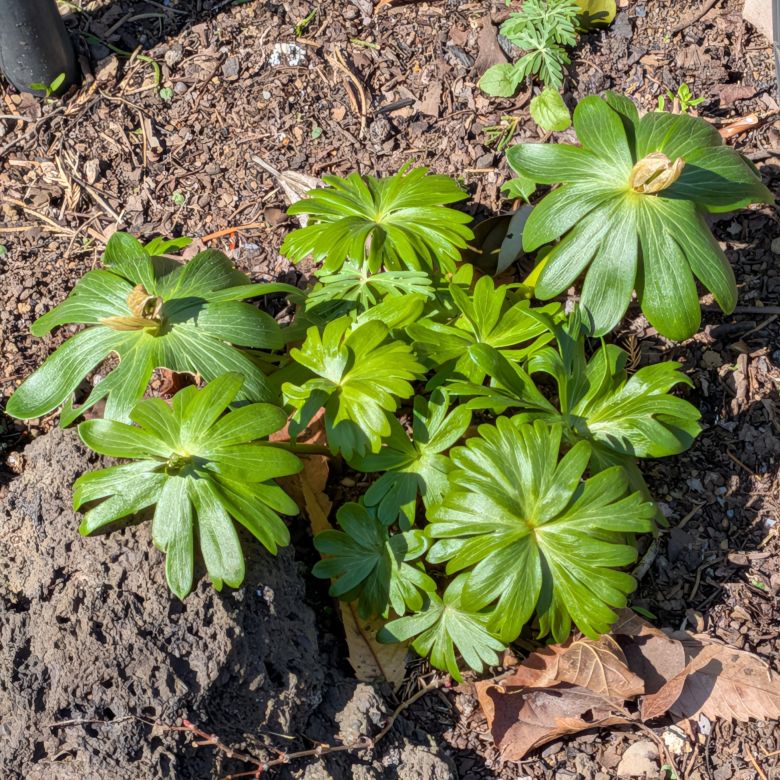
キバナセツブンソウは秋~春に成長し、地下の塊茎に栄養を蓄えます。夏に地上の茎葉を枯らして休眠。春、多肉質の茎が丸まって蕾を守りながら伸び、直立します。葉は柄の長い根生葉が丸い掌状で5~7裂。花の直下に襟飾りのように切れ込みの入った総苞葉が3枚、輪生します。
キバナセツブンソウの繁殖
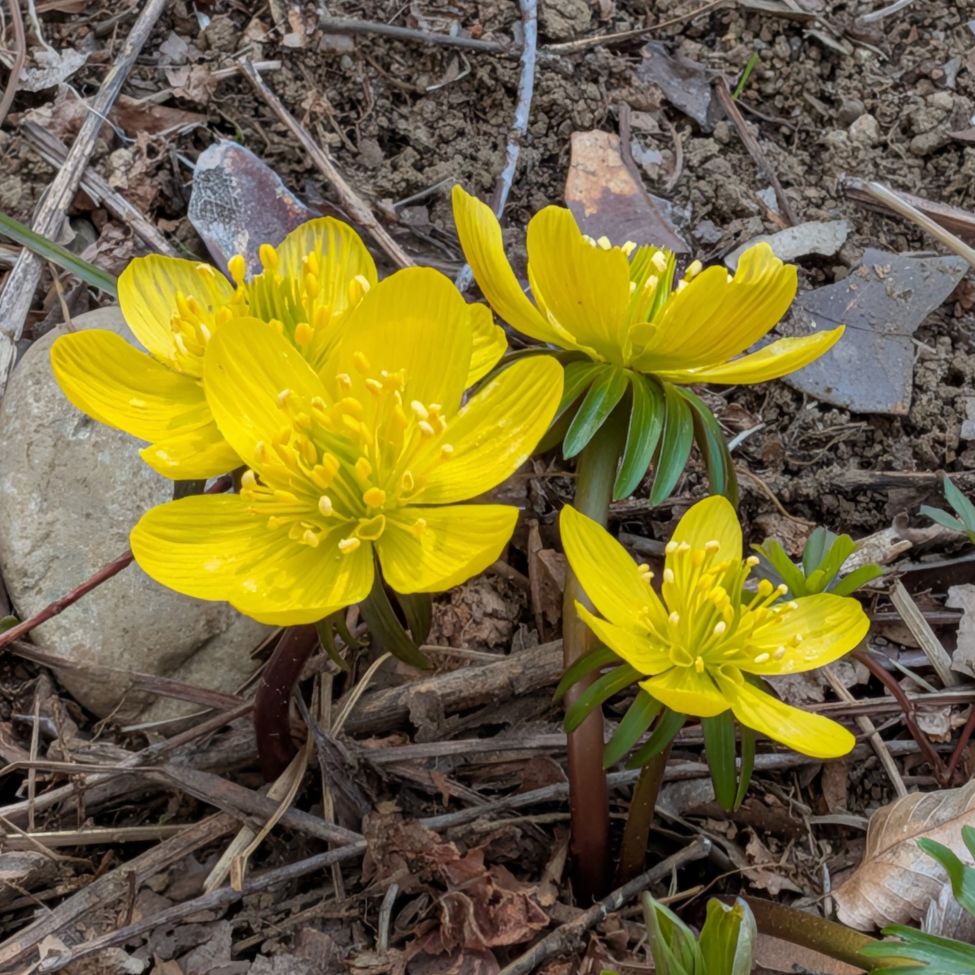
キバナセツブンソウの花は、花弁のように見える萼片が6~8枚、筒状の蜜腺が5~8本、雄しべが多数、離生心皮が5~8つ。花後の袋果は熟すと裂けて種子がこぼれ落ちます。種子には脂肪酸や糖質を豊富に含んだ白い塊「エライオソーム」が付着。蟻によって遠くに運ばれます。
Winter Aconite
Winter Aconite is a perennial herb in the buttercup family (Ranunculaceae). Native to a region stretching from Southern Europe to Asia Minor, it was introduced to Japan during the Meiji era. It is a “spring ephemeral”—extending its stems in autumn, spreading its leaves to survive the winter, blooming in early spring, and then spending the summer dormant as an underground tuber. Its vibrant yellow flowers bloom so cheerfully they almost seem to be singing.
In Japan, its name literally means “yellow-flowered Japanese Winter Aconite.” The English name “Winter Aconite” comes from its winter-blooming habit and the resemblance of its leaves to those of true Aconite (monkshood). Both the genus name Eranthis (“spring flower”) and the species name hyemalis (“winter”) reflect its characteristic of blooming at the very end of winter.
Winter Aconite grows from autumn through spring, storing nutrients in its underground tubers. In summer, the above-ground parts wither as the plant enters dormancy. In spring, the succulent stems emerge in a curled position to protect the buds before growing upright. The basal leaves are long-petioled, rounded, and palmately lobed into five to seven segments. Directly below the flower, three involucral bracts are arranged in a whorl, forming a distinctive, leaf-like collar.
The flower of the Winter Aconite consists of six to eight petal-like sepals, five to eight tubular nectaries, numerous stamens, and five to eight separate carpels. After flowering, the resulting follicles split open when ripe to release the seeds. Each seed is attached to an “elaiosome”—a white, fleshy structure rich in fatty acids and sugars. This attracts ants, which then carry the seeds away, helping the plant disperse over greater distances.