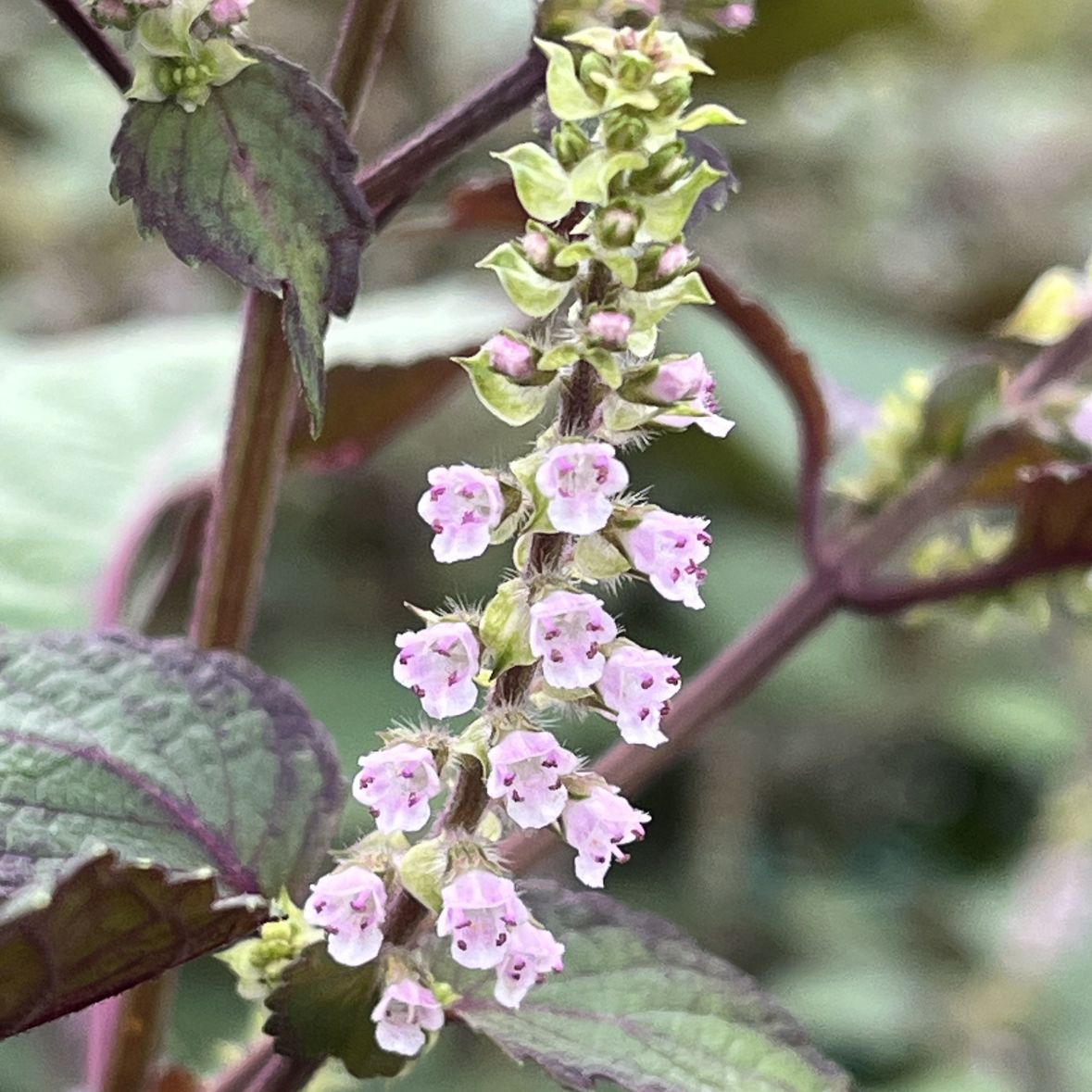
シソの花は上唇が2裂、下唇が3裂、雄しべが長短2本ずつ、雌しべの柱頭が2裂。花穂が上を向き、小さな唇形花たちが整然と連なります。
Shiso flowers are bilabiate (two-lipped), featuring a two-lobed upper lip and a three-lobed lower lip. They possess four stamens in total—two long and two short—and a pistil with a two-lobed stigma. The flower spikes are erect, with small florets arranged in an orderly fashion.
【仮名】シソ
【和名】紫蘇
【英名】Shiso
【学名】Perilla frutescens var. crispa
【誕生】08/ ??
【開花】08, 09月
【花色】White, Purple
シソ
シソの概要
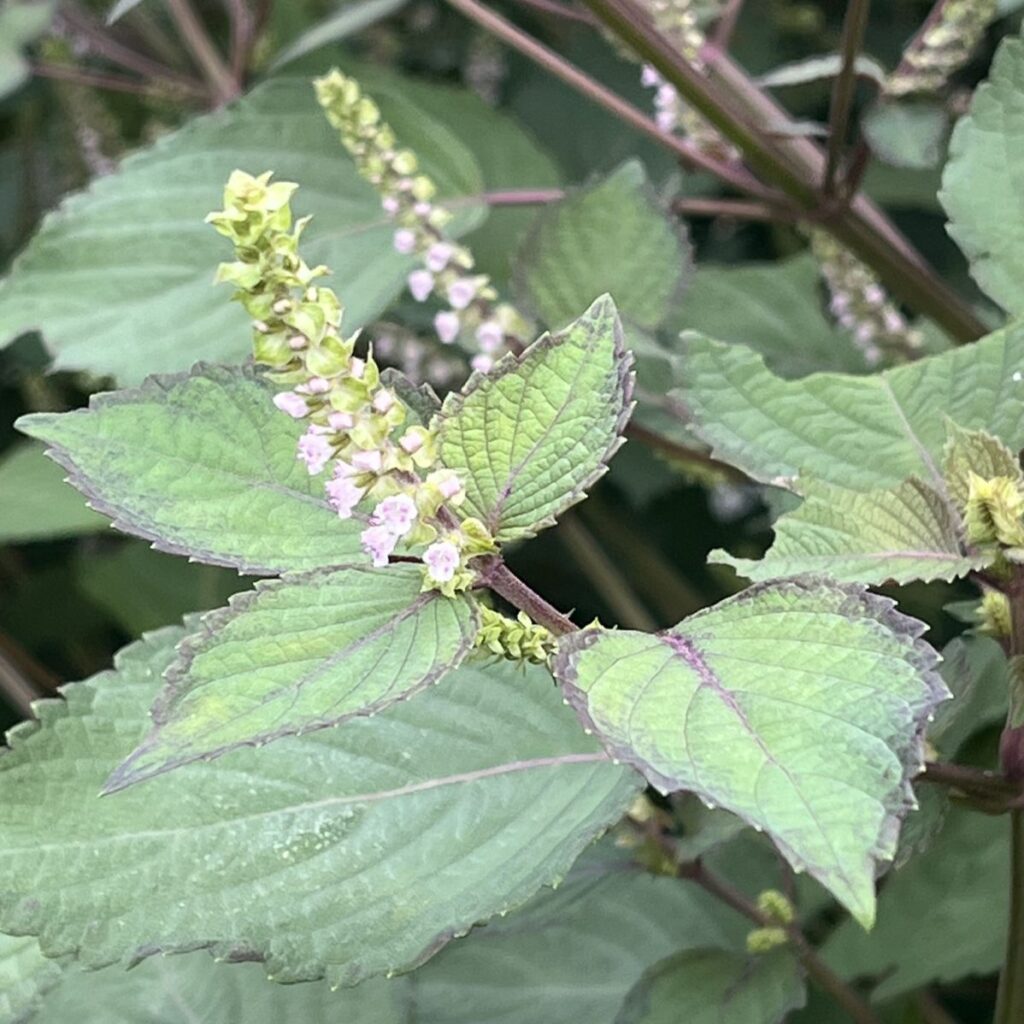
シソはシソ科の一年草です。原産地はヒマラヤ、中国中南部、ミャンマー周辺。東アジア~東南アジア各地に伝わり、北米や欧州にも広がりました。日本へは古代、中国から薬草として渡来し、香草として葉、芽、花、実が食用に。花穂が上を向き、小さな唇形花が整然と連なります。
シソの名前
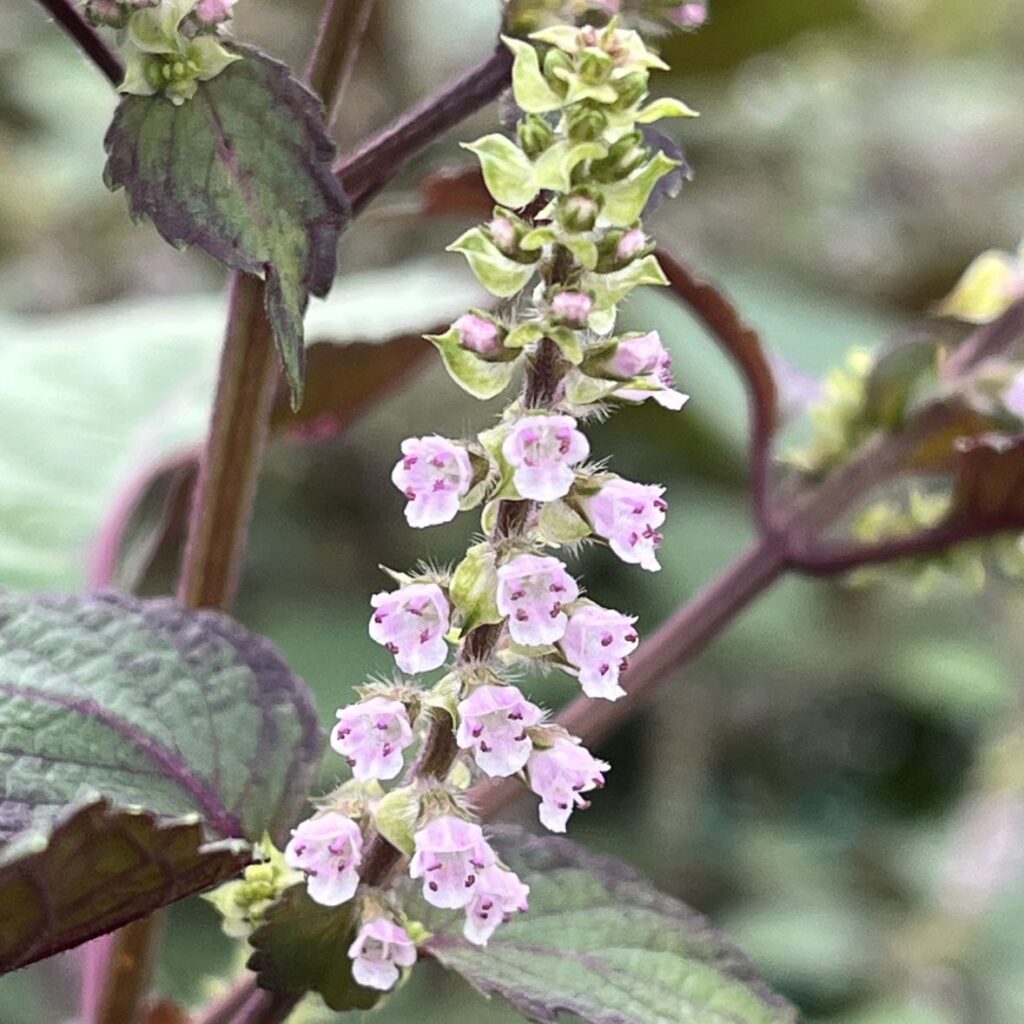
シソの名前は中国名の音読み。「病から蘇らせる紫色の草」という意味です。中国の古代王朝・後漢の名医「華佗」が蟹による食中毒を紫蘇で治した逸話に由来。属名ペリラは「周囲を包む」、種小名フルテスケンスは「低木状になる」、変種名クリスパは「縮れた」という意味です。
シソの姿形
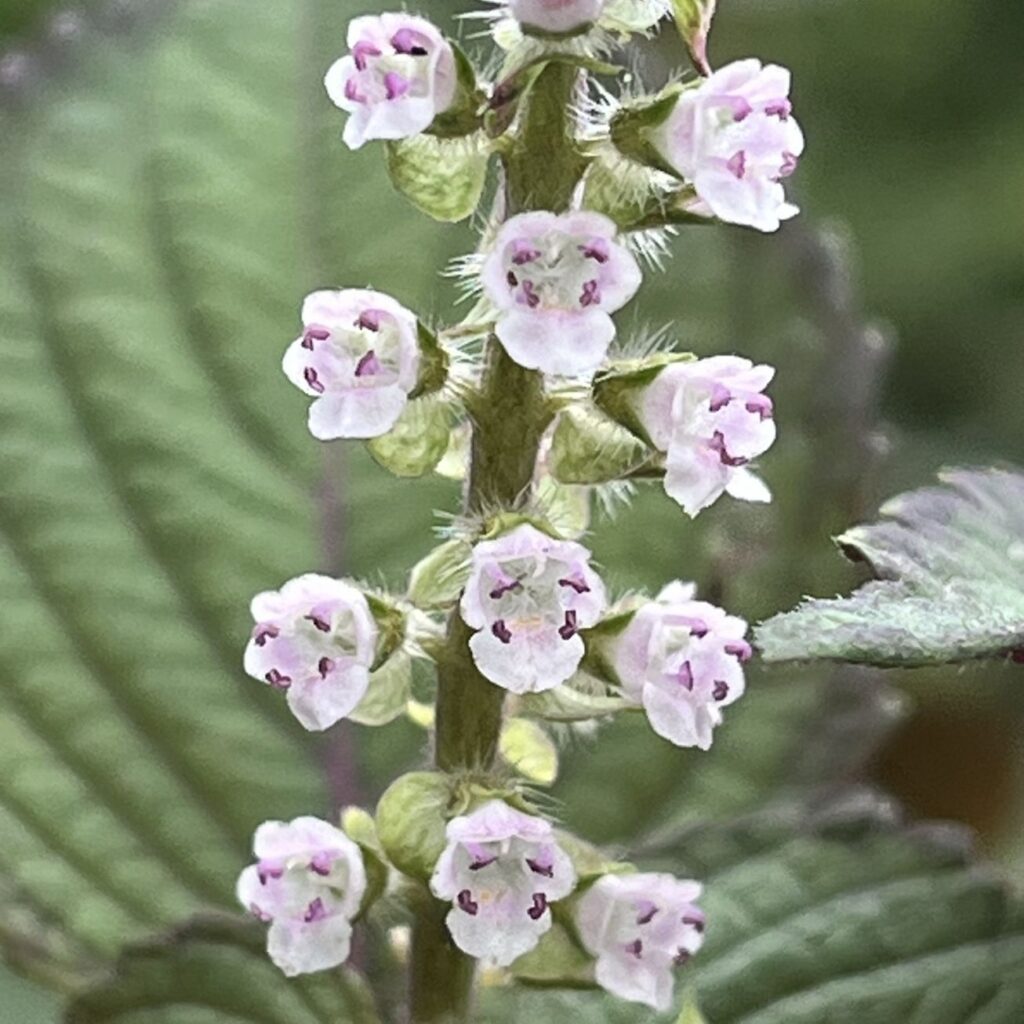
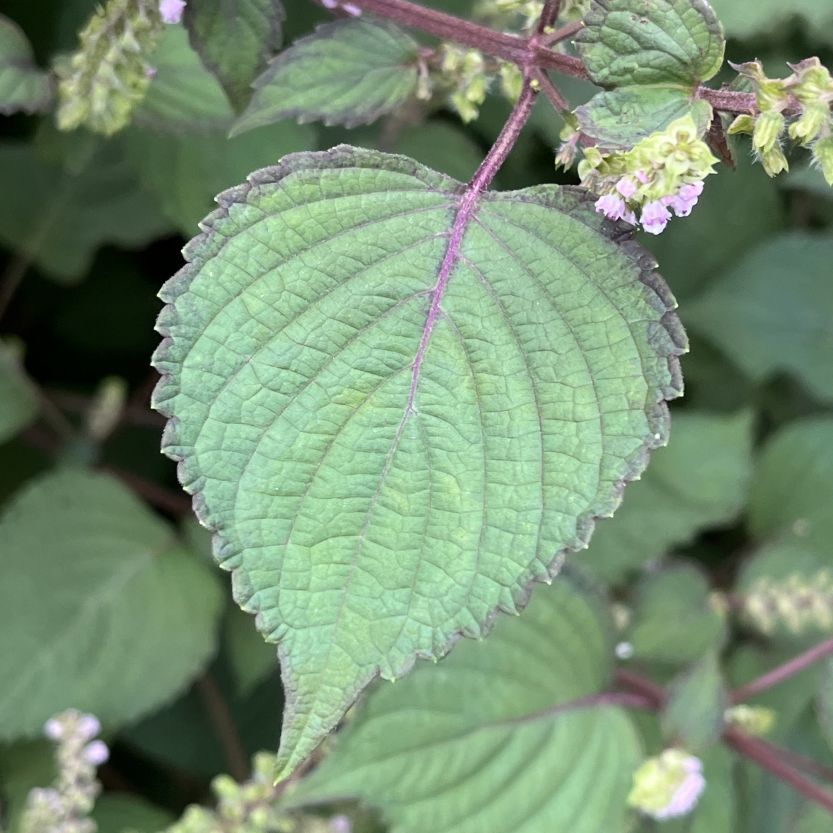
シソの根は浅く、株の周りに細根が広がります。茎は4稜で直立し、盛んに分枝。軟毛が疎らに生えます。葉は縁に鋸歯のある卵形で対生。裏面に腺点が密生し、芳香を放ちます。花は上唇が2裂、下唇が3裂、雄しべが長短2本ずつ、雌しべの柱頭が2裂。花後に4分果を結びます。
シソの利用
シソは香草のほか、古くから生薬「蘇葉」として感冒や消化不良、食中毒に用いられました。抗炎症・殺菌・防腐作用のある香気成分ペリルアルデヒドを含有。脳の健康を維持するフェノール酸系ロスマリン酸、視覚機能を改善するフラボノイド系の色素アントシアニンも含まれます。
Shiso
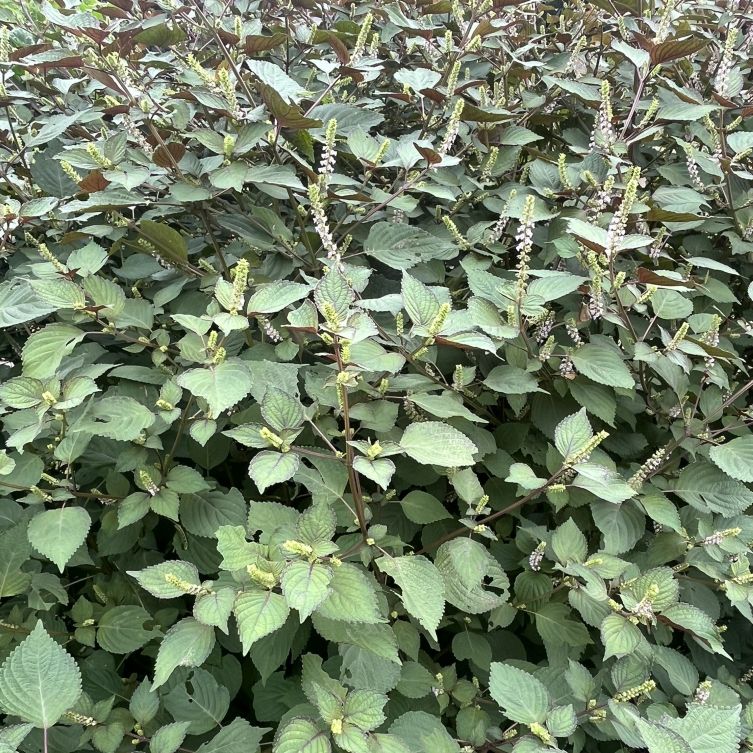
Shiso is an annual herb belonging to the Lamiaceae family. It is native to the Himalayas, central and southern China, and the region around Myanmar. While it spread across East and Southeast Asia, it has also reached North America and Europe. Introduced to Japan from China in ancient times as a medicinal herb, its leaves, buds, flowers, and seeds have since become essential edible aromatic ingredients. The spikes stand upright, bearing neatly aligned florets.
The Japanese name “Shiso” is derived from the on-yomi (phonetic reading) of its Chinese name, meaning “the purple herb that restores life.” This originates from an anecdote about the legendary physician Hua Tuo of the Later Han Dynasty, who used Shiso to cure patients suffering from crab poisoning. The genus name Perilla refers to “enclosing” or “surrounding,” the specific epithet frutescens means “becoming shrub-like,” and the variety name crispa means “curly.”
Shiso has a shallow root system with fine roots spreading around the base. The stems are quadrangular, upright, and branch vigorously, covered sparsely with soft hairs. The leaves are ovate and opposite with serrated margins; their undersides are densely dotted with glands that release a distinct aroma. The flowers are bilabiate, with a two-lobed upper lip and a three-lobed lower lip. They feature didynamous stamens (two long and two short) and a two-lobed stigma. After flowering, the plant produces four nutlets.
Historically, Shiso has been used in traditional medicine to treat colds, indigestion, and food poisoning. It contains perillaldehyde, an aromatic compound with anti-inflammatory, antibacterial, and preservative properties. Additionally, it is rich in rosmarinic acid (a phenolic acid that supports brain health) and anthocyanin (a flavonoid pigment known to improve visual function).