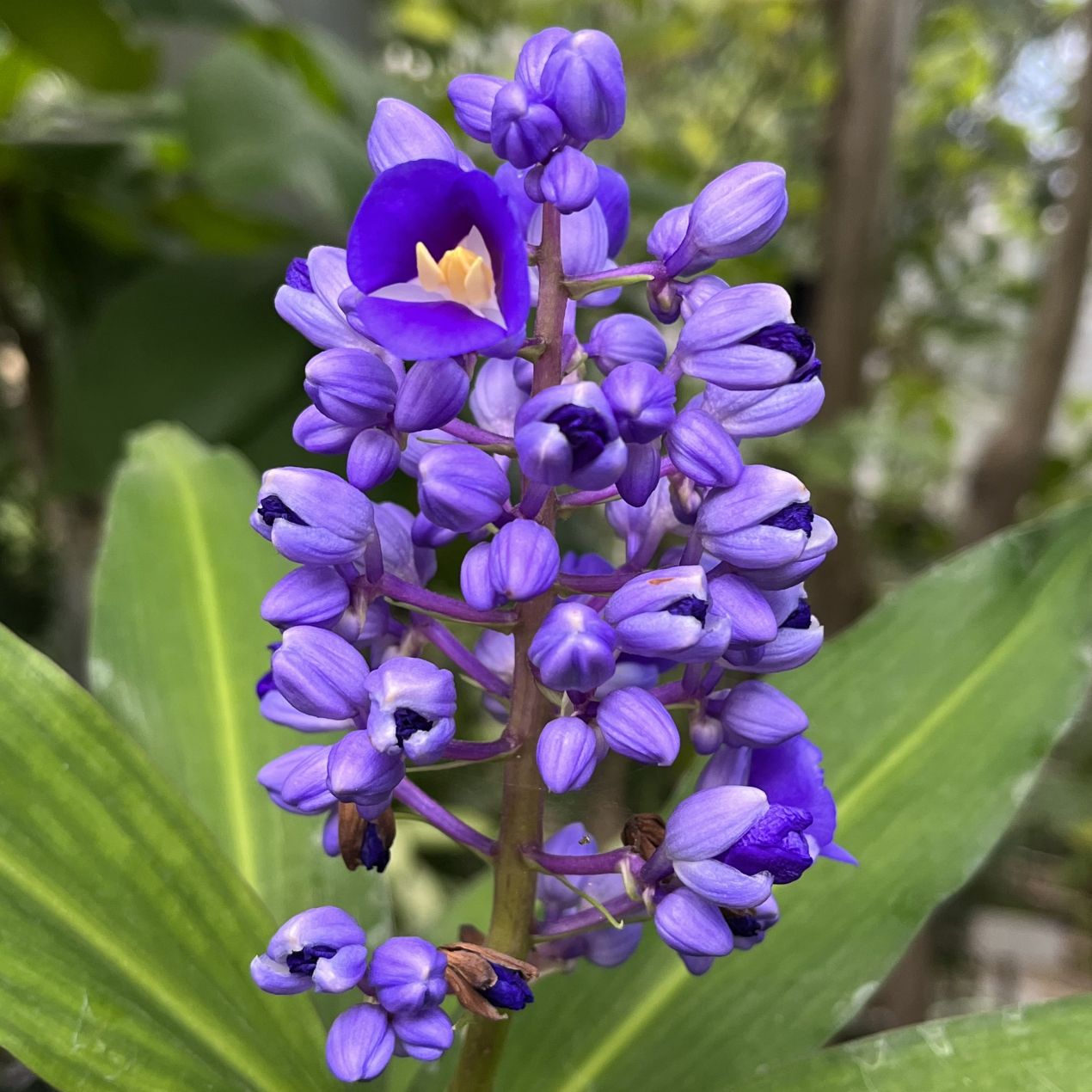
オオタチカラクサの花は房状で1カ月くらいかけて順に咲き上がるものの、1輪の開花は短期間。「1日だけの恋」という花言葉があります。
Blue Ginger flowers bloom in clusters over the course of about a month, but each flower blooms for only a short time. For this reason, the plant’s flower language is “one-day love.”
【仮名】オオタチカラクサ, ブルージンジャー, ディコリサンドラ・ティルシフロラ
【和名】大立唐草
【英名】Blue Ginger
【学名】Dichorisandra thyrsiflora
【誕生】09/ ??
【開花】09, 10, 11月
【花色】Violet, Blue
オオタチカラクサ
オオタチカラクサの概要
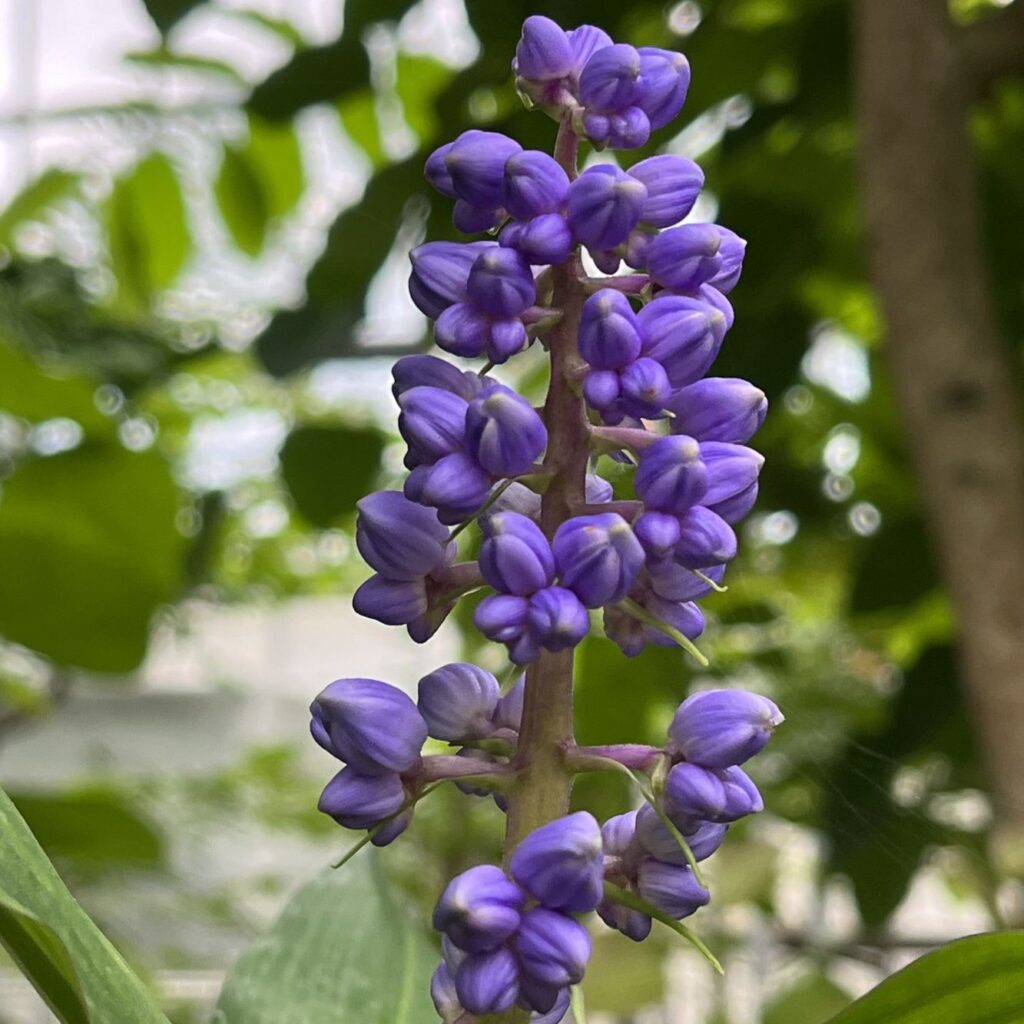
オオタチカラクサはツユクサ科タチカラクサ属の常緑多年草。原産地はブラジル南東部を中心とする熱帯アメリカで、ジャングルの林床などに自生しています。花は房状で、1カ月くらいかけて順に咲き上がるものの、1輪の開花は短期間。「1日だけの恋」という花言葉があります。
オオタチカラクサの和名
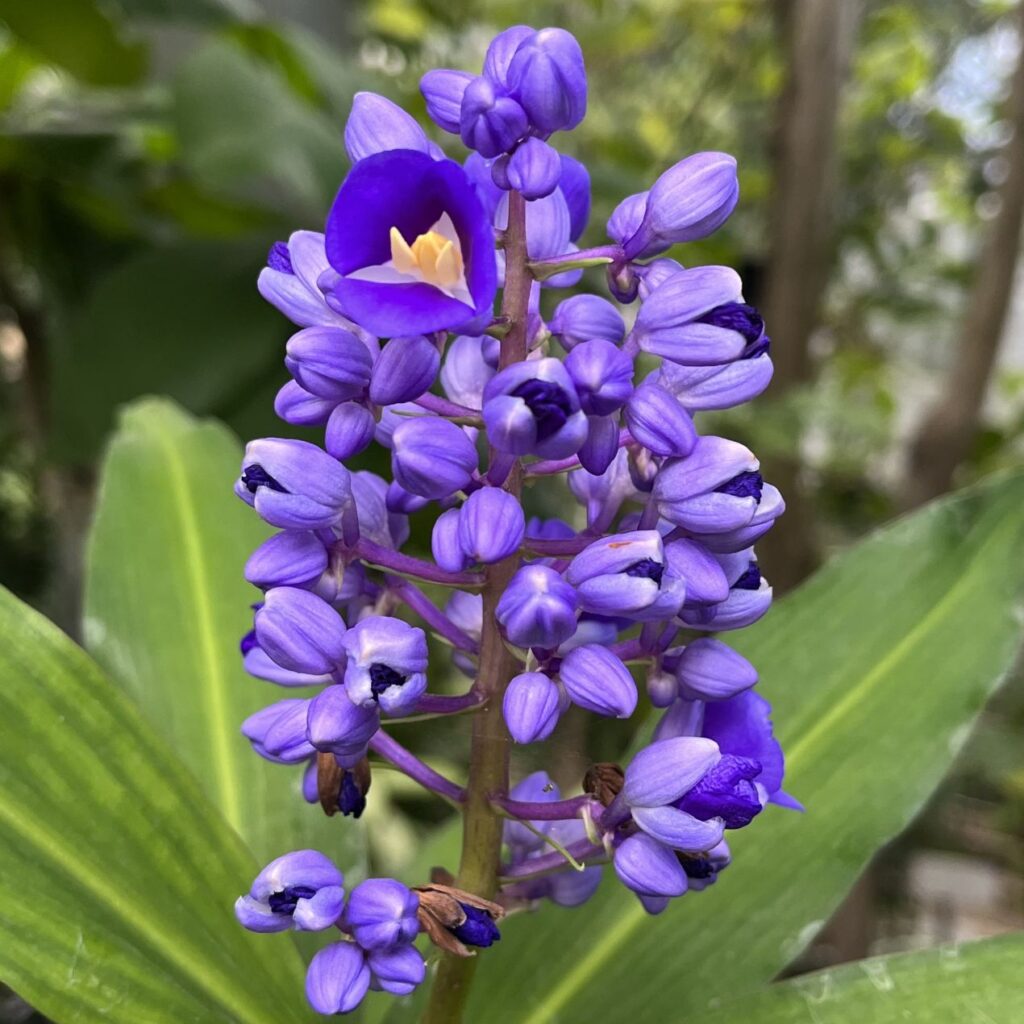
オオタチカラクサの和名は「大きく立ち上がる唐(外来)の草」という意味です。別名「木立紫露草」の由来は花が紫色で、葉が露草に似ていて立性だから。一方、園芸店では英名ブルージンジャーで並べられ、植物園では学名ディコリサンドラ・ティルシフローラで植わっています。
オオタチカラクサの英名
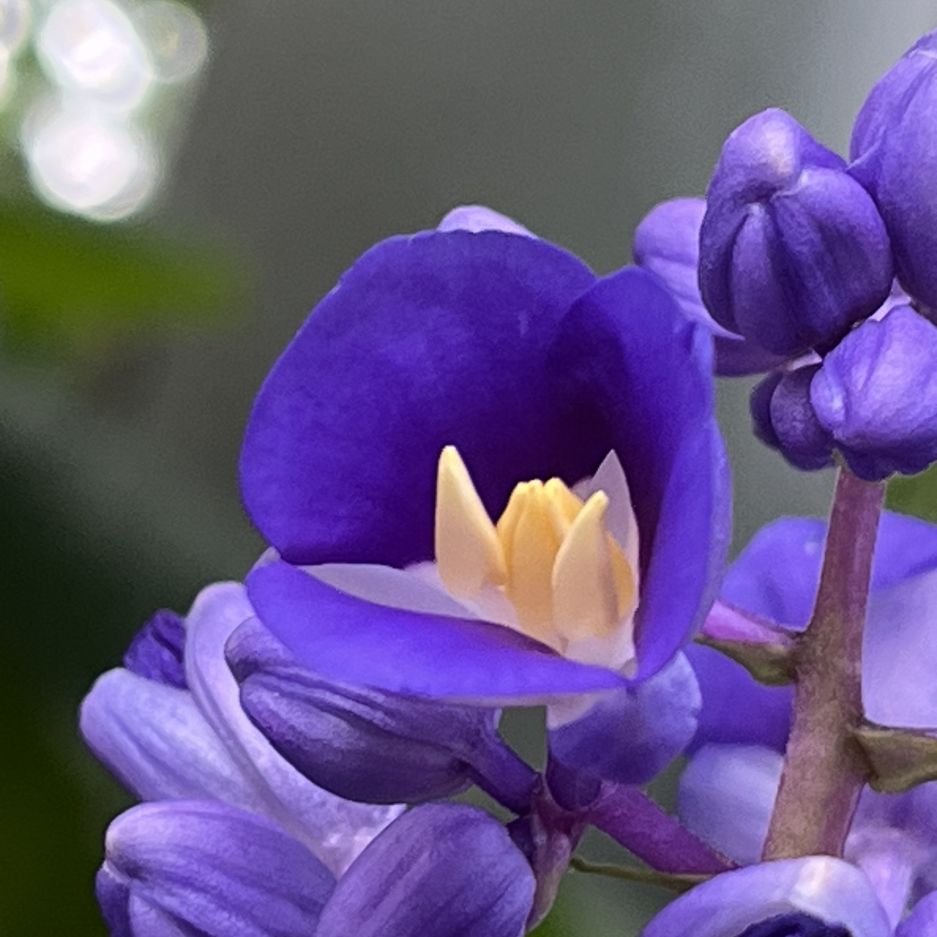
オオタチカラクサの英名ブルージンジャーの由来は花が青色で、葉が生姜に似ているから。属名ディコリサンドラは「2種類の雄しべ」という意味です。普通の雄しべと、花粉をほとんど出さない雄しべがあるから。種小名ティルシフローラは「房状の花々をつける」という意味です。
オオタチカラクサの姿形
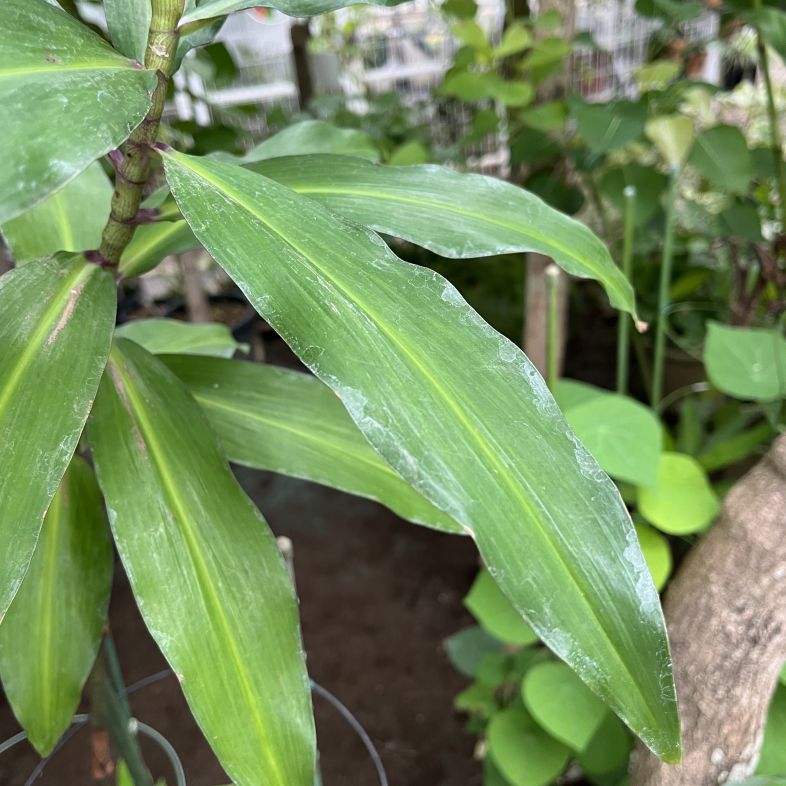
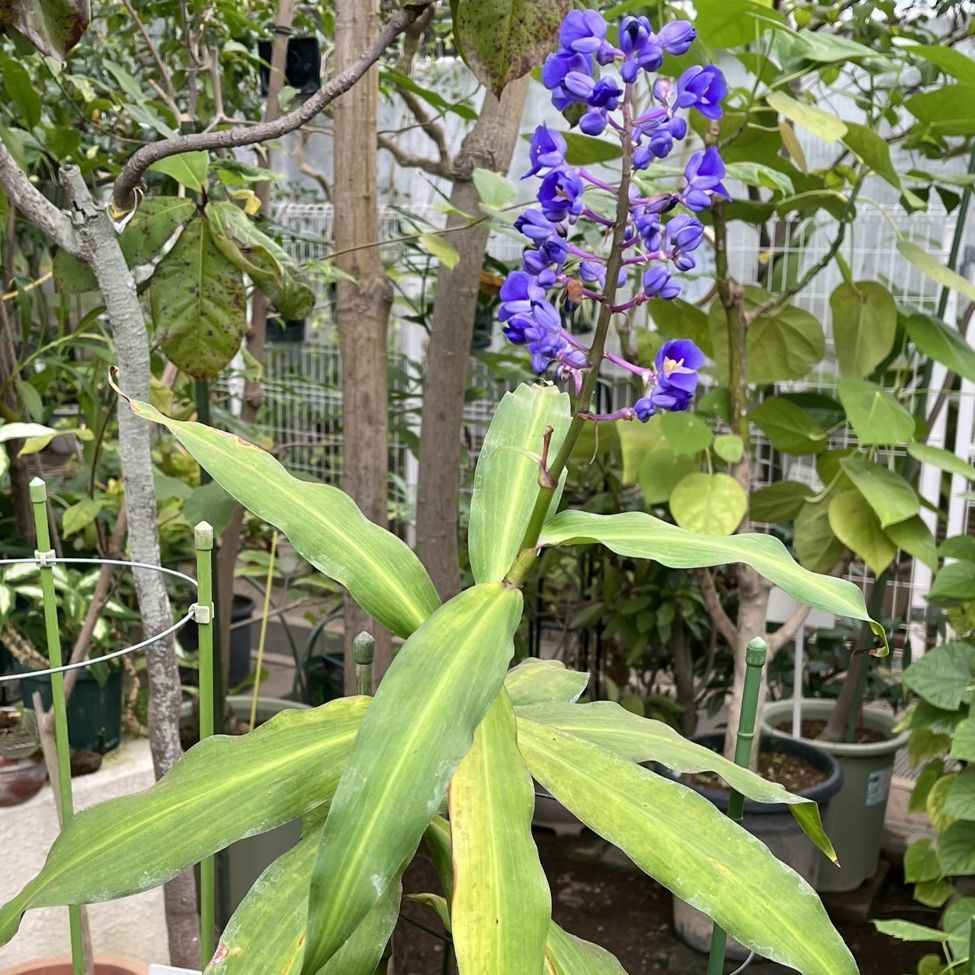
オオタチカラクサの地下茎は紡錘形で、数珠のように連なります。地上茎は肉質で太く、直立。葉は互生の披針形で光沢があり、葉鞘で茎を抱きます。花は茎先で房状に咲き、花弁が上に2枚、下に1枚。雄しべは長短3本ずつで黄色の葯が目立つ一方、雌しべは短く、目立ちません。
Blue Ginger
Blue Ginger is an evergreen perennial plant in the Commelinaceae family. It is native to tropical America, primarily southeastern Brazil, where it grows wild on the jungle forest floor. The flowers bloom in clusters over the course of about a month, but each flower blooms for only a short time. For this reason, the plant’s flower language is “one-day love.”
The Japanese name for Blue Ginger means “a large, upright, invasive grass.” It is also known by the nickname “an upright grass with purple flowers and leaves resembling dew grass.” Meanwhile, in Japanese gardening stores, the plant is displayed under its English name, Blue Ginger, and in botanical gardens, it is planted under its scientific name, Dichorisandra thyrsiflora.
The name Blue Ginger comes from its blue flowers and ginger-like leaves. The genus name Dichorisandra means “two types of stamens.” This refers to the presence of normal stamens and stamens that produce very little pollen. The specific epithet thyrsiflora means “bearing clusters of flowers.”
Blue Ginger’s underground stems are spindle-shaped and arranged in a string like beads. The aboveground stems are thick, fleshy, and upright. The leaves are alternate, lanceolate, and glossy, with leaf sheaths encircling the stem. Flowers bloom in clusters at the end of the stem, with two petals on top and one on the bottom. There are three long and three short stamens with prominent yellow anthers, while the pistils are short and inconspicuous.